


_435x320?&)
The pyramids of Giza: Facts, mysteries and timeless architecture
Discover these fascinating pyramids of Giza facts and uncover the ancient Egyptian mysteries that still puzzle historians to this day
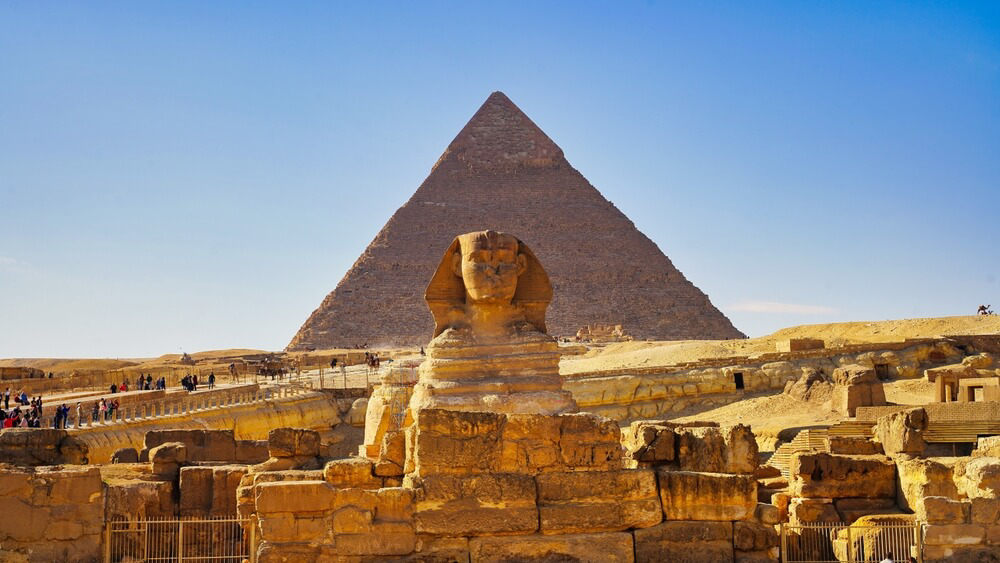
Just before dawn, the desert outside Cairo is almost quiet. The air is cool, the sky bruised with the first hint of light and the limestone silhouettes on the horizon feel more like mountains than monuments. When the Romans conquered Egypt over 2000 years ago, the pyramids were already considered ancient. Today, travellers arrive armed with lists of Pyramids of Giza facts, but nothing quite prepares you for the first real glimpse of the ancient landscape.
For more than 4,500 years, the pyramids have been the most famous expression of Egypt’s royal tombs. Yet, they sit at the end of a long architectural story and within a much larger necropolis of temples, satellite pyramids, causeways and tombs. What follows is not a basic checklist of fun trivia but a curated set of insights and interesting facts about Giza’s pyramids to help you see the site with more informed eyes.
The Giza Necropolis
How the pyramids began: From mastabas to pyramids
Long before the ancient Pyramids of Giza were conceived, Egyptian rulers were buried beneath low, bench-shaped, rectangular mudbrick tombs called mastabas. The leap from that to a stepped, sky-reaching form was nothing short of radical.
The experiment began at Saqqara, south of modern-day Cairo, where you will discover the stepped monument of Djoser. For travellers exploring beyond Giza, a few Pyramid of Djoser facts help place everything in context. This is widely regarded as Egypt’s first large-scale stone building, a stack of mastabas rising in six tiers, designed by the architect Imhotep in the 27th century BC. So, without Saqqara, there would be no Giza.
As time passed, rustic stepped forms evolved into smooth-sided geometric pyramids and by the time Khufu, also known by his Greek name Cheops, came to power, Egyptian architects had the confidence to attempt something on a wholly new scale.

The Pyramid of Djoser
The Great Pyramid’s height and geometry
Even if you think you already know the story, a few carefully chosen great Pyramids of Giza facts can reframe what you are looking at when you stand in front of Khufu’s pyramid. Completed in the 26th century BC, it measured 146 metres, a height no other human-built structure surpassed for millennia. Of course, erosion and the eventual loss of the topmost stones have left it slightly shorter, yet the sense of scale remains unsettling.
For those fascinated by numbers, there are some genuinely elegant Great Pyramid measurement facts. The base, for example, is not a rough approximation of a square but an astonishingly precise one, with each side originally measuring around 230 metres. The difference between them is often quoted as just a matter of centimetres, remarkable given the tools available at the time.

The Pyramid of Khufu
Tura limestone once gave the pyramids a white glow
Step up close, and you can appreciate the Great Pyramid of Giza material that once gave it a very different look. At its core, the pyramid is made of local limestone blocks; however, in antiquity, this was clad in smooth, pale Tura limestone, which, under the harsh midday light, would have gleamed almost white, something to keep in mind when you search later for images of the Giza pyramids' original look.
The inner chambers remain a mystery
The story of how this monument fits into the wider Great Pyramid of Giza history is equally compelling. It was built early in the Old Kingdom’s 4th Dynasty, at a moment when royal authority, religious ideology and technical expertise all aligned. Despite 4500 years of study, inside, the question of the Great Pyramid of Giza's purpose continues to fascinate.
The Great Pyramids of Giza
Most Egyptologists agree that it was, fundamentally, a royal tomb designed to assist the king’s journey into the afterlife. But the exact symbolism of its internal chambers still invites debate. These layers of meaning are what modern explorers are really “discovering” when exploring the Great Pyramid today.
The Solar Barque and funerary beliefs at Giza
One of the most evocative details for visitors interested in Khufu ship facts lies not inside the pyramid but in a boat pit beside it. Here, archaeologists discovered a full-sized cedar vessel, painstakingly disassembled and buried. Interpreted as a solar barque for the king’s eternal voyage with the sun god, it’s a rare instance where you can almost picture the funerary procession, not just the static stone.

Exploring the inside of a pyramid is a must-do
Who built the pyramids? Facts about the workers
For many years, popular imagination, spurred along by Hollywood, assumed that Giza was constructed by vast ranks of enslaved labourers. Yet, modern archaeology hints at a more nuanced, interesting picture, making it important to know a few facts about Egyptian pyramid builders before your visit. Excavations of workers’ villages near the pyramids have revealed planned settlements with bakeries, breweries, medical care and dignified burials.
Excavations of workers’ villages near the pyramids have revealed planned settlements with bakeries, breweries, medical care and dignified burials
This points to the idea that the workforce was skilled with paid labourers and artisans living year-round at these sites, supported by rotating teams along the Nile Valley. Instead of anonymous slaves, these were specialists contributing to a royal and religious project of immense dimension. Understanding this adds emotional weight as you walk around the Giant Pyramid of Giza and imagine the expertise, muscle and organisation required for its creation.

A Mastaba, an original royal burial tomb
Giza Plateau Facts: Khafre, Menkaure and the Sphinx
Many people imagine Giza as a single monument, but, in reality, it is a carefully orchestrated city of the dead. Appreciating a few Giza plateau facts helps you read the landscape properly.
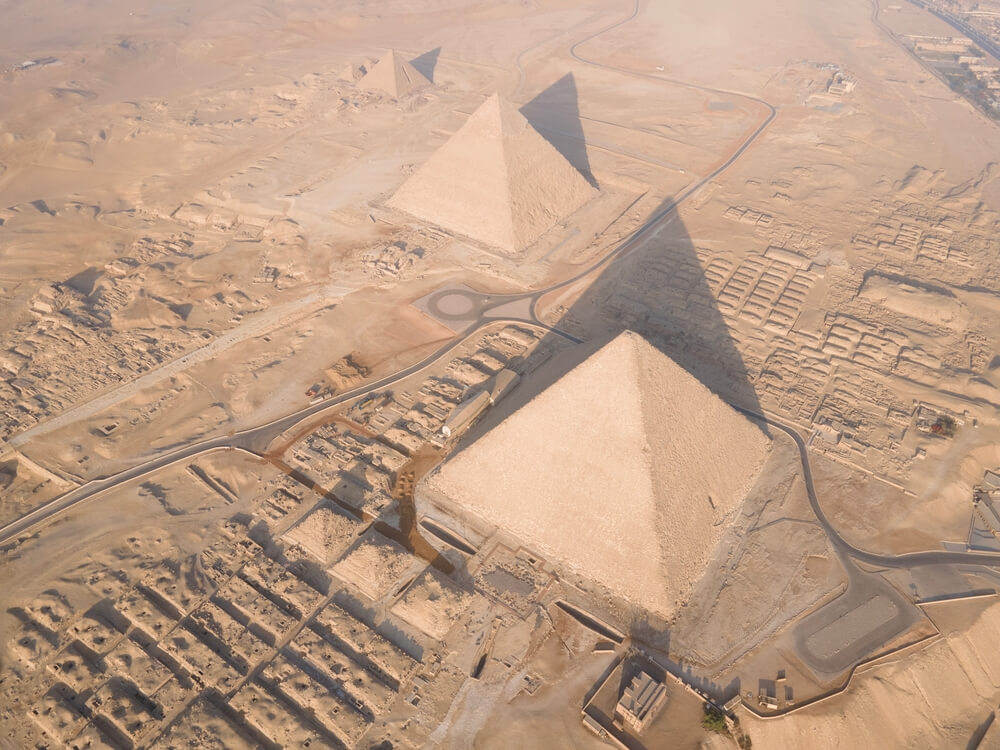
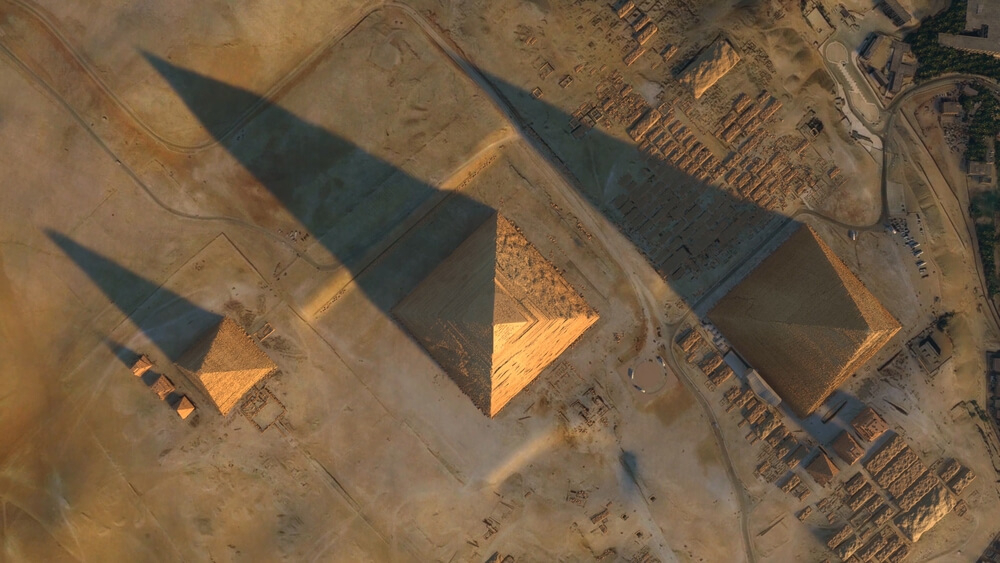
Khufu’s pyramid dominates one end of the plateau; meanwhile, the slightly smaller pyramid of his successor Khafre stands on marginally higher ground, creating an optical illusion that it is taller. The third pyramid belongs to Menkaure, more modest in size but once encased in red granite at its base. This trio has become an iconic image of the more complex mortuary temple, causeway and satellite tombs that create Giza.

The Giza Necropolis
For travellers with a taste for numbers and structure, this is where Giza pyramid size, alignment and layout become part of the experience with precise placement, lines of sight and orientation all steeped in symbolism.
And then there is the lion-bodied, human-headed guardian carved from the bedrock itself. Any visit is incomplete without a few facts about the Sphinx of Giza in mind. Often associated with Khafre, this imposing statue was once the dramatic focal point of a ceremonial approach to the pyramid complex.
Understanding Giza: How to read the necropolis
For all the archaeological data, the Giza necropolis still resists being reduced to pure measurement and theory. As you stand before these grand monuments, let your mind wander to images of processions moving from the Nile’s floodplain up causeways to the pyramid complex above. Or, embalmers at work in shadowed chambers, priests reciting texts under an open sky and workers manoeuvring colossal blocks along ramps and sledges. When you frame the site this way, you’re no longer ticking off Pyramids of Giza fact clichés, but engaging with a landscape of power, belief and carefully orchestrated spectacle.
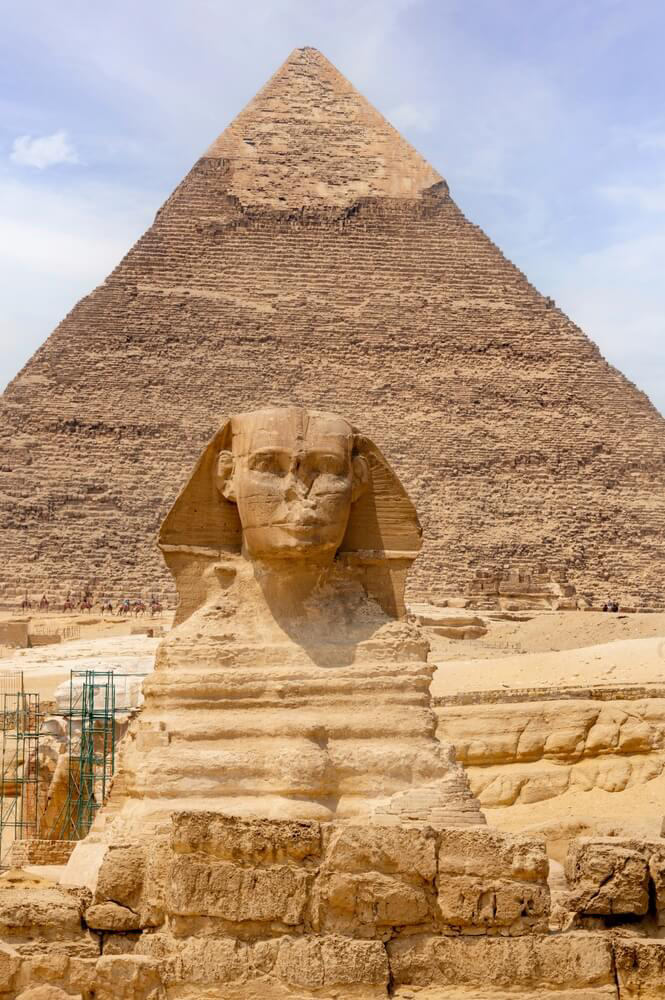
The Sphinx of Giza
A few more Pyramids of Giza facts for the genuinely curious
If you’re the sort of traveller who likes to have a framework before you go, these additional Pyramids of Giza architecture facts can be helpful. The dimensions of the Giza Pyramid for Khufu’s monument equate to a base area of roughly 13 acres, large enough to swallow a small village. Not only that, but the alignment of the structure is famously close to true north, an astonishing achievement that continues to intrigue anyone interested in ancient surveying.
The alignment of the structure is famously close to true north, an astonishing achievement that continues to intrigue anyone interested in ancient surveying
Ongoing analysis has also revealed clever variations in block quality and density, suggesting the builders were thinking not only about sheer mass, but about stability and weight distribution from the start. Taken together, these Great Pyramids of Giza facts are keys to understanding how a Bronze Age court could master skills and materials with such precision.
Planning your visit to the ancient Pyramids of Giza
No amount of reading and understanding of the Pyramids of Giza facts can prepare you for standing between these monuments. To make the most of your trip, book a hotel with a view of the pyramids and enjoy the proximity to this iconic Egyptian landmark. A solid grasp of information about the Great Pyramids of Giza and the surrounding necropolis will enrich your visit, yet it is the lived experience that will linger long in your mind.
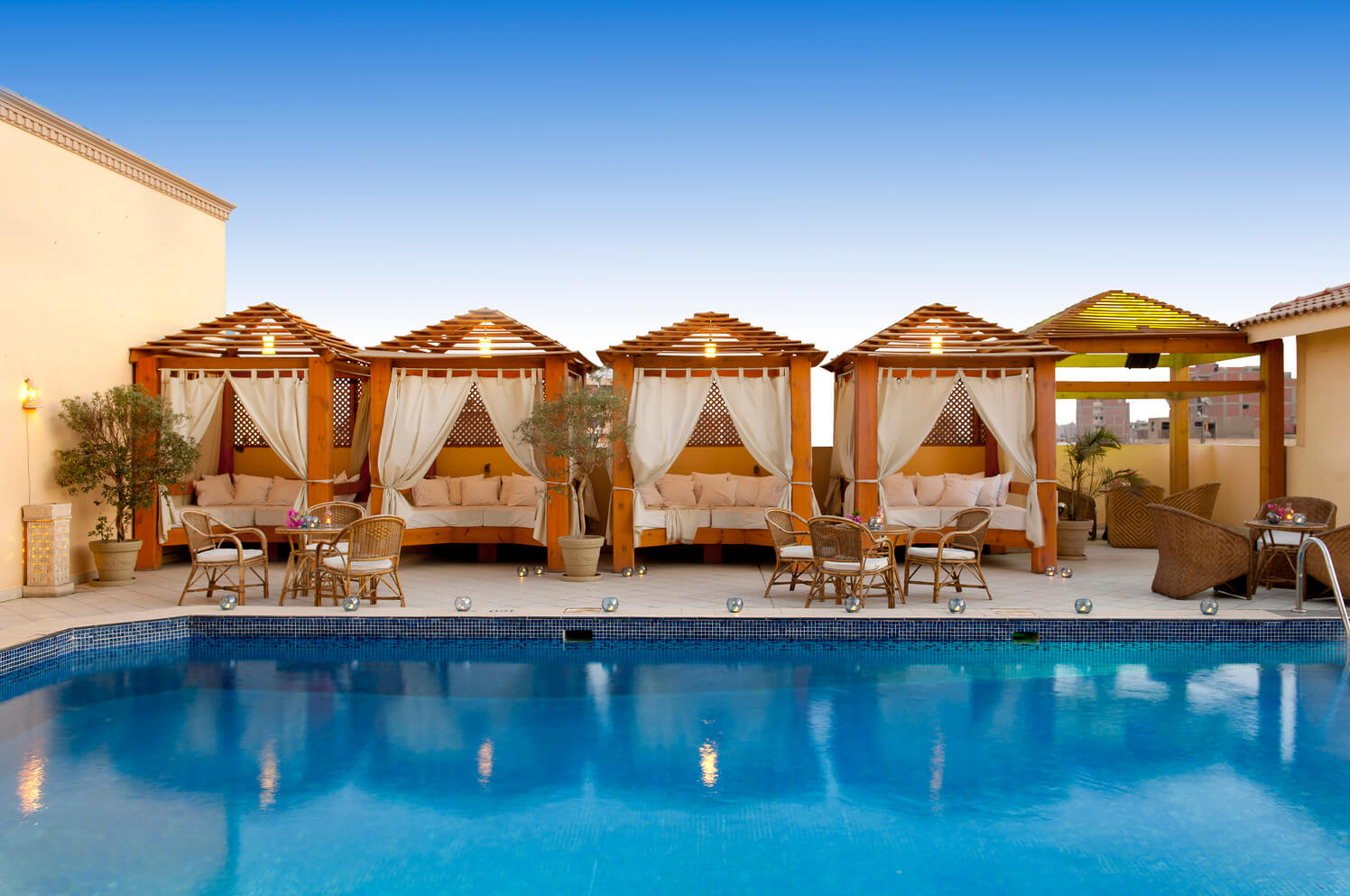
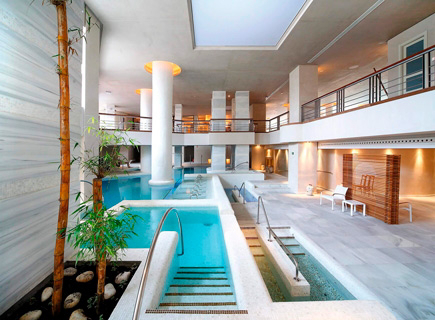
Barceló Cairo Pyramids hotel
Most people enjoying a holiday in Egypt will want to step inside a pyramid at least once to gain a sense of what it is like to move along low passages, into narrow, echoing chambers where the weight of millions of tonnes of stone sits above you. Be sure to allow time for exploring the mastabas and smaller tombs and if your schedule permits, spending an entire day at Giza will allow you to see how the light changes on the stone.
To end the day, try to engineer a view of the Pyramids of Giza sunset. This unforgettable scene is just as incredible from the plateau itself as it is from a rooftop bar in Cairo. It is at this moment that all those interesting facts about the Giza pyramids fall quiet and the site returns to its original glory and the line between past and present becomes unusually thin.

The Pyramids of Giza at sunset