

_435x320?&)
The Mayan Ruins of Chichen Itza: A Must-See Wonder
Chichen Itza? Get ready to travel back in time and discover the wonders of a bygone civilization come to life at this historical destination on Mexico’s Yucatán Peninsula

During your next vacation to Cancún or all-inclusive stay in the Riviera Maya, a visit to the Mayan ruins of Chichen Itza is an absolute must. This one-of-a-kind historical marvel was named one of the New Seven Wonders of the World, chosen by more than 100 million voters from all over the globe. It’s also UNESCO World Heritage Site and one of the most visited attractions on the Yucatán Peninsula. Let’s dive into fascinating Chichen Itza facts, history, and everything you’ll want to know before paying the site a visit.
Fascinating Chichen Itza History
The Mayan ruins of Chichen Itza comprise what was originally a city founded around 250 AD by the legendary Maya-Itza people. The name "Chichen Itza" translates from Mayan to "the mouth at the well of Itzá.” This is a reference to water magicians (Itzás), who were a vital part of the Mayan spiritual cosmology. Most of the buildings that remain today date from between 800–1100 AD..
At its peak, Chichen Itza stood as one of the largest Mayan cities and served as a cultural, economic, and ceremonial capital of the Yucatán Peninsula for close to a millennium. Even at the time of the Spanish conquest, the city remained an important religious center to which the Maya from the surrounding area made pilgrimages. After a period of decline, Chichen Itza was largely abandoned following the Spanish conquest in the 1500s, and the city fell into oblivion, hidden beneath vegetation.
Most of the buildings that remain today date from between 800–1100 AD
Explorers in the 1800s re-discovered the site and began excavating, uncovering some of Mexico's greatest treasures. Amazingly, Chichen Itza's history continues to reveal many secrets. In 2019, archaeologists announced that they had found a previously unknown cavern filled with pristine Mayan artifacts. Their findings have already caused researchers to rethink many previous assumptions about Mayan culture and religion.
Today, Chichen Itza is one of Mexico's most visited attractions, with more than two million tourists experiencing the past glories of the Mayan civilization every year.
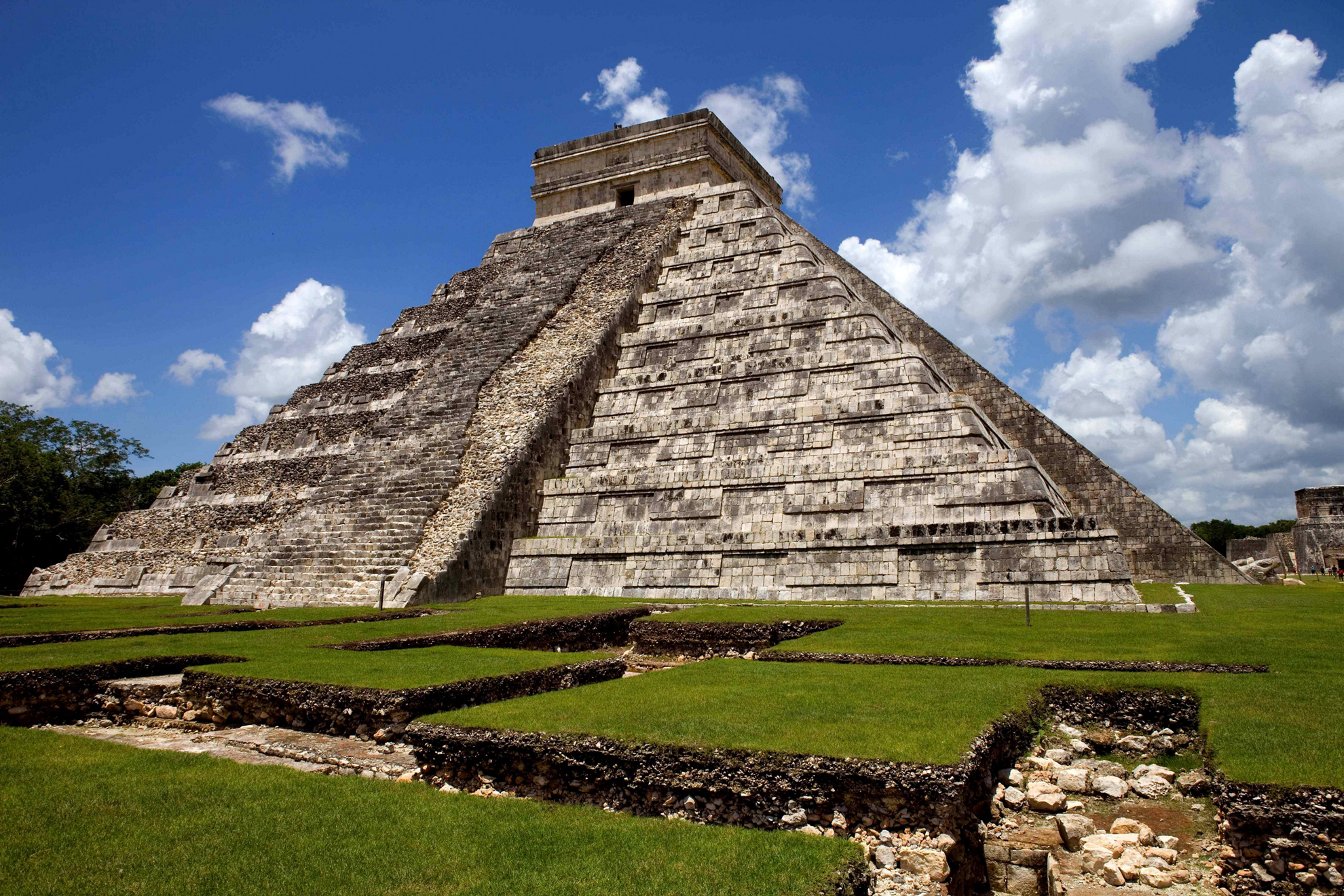
: The Kukulcán Temple
The Kukulcán Temple: Chichen Itza's Crown Jewel
The most impressive and iconic structure at the Mayan ruins of Chichen Itza is the Kukulcán Temple, also known as El Castillo (or “The Castle” in English). This 80-foot-tall limestone masterpiece stands as the centerpiece of the ancient Mayan city and represents one of the most sophisticated examples of Mayan architecture and astronomical knowledge.
Built sometime between the ninth and 12th centuries, the Kukulcán Temple is not only a Mesoamerican step pyramid, it's a gigantic calendar carved in stone. Each of the Kukulcán Temple’s four sides feature 91 steps. When you multiply 4 × 91, you get 364, and adding the top platform brings the total to 365, representing the days in the solar year. The pyramid is also decorated with 260 evenly spaced rectangular blocks, symbolizing the number of days in the Tzolk’in, the Mayan ritual calendar. Every step, every decoration, every line reflects a concept of the calendar.
Built sometime between the ninth and 12th centuries, the Kukulcán Temple is not only a Mesoamerican step pyramid, it's a gigantic calendar carved in stone
Kukulcán, the feathered serpent deity who was one of the most important gods in Mayan and Mesoamerican culture. The Maya were incredible artisans and craftspeople, and the pyramid of Kukulcán showcases their mastery of both art and science.
It's worth noting that in order to preserve the Kukulcán Temple for future generations, visitors can no longer climb the pyramid. However, the view from ground level remains breathtaking, and the architectural achievements are no less impressive when observed from below.
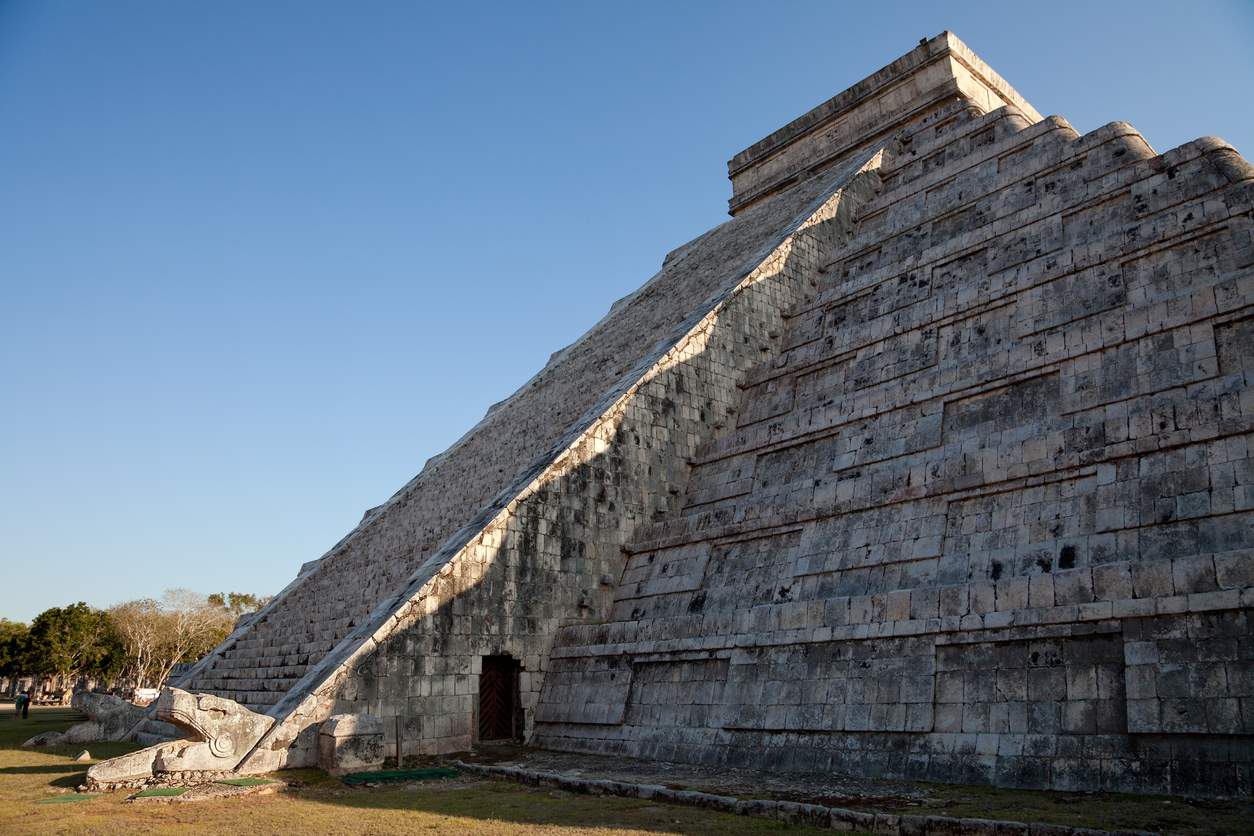
Chichen Itza serpent
Experience the Equinox at Chichen Itza
The Kukulcán Temple is positioned so that twice a year, during the spring and autumn equinoxes, an extraordinary spectacle unfolds. The equinox is the moment when the sun sits directly above one of the two tropics and day and night are exactly the same length. For cultures like the Maya, who lived off their own crops and closely monitored the agricultural cycle, these moments were particularly important.
On the days around the equinox at Chichen Itza, shadows cast from the edges of the platforms on the pyramid's west-northwest side create a series of rounded, inverted triangles on the north-northeast staircase. These shadows form a wave-like pattern that appears to slither down the pyramid, ending at the massive serpent head carved at the base. It looks as if the serpent god Kukulcán is descending to earth to make the land fertile for the next harvest season.
It looks as if the serpent god Kukulcán is descending to earth to make the land fertile
The Chichen Itza serpent equinox effect occurs shortly before sunset and can be seen clearly about five days before and after the actual equinox date. While the phenomenon happens in both spring and fall, spring tends to be the better time to witness it. The fall season is during hurricane season on the Yucatan Peninsula, and rainier weather increases the chance of cloudy skies that might obscure the spectacle.
Yet another spectacular effect at the Kukulcán Temple is acoustic. The Maya incorporated acoustic elements into their massive structures with remarkable precision. If you stand directly in front of the stairs on the north side of the pyramid and clap your hands, an echo rings out that sounds exactly like the call of the quetzal, the sacred bird of the Maya. Creating this Chichen Itza clap effect must have been even more difficult than engineering the descending snake shadow.
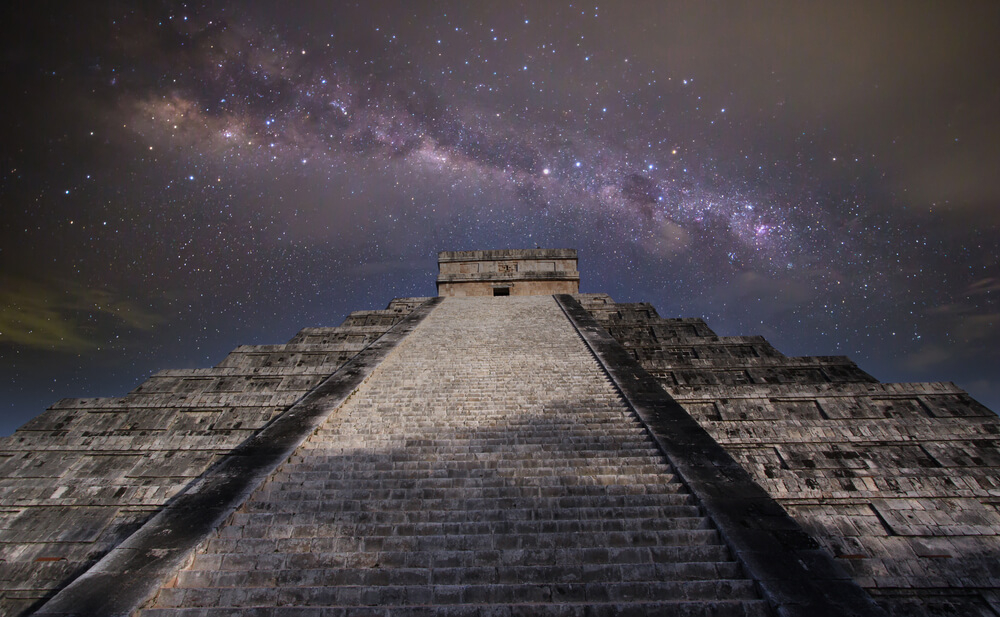
Looking up at Kukulcán Temple
The Mayan ruins of Chichen Itza’s Must-Sees
The Great Ball Game Court
The Mayan ruins of Chichen Itza are home to the largest Mayan ball court in all of Mesoamerica. Measuring over 524 feet long and 229 feet wide, this massive court hosted a game called Pok Ta Pok. The ball court features incredible sculptures and carvings that showcase the artistic prowess of Mayan culture.
The stakes of the Mayan ball game in Chichen Itza were extraordinarily high. It's thought that the captain of the team that made the first successful shot was decapitated as a sacrifice to the gods – an act that was considered a great honor rather than a punishment. The ball court's walls are adorned with intricate stone panels depicting the game and its ritualistic significance, offering visitors a glimpse into this vital aspect of Mayan culture.
The Temple of the Jaguars
Attached to the ball court complex, you'll find the Temple of the Jaguars, named after its dazzling stone jaguar sculpture. The temple is surrounded by marvelously preserved murals and engravings that demonstrate the sophistication of Mayan artistry. The Chichen Itza carvings here are among the best-preserved at the site, making the Temple of the Jaguars one of the finest places to witness the creativity and skill of ancient Mayan craftspeople.
The Sacred Cenote (or Cenote Sagrado)
Don't miss the incredible Cenote Sagrado (or Sacred Cenote in English), a giant sinkhole that held profound spiritual significance for the Mayan people. This natural limestone pool was considered sacred and played a central role in religious ceremonies at Chichen Itza. Over the years, treasures of gold, jade, and other precious materials have been recovered from the cenote's depths. They were offerings that were thrown in to honor Chaac, the Mayan god of rain.
This natural limestone pool was considered sacred
This Chichen Itza pool served as a direct connection to the underworld in Mayan cosmology, and its importance to the spiritual life of the ancient Chichen Itza inhabitants cannot be overstated. Standing at its edge, you can almost feel the weight of centuries of ritual and devotion.
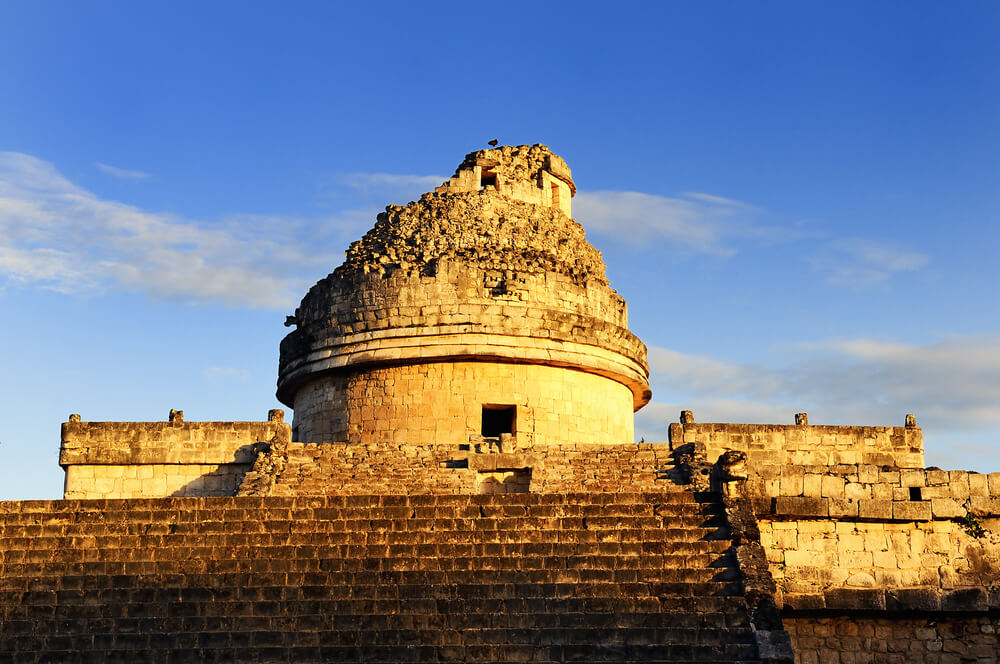
The top of Kukulcán Temple.
How and When to Experience Chichen Itza
The Mayan ruins of Chichen Itza are located approximately two and a half hours from the main resorts of the Riviera Maya and Cancún. While the journey requires some travel time, it's absolutely worth it for this once-in-a-lifetime experience. The most convenient and safest way to visit is by booking a guided tour.
There's no bad time to discover the wonders of the Mayan ruins of Chichen Itza, but November through April is generally considered the best time to visit. During these months, you'll avoid the rainy season, enjoy comfortable temperatures, and maybe even catch the spring equinox at Kukulcán Temple.
There's no bad time to discover the wonders of the Mayan ruins of Chichen Itza, but November through April is generally considered the best time to visit. During these months, you'll avoid the rainy season, enjoy comfortable temperatures, and maybe even catch the spring equinox at Kukulcán Temple.
Respecting Chichen Itza for Future Generations
Visiting the Mayan ruins of Chichen Itza is just one of many ways you can experience Mayan culture in Mexico. When you visit these sites, remember that you're walking through a delicate historic environment that has stood for over a thousand years. The significance of Chichen Itza extends far beyond its role as a tourist attraction. It's a sacred site, a testament to human ingenuity, and an irreplaceable window into Mayan history and culture.