
_435x320?&)
Carnival in the Canary Islands? Discover how each island celebrates
While the Santa Cruz de Tenerife carnival is world famous, carnival in the Canary Islands differs from island to island. Here is what you need to know!
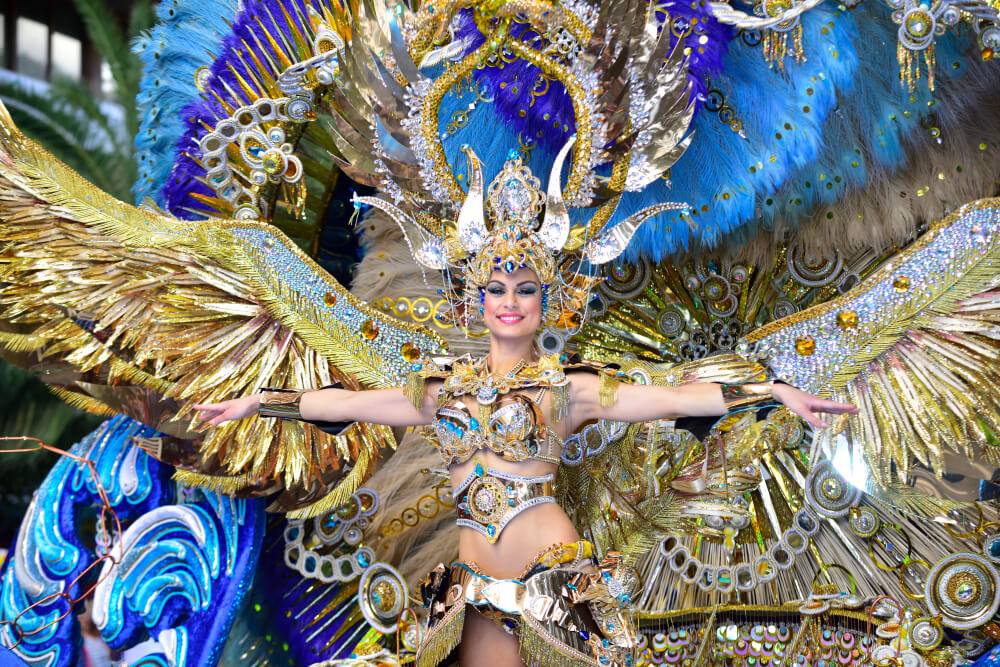
Carnival in the Canary Islands isn’t a single party, so much as a month-long glitter-bright fever dream that hops from island to island, timed around February-March, depending on the year. It starts with anticipation and the first burst of confetti as the elaborate galas select the carnival queen, then builds into a full-bodied celebration of escapism: masks, murgas (satirical song groups), comparsas (dance troupes), street parades and all-night dancing, typically timed around the run-up to Ash Wednesday. Each island delivers its own take on carnival season, each with a different theme, with islands like Tenerife and Gran Canaria being the most famous carnivals in the Canary Islands.
Tenerife, the largest carnival in the Canary Islands
If you can’t jet off to Rio for the carnival, your next best bet is the carnival of Santa Cruz de Tenerife. This Canary Islands carnival doesn’t do anything by halves. In 1987, Santa Cruz de Tenerife’s Carnival set a Guinness World Record when around 250,000 people packed into a plaza for an open-air concert by Cuban salsa singer Celia Cruz. Later, in 2019, that record was broken again, with the attendance record reaching 400,000 spectators. The Santa Cruz carnival kicks off with the Carnival Queen Gala, a televised all-towering headdresses-and-Swarovski-level-sparkle event, widely anticipated by locals and tourists alike.
In 1987, Santa Cruz de Tenerife’s Carnival set a Guinness World Record when around 250,000 people packed into a plaza for an open-air concert by Cuban salsa singer Celia Cruz
If you are on holiday in Tenerife during carnival, the key events include the cabalgata anunciadora (carnival procession) that kicks off the street parties, the first day of carnival, the coso apoteosis (grand parade), the entierro de la sardina (the burial of the sardine) and the final piñata weekend. Costumes are a must; the more satirical and wild, the better and prepare for full-on decadence and debauchery. Other cities host their own carnival in Tenerife, with Puerto de la Cruz hosting a comical drag race where men run through its cobbled streets at night in an event called Mascarita, ponte tacón (Honey, put on your high heels). Alternatively, Los Cristianos is another option in the south of the island, famous for its fairground rides and family atmosphere.
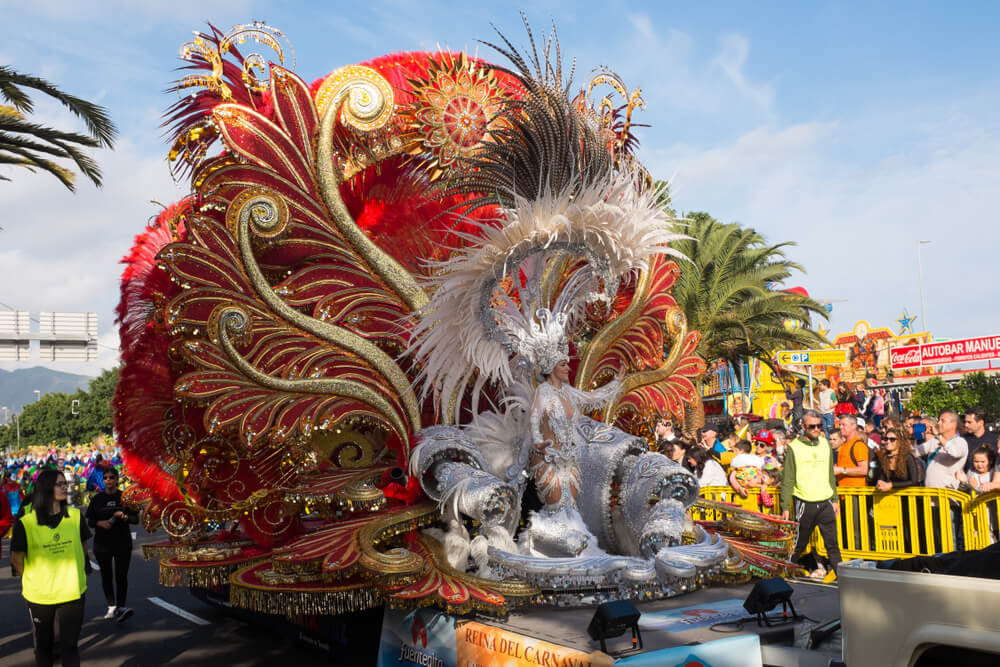
A carnival float in Tenerife’s carnival
Gran Canaria Carnival, Las Palmas and Maspalomas
If you are on holiday in Gran Canaria, you get to choose between the carnival in Las Palmas or the beachside Maspalomas carnival. Typically starting a little later than Tenerife’s celebrations, Las Palmas offers a bolder, cheekier and brilliantly theatrical take on carnival in the Canary Islands. This is the carnival with the Drag Queen Gala, a now-iconic event, broadcast on national, Spanish television, that began in 1998 and has become one of the Canary Islands’ most famous calling cards, boasting high-camp performances, athletic heels and a euphoric crowd. On the streets, the city runs on themed nights, open-air stages, parades and street parties that stretch from Las Canteras Beach to the charming neighbourhood of Vegueta. Just like Tenerife’s carnival, the carnival theme changes each year, with the stage sets and costumes bringing it to life in the most imaginative ways.
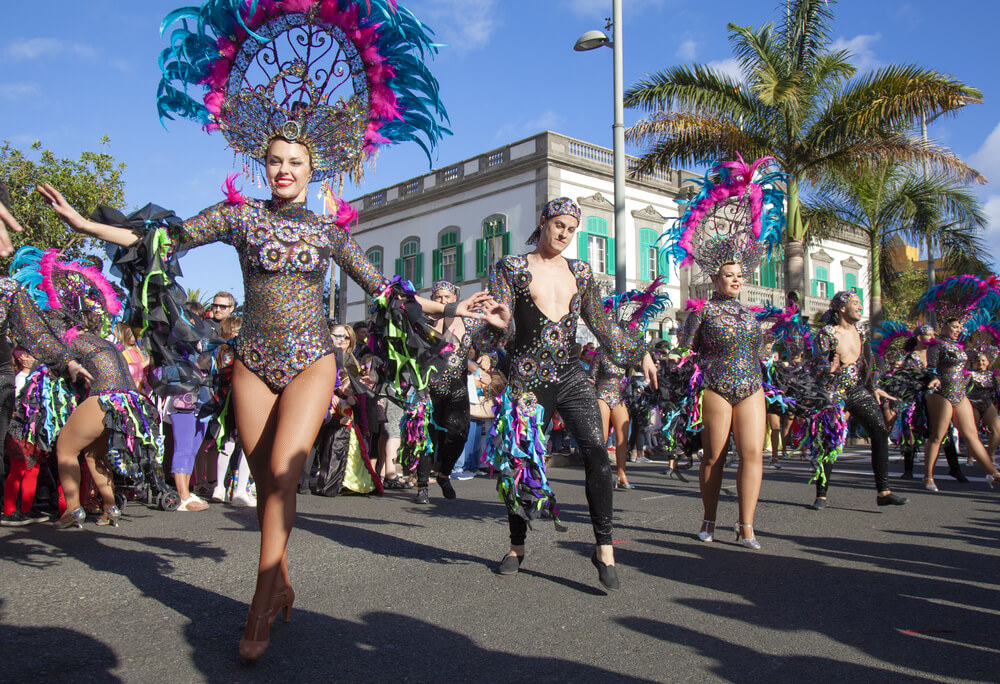
The Carnival in Las Palmas de Gran Canaria
In the south of Gran Canaria, Maspalomas welcomes a diverse crowd of revellers with its beachside celebrations. Expect a riot of sequins and sound, set against a backdrop of palm-lined avenues of Playa del Inglés. During the day, rondallas (string ensembles), street performers and drag queen parades entertain crowds, and by night, crowds flock to the area around the Yumbo Centre, where stages, shows and open-air revelry keep the momentum going long after dinner.
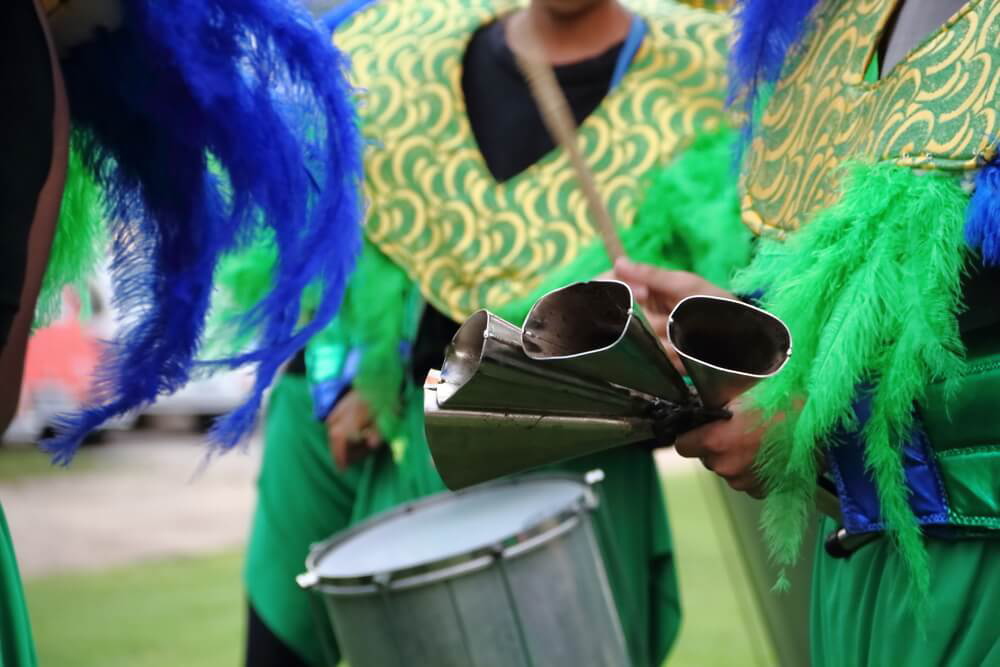
Music is a key part of carnival
Los Indianos, La Palma’s answer to carnival
In La Palma, carnival is less about sequins and glitter and more a celebration of the island’s heritage. Each year, on Carnival Monday, La Palma’s capital, Santa Cruz de La Palma, turns back the hands of time as locals and visitors dress in crisp white linen, guayaberas and straw hats, channelling (ironically) the islanders who once emigrated to Cuba and returned flaunting their newly attained wealth. Parasols bob above the crowd, vintage suitcases are clutched like props, and the odd cigar appears for dramatic effect.
Keep an eye out for La Negra Tomasa, the day’s most iconic figure
Keep an eye out for La Negra Tomasa, the day’s most iconic figure. Once she arrives at the port, Los Indianos gather to escort her down Calle Real, and the city tips happily into celebration, with music and dancing spilling through the streets. By early afternoon, the streets are pulsing with Cuban rhythms and salsa, and then the signature moment arrives, the infamous talcum-powder battle, when clouds of white dust billow through the avenues and everyone ends up powdered from head to toe, laughing, dancing, and looking like they’ve stepped out of a black-and-white film.
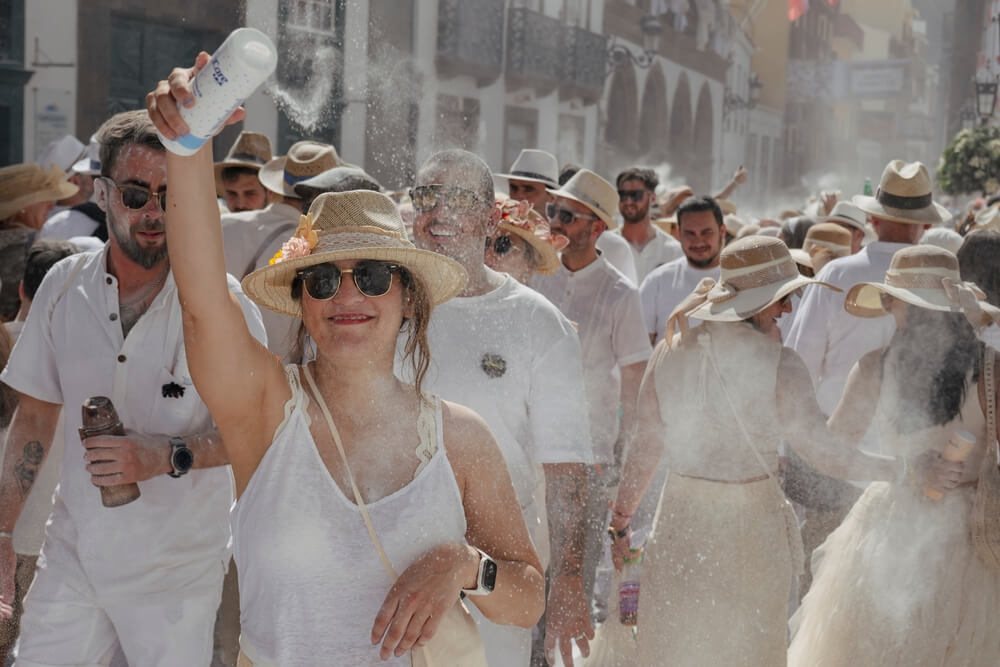
Los Indianos Carnival in La Palma
Carnival in Lanzarote: One of the oldest of the islands
Despite not being as well-known as others, Lanzarote’s carnival is actually one of the oldest. If you visit Lanzarote and are looking to experience carnival in the Canary Islands, start in the island’s capital, Arrecife. Here, traditional music groups known as the parrandas marineras de los buches entertain crowds as floats roll through the streets to the beat of comparsas and booming batucada, turning the city into a whirl of colour and celebration. Yet, the revelry doesn’t end there. Across Lanzarote, in Teguise, carnival keeps its more mischievous traditions alive with the diabletes, devil-costumed characters who stalk the streets in gleeful theatrical style.
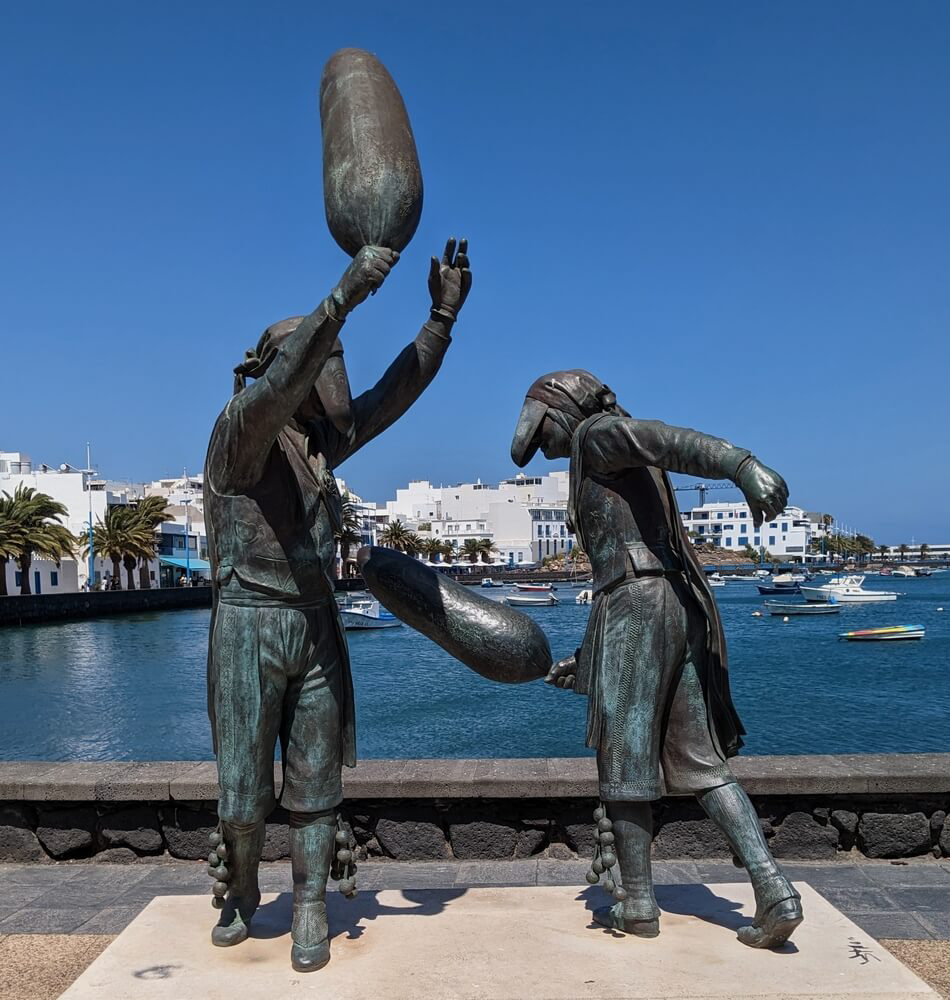
A statue in Arrecife of the Marineras de los Buches
Enjoy Carnival in Fuerteventura
Planning a break in Fuerteventura and keen to witness carnival in the Canary Islands? You are in luck. Puerto del Rosario’s carnival is where the island’s sense of humour really shows. Here, the Arretrancos, a gloriously chaotic “soapbox derby,” steal the show, yet what matters is not speed but imagination. The most absurd, most ingenious, most laugh-out-loud vehicle wins.
Swap the streets of Puerto del Rosario for the port as the action drifts seaward with the Achipencos, the watery counterpart
Swap the streets of Puerto del Rosario for the port as the action drifts seaward with the Achipencos, the watery counterpart. Carnival-goers launch brightly coloured rafts and compete for the most original design, turning the harbour into a floating parade of homemade contraptions that are as ingenious as they are slapstick. In addition to these two events, expect the usual galas, street parades and live music and dancing from the murgas and comparsas when in Fuerteventura for carnival.
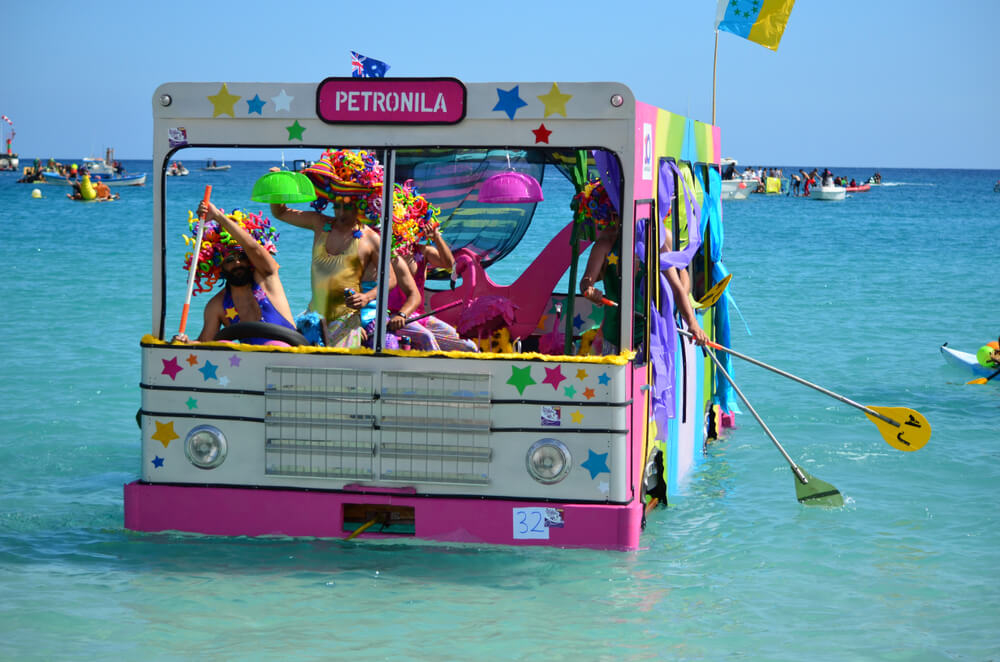
An Achipenco in the sea at Puerto del Rosario, Fuerteventura
Carnival in La Gomera is a quiet affair
If you want to experience the magic of carnival in the Canary Islands but cannot face the idea of battling the crowds, then La Gomera is an excellent choice. Rarely visited by tourists, this carnival, held in the island’s capital, San Sebastian, offers an authentic experience. One of the most noteworthy events is the Día de los Polvos de Talco y Añi, held on Carnival Monday. Carnival-goers dress in white and dance to the sound of orchestra music under a cloud of talcum powder. Celebrations surrounding this day are marked with colourful costumes, murgas, comparsas and lots of fun. Tempted? You can reach La Gomera very easily by air or ferry from all the Canary Islands, so if you are in the mood for some island hopping, this is a great spot.
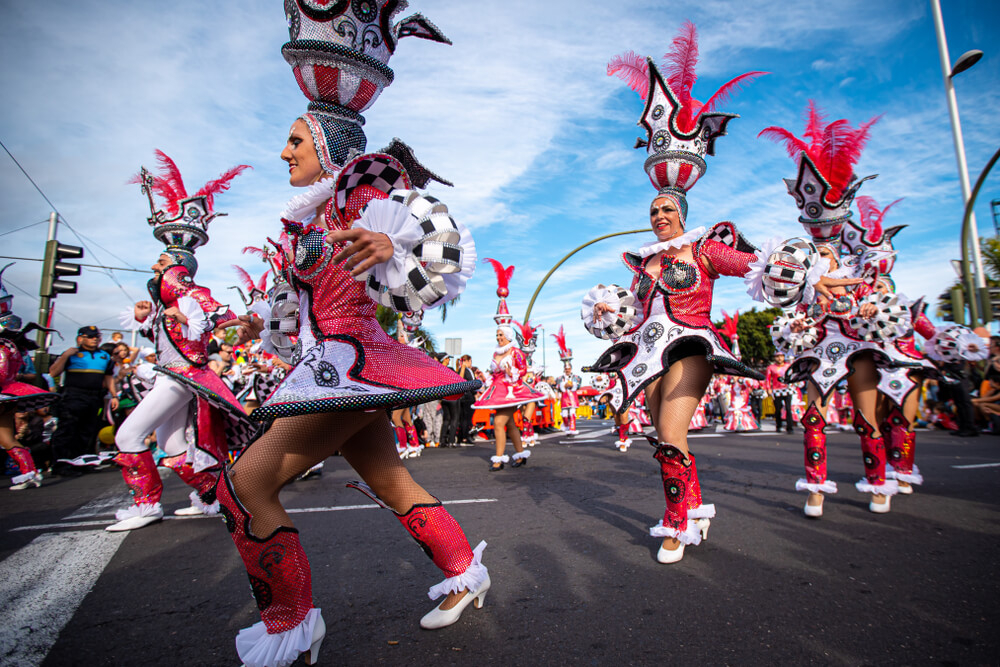
Fancy dress is an essential part of carnival
Hop over to El Hierro for carnival
The smallest of the Canary Islands by area and a UNESCO Biosphere Reserve, El Hierro serves up a peculiar take on carnival in the Canary Islands. One of the unmissable events takes place on Shrove Tuesday and is known as the Fiesta de los Carneros, or Los Carneros de Tidagay. Hundreds of youngsters flock to Frontera to reenact an almost lost tradition of covering their bodies in black coal dust, dressing up in faux-fur hides to become rams and terrorising carnival-goers into joining in the fun. Just like La Gomera, the island boasts excellent connections to the other Canary Islands, so there really is no excuse not to join the carnival fun.