
_435x320?&)

Our Guide to Whale Watching in the Dominican Republic
A Visit to Punta Cana During Whale Season in the Dominican Republic Is Your Best Bet for Sighting Humpback Whales

Every year from mid-December through April, thousands of humpback whales travel over 5,000 miles in their seasonal migration from the feeding grounds in the North Atlantic to the protected shallow reefs and warm waters off the coast of the Samaná Peninsula. Plan your visit to Punta Cana during peak season for whale watching in the Dominican Republic for a chance to observe these magnificent mammals in their natural habitat.
The humpbacks’ breeding season is the best time for whale watching in Punta Cana as the pods gather to mate, give birth, and nurse their young. Watching this endangered species breach, tail-slap, and perform acrobatics is truly one of life’s most unforgettable experiences.
Watching this endangered species breach, tail-slap, and perform acrobatics is truly one of life’s most unforgettable experiences
And Punta Cana is also the perfect point of departure from which to venture out into Samaná Bay, Navidad Bank, or Silver Bank, where you’ll even have a chance to swim with whales in the Dominican Republic.
During whale season in Samaná, you’ll see not just full-grown humpbacks, but also newborn calves swimming under their mothers’ watchful gaze. You’ll also sight plenty of male humpbacks battling for the attention of prospective mates, which is the main reason behind much of their flashier behavior like leaping out of the water into mid-air (a move known as “breaching”) or lobtailing (flapping their flukes to make a thunderous clap). Not to mention the ethereal song of the humpback whales that these fascinating mammals are known to sing during mating season.
Those of you who are unable to plan your visit during whale season in the Dominican Republic can rest assured, because other cetaceans drawn to the area, like bottle nose dolphins and or the Antillean manatee may be sighted year-round.
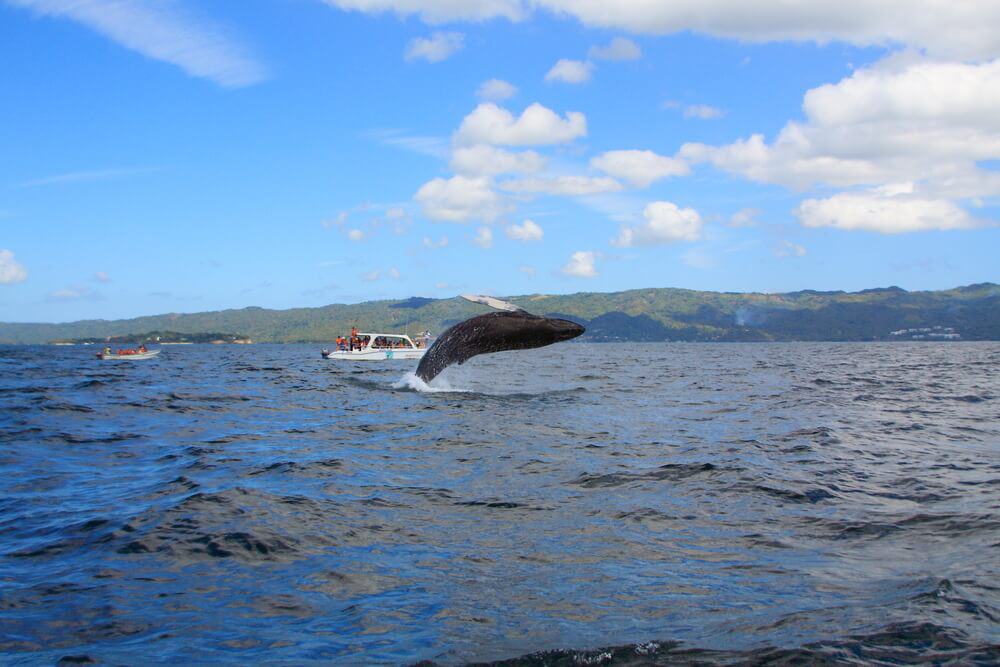
During whale season in the Dominican Republic, the northeast coast is a key breeding ground for humpback whales
Why Observe Whale Migration in the Dominican Republic?
Observing cetaceans in their natural habitat is just one of the many memorable experiences Punta Cana has to offer, but whale season in the Dominican Republic bears special mention. With its privileged location at the confluence of the Atlantic Ocean and the Caribbean Sea, the Dominican Republic is a key point on the humpback whales’ itinerary.
With its privileged location at the confluence of the Atlantic Ocean and the Caribbean Sea, the Dominican Republic is a key point on the humpback whales’ itinerary
The Navidad and Silver Banks Marine Mammals Sanctuary, off the coast of Samaná, has been one of the main breeding grounds for humpbacks for the past 50,000 years. So, humpback whale season in the Dominican Republic is truly a spectacle to behold and one of the essential experiences the Dominican Republic has in store for visitors.
Some conservationists point to the benefits of whale watching in helping to educate participants on whale behavior, ecology, and conservation needs. Many Samaná whale-watching tours include an educational component and are offered by certified naturalist guides who are qualified to interpret whale behavior. This makes a Samaná Bay whale-watching tour a must for any eco-adventurer visiting the Dominican Republic.
Another benefit of whale watching in the Dominican Republic is that, by imparting an economic value on this endangered species, the activity helps promote conservation efforts and serves as an added incentive for locals to ensure the animals’ welfare.
The Dominican Republic was the first country in the Caribbean to start offering whale-watching tours in the early 1980s
The Dominican Republic was the first country in the Caribbean to start offering whale-watching tours in the early 1980s. Thanks to this experience, the country is now known for its good whale-watching practices and whale tours in the Dominican Republic are considered a model for other Caribbean destinations.
In the Dominican Republic, whales are treated with the utmost respect. The waters of the humpback whale sanctuary are virtually off-limits to any boats other than whale-watching vessels, and there is a strictly regulated cap on the number of whale-watching permits allotted each year. This ensures that the whales feel safe and comfortable. In fact, they are so at ease and friendly that it’s even possible to go snorkeling with whales in the Dominican Republic and enjoy one of the most amazing aquatic adventures possible during your stay in Punta Cana.
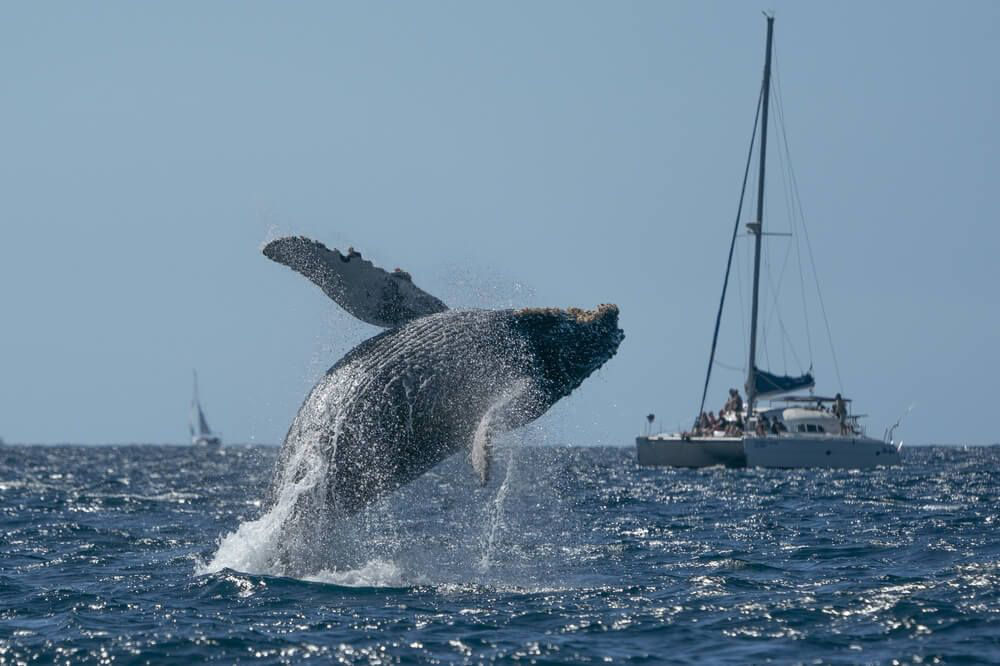
Samaná Bay is a strategically location for humpback whale migration in the Dominican Republic
The Best Options for whale watching in the Dominican Republic
If you’re staying in Punta Cana, you’ll find a varied selection of whale-watching tours on offer during whale season in Samaná. Half-day excursions to the Samaná sanctuary last from between 3 and 4 hours—depending on conditions at sea—, while full-day tours run between 6 and 8 hours. Most tours include a lunch stop and some beach time, so remember to bring your bathing suit. And whichever you pick, make sure you take sun screen and, of course, your camera; a whale-watching tour of Samaná Bay is sure to be a memorable excursion.
Another—pricier—option for whale watching in the Dominican Republic is booking a live-aboard tour to Silver Bank. This 649-square mile underwater carbonate platform is part of the Marine Mammal Sanctuary and lies about 56 miles offshore. Silver Bank is home to the largest seasonal population of humpbacks in the North Atlantic, drawing between 5,000 and 7,000 specimens during peak whale season in the Dominican Republic.
Silver Bank is home to the largest seasonal population of humpbacks in the North Atlantic, drawing between 5,000 and 7,000 specimens during peak whale season in the Dominican Republic
Although whale-watching is not a programed performance, the chances of spectacular sightings here is quite high. And these longer tours offer passengers the opportunity to experience passive in-water whale encounters for those eager to swim with humpback whales in the Dominican Republic.
If for any reason you are unable to book a boat excursion, the free on-land observatory at Punta Balandra is another great option for Samaná whale watching. The site offers amazing panoramic views of the Samaná Peninsula, and it’s estimated that 80% of the humpback whale population passes through here on its way to Samaná Bay.
And whether you choose to observe whales from dry land or make the voyage to Silver Bank, the Museo de las Ballenas—“whale museum”—in Samaná is a must-visit.
The facility features an awe-inspiring 40-foot humpback whale skeleton found in 1993. This attraction is the perfect way to prepare for or follow up on any Samaná whale tour and it’s also a great alternative if for some reason you’ve missed humpback whale season in the Dominican Republic.
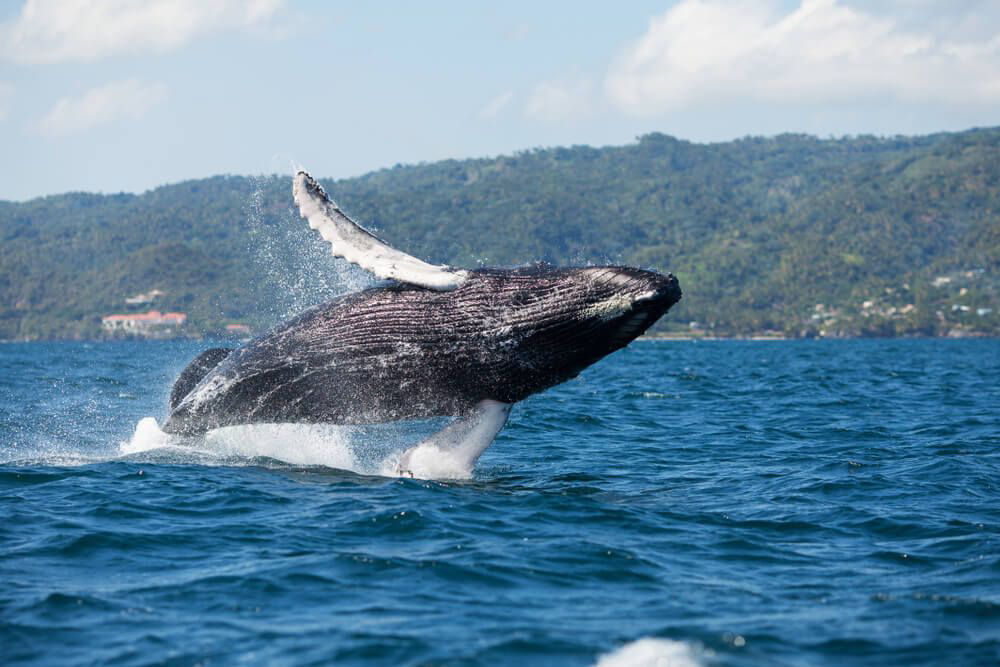
Take a whale-watching tour in Punta Cana to learn more about these fascinating creatures when you visit the Dominican Republic
Fun Facts about Dominican Republic Whales
Whichever experience you choose, you’ll learn plenty about whale migration in the Dominican Republic. But here are a few things to know before you book your vacation in Punta Cana:
Acrobats of the sea.
Humpback whales will occasionally launch themselves right out of the water—making a huge splash—in a behavior called breaching. Some researchers believe breaching helps whales shake off barnacles and other parasites. Others think humpbacks are just having fun! You’ll have ample opportunities to observe this behavior during whale season in the Dominican Republic.
A long commute
Dominican Republic whales swim epic distances during their annual migration between the feeding in the Northern Atlantic and breeding grounds of the coast of the Samaná Peninsula. Some travel as far as 5,000 miles each way in a journey that lasts between four to eight weeks.
Marine giants
On average, humpback whales in the Dominican Republic are about the size of a school bus, weighing in at between 40 and 100 tons (80,000-200,000 pounds!) and measuring between 48 to 62 feet from the top of the head to the tip of the fluke.
Picky eaters
On average, humpback whales in the Dominican Republic are about the size of a school bus, weighing in at between 40 and 100 tons (80,000-200,000 pounds!) and measuring between 48 to 62 feet from the top of the head to the tip of the fluke.
Underwater music
The humpbacks’ haunting, complex songs can last up to an hour and can be heard from distances up to 20 miles away.
And this is it as far as our guide to whale watching in the Dominican Republic. There's still lots more to learn about humpback whales, but this should be enough to get you started on your adventure. Just be forewarned that, once you discover the wonders of these enigmatic creatures, you may very well be hooked and end up deciding to embark on a whale-watching world tour.
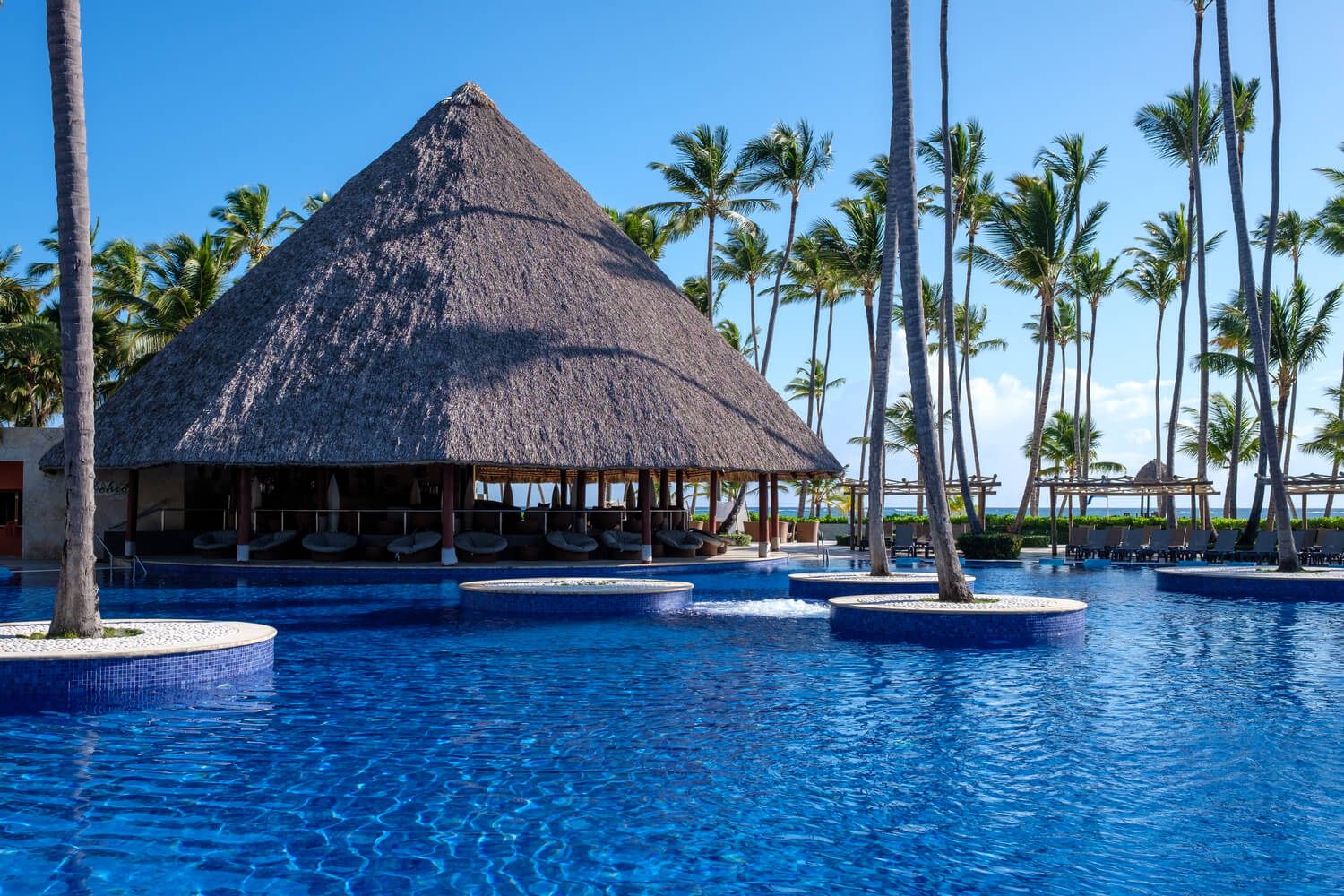
The Barceló Bávaro Grand Resort is the perfect place to stay in Punta Cana for whale watching