
_435x320?&)

Calendars, pyramids, and ruins: How Mayan Culture has shaped Mexico
Uncover fascinating things you didn’t know about Mayan culture while you journey through Mexico’s Riviera Maya
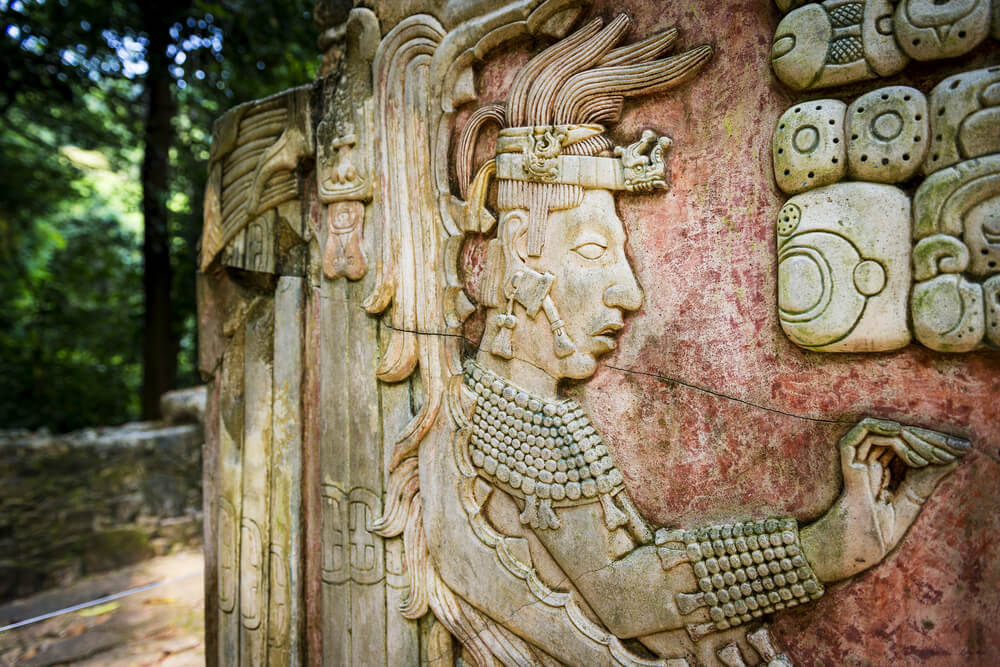
Latin America is famous for its ancient civilizations. From the Incas to the Aztecs, vast empires were formed, giving rise to a culturally rich society full of traditions and iconic landmarks. However, when it comes to Mayan culture, something interesting occurred. Instead of a united empire, the Maya people were a diverse group, speaking different languages, brought together by the common language Proto-Mayan, from which many languages evolved. Their story has fascinated travelers for decades, and sacred Mayan sites are a hotspot for visitors not only across the Mexican states of Yucatán, Campeche, Quintana Roo, Chiapas, and Tabasco, but also in Guatemala, Honduras, Belize, and El Salvador. The Mayan influence can be felt far and wide; yet, for a truly authentic experience, travel to the Riviera Maya, the heartland of Mayan civilization in Mexico.
Who were the Mayans?
Before you venture off exploring, it is important to understand a brief history of the Mayan civilization. The origins of ancient Maya culture trace back to around 8000 BC, with the development of their advanced society beginning around 2000 BC. Their culture evolved through several stages, reaching its peak during the Classic Period (250–900 AD), when most of their iconic architecture and art were created.
Around 900 AD, many major centers in the central lowlands were mysteriously abandoned, a phenomenon still not fully understood. While these interior cities fell into ruin, new ones emerged in the north, such as the renowned Chichén Itzá. By the time the Spanish arrived, many ancient cities were already overgrown and forgotten, with some only rediscovered in the 20th century.
Although numerous archaeological discoveries have been made, Maya culture has remained largely enigmatic to scientists
Although numerous archaeological discoveries have been made, Maya culture has remained largely enigmatic to scientists. The Mayan script, for instance, was not deciphered until the latter half of the 20th century, and this breakthrough has challenged many long-held beliefs, such as the notion that the Maya were a peaceful civilization. As a result, research in this field is ongoing and continues to uncover new insights.
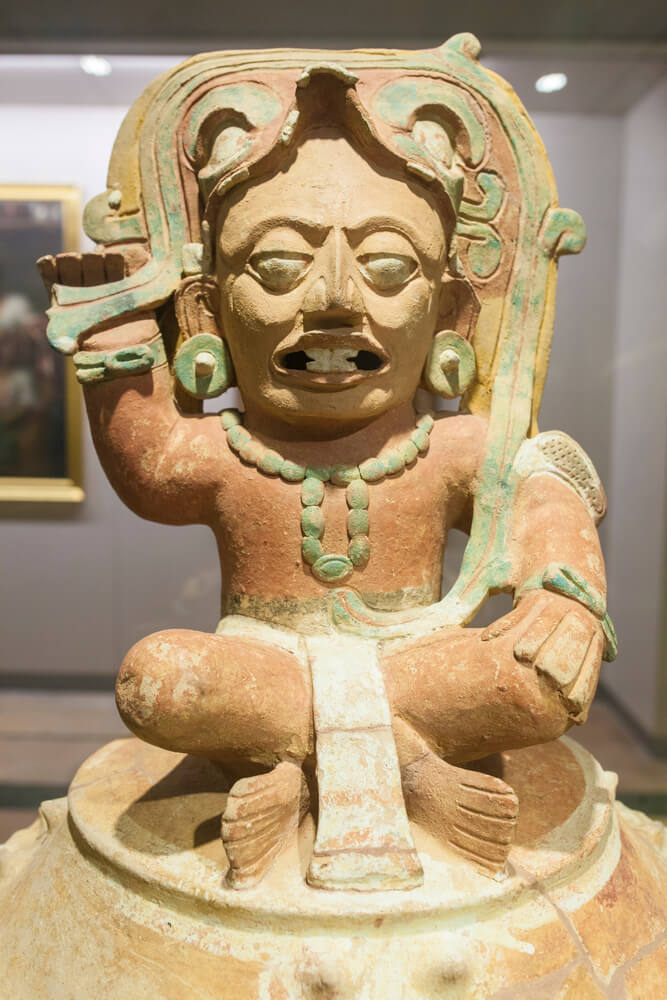
Statue of the sun god Kinich Ahau
The legacy of the ancient Maya
Highly regarded as one of the most advanced and developed civilizations in pre-colonial America, the Mayan culture carries a rich cultural legacy to this day. The Maya had a complex social structure, advanced scientific knowledge, particularly in astronomy, skilled craftsmanship, and managed trade routes that extended to distant regions beyond their own territory. These stand among the most remarkable achievements of Maya culture:
Mathematics
Based on a vigesimal (base-20) number system, the Mayan number system was capable of representing very large numbers with just a few symbols. This quality came in handy when they created their complex calendar system (see below), which involved vast time cycles. Yet, what made Mayan mathematics truly stand out was its use of a place-value system that included a symbol for zero. While it's possible the Maya were the first civilization to develop a functional zero, unfortunately, this cannot be 100% proven.
Astronomy and calendar
While the Mayan calendar is worthy of recognition in its own right, in 2012, it gained international attention after the prediction of the world’s end. In reality, the Maya conducted astronomical observations primarily for religious and prophetic purposes, to forecast future events and align their rituals accordingly. Their astronomical knowledge was so advanced that, at the time of first contact with Europeans, their calculations were more accurate than those in the Old World.
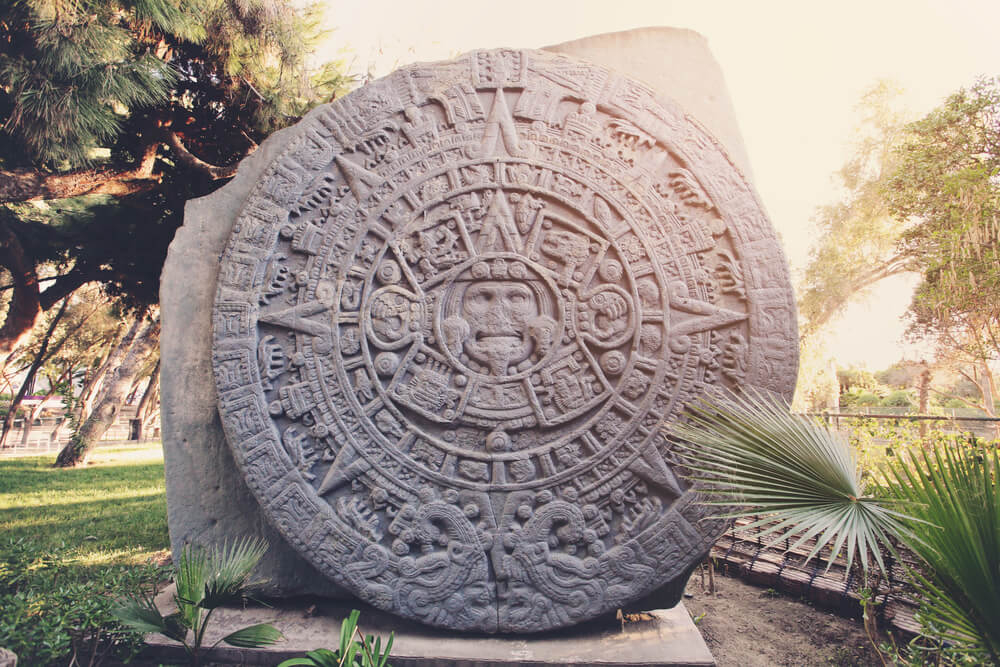
The Mayan calendars were always represented in circular form
The ancient Mayan language
Another great legacy of the Mayans is their language, considered by many to be the most advanced writing system in pre-colonial America. Unlike other cultures that relied solely on pictograms, the Maya created a logosyllabic script combining logograms (symbols representing words or meanings) with syllabic symbols (phonetic sounds).
The Maya created a logosyllabic script combining logograms (symbols representing words or meanings) with syllabic symbols (phonetic sounds)
This allowed them to produce more complex texts than other writing systems in the region. However, tragically, only four authentic texts survive today as the large majority were burnt by the Spanish during the conquest. Despite this, it is still possible to see Mayan symbols and writing preserved forever on buildings and various objects such as ancient Mayan pottery.
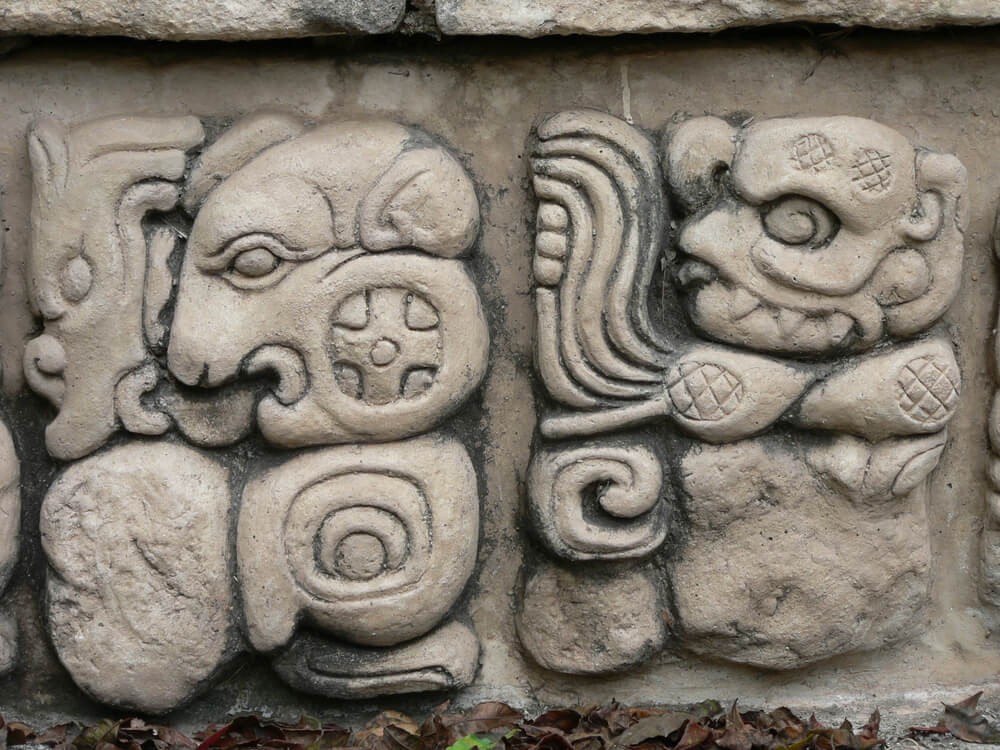
Mayan symbols
The architecture of the Mayan civilization
Throughout their existence, the Mayans built large metropolises featuring monumental structures like palaces and temples, many of which still stand today. Their architecture was elaborately adorned with reliefs and murals, and was so refined that distinct regional styles can be identified. Yet one noteworthy element of Mayan architecture is the inclusion of observatories and the alignment of temples with celestial bodies, especially Venus, which held great significance in Maya cosmology.
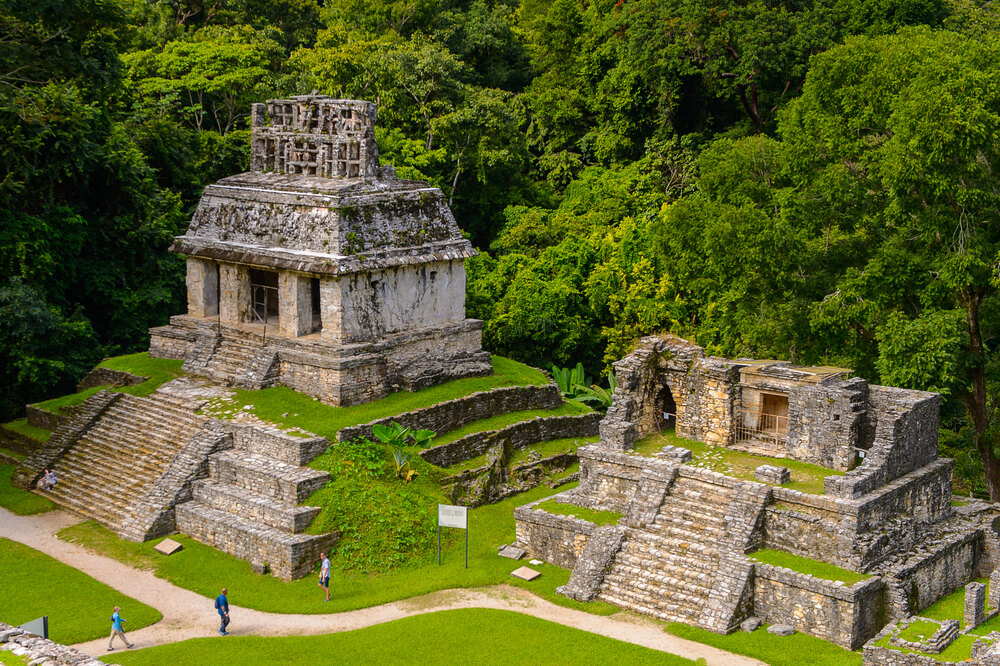
The archeological site of Palenque
Discover the greatest Mayan ruins on your travels
Across the Mayan cultural region, a long list of Mayan ruins has been created thanks to endless archaeological excavations. Yet, many still remain unexplored. Among the most significant and accessible sites are Chichén Itzá, Palenque, Uxmal, Comalcalco, and Yaxchilán in Mexico. If you are on holiday in Honduras, you can discover Copán. Yet, for those travelling to Guatemala, the breathtaking Tikal is a must-see.
Chichén Itzá, located in Mexico’s Yucatán Peninsula, is one of the most frequently visited Maya sites
Chichén Itzá, located in Mexico’s Yucatán Peninsula, is one of the most frequently visited Maya sites, thanks to its proximity to coastal tourist resorts and its iconic Temple of Kukulkan. This pyramid, dedicated to the Feathered Serpent deity, is renowned for its architectural precision: during equinoxes, a shadow resembling a serpent appears along its steps, an impressive demonstration of the Maya’s astronomical knowledge and alignment of their structures.
Traveling to El Salvador? Another remarkable site is Joya de Cerén, often referred to as the "Pompeii of the Americas." Buried under volcanic ash around 600 AD, it is unique in preserving traces of everyday Maya life. In contrast to other sites, which mostly feature the monumental architecture of the elite, Joya de Cerén offers a rare glimpse into the lives of common people.
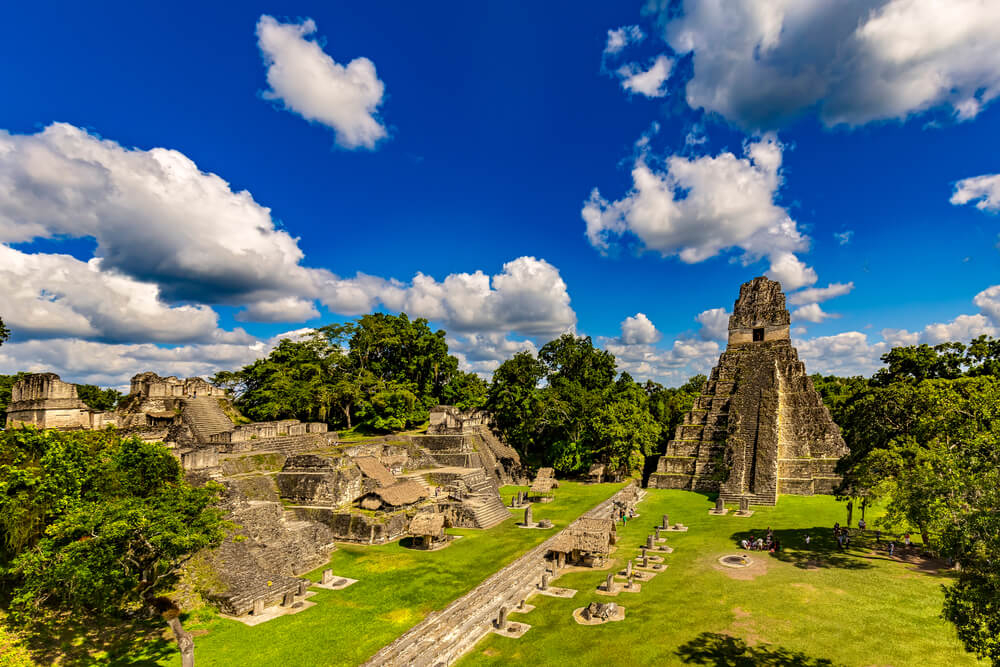
The archaeological site of Tikal
What is Maya culture like today?
It may be easy to think that the arrival of the Spanish marked the end of Mayan culture. Yet, since the Spanish struggled to control the region, the last of the Mayan cities fell in 1697. The remaining Mayans packed their belongings and headed for the rural villages, living autonomously, away from Spanish rule. The result? Mayan traditions, customs, and languages never fully disappeared, instead being pushed underground. Today, more than 30 Mayan languages are spoken by over six million people living in Guatemala, Belize, and Mexico.
Maya people have an enduring spirit and are keen to keep their culture alive
Maya people have an enduring spirit and are keen to keep their culture alive. This can be seen in traditional clothing, regional cuisine, and local festivals. If you are visiting Mexico during the Day of the Dead festivities in Riviera Maya, you will notice that the celebration is known as Hanal Pixán, reflecting ancient Maya practices. The Mayan influence even stretches to sports, with the ancient Mesoamerican ball game living on in the modern sport of Ulama, still played in parts of Mexico. So when visiting Central America, travelers can experience not only the legacy of the ancient Maya but also a vibrant, living Maya culture that continues to thrive today.
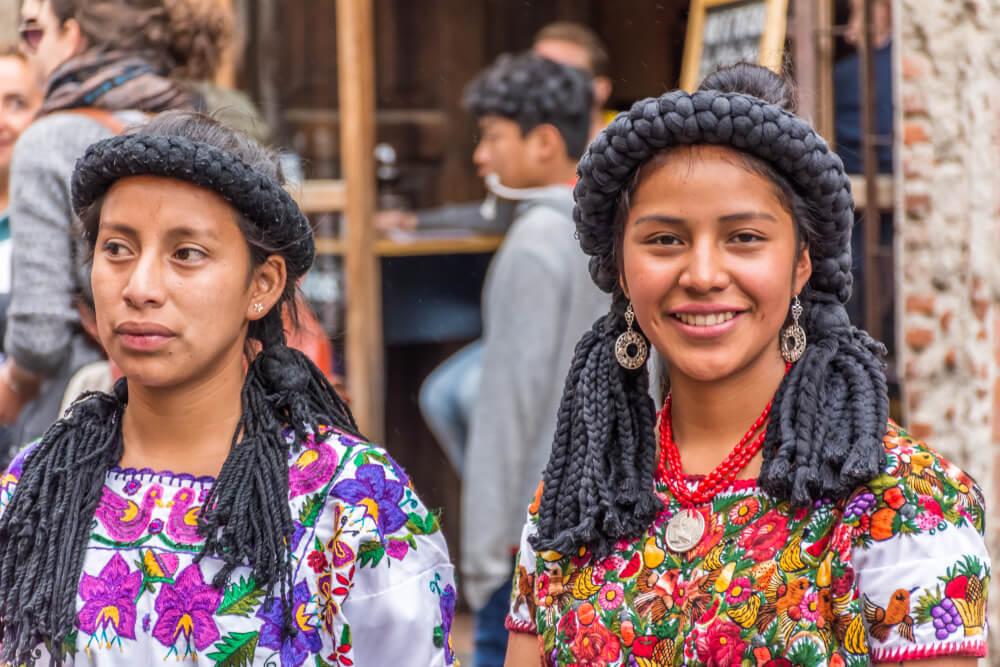
Mayans in traditional dress