
_435x320?&)
Tenerife’s wild side: A journey through Teide National Park
It looks like Mars, but it’s just a short drive from your hotel: discover the surreal beauty of Tenerife’s Teide National Park, Spain’s highest peak
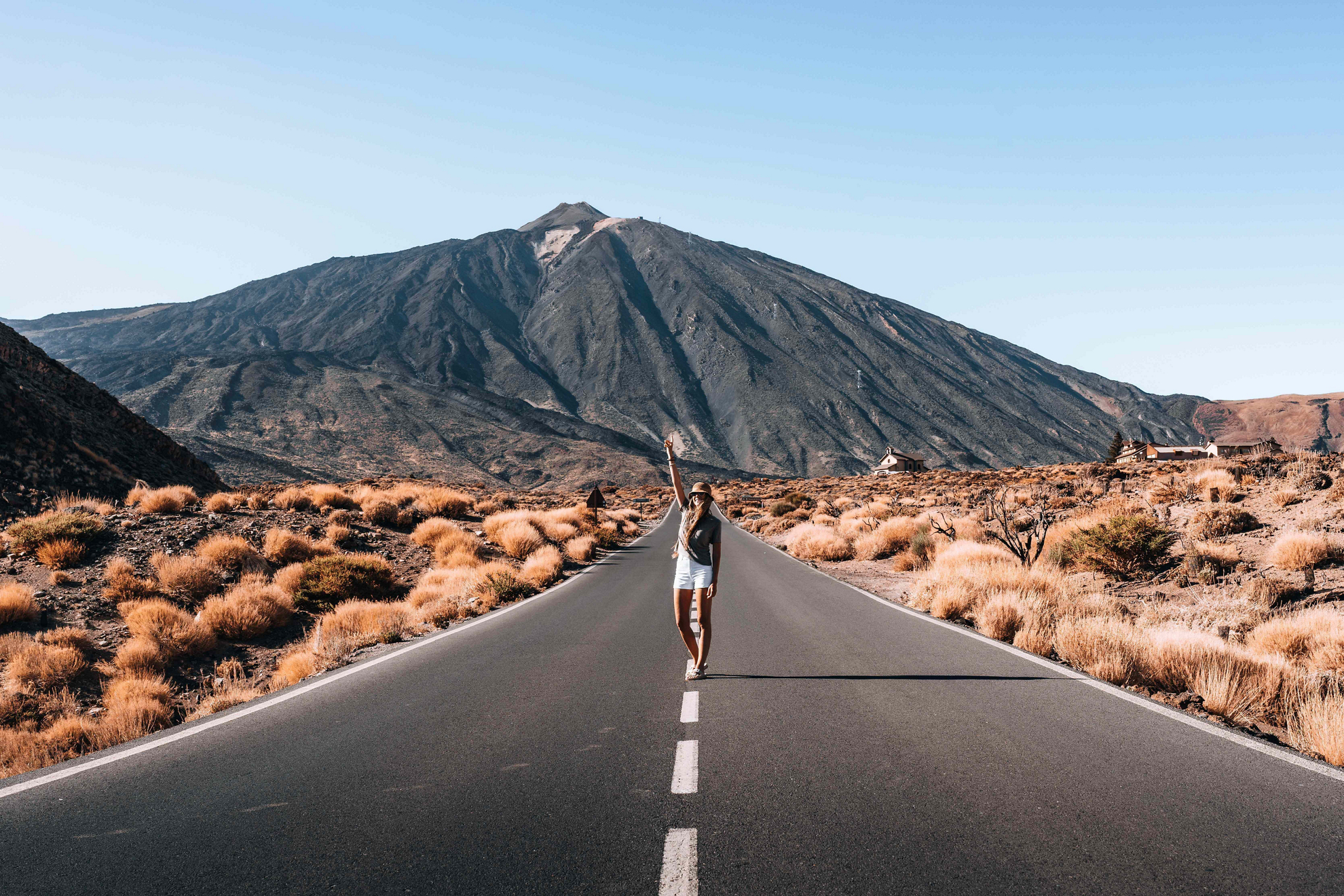
A national park since 1954 and a UNESCO Heritage Site since 2007, the Teide National Park is a must-visit during your holiday in Tenerife. Rising dramatically above the clouds, Mount Teide, Spain’s highest peak, is less of a mountain and more like a glimpse into life on Mars. A visit to the Teide National Park isn’t something to rush.
Mount Teide, Spain’s highest peak, is less of a mountain and more like a glimpse into life on Mars. A visit to the Teide National Park isn’t something to rush.
It is a place that silences you on arrival, where colour, texture and the air itself shift with every twist and turn. This vast, high-altitude wilderness of lava fields, lunar valleys and twisted rock formations spreads across nearly 19,000 hectares and acts as a reminder of nature’s power. Considered the spiritual and geographical epicentre of the Canary Islands, a trip to Teide is something all visitors should add to their travel list when in the area.
Getting to Teide National Park
Since this is a major landmark, all routes in Tenerife lead to Teide. Yet, the easiest way to enjoy the national park is either with a guided tour or driving up in a rental car. However, for those with a keen sense of adventure, there are a number of bus routes that take visitors to key areas in the Teide National Park.
Teide by car
Hiring a car? The drive from the south of the island via the TF-21 from Los Cristianos unveils cinematic views. Or, you may choose to explore the majestic cliffs of Los Gigantes before taking the TF-38 towards El Teide. Heading up from the north? The TF-21 from La Orotava is a picturesque journey. Meanwhile, the route from La Esperanza in the northeast, along the TF-24, is often considered the most enchanting approach, offering a gradual ascent through misty forests until you break through a sea of clouds created by the trade winds.
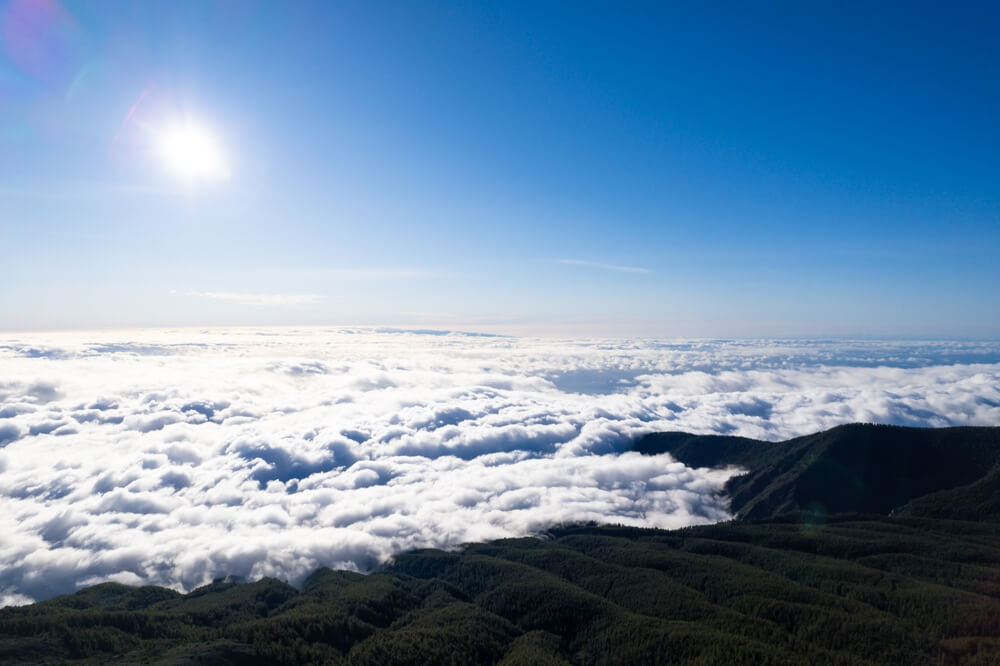
The sea of clouds typical of the Teide National Park
Catch the bus to El Teide
If you don’t fancy driving along the mountain roads, TITSA, the local bus company, offers transport to the national park. From the south, the 342 line goes from Playa de las Américas (Adeje to Mount Teide). From the north, the 348 line goes from Puerto de la Cruz (La Orotava). But, keep in mind, if you do plan to catch a bus, or guagua as locals call them, the routes are very windy and will put delicate stomachs to the test.
Booking a Mount Teide excursion?
Of course, one of the best ways to explore the park is with a professional guide who will pick you up and drop you off at your hotel. From a half-day hiking trip to a sunset and stars excursion, you are spoilt for choice when it comes to experiences in the national park. If you are staying at one of the island’s luxury hotels like the Royal Hideaway Corales Resort, you can even organise a bespoke, private tour for a truly exclusive experience.
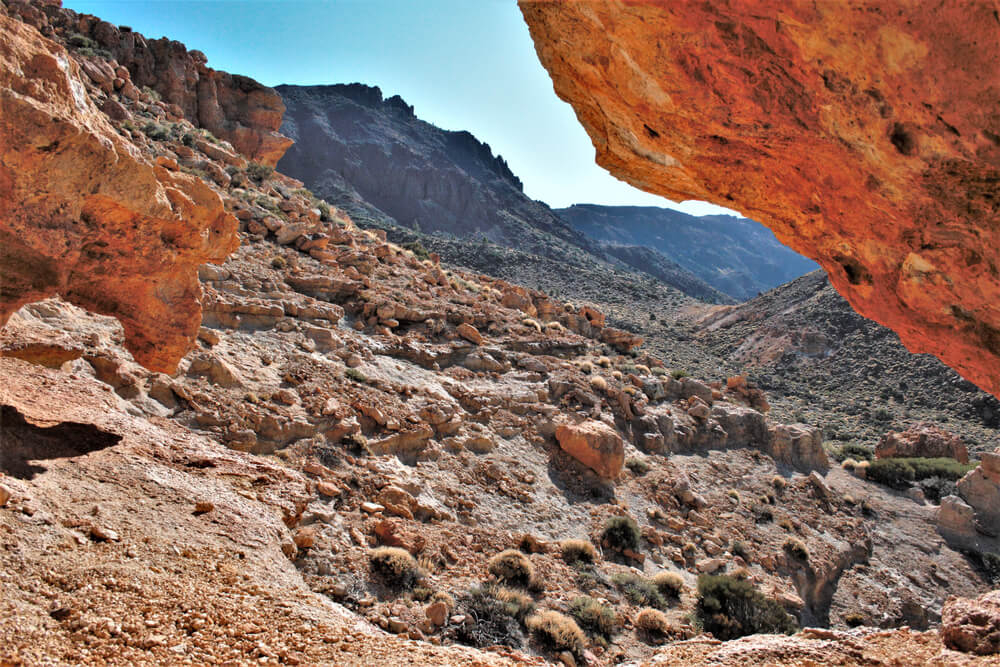
Las Cañadas del Teide
Mount Teide, Tenerife: The park’s protagonist
The undisputed highlight of the park is Mount Teide, the third-largest volcanic structure in the world, measuring 3718 metres in height. It is thought to be a young volcano, at 600,000 years old and from the top it is possible to see the other Canary Islands. Accompanying El Teide, the national park comprises a large caldera known as Las Cañadas del Teide, Montaña Blanca and Pico Viejo (or Montaña Chahorra).
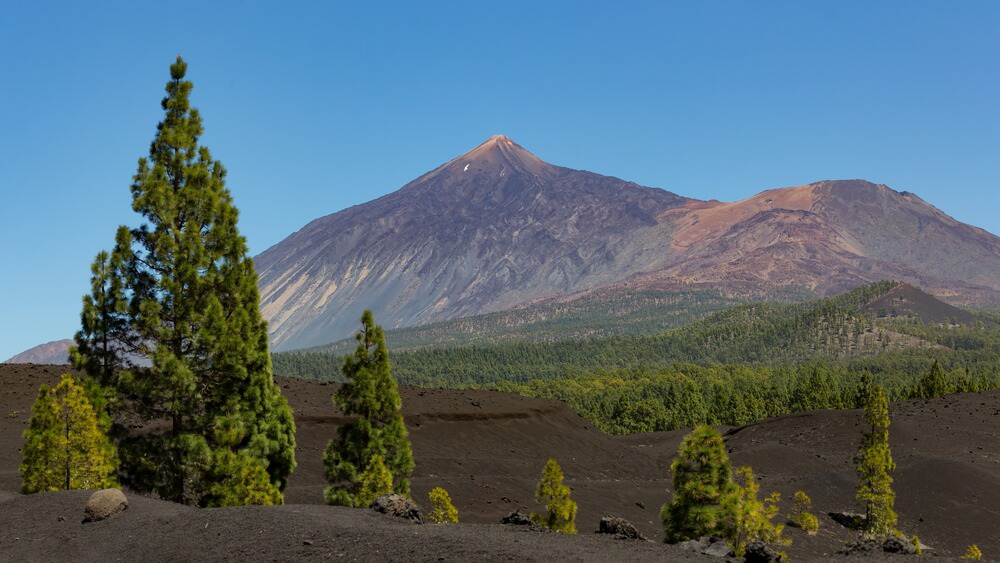
Mount Teide and Pico Viejo
Flora and fauna in the park
Amidst the stark beauty of the park, 139 recorded plant species survive in this high-altitude wilderness. There is one, however, that stands out for its beauty: the red bugloss (Echium wildpretti). With its towering crimson spike reaching up to three metres, this dramatic bloom has become the park’s natural emblem.
With its towering crimson spike reaching up to three metres, this dramatic bloom has become the park’s natural emblem
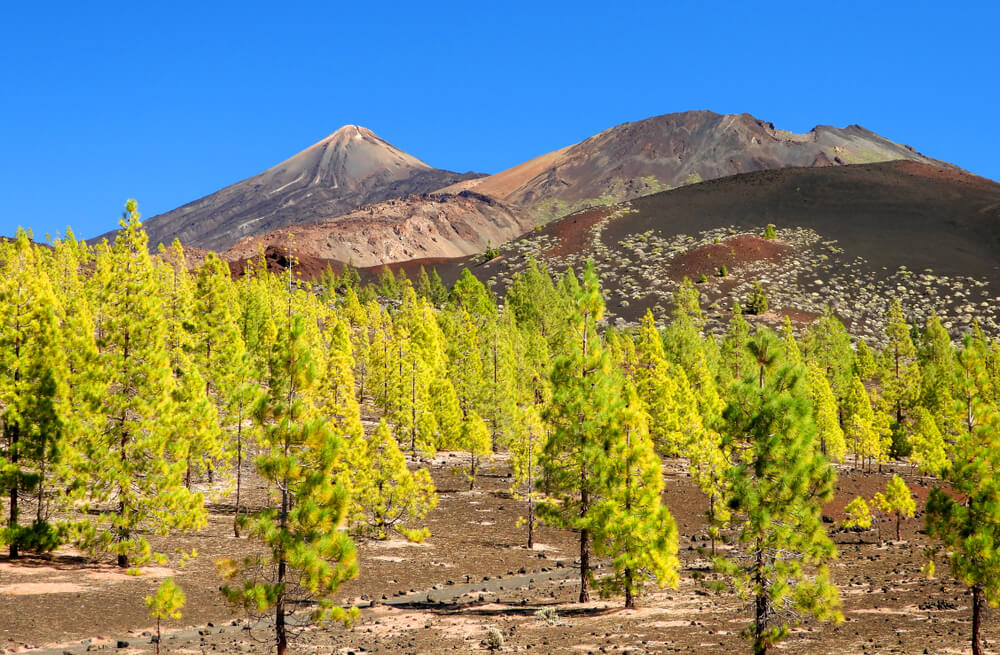
In fact, the island’s aboriginal people, the Guanches, used the roots of this plant to dye hides in deep earthy tones. Yet, out of all the vegetation in the park, only three tree varieties manage to thrive here: the Canary Islands juniper, pine and willow. These green silhouettes can be seen standing in poetic contrast to the black lava fields surrounding them; a view many slow travellers will enjoy.
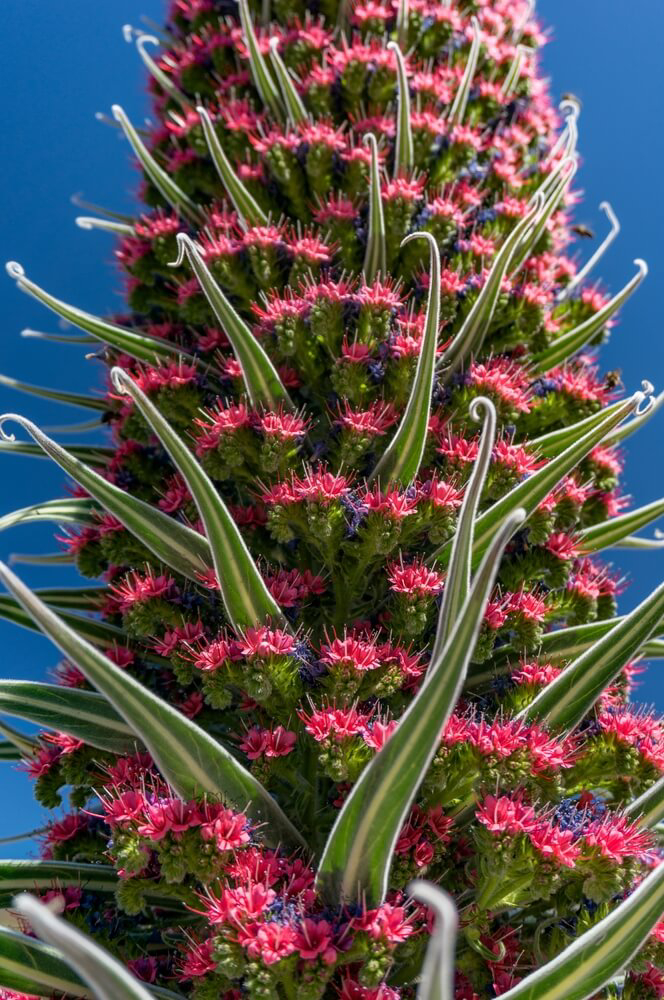
The Red Bugloss, or Red Tajinaste flower
Planning some Teide hiking? Save these routes
Many people mistake Teide for thinking it's all about the summit. In truth, the entire national park is a natural wonder from the folds in the lava to the delicate flowers that bloom against all odds. There are over 40 marked trails to enjoy, each revealing a new side of the park. For first-time visitors, these two routes are a great starting point:
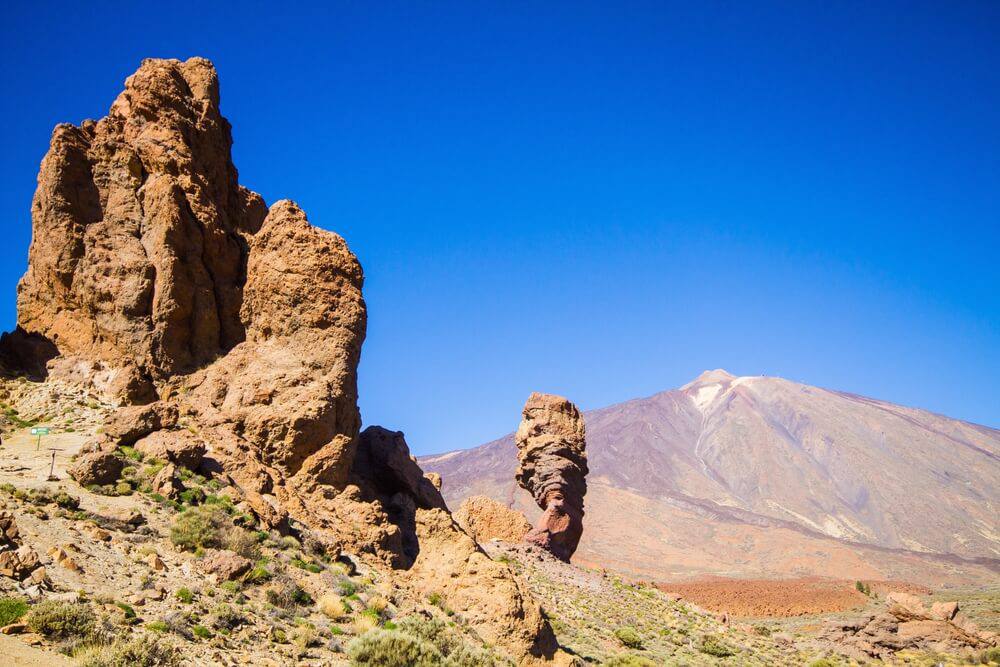
Roques de García
A two-hour circular walk through surreal rock formations, including the famous Roque Cinchado, once immortalised on the 1,000-peseta note. The views are staggering, especially in spring when the scarlet Tajinaste (viper’s bugloss) bursts into bloom.
Roques de García
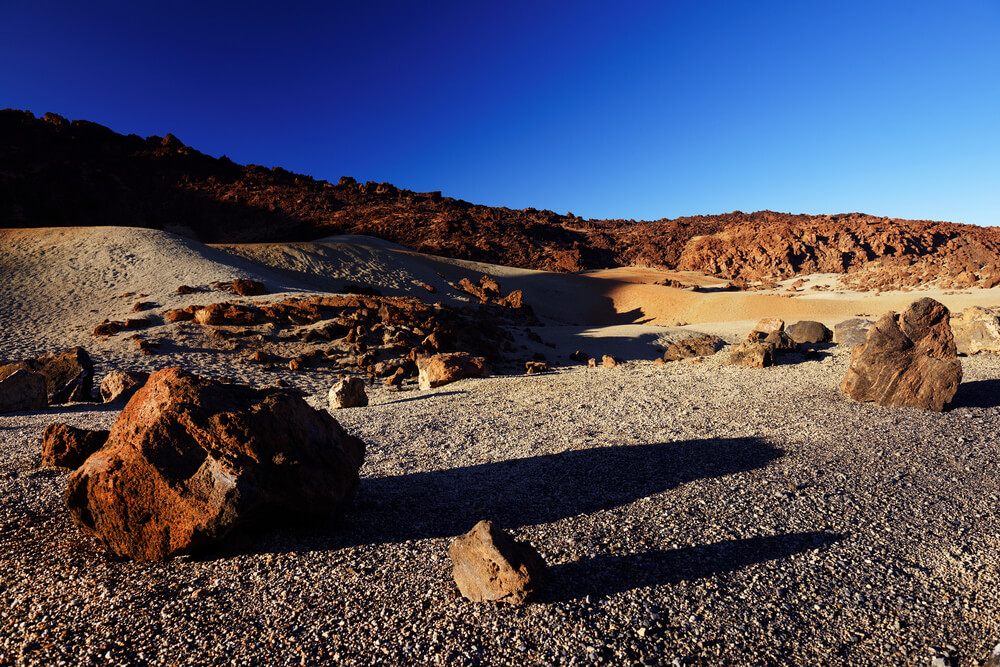
Arenas Negras
Starting from the El Portillo Visitor Centre, this gentle loop passes through golden broom fields into pitch-black volcanic earth and ends with sweeping vistas of deep gorges and the sea of clouds below.
Explore the lunar landscapes of Teide National Park
Rock climbing in Teide National Park
For those seeking adventure at altitude, rock climbing in El Teide National Park offers an experience unlike anywhere else in Spain. Perched more than 2,000 metres above sea level, the volcanic amphitheatre of Las Cañadas del Teide is a playground for adrenaline junkies and thrill seekers.
Climbers of all levels can find their challenge here, from the sport and bouldering routes of La Cañada del Capricho to the dramatic walls of Roque La Catedral, a towering volcanic monolith rising 120 metres above the plateau. You can even climb the north face of Roques de García, which offers spectacular views across Llano de Ucanca, one of the best stargazing spots in Tenerife.
The forest forms a ring around the base of the volcano
Taking it higher: The Teide Cable Car
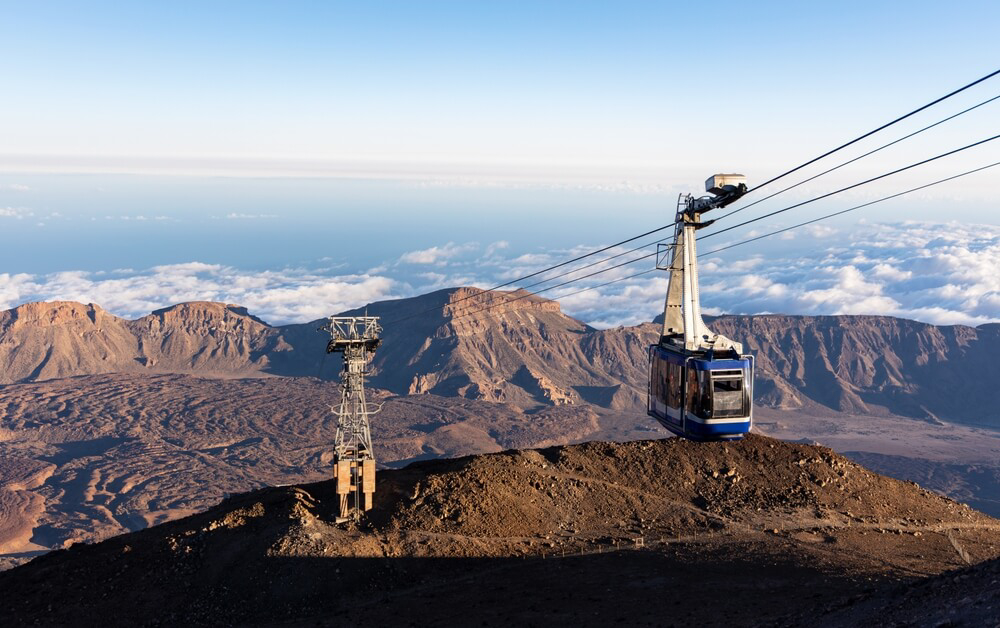
If climbing makes your legs turn to jelly at just the thought of it, the Teleférico del Teide, built in 1974, allows you to touch the sky- almost literally. This cable car whisks you from 2356 to 3555 metres across La Rambleta in eight minutes. From the upper station, three short trails fan out across the mountain’s upper slopes, each with views that make you forget about the altitude.
Trail number 10 leads to the summit itself, but you’ll need to apply for a special permit
Trail number 10 leads to the summit itself, but you’ll need to apply for a special permit, well in advance, to reach the very top of the volcano. Even without reaching the very top, the Pico Viejo and La Fortaleza viewpoints are some of the best lookout spots in the Canary Islands. Just remember, temperatures plummet, UV rays intensify and the lack of oxygen (around 20%) can make even short walks quite challenging. Be sure to check the weather too to make sure that the cable car is operational on the day of your visit.
Teide Cable Car - Teleférico del Teide
Climbing to the top of El Teide
If hiking to the top of the volcano is something that appeals, then you can either book onto an organised Mount Teide hiking tour or go it alone. If you go it alone, as mentioned before, remember to book your permit well in advance from the national park administration. This shouldn’t take long to organise, but this depends on the season; for example, in the summer months, it can take months.
While the cable car takes you to trail 10, which leads to the summit, many visitors choose to hike the entire route from start to finish. To do this, trail number 7 from Montaña Blanca is the best option. This route is very difficult, especially with the change in altitude and can take between 6 and 8 hours.
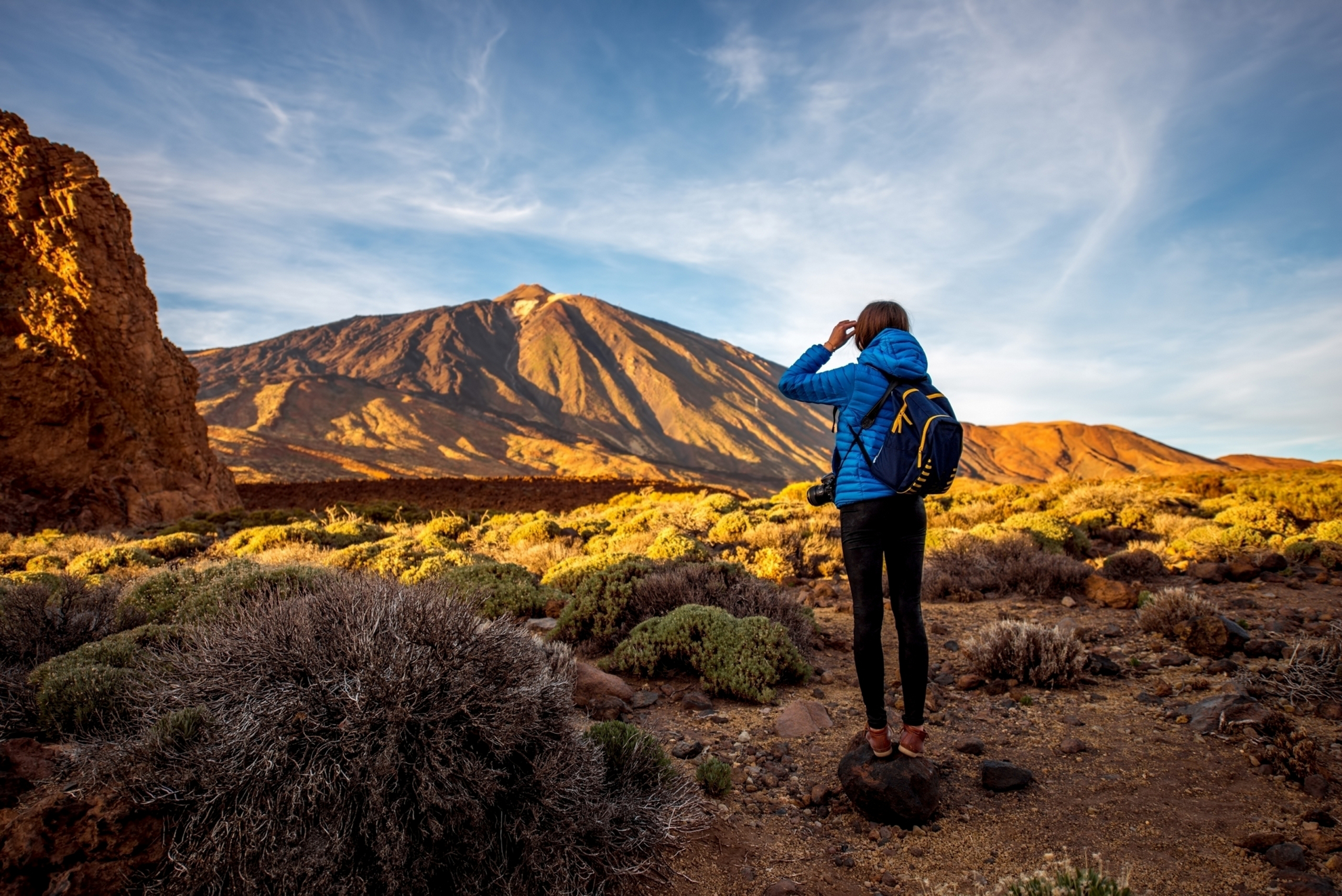
Mount Teide
Climbing without permission
Want to avoid the stress of organising a permit on your Teide trip? Get to the summit before the cable car becomes operational, generally from 9:00 am until early evening. So, if you reach the summit before 9:00 am, no one will ask for papers. Many hikers choose to spend the night at the Altavista refuge at 3260 metres and set off before dawn to witness the sunrise from the summit of Mount Teide.
Unfortunately, the refuge has been closed for some time and its reopening is uncertain. It takes 4 hours to hike from Montaña Blanca to the refuge and another two from the refuge to the summit. If you want to sleep on El Teide, the only option at present is to set up a bivouac shelter, but this requires a permit from the park administration, and the process is only possible in Spanish.
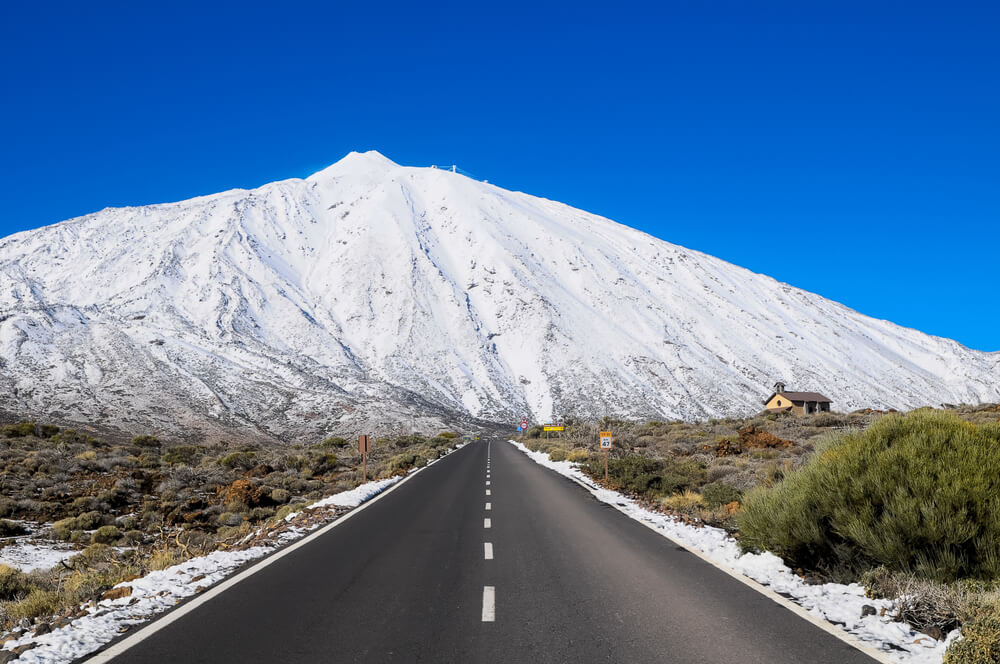
Watch out for snowfall on Teide as the park shuts
The starry skies of Teide
After nightfall, the Teide National Park reveals a different kind of landscape. Far from city lights and shielded by strict conservation laws, the park boasts one of the clearest skies in the world. The Teide Observatory in Izaña draws world-class astronomers, but you don’t need a telescope to be awestruck. Venture up at night either with a group or in a car, pull over at a designated viewpoint, switch off the headlights and look up at how the Milky Way spills across the heavens with dazzling clarity. Few experiences feel so humbling.
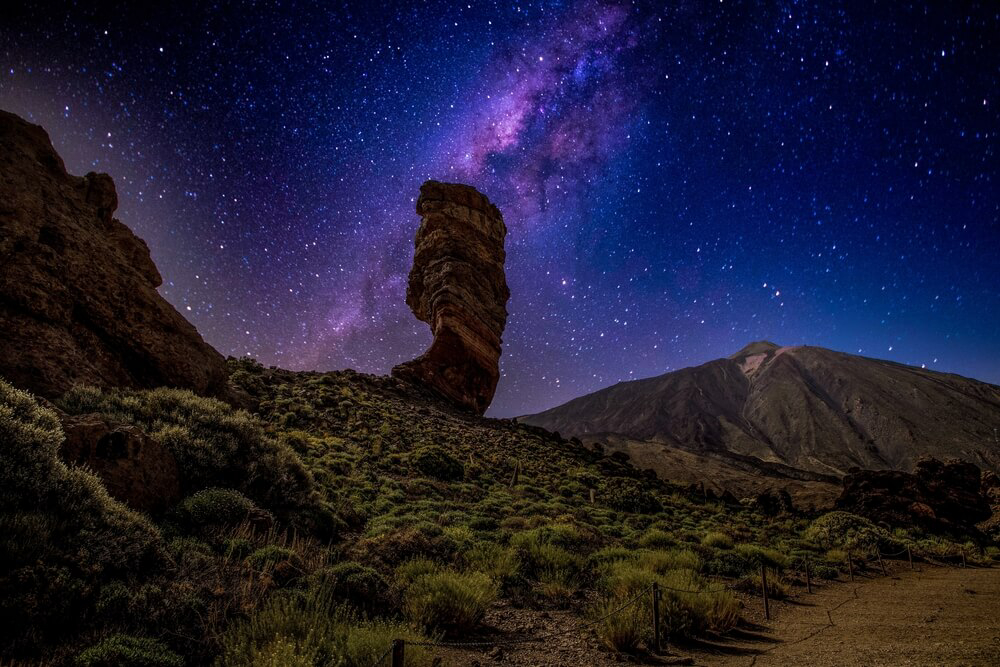
Roques de García at night
Essential Teide information: Permits and visitor access
Access to the national park is free and unregulated for now, except for those visiting the summit. However, due to the magnitude of visitors exploring the park each year, an eco-tax for non-residents and new visitor monitoring measures are expected in 2026. Access to El Teide’s summit is carefully regulated to protect the park’s fragile ecosystem.
As previously mentioned, to climb to the top via Trail 10 (Telesforo Bravo), visitors must apply online for a free summit permit, valid for a specific date and two-hour slot. Applications close at 2 p.m. the day before, though spaces often fill weeks ahead. Even those taking the cable car and descending on foot need a permit. Some additional trails, such as PNT 07, PNT 09, PNT 23 and PNT 28, also require authorisation via the Teide Tenerife ON platform.