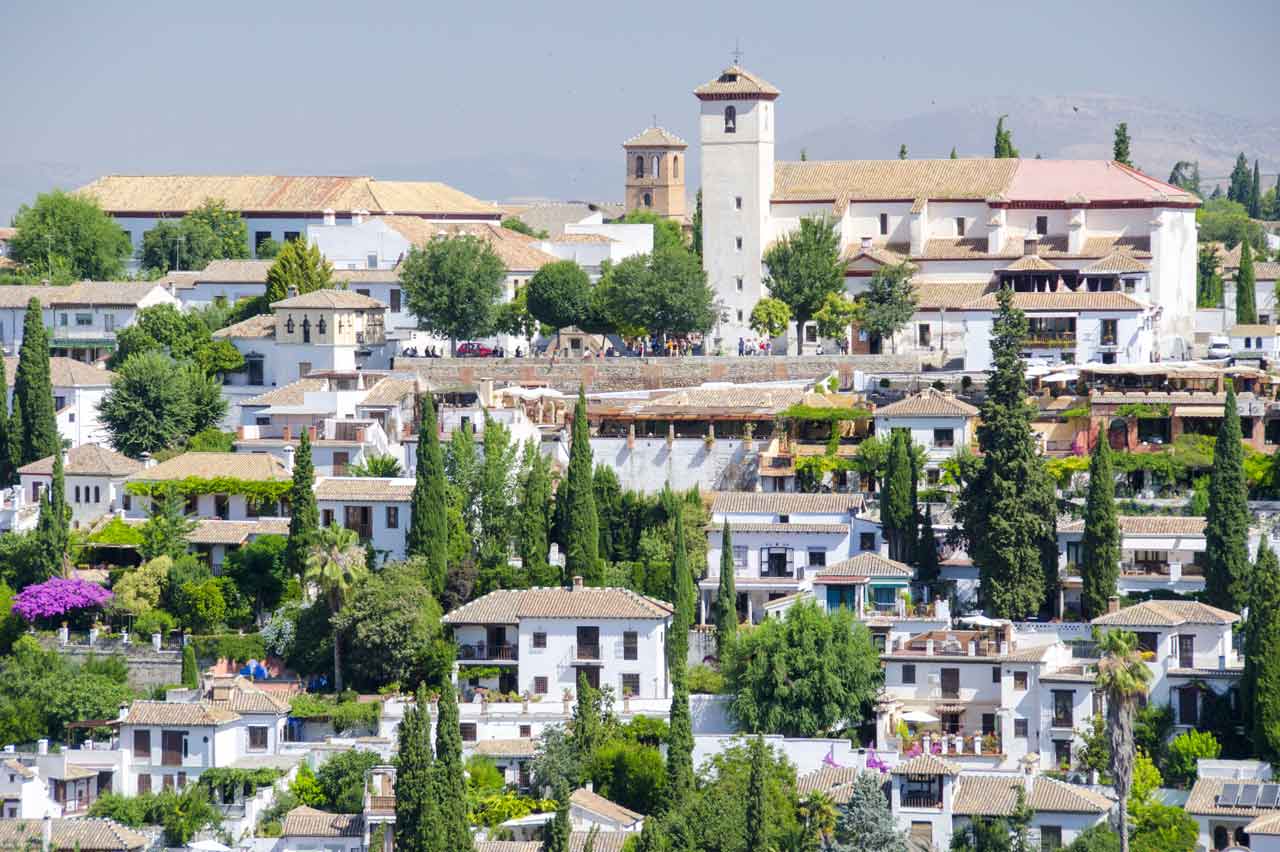













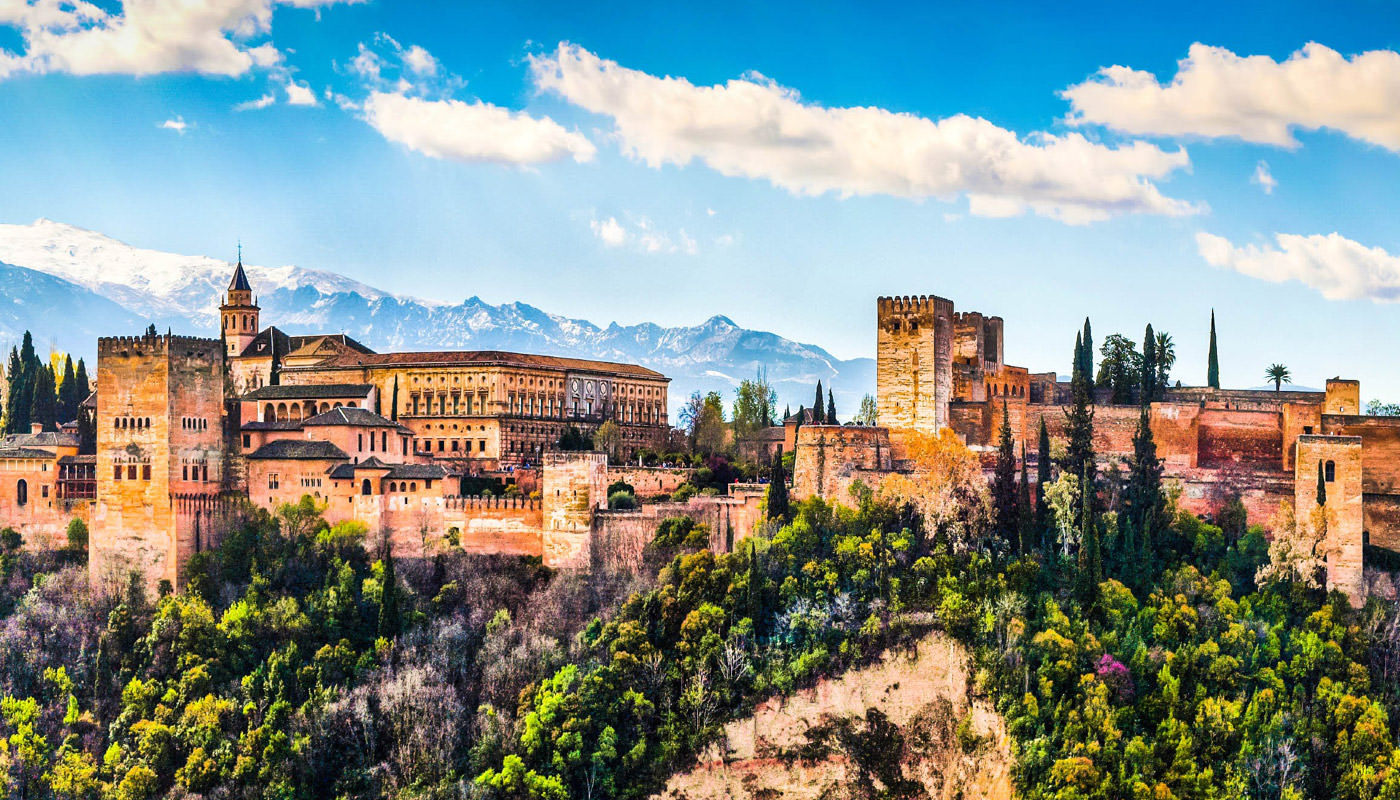






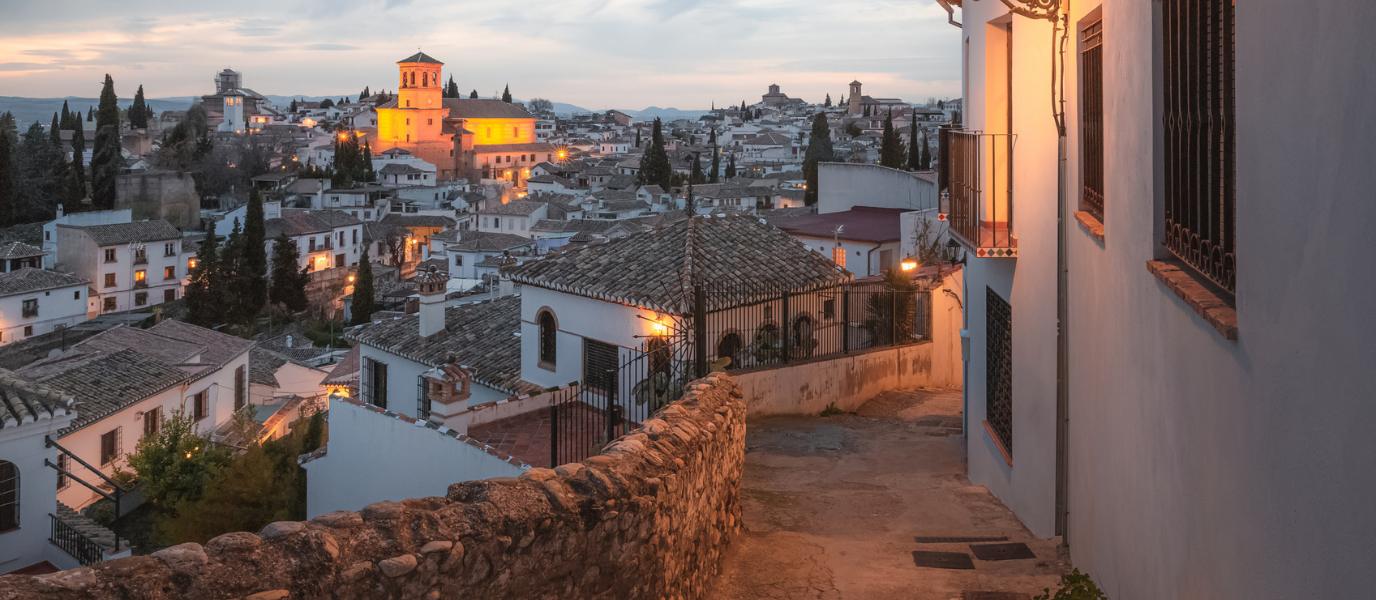
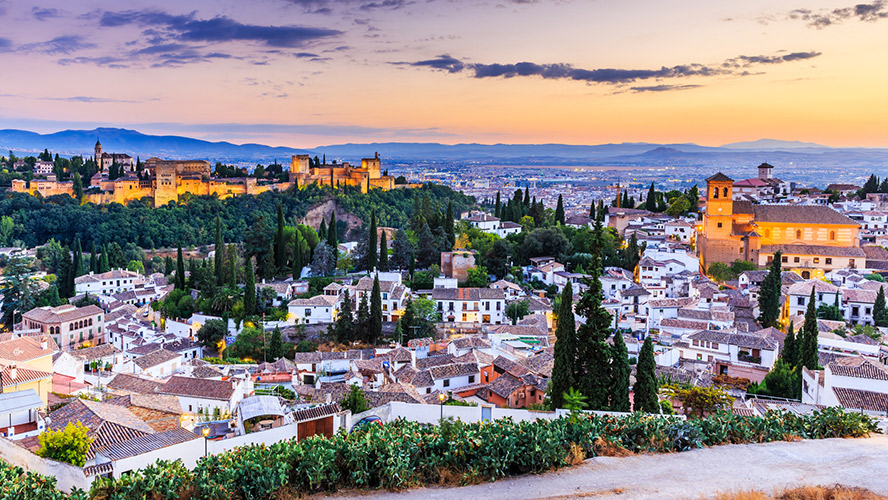
The houses are normally painted white, and decorated with lovely plants that also adorn their beautiful gardens, orchards and terraces. These are Granada’s most traditional dwellings; they are mansions typically found in the city’s historic neighbourhoods, and are the successors to the orchards that once belonged to the Moors, and which subsequently became domestic gardens. These private, intimate sanctuaries hide a real universe of Andalusian perfumes, colours and flavours. Known as cármenes (from the Arab word ‘karm’, meaning ‘vine’), they are chiefly located in the Albaicín and Realejo neighbourhoods and in the area around the Alhambra.
Nowadays, Granada’s cármenes have been converted into museums, art galleries and prestigious restaurants. Most are privately owned, but some are public property, such as the Carmen de la Victoria, which belongs to the University of Granada, and the Carmen de Max Moreau, which houses an art museum. Then there’s the Carmen de la Fundación Rodríguez-Acosta and the Carmen de los Mártires, which are owned by Granada’s City Council.
Below, we explain why you should visit one or two of Granada’s finest cármenes on any tourist trip to the city of the Alhambra.
- History of Granada’s cármenes
- Carmen de los Mártires
- Carmen de la Fundación Rodríguez-Acosta
- Carmen de la Victoria
- Carmen-Museo Max Moreau
- Carmen del Aljibe del Rey
- Carmen de los Mascarones
History of Granada’s cármenes
The cármenes are buildings typical of Granada’s rural estates from the Nazari period, when areas of garden and orchard existed side by side and also served as a space for leisure and recreation. The cármenes are very beautiful places that bring freshness and shade to Granada’s scorchingly hot summers, and which are surrounded by walls that serve to protect their interior intimacy. Flowers mingle with fruit trees and vines in the gardens of these unique buildings. They are a source of great pleasure for the senses. We tell you which of Granada’s cármenes are open to the public.
Carmen de los Mártires
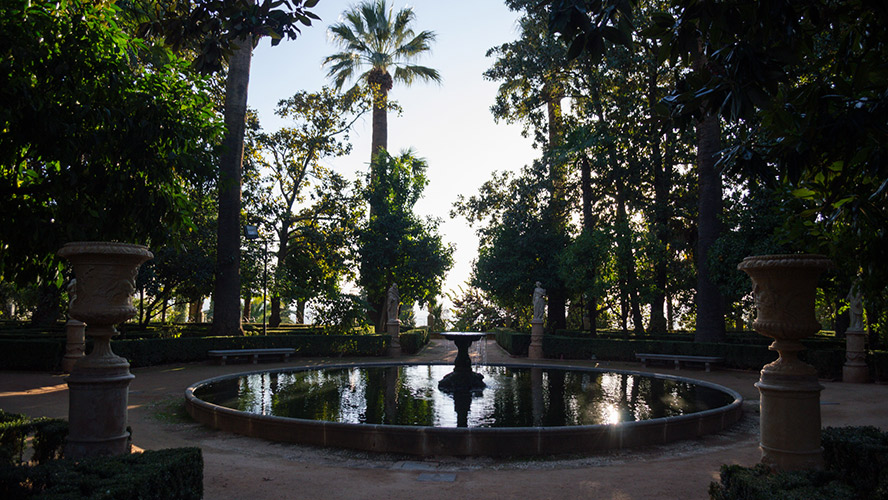
It is said that the Carmen del Campo de los Mártires was built over the old dungeons occupied by Christian prisoners during the time of the Nazaris. When the city was reconquered by the Catholic Monarchs, the place became a Carmelite monastery, where San Juan de la Cruz served for a time as prior. For this fact alone, the carmen is worth a visit. The site covers over 7 hectares, and its current appearance has been preserved since the nineteenth century. Visitors will notice the then prevalent Eastern influences on its construction. Its gardens reflect a blend of French, English and Andalusian models. It is said that this was where Boabdil surrendered the city to the Catholic Monarchs.
Carmen de la Fundación Rodríguez-Acosta
Also known as ‘Carmen Blanco’, this mansion was built close to the Alhambra by the artist José María Rodríguez-Acosta between 1916 and 1930. Today, in accordance with the painter’s express wishes, the building houses the Foundation that bears his name. Its aim is the dissemination of culture and art. The carmen was declared a National Monument in 1982, and its outstanding feature are its gardens. Since 1973, this carmen has also been the headquarters of the Gómez Moreno Institute. A native of Granada, Gómez Moreno was an archaeologist and historian and the Institute exists to raise awareness of his legacy and collection.
Carmen de la Victoria
The Carmen de la Victoria, owned by the University of Granada, is located on the hill of the Albaicín district, which in Moorish times was an area filled with orchards, cármenes and gardens. The plot was attached to the Victoria convent, and when the convent was demolished in the last century, the carmen that we see today was established. It is one of the city’s most emblematic cármenes, and the only publicly-owned one that has not lost its character as a dwelling with a garden. Initially, it was a residence for Moroccan students (the Casa de Marruecos), and part of the School of Arab Studies. It then became a student hall of residence, and is now a guest house. The layout of its gardens overlooking the Alhambra has been preserved for over 100 years.

Carmen-Museo Max Moreau
This municipal museum, located in the Albaicín neighbourhood, was once the home of the Belgian artist Max León Moreau, who bequeathed his entire estate to the city of Granada. Now visitors can see an exhibition of his portraits, still lifes and landscapes, as well as his artist’s studio, which has been preserved exactly as it was at the time of his death. One room of the museum is devoted to his biography.
Carmen del Aljibe del Rey
This beautiful carmen is home to the AguaGranada Foundation which, at 12.00 noon Monday – Friday, organises a free guided tour with no need for booking in advance. This carmen stands in the heart of the Albaicín, between the Zirí wall and Cristo de las Azucenas square. The building houses the Water Interpretation Centre, which emphasises the importance of water during the Andalusi period, the use of aqueducts and the then pioneering system of water storage. In this building, you can see the Albaicín’s historic water cistern — at 300 cubic metres, its largest ever. It dates from the eleventh century, and the house bears its name.
Carmen de los Mascarones
In Calle del Agua, in the heart of the Albaicín, the Carmen de los Mascarones was once the home of the poet Pedro Soto de Rojas, a great friend of Góngora, and the Canon of the Salvador Collegiate Church, who was praised by both Cervantes and Lope de Vega. The carmen also has links to García Lorca, as it was here that the poet organised, together with the Granada Athenaeum, a homage to Soto de Rojas in 1926. This lovely house, and its garden with sculptures and fountains, dates from the sixteenth century.