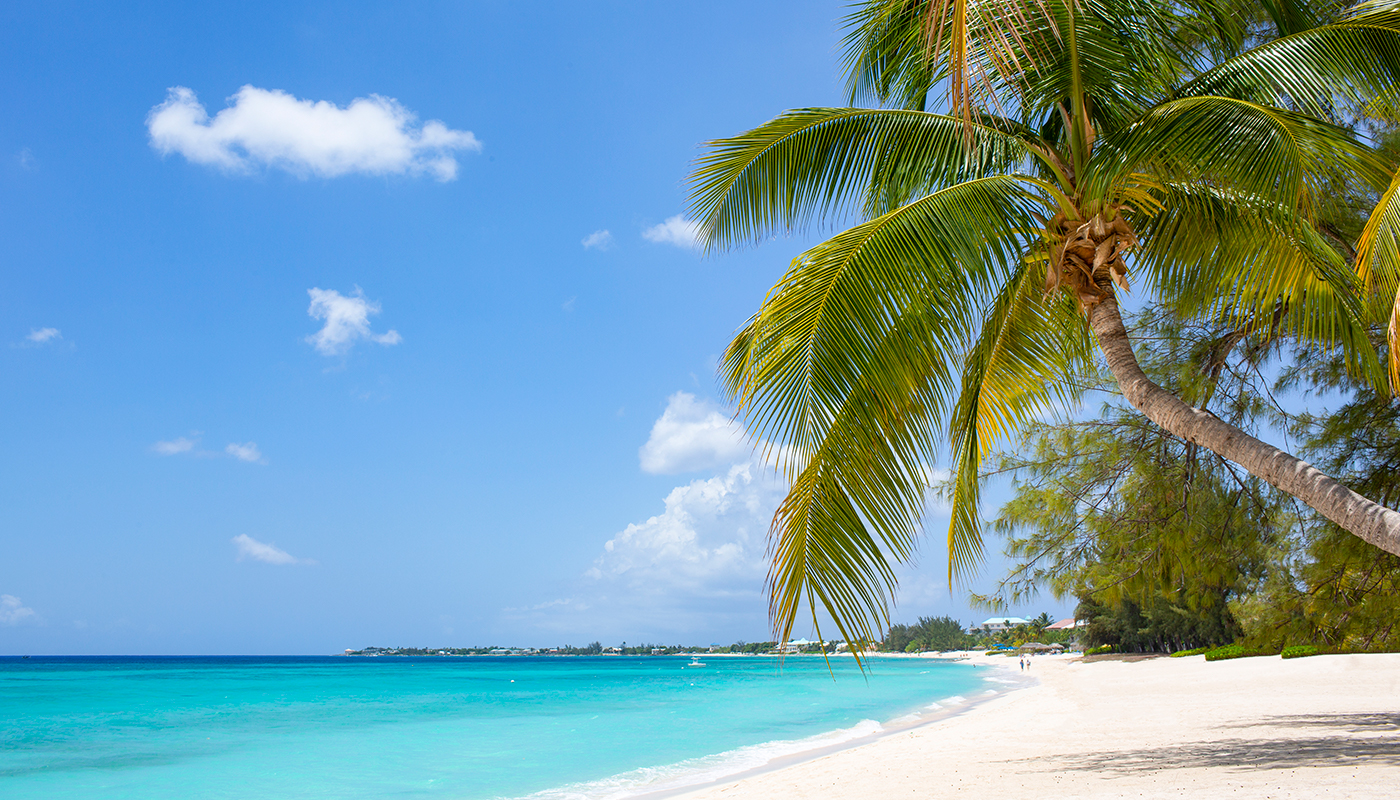


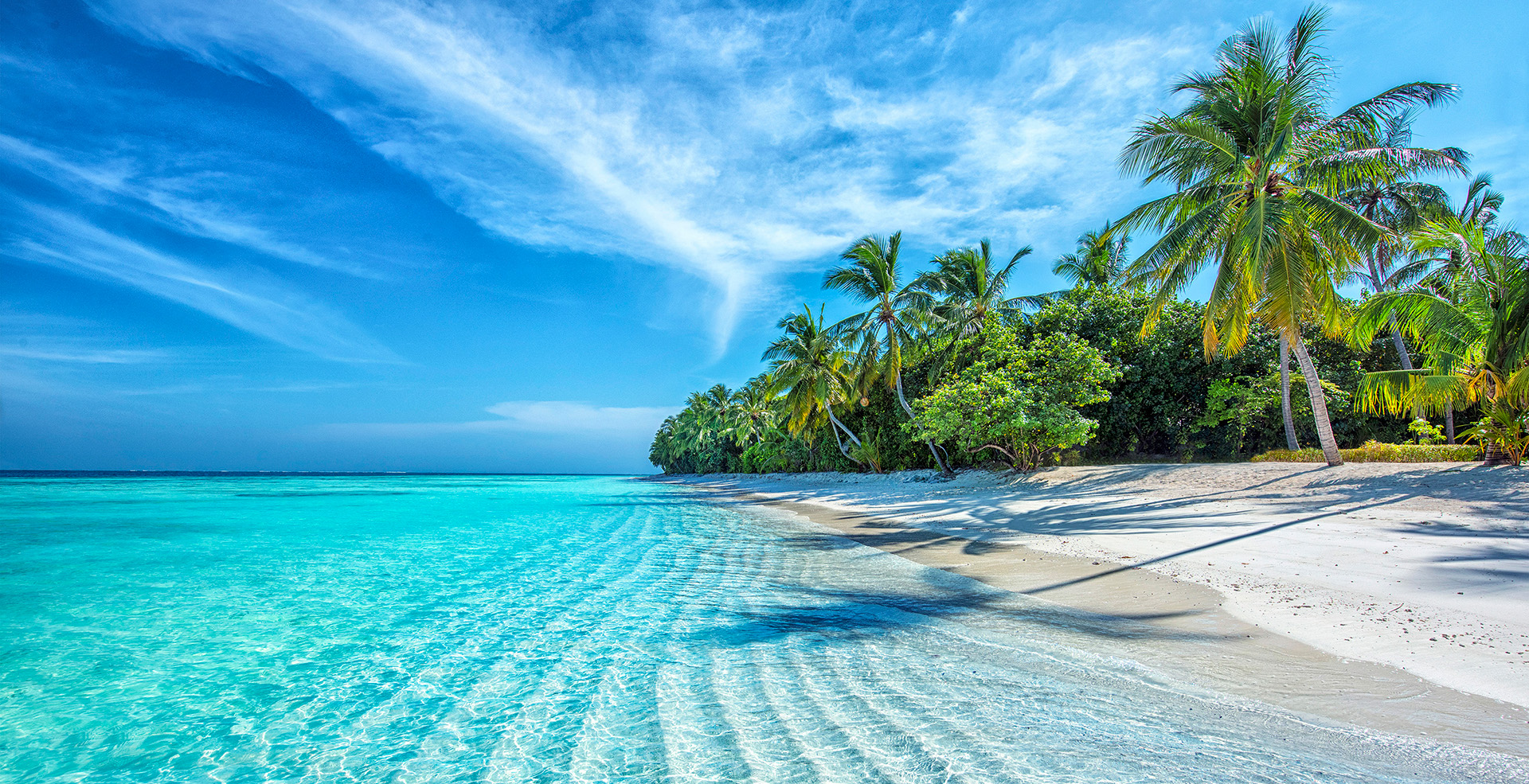








With its splendid Buddhist temples, its buzzing nightlife, its centuries-old parks and tropical forests, and its colourful, flamboyant markets, exotic Thailand is as diverse as it is spectacular and fascinating. Set in the heart of South-East Asia, this archipelago is famous throughout the world for its idyllic beaches and its mouthwatering gastronomy. The country’s capital, Bangkok, is a revelation for the senses, as it allows travellers to enjoy the best street food at Chinatown’s food stalls and to fall in love with Thailand’s vibrant culture.
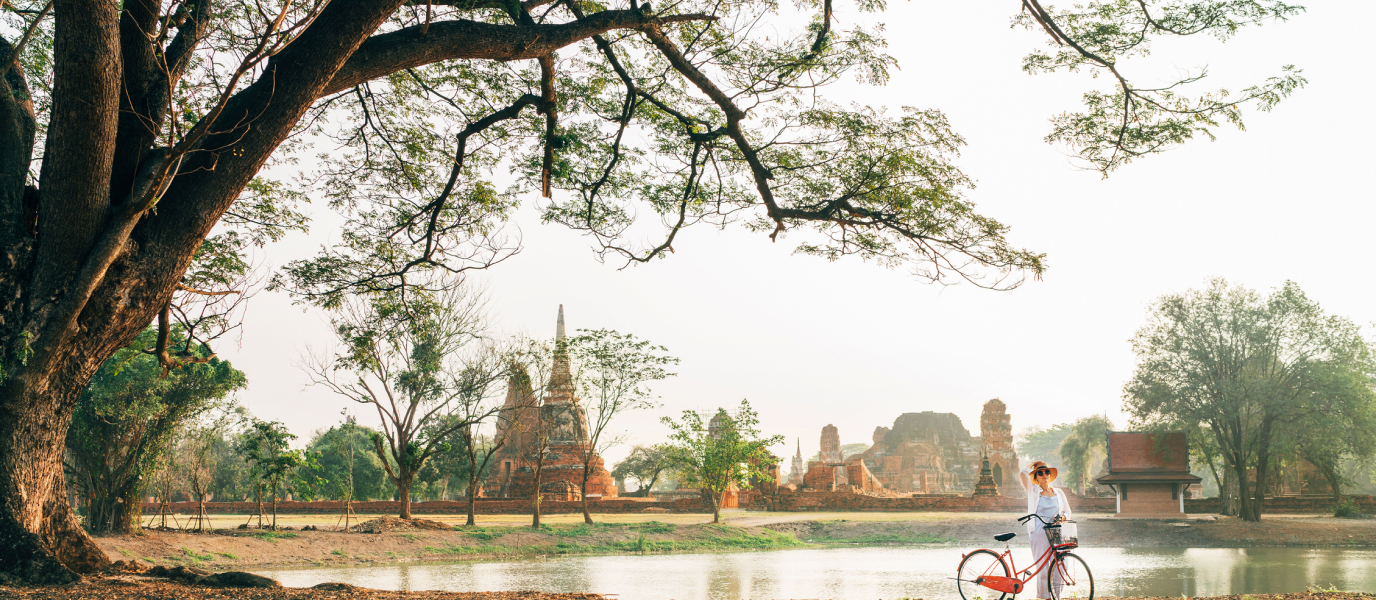
In addition to the capital, there are lots of interesting places that you will want to visit and where there is lots to do. Chiang Mai, with its remarkable Buddhist temples, is one of them. It is also worth exploring the ancient ruins of the cities of Ayutthaya and Sukhothai. And nature lovers will make a beeline for the rainforests of Khao Sok (thought to be the oldest on Earth) or to see the elephants in the forests of Khao Yai.
Below, we tell you what you can see on a holiday trip to Thailand. We also give you ideas for things to do.
- Bangkok
- Chiang Mai
- Chiang Rai
- Kanchanaburi and the bridge on the river Kwai
- Khao Sok National Park
- Phi Phi Islands
- Koh Tao
- Sukhothai
- Ayuthaya
- Lop Buri
- Isan
- Phuket
- Ko Samui
- The Similan Islands
- Krabi
- Ko Phi Phi
- Where to stay in Thailand
Bangkok
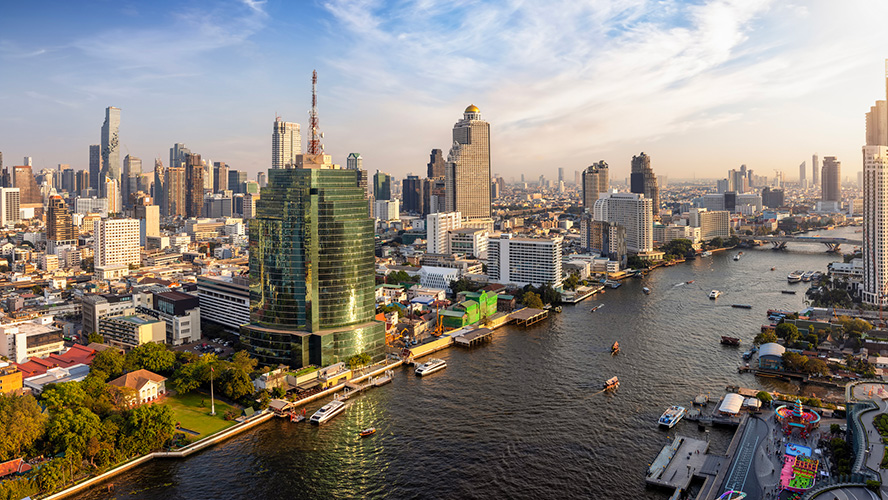
Thailand’s capital, Bangkok, has it all. The city is a mosaic of very different and defined areas, each with its own personality. The river Chao Phraya flows through the centre of the city, and the outlying districts are greener and more natural. Everyone should visit the Old Town, which stretches from the Royal Palace to the immense reclining Buddha of the Wat Pho and to the National Museum, one of South-East Asia’s finest. The Royal Palace draws more visitors than any other attraction in Thailand. It is also worth visiting Chinatown, with its gold shops and street stalls, and Dusit, a quiet area with elegant boulevards.
Chiang Mai
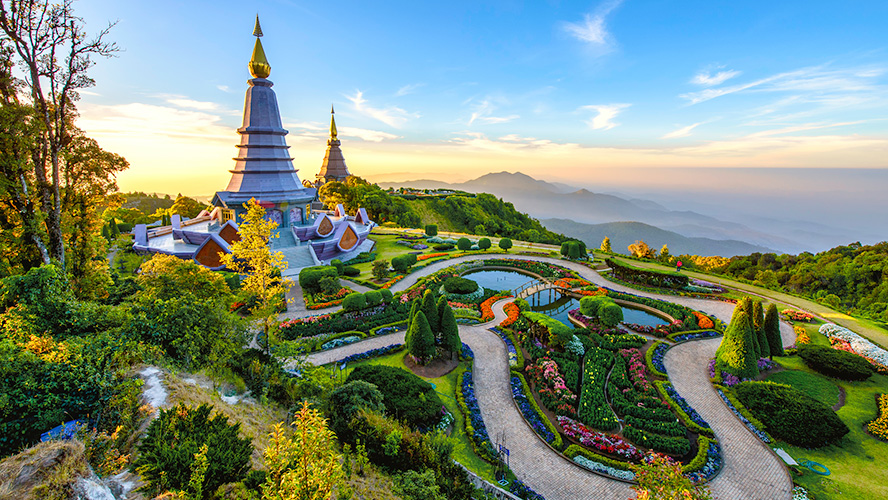
This is Thailand’s second-largest city. Chiang Mai means ‘new city’, and it was chosen in 1292 by King Mengrai to replace Chiang Rai as the capital of the Lanna kingdom. Tourists visit this walled city for its temples, its excellent shopping centres, and its hiking trails.
Chiang Rai
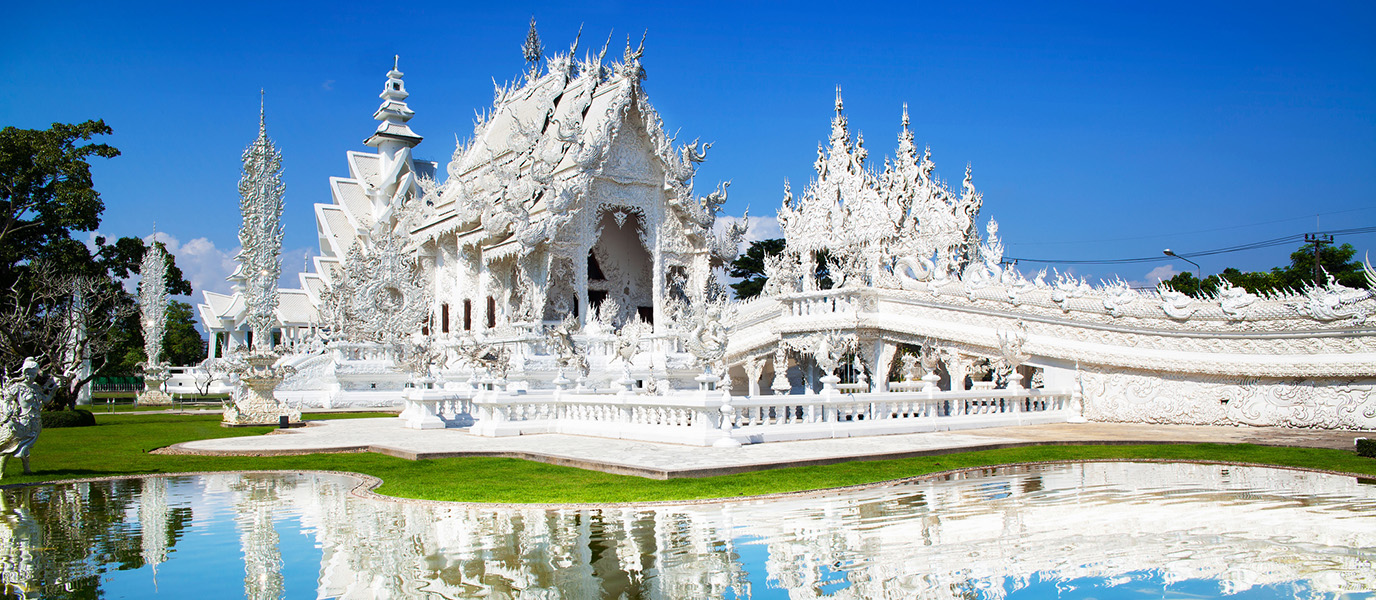
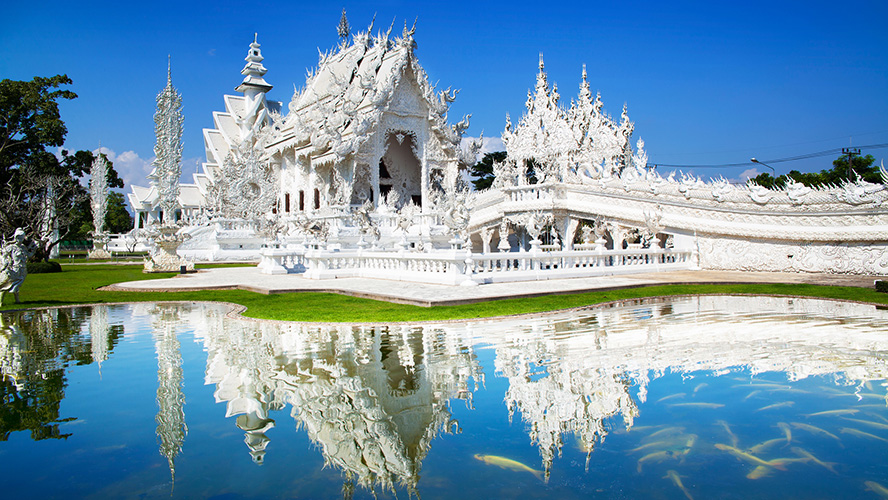
Founded in 1262 by King Mengrai as the capital of the Lanna kingdom, Chiang Rai lost its title soon afterwards to Chiang Mai. This decision caused it to lose importance, but even nowadays, the city has interesting monuments. For example, its Clock Tower is illuminated every night, and the light changes colour from its original gold through green to pink.
Kanchanaburi and the bridge on the river Kwai
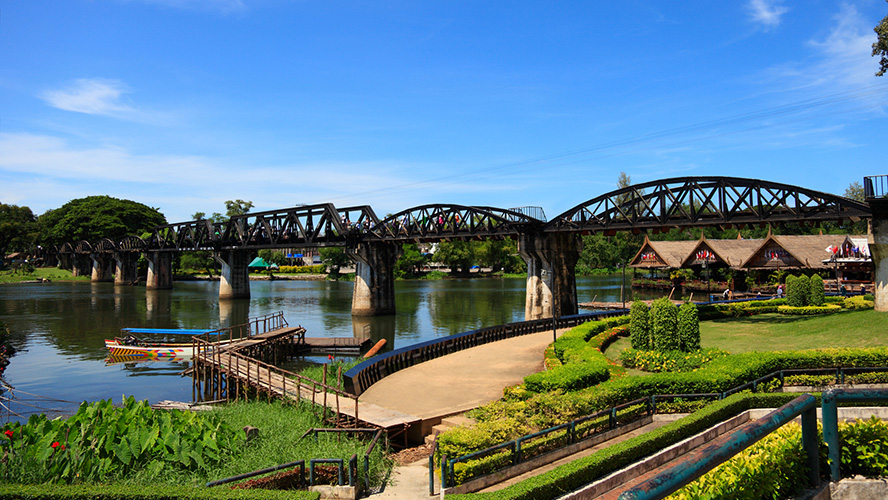
Surrounded by limestone cliffs and vast stretches of sugar cane, Kanchanaburi is famous for the bridge over the river Kwai. Nowadays, 77 kilometres of the famous Burma-Siam railway line remain, and you can travel along it from Kanchanaburi to Nam Tok. At the same time, we do need to remember that the building of this line cost the lives of over 100,000 people and 12,000 Allied prisoners of war.
Khao Sok National Park
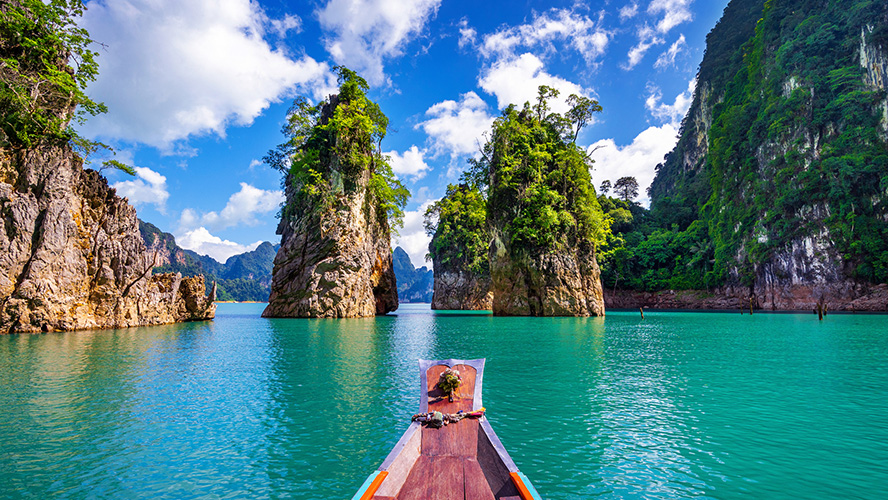
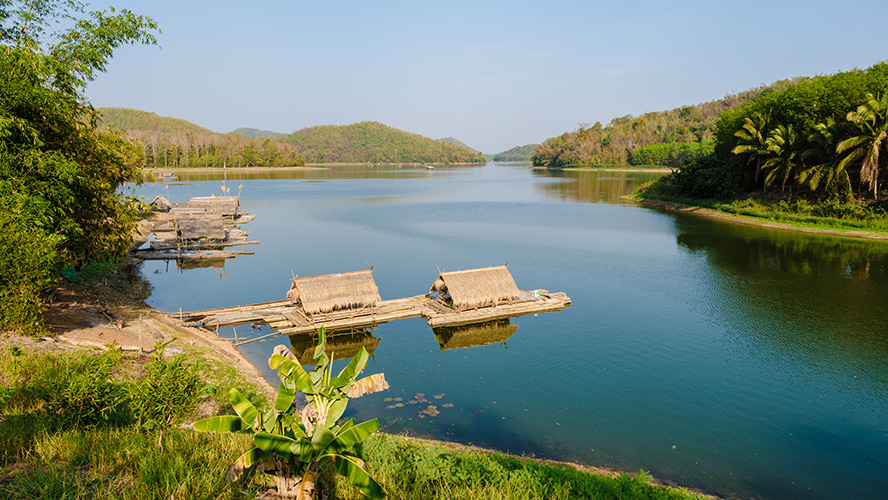
This is one of southern Thailand’s great virgin forests, home to elephants, tigers, bears, wild boar and monkeys, as well as 188 species of birds. The Khao Sok National Park covers 738 square kilometres and includes 100 spectacular islands that have been formed since the construction of the Rachabrapha dike in 1982. A visit to the Cheow Lan artificial lake, with is emerald-coloured waters, is not to be missed.
Phi Phi Islands
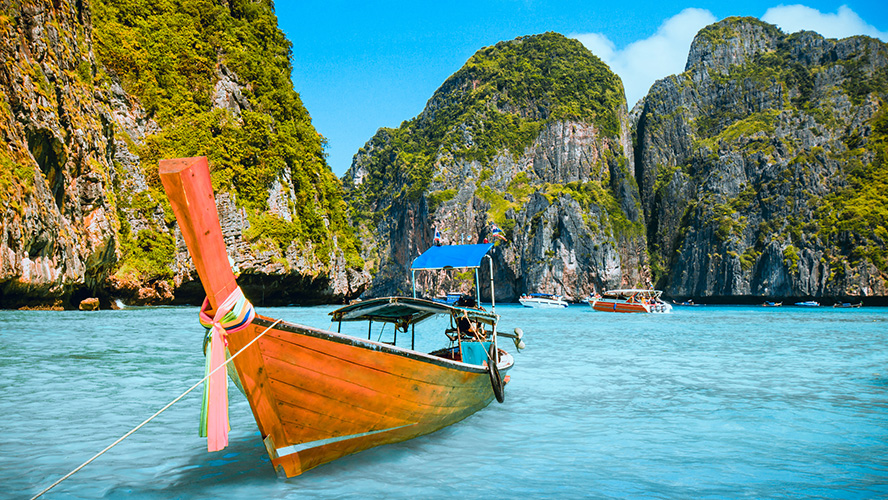
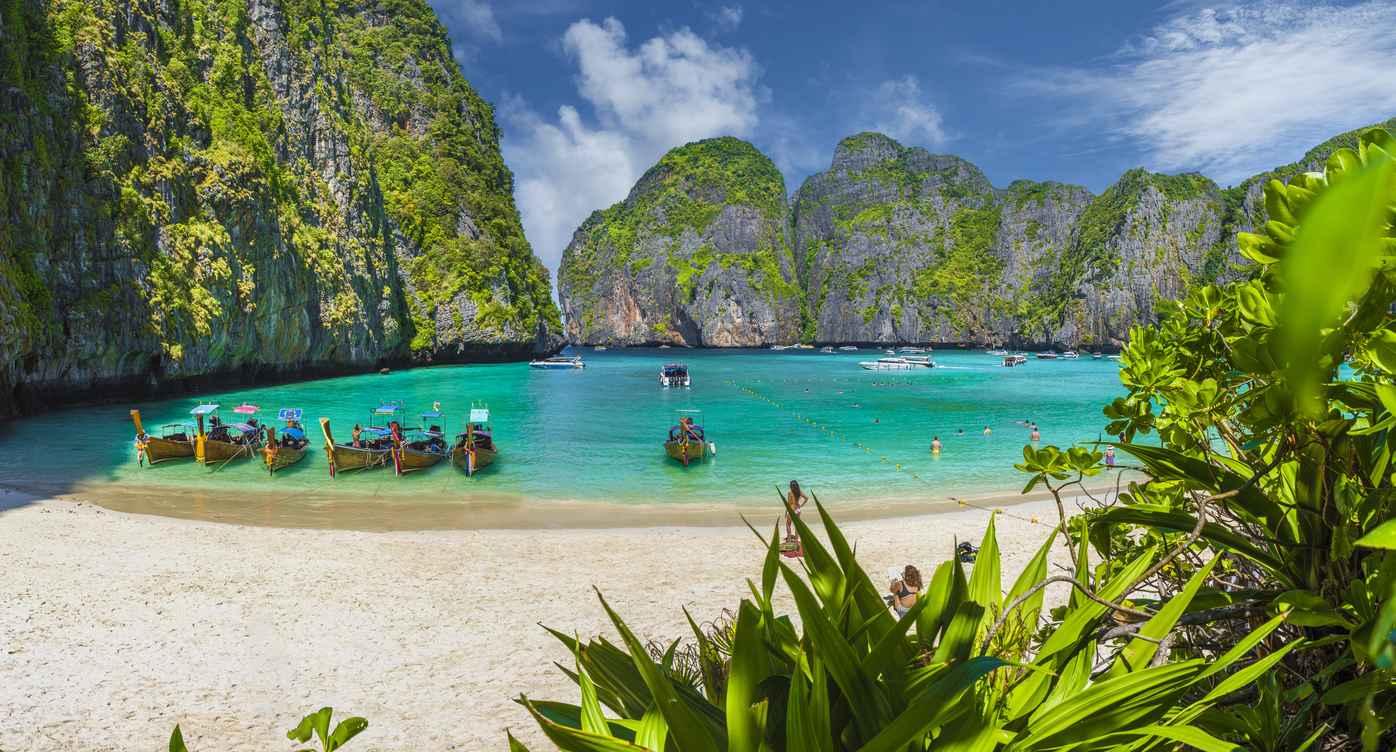
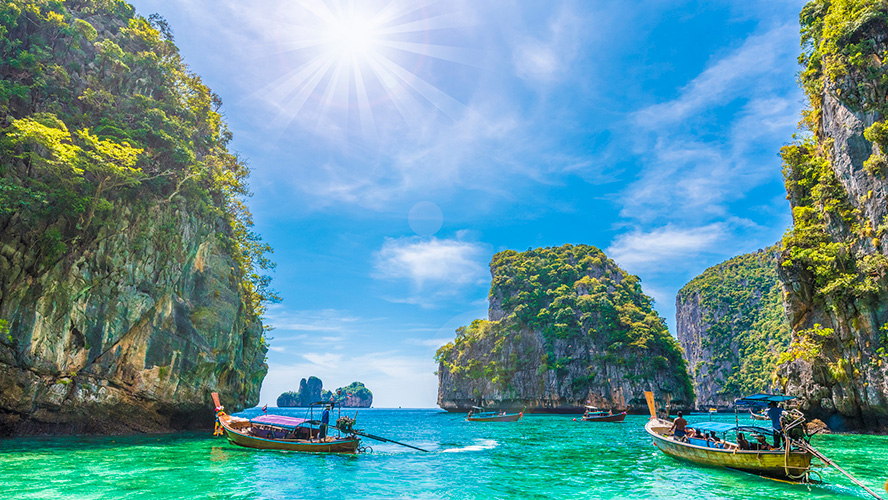
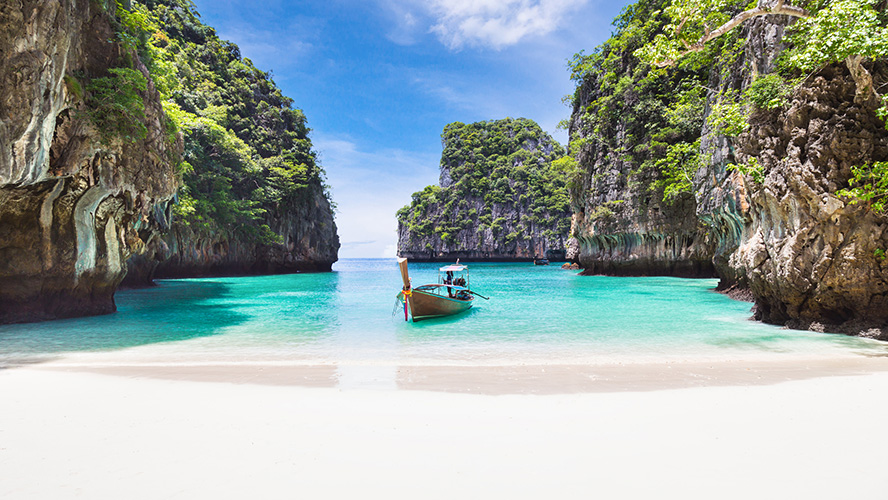
This small archipelago lies to the south of the country, and has become one of Thailand’s most popular tourist spots. The main islands are Koh Phi Phi Don, the only inhabited island, and a stop-over for the ferries arriving from the peninsula; Koh Phi Phi Leh, an island of limestone cliffs that rise to hundreds of metres above sea level, and with two pleasant beaches; Koh Yung or Mosquito Island, where there is a lovely beach and not much else, and Koh Pai or Bamboo Island, which has a little restaurant and a camping site.
Koh Tao
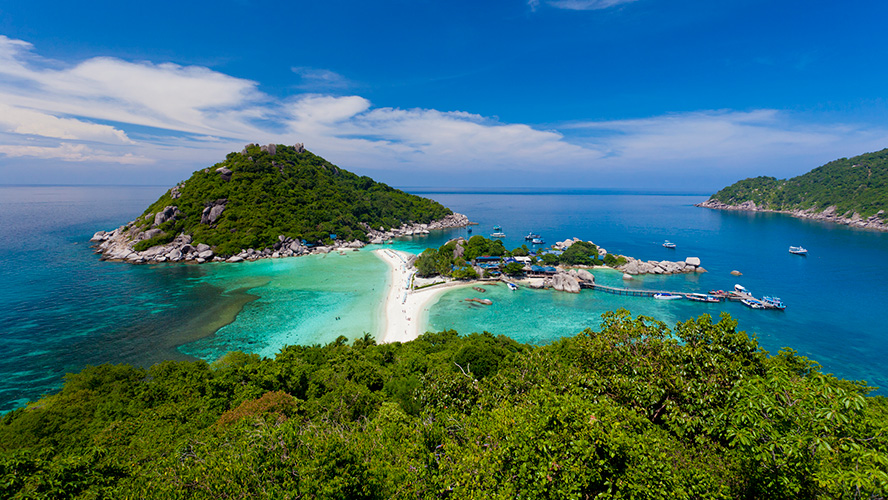
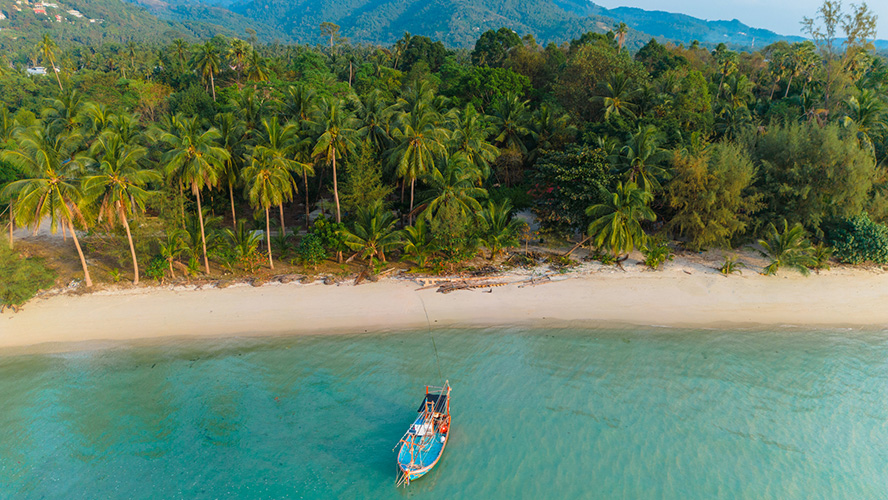
Koh Tao is the smallest and prettiest island of the Samui archipelago, and accommodation is available. It is a diver’s paradise. The island is steep, and inland it is covered in dense jungle. It also has lovely, peaceful coves along its coast and beaches of soft sand in the west. We recommend you visit the Nang Yuan viewing point to enjoy the spectacular views.
Sukhothai
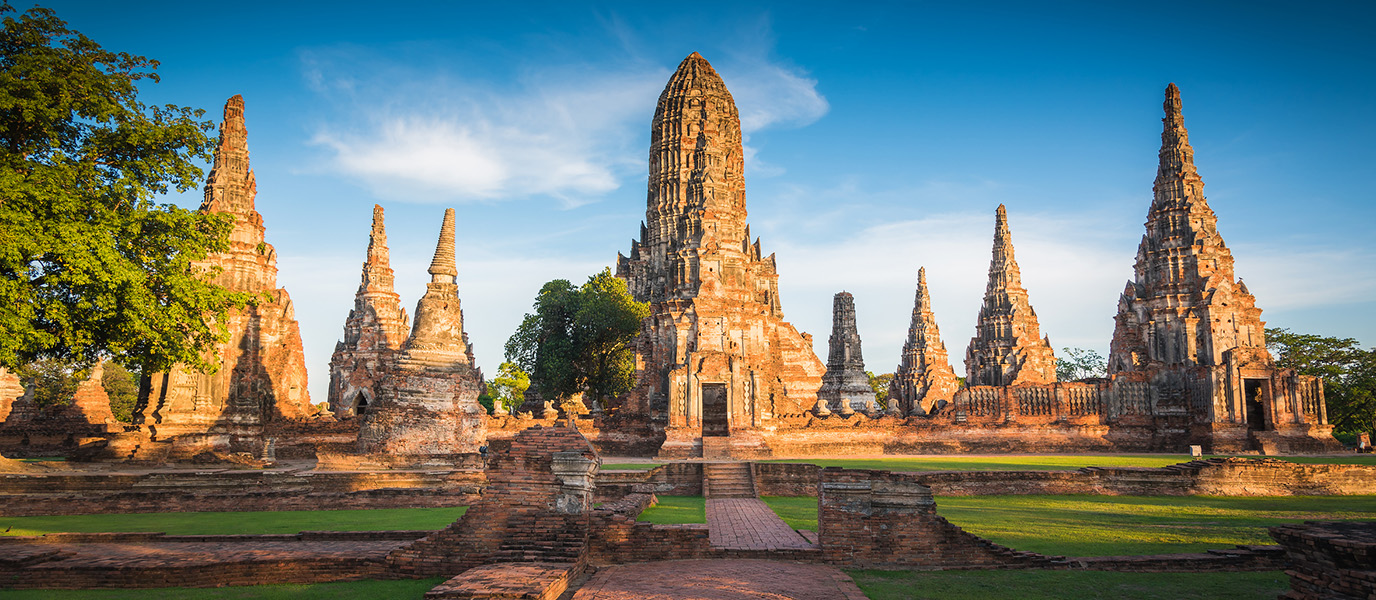
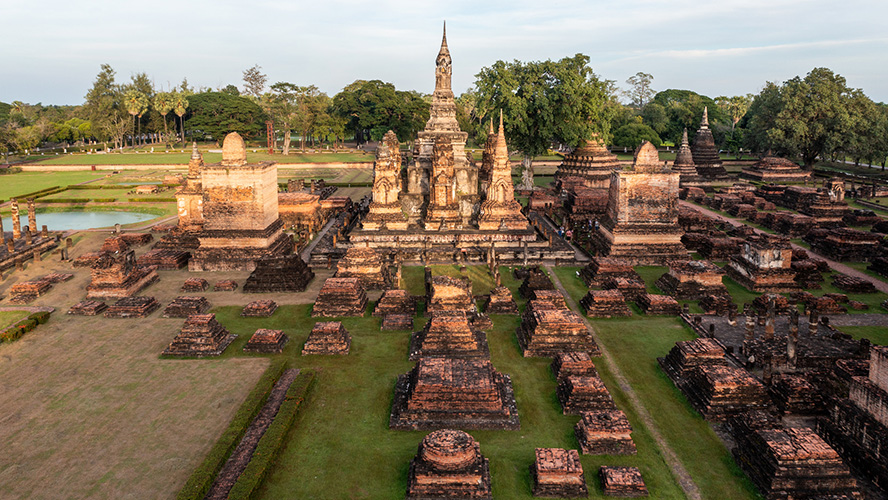
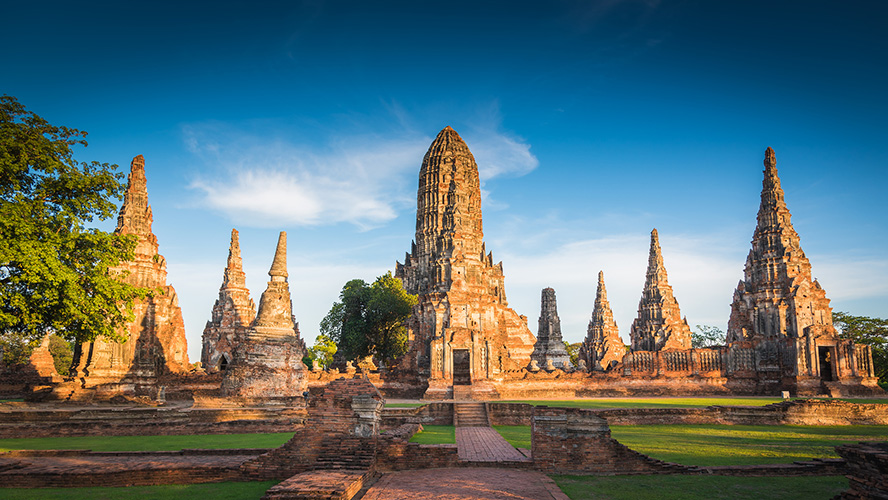
A UNESCO World Heritage Site, the abandoned city of Sukhothai is central Thailand’s best-preserved historic monument. The Sukhothai Historical Park is divided into five areas, one of which is the Royal City, protected by moats and walls. The other four areas have remarkable ruins, such as the Buddha monument at Wat Si Chum.
Ayuthaya
Founded in 1350 by Ramathibodi, Ayutthaya stretches from the meeting-point of the rivers Chao Phraya, Lop Buri and Pasak. Its monuments are to be found on the central island. Nowadays, the ruins share the space with modern buildings, but there is also a great variety of restaurants and hotels.
Lop Buri
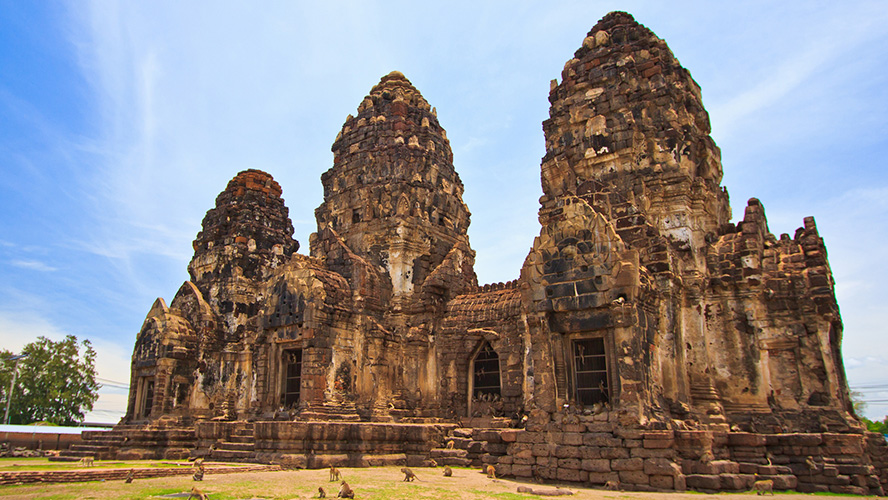
This is one of Thailand’s oldest cities. Its political heyday was in the seventeenth century. Today, the modern city is known as ‘Monkey Town’, and it stretches out to the east of the former city. If you walk around its streets, it is highly likely that the monkeys will come out to meet you.
Isan
Isan could be ‘the Andalusia of Thailand’. It is the country’s biggest region, its most popular, and the birthplace of many Thai cultural symbols, such as papaya salad, Som Tan and caoñiao (sticky rice). Isan comprises 20 provinces, and has a population of 22 million.
Phuket
Known as ‘the pearl of the Andaman’, Phuket is the main island and Thailand’s most important holiday destination. The Patong coastline is the holiday destination par excellence for beach- and bar-lovers, but the island also offers interesting things to see. A stroll through the city will enable you to discover the architecture of the great nineteenth-century mansions and the Phuket Thai Hua Museum, Thailand’s oldest Chinese school.
Ko Samui
Ko Samui is considered Phuket’s ‘little sister’ — it is a small coastal town with legendary wide beaches, and a place where you can party all year round. It is the island’s emblem for enjoying ‘dolce far niente’, and lazing around, eating, drinking, sleeping, visiting the odd seafood restaurant, and exploring the island’s clubs.
The Similan Islands
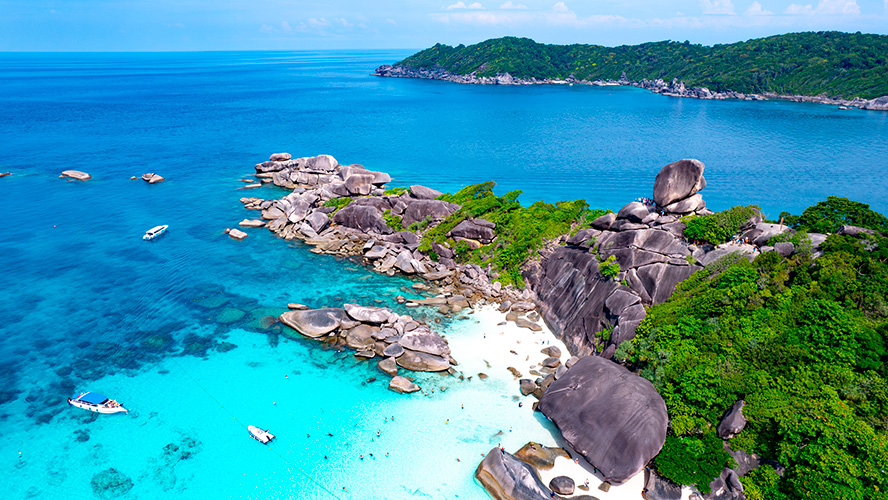
This small group of nine islands (of which only six can be visited) is famous as the home to a large turtle population, so if you take the trouble to visit, you are certain to see some. This is also an extremely popular destination with diving enthusiasts and those interested in the sea bed. You cannot stay on these islands, and visitors are only allowed for part of the year.
Krabi
This small fishing town, whose name means ‘sword’, is the departure point for the islands of Ko Lanta to the south, Ko Phi Phi to the south-west, and to the east, the beaches around Ao Nang. The town is surrounded by cliffs, and lots of people are drawn here for the difficult challenge of climbing them.

Ko Phi Phi
Located 40 kilometres to the south of the town of Krabi, Ko Phi Phi comprises two islands: Phi Phi Don and Phi Phi Leh, both of which attract climbers keen to scale their steep cliffs. Both islands are famous for their stunning scenery, their idyllic sea beds and their exotic animal species. The film director Danny Boyle chose Ko Phi Phi as the location for his film ‘The Beach’ (2000), by Alex Garland.