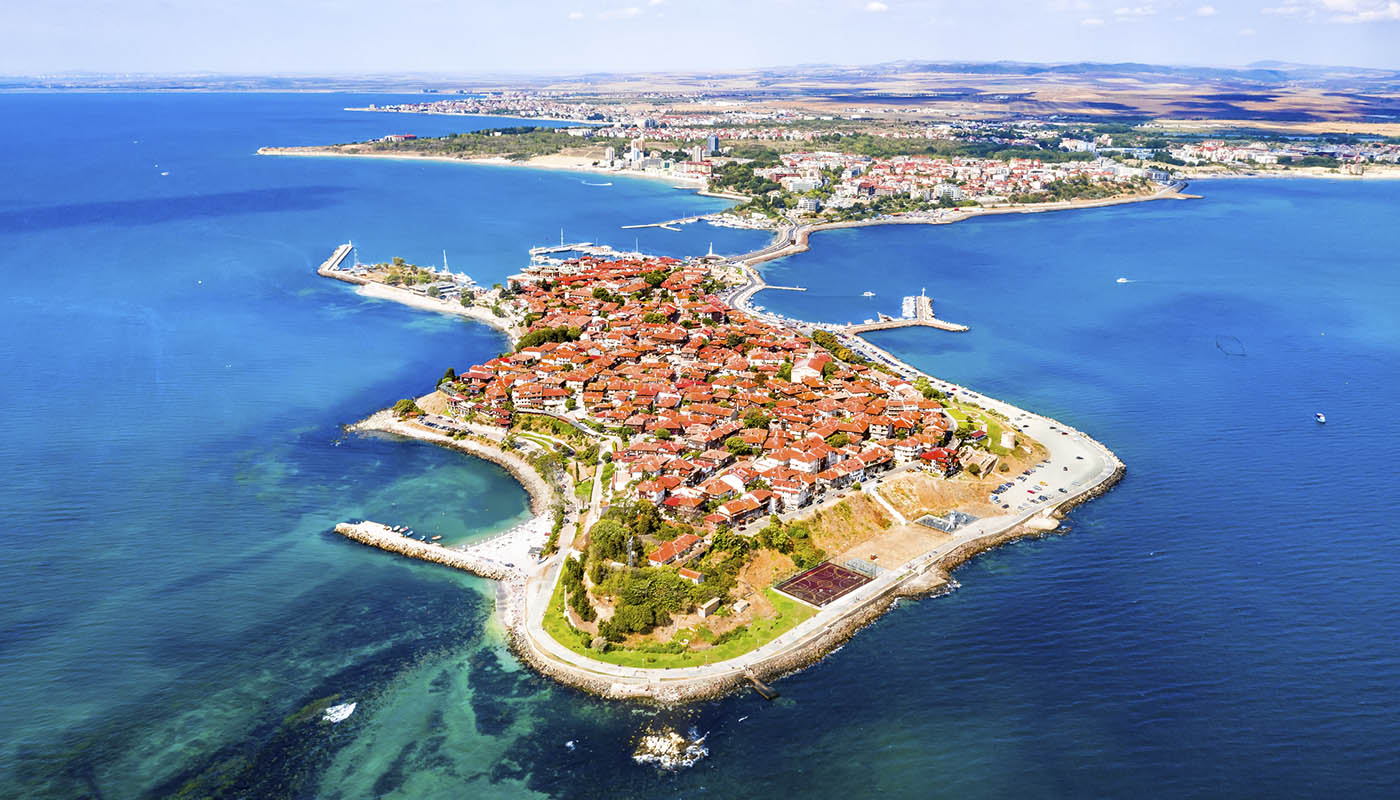













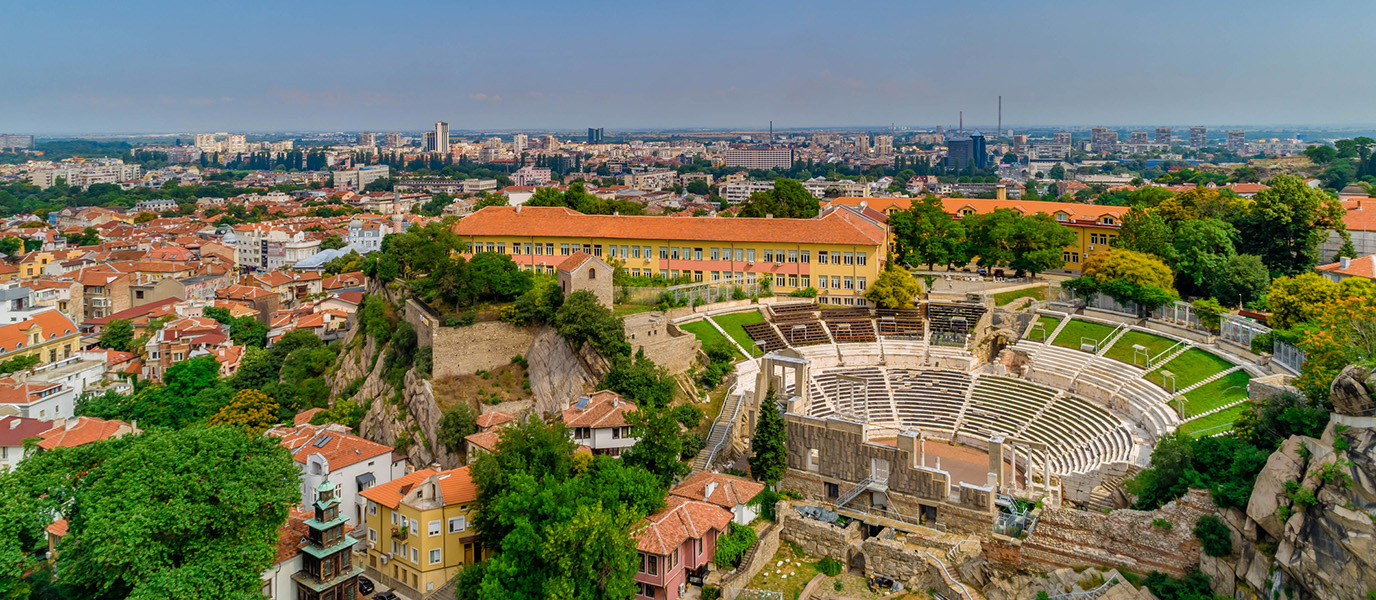
Nestled among seven hills and bathed by the river Maritsa, Plovdiv, with over 8,000 years of history, is one of the world’s oldest inhabited cities, and was standing long before Athens or Rome appeared on the map. To stroll around Plovdiv is to take a journey back in time, from the remains of ancient Thrace and Roman splendour to the Ottoman heritage and the creative hustle and bustle of a city that is constantly reinventing itself. Thanks to its delightful Old Town, its emblematic Roman amphitheatre and the lively pedestrianised Knyaz Alexander I, this city was awarded the status of European Capital of Culture in 2019. A destination not to be missed for anyone wishing to explore the most authentic and cultural side of Bulgaria.
- The history of Plovdiv: 8,000 years of civilisations in a single city
- What to see in Plovdiv: the treasures of the European Capital of Culture, 2019
- The Archaeological Complex: the ancient city walls and the Roman Forum
- The Roman Amphitheatre: a living legacy from ancient times
- The Basilica: a Paleo-Christian church with magnificent mosaics
- The Old Town: a journey back to the Bulgarian National Renaissance
- Knyaz Alexander I, Europe’s longest pedestrianised boulevard
- Where to eat: the perfect city to try Bulgarian cuisine
The history of Plovdiv: 8,000 years of civilisations in a single city
The history of Plovdiv began over eight millennia ago, when the Thracians founded one of the first known human communities in this fertile region. Known at that time as Eumolpia, the city prospered due to its strategic position on the trading routes connecting Europe and Asia. The Thracians left behind monumental tombs and unique artifacts that visitors can admire today in the city’s museums.
In the fourth century BC, Philip II of Macedon, the father of Alexander the Great, conquered the city and renamed it Philippopolis in honour of himself. During this period, the city acquired fortifications and a more organised urban structure. However, its most prosperous era arrived under Roman rule, when Philippopolis — then renamed Trimontium — became one of the most important cities of the province of Thrace. The Romans built theatres, forums, thermal baths and aqueducts whose state of preservation astonishes visitors today.
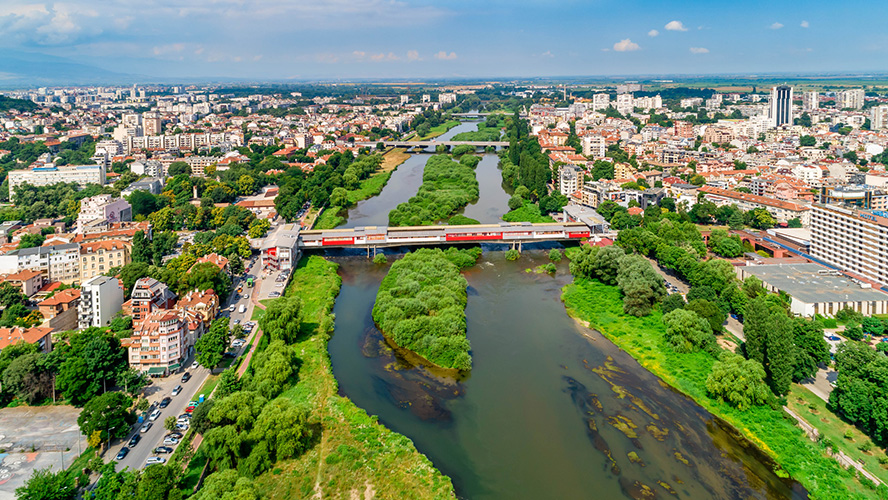
After the fall of the Roman Empire, Plovdiv passed through Byzantine, Bulgarian and Ottoman hands, leaving behind vestiges that still remain, including the Dzhumaya mosque, built in the fifteenth century, and Bulgarian Renaissance Orthodox churches such as that of Saint Constantine and Saint Helena. During the Middle Ages, the city was a key focus in the wars between the Bulgarians and the Byzantines, while under Ottoman rule it became an important centre for trade. With the liberation of Bulgaria in the nineteenth century, Plovdiv became one of the Bulgarian National Renaissance’s most vibrant cities, during a period of cultural and political resurgence that left an indelible mark on its architecture and spirit.
Nowadays, Plovdiv is a living testament to the many civilisations that have passed through it, each of which has left its imprint on the cultural fabric of the city.
What to see in Plovdiv: the treasures of the European Capital of Culture, 2019
The Archaeological Complex: the ancient city walls and the Roman Forum
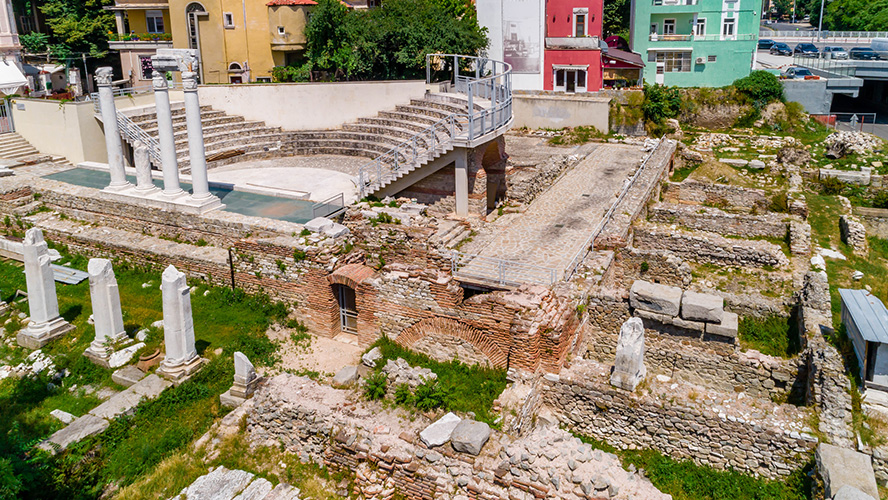
Plovdiv’s Archaeological Complex, nestled among the lower slopes of the hills that surround the city, is an essential visit for anyone who wishes to understand its age-old history. This place brings together the remains of epochs from the Thracians up until the Ottoman period, by way of the Romans and the Byzantines. The most fascinating remains include the ancient defensive walls, dwellings decorated with mosaics, and little temples that recall the spirituality of cultures lost in time.
One of the most emblematic spots is the Roman Forum, a broad public space which, in its time, was the nerve-centre of business and political life. Built in the first century AD, this forum, with its rectangular floor plan, was surrounded by imposing porticoes and monuments that reflected the wealth and prestige of Trimontium, as Plovdiv was known back then. While strolling around the ruins, it is still possible to imagine the echoes of the merchants bargaining, the citizens discussing laws, and the processions that filed through this spot steeped in symbolism.
The Roman Amphitheatre: a living legacy from ancient times
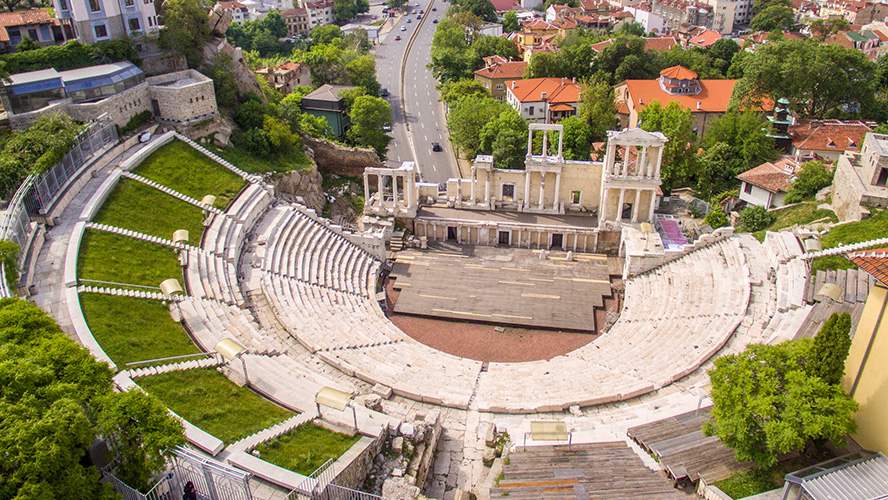
Plovdiv’s Roman Amphitheatre, built during the reign of the emperor Trajan, is a masterpiece of Roman engineering and architecture. Dug into a natural slope, this semicircular arena can hold up to 6,000 people, and is is one of the best-preserved of its type in the world.
It is not only its structure that impresses, but the details that still survive: the marble reliefs carved with such precision, the seats positioned in rows that offer perfect acoustics, and the inscriptions that reveal the names of the Roman citizens who paid for their construction. Nowadays, this amphitheatre still vibrates to the sound of concerts, plays and festivals held under the starry skies.
The Basilica: a Paleo-Christian church with magnificent mosaics
Discovered relatively recently, the Great Basilica of Plovdiv has added a new chapter to the city’s rich cultural legacy. This ancient building, erected during the fourth century during a period when Christianity was flourishing, is famous for the spectacular mosaics that cover over 2,000 square metres.
The mosaics, created using thousands of brightly coloured tiles, depict exotic birds, flowers and religious motifs telling symbolic and Biblical stories. Every last detail reveals the expertise of the artists and the importance of Plovdiv as the spiritual centre of the Eastern Roman Empire. The museum that houses this gem also includes interactive displays and a system of walkways which allows the mosaics to be viewed from different angles, making the visit a total immersion in the art and history of antiquity.
The Old Town: a journey back to the Bulgarian National Renaissance
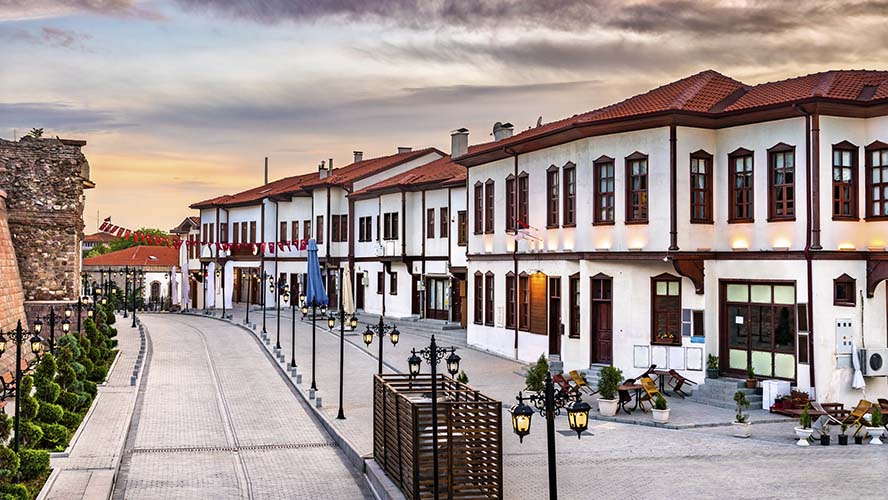
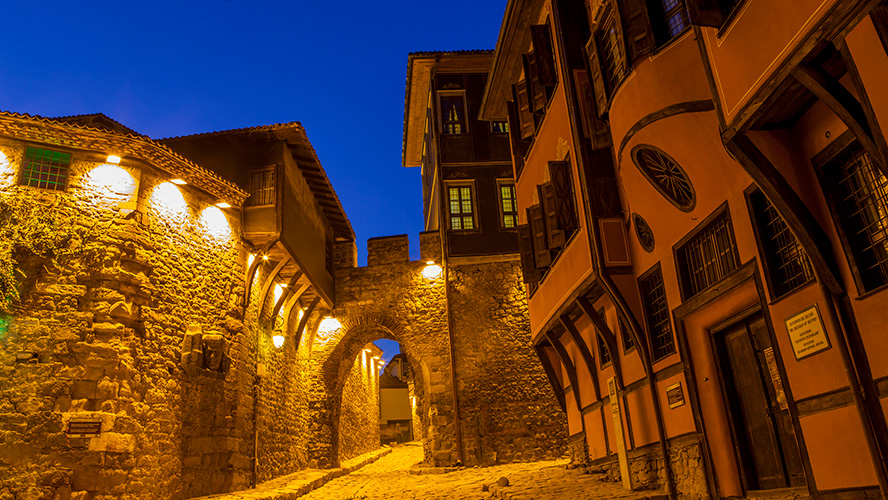
To tour Plovdiv’s Old Town is like walking over an open page of history. Its twisting, cobbled streets, lined with elegant mansions from the Bulgarian National Renaissance, encourage visitors to wander at will and discover its many secrets. This historic district is built on three of the seven original hills of Plovdiv, and every corner offers a panoramic view or an architectural detail worthy of admiration.
One of the highlights is the Balabanov House, a carefully restored mansion that combines opulent Ottoman interiors with traditional Bulgarian decorative features. Here, visitors can admire carved furniture, murals and objects that conjure up the life of the nineteenth-century bourgeois elite. Another essential visit is the Regional Ethnographic Museum, set in a majestic nineteenth-century Baroque house. This museum exhibits not only traditional costumes, agricultural tools and domestic objects, but also relates the stories and customs that have shaped Bulgaria’s cultural identity. In this ancient city, you will also find little churches such as the previously mentioned Church of Saint Constantine and Saint Helena, whose frescoes and architectural details are a testament to the Orthodox faith of Plovdiv’s inhabitants down the centuries.
Knyaz Alexander I, Europe’s longest pedestrianised boulevard
Plovdiv’s modern-day vitality is as impressive as its history. Knyaz Alexander I, at 1.7 kilometres long, is Europe’s longest pedestrianised boulevard. This space buzzes with life, with shops, restaurants and bars where locals and visitors mingle. At nightfall, the area becomes a centre for nightlife, with live music and a lively atmosphere.

Where to eat: the perfect city to try Bulgarian cuisine
Plovdiv’s gastronomy reflects its rich cultural history: it includes everything from traditional Bulgarian dishes to more modern, international options. This city has something to offer all tastes.
One of the most highly recommended places is Pajav, a restaurant in the Old Town, that offers a contemporary version of Bulgarian cuisine. This establishment’s specialities include kavarma, a slow-cooked meat and vegetable stew, and fresh salads prepared using local produce. For a more traditional experience, Hemingway is a superb option. Here, guests can enjoy dishes such as banitsa (a filo pastry cheesecake) or kebapcheta (small, spiced meat sausages) accompanied by a good wine from the Thrace region.