









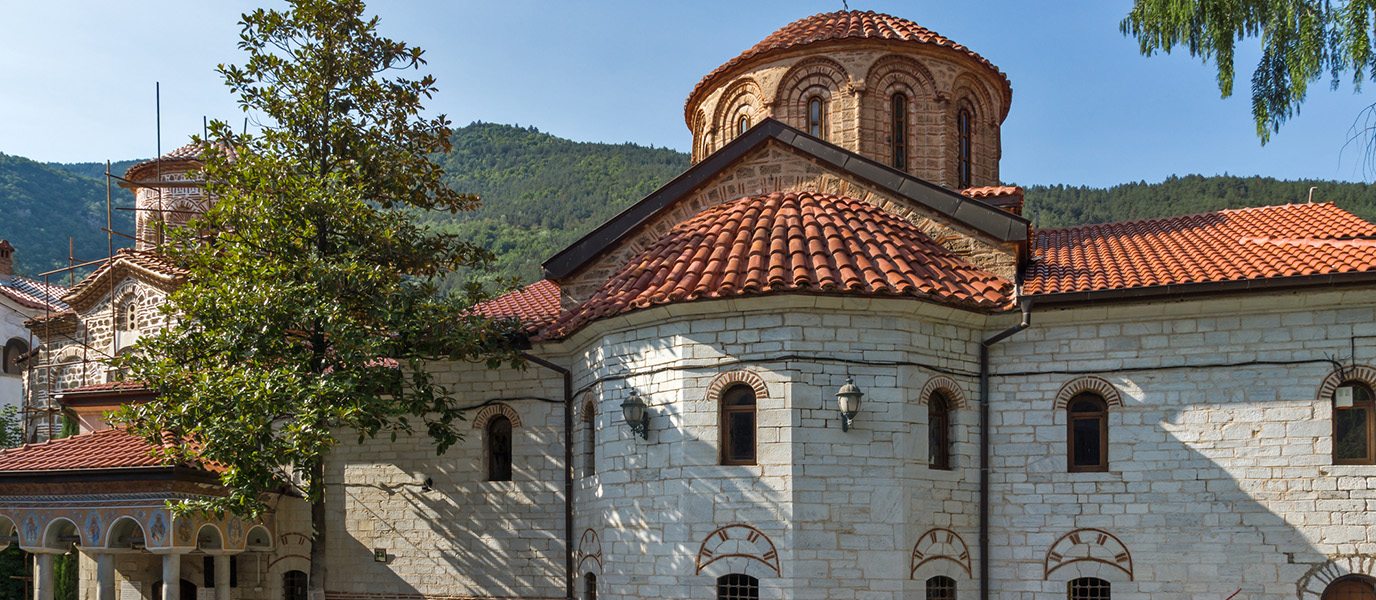
Hidden among the lush forests on the slopes of the Rhodope Mountains and caressed by the waters of the river Chepelare, Bachkovo Monastery, a UNESCO World Heritage Site, stands as an ancient guardian of Bulgaria’s spirituality and art. Located just 30 kilometres from Plovdiv and considered the second biggest monastery in the country after Rila, Bachkovo is not only captivating for its historical and religious value, but also for its serenity and natural surroundings, which have made it a place of pilgrimage and a spiritual refuge for visitors from all over the world.
- History and status of the Monastery: a beacon of Bulgarian spirituality and identity for a thousand years
- Architecture: Bachkovo, an Orthodox monastic jewel with a mixture of styles
- What you will experience during your visit: an insight into the Bulgarian Orthodox faith
- Visiting the surrounding area: exploring the Rhodope Mountains
History and status of the Monastery: a beacon of Bulgarian spirituality and identity for a thousand years
Bachkovo Monastery was founded in 1083 by Grigorii Bakuriani, a Byzantine military commander of Georgian origin, under the auspices of the Byzantine Empire. Originally, the monastery followed Georgian monastic traditions, a detail that makes it unique in Bulgaria’s religious context. The first monks who lived there belonged to the Eastern Orthodox community, but over time the monastery absorbed Bulgarian and Byzantine influences that enriched its identity.
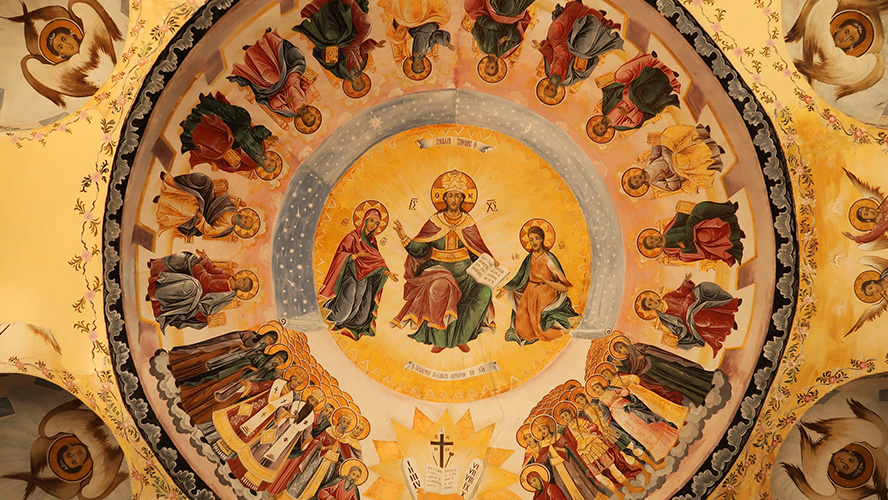
Throughout its history, the monastery became a cultural and spiritual stronghold during times of great adversity. During the centuries of Ottoman rule, Bachkovo was a vital centre for preserving Bulgarian identity. Within its walls not only prayers and hymns were sung, but also the Bulgarian language and culture were taught, and it remained a beacon of hope and resistance for the people. Despite looting, fires and transformations, the monastery has been restored several times, always respecting its original essence.
One of the monastery’s most precious treasures is the miraculous icon of the Virgin Mary Eleusa, a 14th century religious work of art that is considered sacred in Bulgaria. According to tradition, this icon has miraculous properties, offering healing and protection to those who pray to it. For centuries, it has attracted thousands of pilgrims seeking spiritual solace or giving thanks for blessings received. This icon occupies a prominent place in the monastery’s main church and is the centre of various religious celebrations, especially during Orthodox feasts.
Architecture: Bachkovo, an Orthodox monastic jewel with a mixture of styles
Bachkovo Monastery is an impressive example of Orthodox monastic architecture, with elements reflecting different historical periods and artistic styles. The site is organised around two inner courtyards surrounded by high stone walls, creating the appearance of a fortress and spiritual isolation.
The main part of the monastery is the Church of the Dormition of the Virgin, built in 1604. Inside are extraordinary frescoes, including those in the narthex painted in 1643, depicting biblical scenes, saints and portraits of the church donors. The main decoration was painted in 1850 by the artist Joan Mosch, in a style that blends Byzantine tradition and Bulgarian National Revival. The church includes the venerated icon of the Virgin Mary Eleusa, brought from Georgia in the 14th century and considered miraculous for its healing properties. Pilgrims from all over the world visit the monastery to pray in front of this relic.
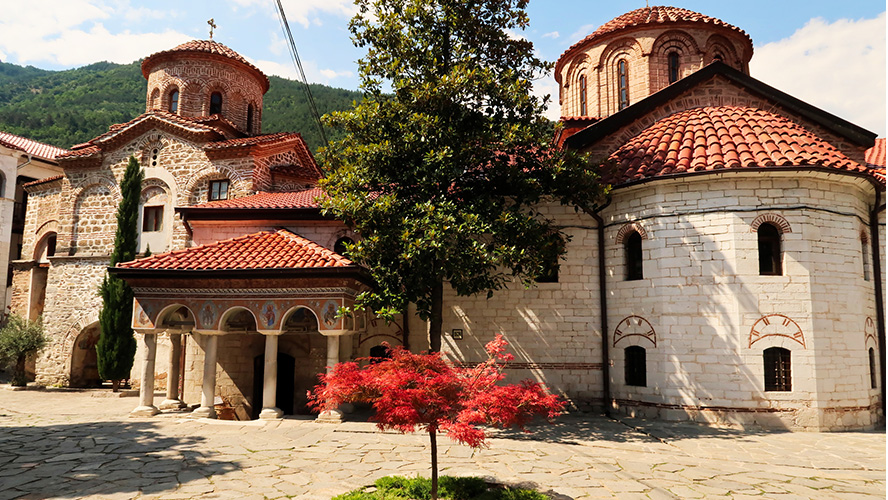
Another gem within the monastery is the smaller but equally significant Church of Saint Nicholas, located in one of the inner courtyards. Probably built in the 12th century, the church preserves older frescoes that show an early medieval Byzantine style. The narthex, added later, was decorated in 1840 by Zahari Zograf, one of Bulgaria’s most prominent painters, known for his vibrant colours and ability to capture human expressiveness.
The monastery’s refectory, with its marble table and restored frescoes, is also a window into the monks’ daily life. Communal meals were held here, uniting spirituality and practical life. This area, together with the churches, forms part of a monumental ensemble that reflects centuries of cultural and religious resistance.
In the main courtyard, a century-old jujube tree, brought from Georgia more than two centuries ago, stands as a symbol of the connection between the monastery’s Georgian and Bulgarian heritage.
What you will experience during your visit: an insight into the Bulgarian Orthodox faith
Visiting the Bachkovo Monastery is entering a place where spirituality and Bulgarian history permeate the atmosphere. From the moment you enter, you are enveloped by an atmosphere of peace and seclusion where time seems to stand still.
The miraculous icon of the Virgin Mary Eleusa
The spiritual heart of the monastery is the icon of the Virgin Mary Eleusa, one of the most revered relics in Bulgaria. According to tradition, this icon was brought from Georgia in the 14th century and stands in a prominent place in the Church of the Dormition of the Virgin. They say that it has miraculous properties, especially for healing diseases and providing protection. The devotion it inspires is evident: pilgrims from far and wide leave lighted candles, offerings and prayers at its feet, creating an atmosphere of fervour that transcends religious boundaries.
The icon is decorated with a silver frame that emphasises its importance. They say that the icon has never been removed from the monastery and has become its inseparable symbol.
The ossuary: a journey to the roots of monasticism
A few hundred metres from the main building is the ossuary, one of the monastery’s most unique and oldest parts. This building, built in the 11th century, is decorated with frescoes that have stood the test of time, depicting scenes of saints and funerary traditions. The ossuary contains the remains of monks and benefactors, providing a solemn space that connects visitors to the deepest roots of Orthodox monasticism. The walk to the ossuary is short but unforgettable, surrounded by a landscape that invites you to meditate.
Zahari Zograf’s frescoes
Bachkovo Monastery’s art reaches its highest expression in the frescoes painted by Zahari Zograf, one of the greatest exponents of the Bulgarian National Revival. His paintings adorn both the refectory and the Church of Saint Nicholas and are remarkable for their vibrant colour and attention to detail.
Zograf’s frescoes depict biblical scenes with a fresh approach: the faces of the saints appear alive and expressive, and the background landscapes reflect a mixture of Byzantine tradition and the more modern techniques of the time. Among his masterpieces are the images of saints and donors in the narthex of the main church, which offer a unique insight into the religious and cultural life of 19th century Bulgaria.
Visiting the surrounding area: exploring the Rhodope Mountains
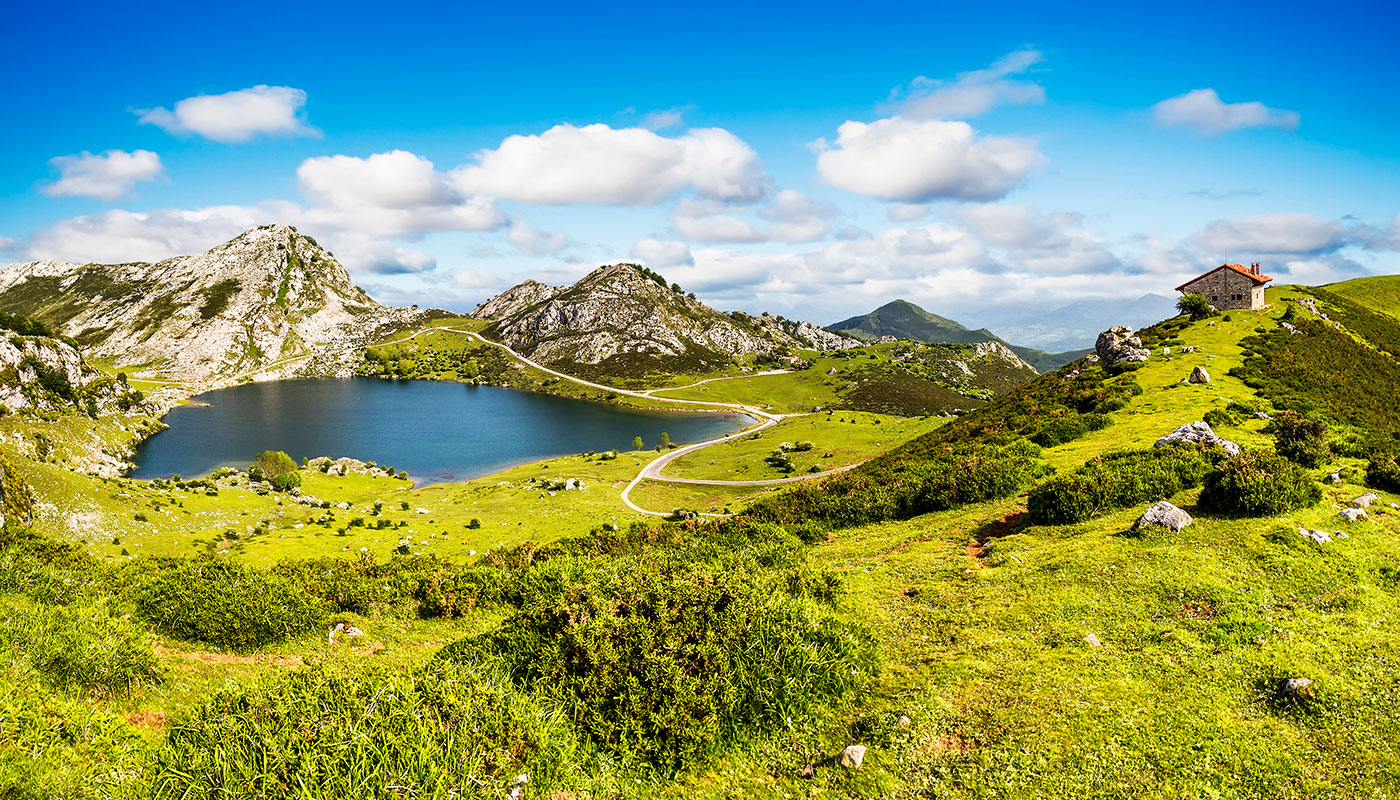
The natural environment surrounding Bachkovo Monastery is as captivating as the ensemble itself. The Rhodope Mountains, with their dense forests and mountainous landscapes, provide numerous opportunities for exploration.
Towards the Bachkovo waterfall
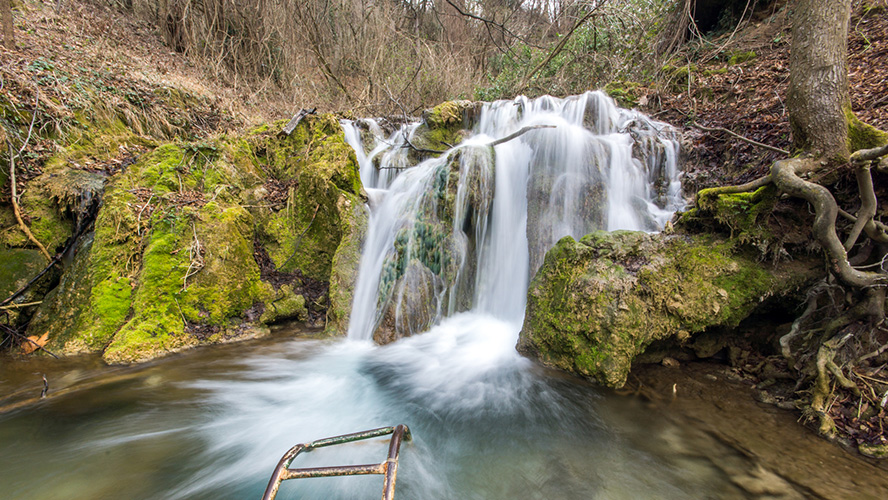
Just a few minutes from the monastery, you will find trails leading to hidden waterfalls and natural viewpoints. One of the most popular is the path to the Bachkovo waterfall, a small but picturesque cascade that is perfect for a short hike.
Asenova Krepost
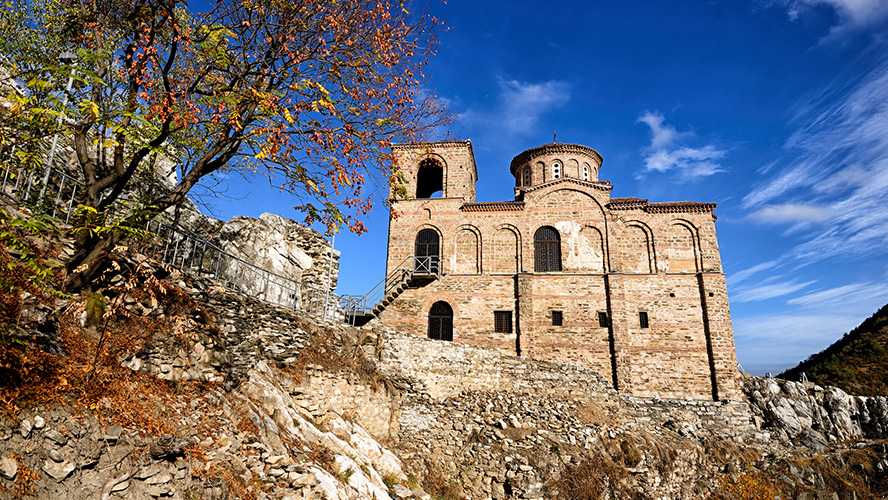
Just 10 kilometres from the monastery is Asenova Krepost (Asen’s Fortress), a medieval castle perched on top of a cliff. Although in ruins, its strategic location and well-preserved church make it a fascinating outing to round off your visit to the monastery.