






















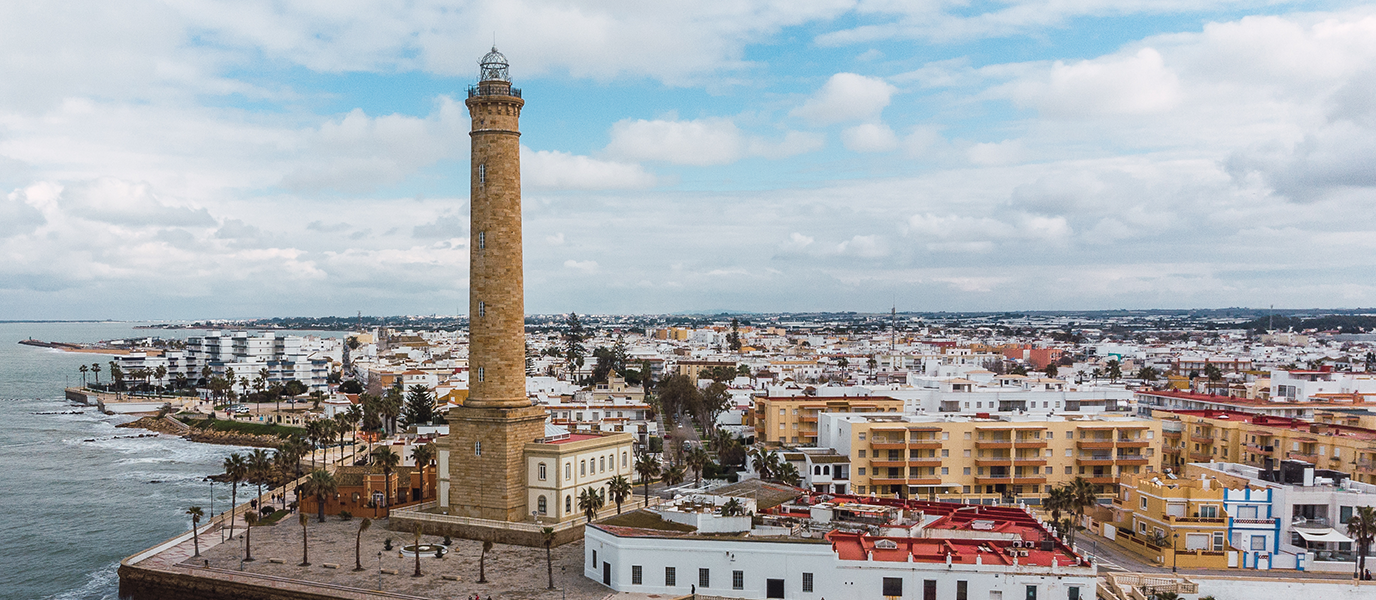
On the skyline of the Costa de la Luz, where the Atlantic gently laps the sands of Cadiz with a steady rhythm, stands a majestic tower that has kept watch over ships and tides for over 150 years. Chipiona Lighthouse isn’t just a functional structure for navigation, it’s a landmark of 19th-century engineering, a window onto Andalusia’s maritime past and a place that still inspires awe today. Its 69-metre height, making it the tallest in Spain and one of the tallest in Europe, isn’t the only thing that makes it special. Its serene and steadfast presence has endured storms, the passing of the centuries and sweeping changes in history.
- Historical context: a light guiding the seas since ancient times
- Where is Chipiona Lighthouse and how to get there: the edge between the vast ocean and the land
- Can you visit Chipiona Lighthouse? Yes, and the views are worth every step
- Information and tips for a smooth visit
Historical context: a light guiding the seas since ancient times
Although the current lighthouse was inaugurated in 1867, its history goes back much further. In Roman times, a similar tower stood here, known as the Turris Caepionis, said to have been built to warn ships of the rocky shallows of Salmedina. This ancient tower, mentioned by Pliny the Elder, gave its name to present-day Chipiona and highlights the thousand-year-old heritage of the place.
For centuries, the coast of Cadiz saw waves of merchant ships, Atlantic voyages and returns loaded with treasure from the Americas. But it was also the site of many shipwrecks, thanks to the tricky currents at the mouth of the Guadalquivir and the lack of visibility on moonless nights. That’s why, in the mid-19th century, it was decided that a modern lighthouse was needed to meet new navigation requirements.
The design was commissioned to Catalan engineer Jaime Font, who created a cylindrical tower 69 metres high, built with “ostionera” stone from local quarries. The result was a solid yet elegant tower, powerful in presence, which started operating on 28 November 1867. Since then, its light, first fuelled by olive oil, then paraffin, and now electricity, has witnessed the transformation of the maritime world.
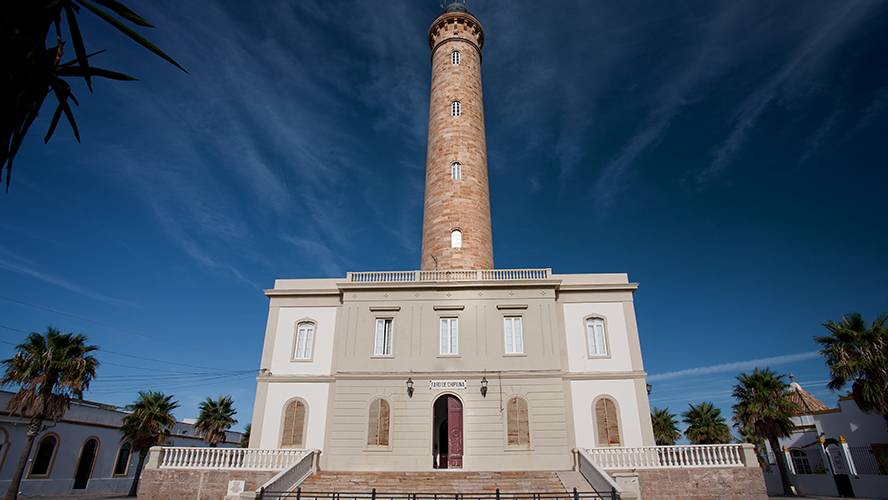
Where is Chipiona Lighthouse and how to get there: the edge between the vast ocean and the land
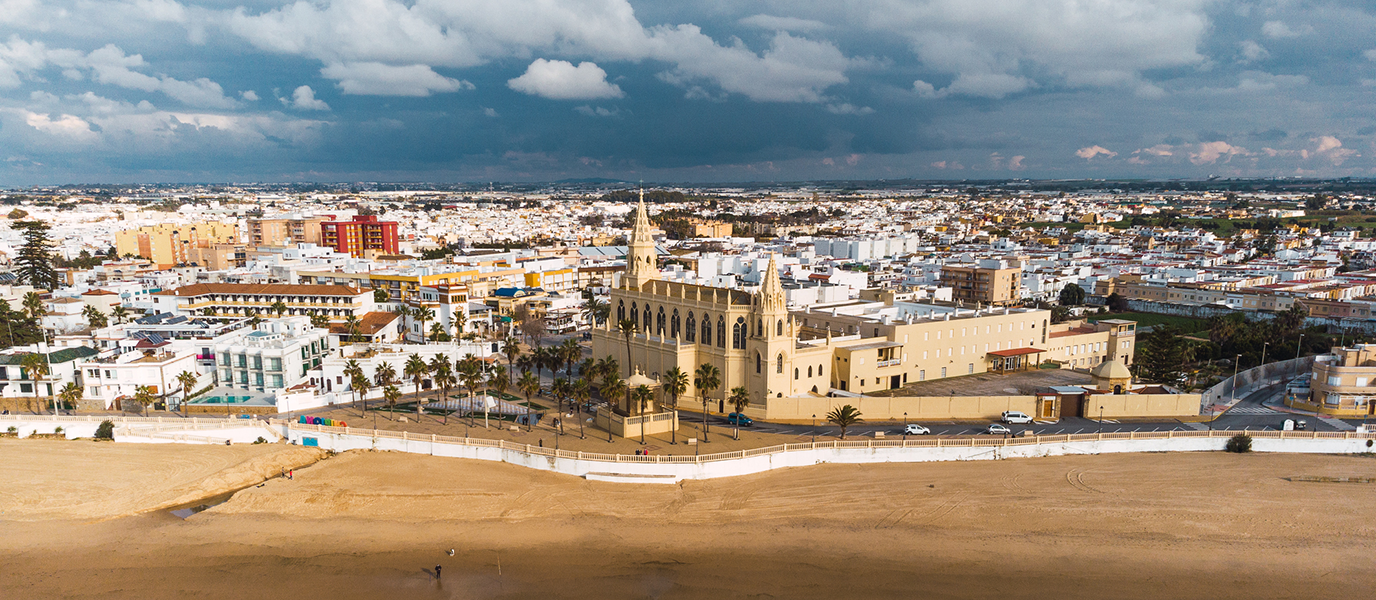
Chipiona Lighthouse is right at the tip of the town’s coastline, where the Atlantic meets the Guadalquivir River. It stands on a rocky platform just metres from the sea, surrounded by a promenade that links with Regla Beach to the south and the current-swept coast to the north. Its location is no accident. From here, it oversees the entrance to the Guadalquivir estuary and offers visibility of over 25 nautical miles.
Getting there is easy, whether on foot or by car. Chipiona is well connected by road to other towns in the province like Sanlúcar de Barrameda and Rota. For travellers without a car, there are regular buses from Cadiz and Jerez de la Frontera, which also has a train station and airport. From the centre of Chipiona, it’s just a ten-minute walk along Avenida del Faro to the lighthouse base. There, you’ll find a lovely setting dotted with benches, palm trees and panoramic sea views.
Can you visit Chipiona Lighthouse? Yes, and the views are worth every step
One of the great things about Chipiona Lighthouse is that, unlike many historic lighthouses, you can actually go inside. That said, visits are guided and must be booked in advance, as access is managed by the Port Authority of Seville. Tours take you up the tower via a spiral staircase with over 300 steps, which is a bit of a climb, but the views at the top are well worth it.
From the lantern room you get a spectacular panorama, across the Bay of Cadiz, the outline of Doñana to the north and, on clear days, even the coast of Huelva. You can also spot Chipiona’s layered urban sprawl, its fishing port, beaches and the stretch of vineyards surrounding the town. On the technical side, the lighthouse lantern is still fully operational, emitting a light that can be seen over 40 kilometres away.

Information and tips for a smooth visit
Chipiona Lighthouse is open to visitors at specific times, usually at weekends and during the tourist season. Tickets are handled by the local Tourist Office or partner organisations and cost five euros (free for children under seven). It’s best to wear comfortable shoes because the climb is safe but long. Try to avoid the hottest part of the day in summer, as there’s no natural ventilation inside.
If you’re not up for the climb, the area around the lighthouse still makes for an interesting visit. There are information panels, commemorative sculptures and benches where you can watch the sunset. The Paseo Costa de la Luz, which runs along this stretch of coast, connects with restaurants, bars and ice cream shops, ideal for rounding off your visit with a bite by the sea.