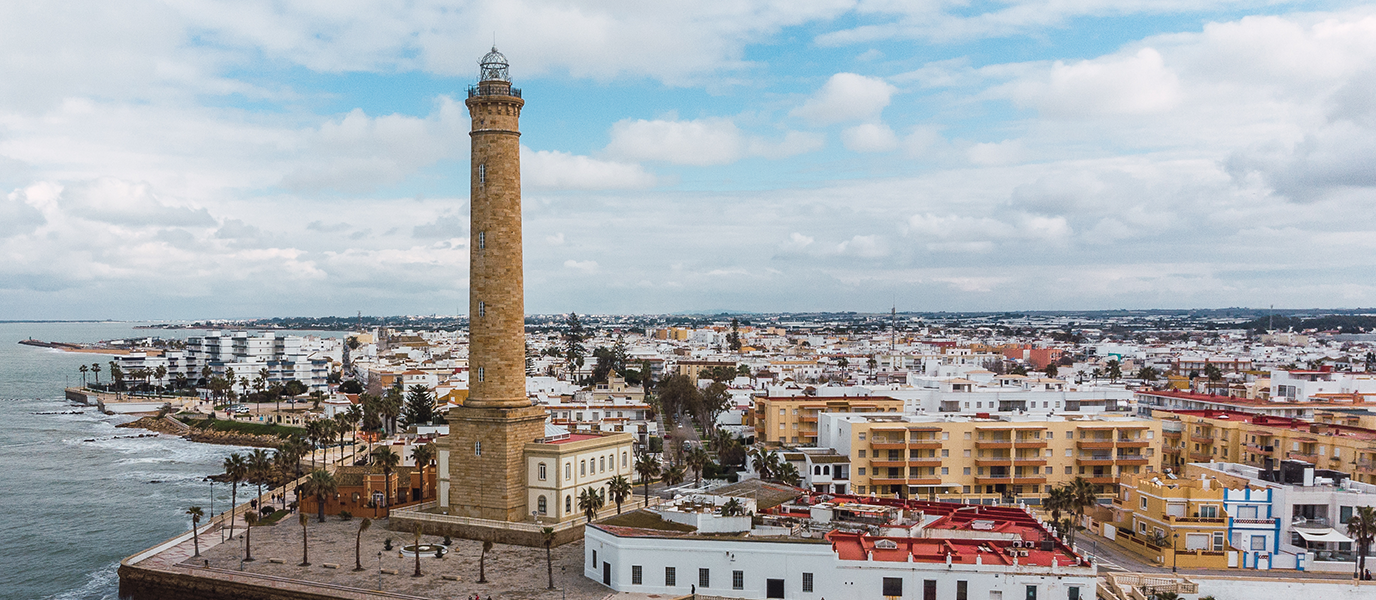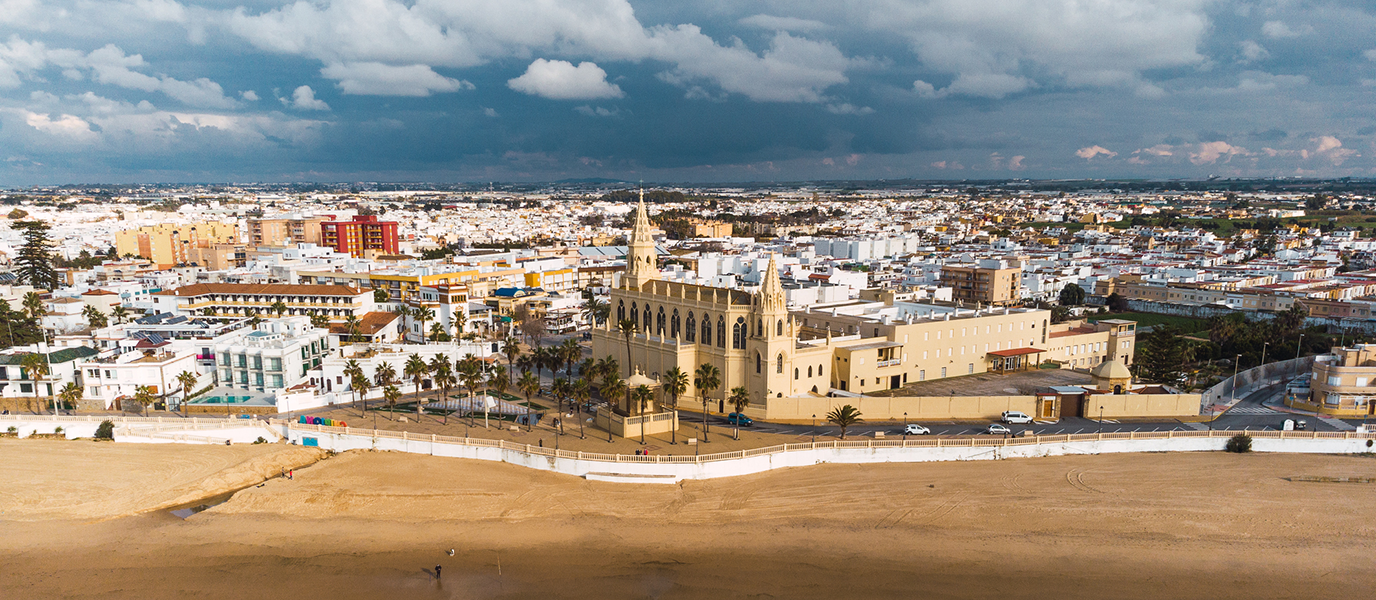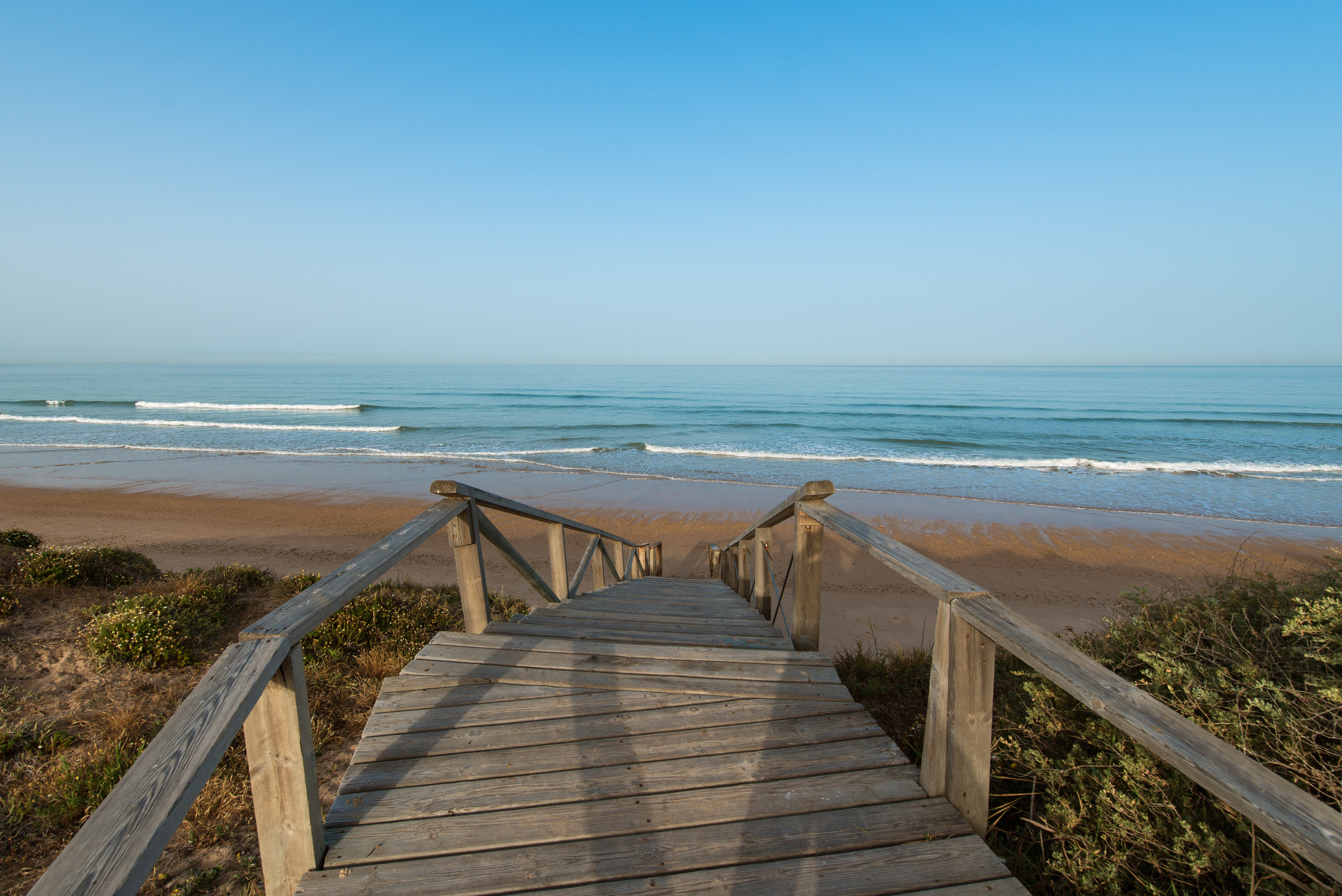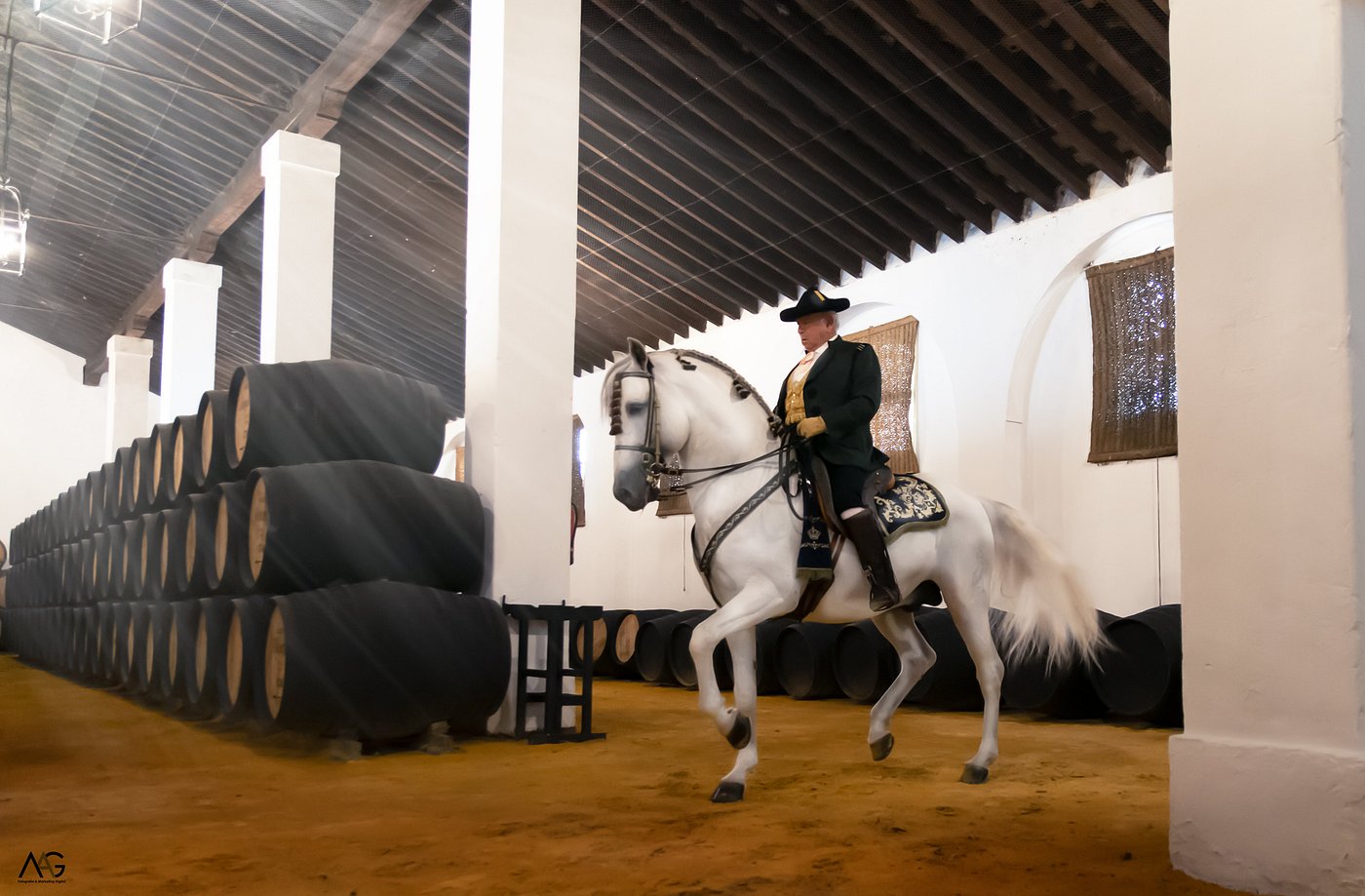

















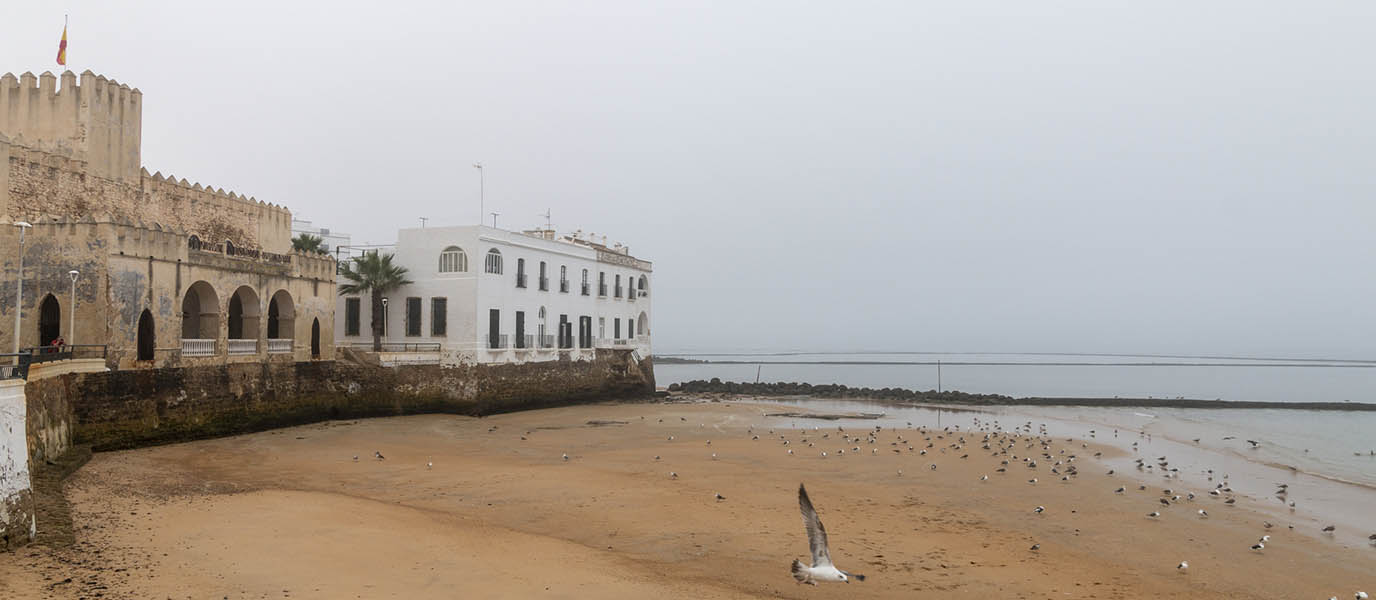
Since ancient times, Chipiona (and the province of Cádiz generally) has been an enclave much coveted by all the civilisations that have passed through the Mediterranean region. Many peoples, including the Phoenicians, the Punics, the Romans and the Arabs, made settlements here, attracted by its privileged position, and they left vestiges of their culture in various monuments and other historical treasures. That is the case of Chipiona Castle: a fortress literally bathed by the sea.
The building’s origins are uncertain, but it is thought that it was built during the fifteenth century on the site of a former Muslim structure. Some academics believe it was built on the orders of Alonso Pérez de Guzmán ‘el Bueno’, although it is more likely that it was constructed by the Lords of Sanlúcar to defend the area from the constant pirate attacks from North Africa. What is known for certain is that throughout its history, the castle has undergone many changes, as the original building was much smaller, had few openings and had only one storey.
The history of Chipiona Castle
Chipiona Castle as we see it today is the result of a series of remodellings. It seems that during the sixteenth and seventeenth centuries significant work was undertaken to alter its original layout — and to build a second storey. We also know that the castle has had different uses throughout its history. It served as a chapter house for Chipiona Town Hall; it was a parish priest’s residence in the seventeenth century, a local prison in the eighteenth century, and a Civil Guard barracks during the nineteenth century. And, strangely, for a good part of the nineteenth and twentieth centuries, it was a hotel.
In the nineteenth century, the Dukes of Montpensier tried to turn Chipiona into a major tourist enclave for the aristocracy and wealthy families. So the castle was redesigned, its rooms were divided up, and a tower was built. Another important architectural change occurred in 1922 when, for over five years, the castle became a residence for Carlos de Borbón and Luisa de Orleáns, members of the Spanish Royal Family. Another of the castle’s famous guests was María de las Mercedes de Borbón, grandmother of the current King of Spain, who wrote about it in her memoir ‘Yo, María de Borbón’.’ [I, María de Borbón]. The castle was declared an Asset of Cultural Interest in 1985, in 2000 it became part of Chipiona’s municipal heritage, and it was opened to the public on 30th April 2009. Since then, many cultural events have been held in the fortress.
What can you see at Chipiona Castle
Chipiona Castle is very well preserved, and both the edifice itself and its surroundings attract visits from both locals and tourists. The building’s floor plan is square, and its façade is sand coloured. Its two storeys are covered with groin vaults, and it has a square tower. It has lancet windows and the entire building is surrounded by battlements.
What to see inside Chipiona castle Currently, the Interpretation Centre is hosting ‘Cádiz and the New World’. This exhibition is fascinating from a cultural point of view, as it demonstrates the importance of the province of Cadiz in the discovery and subsequent colonisation of America. It covers a period of history of at least four centuries: from 1492, the date of the discovery of America, until 1812, the year when the Constitution of Cádiz (known as ‘La Pepa’) was promulgated.
The Interpretation Centre: ‘Cádiz and the New World’
Inside Chipiona Castle, the Interpretation Centre has housed the ‘Cádiz and the New World’ exhibition since 2016, designed to show the important role played by Cádiz in the discovery, colonisation and exploitation of the New World, as three of Columbus’s four voyages set out from here, and Cádiz was also the starting and finishing point of the first voyage around the world.
The exhibition deals with the period of history from the years leading up to the discovery of America until the 1812 promulgation of the Constitution of Cádiz. The exhibition occupies five rooms, and is divided into 14 themed sections covering important topics such as the privileged position of the province of Cádiz, the different types of boats used on the voyages of discovery, the part played in the Discovery by important Cádiz citizens, the entrepreneurial strategies related to sailing and commercial activity, the defensive system of the Bay of Cádiz, and the urban, scientific and artistic development of the age.