











Konya, situated in the vast Anatolian steppe, is known as the birthplace of Sufi mysticism and the home of Mevlana Rumi, the great 13th century Persian poet and thinker. Yet beyond its fame as a centre of Sufism, this city dazzles with its Seljuk and Ottoman heritage, its turquoise-domed mosques and tile-decorated madrasas that tell centuries of history. Its streets are lined with bustling markets, medieval caravanserais and minarets that stand as witnesses to a glorious past. When visiting Konya, you will not only see its most iconic monuments but you will feel its soul, which continues to attract pilgrims and travellers searching for more than just a sightseeing tour.
- History and location of the city: Konya, the heart of Seljuk power and mysticism
- What to see on your visit: from Mevlana’s tomb to Seljuk treasures
- Dervish ceremony: the mystical whirl that connects with the divine
- Where to eat: traditional Anatolian flavours
- Nearby visits: ruins and landscapes that tell ancestral stories
History and location of the city: Konya, the heart of Seljuk power and mysticism
Konya is one of the oldest cities in Anatolia, with a history dating back more than 4,000 years. It was a major settlement during Hittite times and later became part of the Phrygian Empire and the Kingdom of Lydia. However, its rise began with the Romans, when it was known as Iconium, and later with the Byzantines, who fortified it because of its strategic location on the Silk Road.
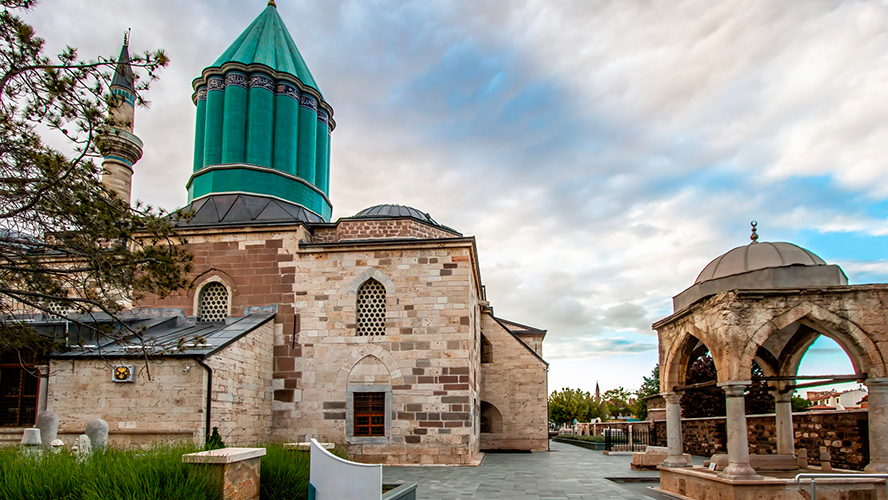
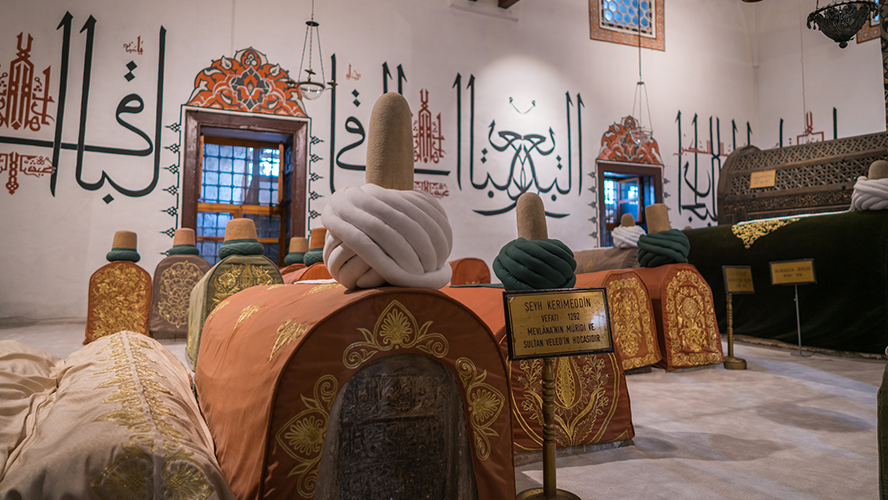
Konya’s moment of greatest splendour came in the 12th century, when it became the capital of the Sultanate of Rum, a Seljuk state that ruled over most of Anatolia after the arrival of the Turks from Central Asia. Under the Seljuks, the city flourished as a cultural and architectural centre, with the construction of madrasas, mosques and caravanserais that can still be seen today. It was then that Mevlana Rumi settled in Konya and founded the order of the whirling dervishes, whose dance symbolises the soul’s journey in search of the truth. His mausoleum, now the Mevlana Museum, is today one of the leading spiritual centres of the Islamic world and the most visited place in the city.
In the 15th century, after the fall of the Seljuks, Konya became part of the Ottoman Empire, maintaining its religious and commercial importance. Over the centuries, it has become a centre of spirituality, attracting pilgrims and travellers from all over the world. Today, although Konya is a modern metropolis, it still retains its historical essence, with traditional bazaars, Seljuk monuments and the mystical atmosphere that has characterised it for centuries.
What to see on your visit: from Mevlana’s tomb to Seljuk treasures
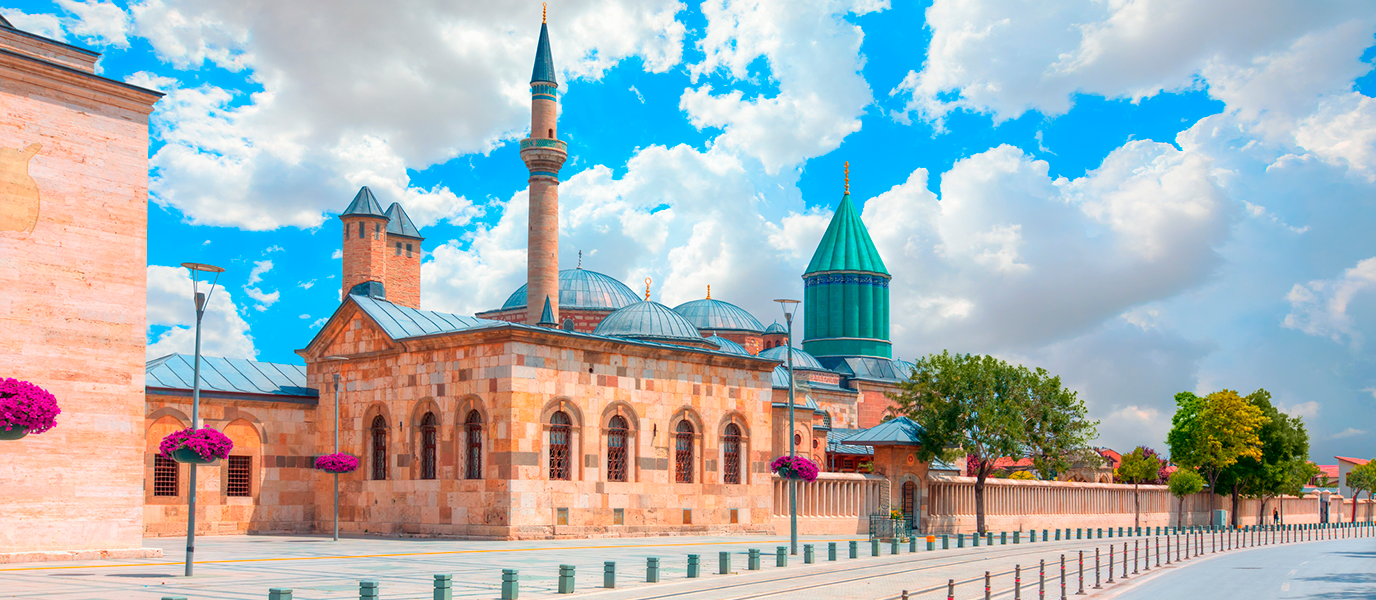
Konya’s main landmark is the Mevlana Mausoleum, a pilgrimage site where the remains of the Sufi poet Rumi were laid to rest. Its turquoise dome and intricate mosaics make it an icon of the city. Inside, visitors can immerse themselves in the life and teachings of the Sufi master, surrounded by ancient manuscripts, ritual objects and mesmerising Persian calligraphy.
Nearby is the Alaeddin Mosque, the oldest in Konya, built in the 13th century on a hill overlooking the city. Its structure reflects the transition between Seljuk and Ottoman architecture, with a slender minaret and an austere but imposing interior. The Seljuk sultans who made Konya their capital are buried next to the mosque in the Alaeddin Palace.
Another of the city’s treasures is the Karatay Madrasa, a former Koranic school founded in 1251, now a museum of Seljuk ceramics and art. Its cobalt blue mosaics and dome decorated with celestial stars evoke the grandeur of medieval Islamic culture. No less impressive is the Ince Minareli Madrasa, which is outstanding thanks to its ornate minaret and exquisite collection of stone carvings.
For those wishing to explore Konya’s caravan past, a visit to the Sultanhani Caravanserai, located 100 km from the city, is a must. This 13th-century fortress was a key point on the Silk Road, where merchants and travellers rested before continuing their journey. Its monument structure, with thick stone walls and a large courtyard, offers a glimpse of life in those times of caravans and trade.
Dervish ceremony: the mystical whirl that connects with the divine
Konya is the only place in Turkey where you can see the ceremony of the whirling dervishes in its most authentic context. This ritual dance, known as sema, is a moving meditation in which the dervishes whirl around themselves in white robes and black sashes, in a trance symbolising the soul’s ascent to divinity.
The ceremony takes place at the Mevlana Cultural Centre, where every Saturday evening visitors can witness this tradition that has been kept alive for centuries. The music, composed by ney flutes and drums, creates an enveloping atmosphere that transports you to another world.
The best time to experience Konya’s spirituality is during Mevlana Week, celebrated every December in honour of the poet’s death anniversary. During those days, the city is filled with cultural events, poetry recitals and Sufi ceremonies that attract thousands of people from all over the world.
Where to eat: traditional Anatolian flavours
Konya’s cuisine is a reflection of its history, with dishes that have been passed down from generation to generation. One of the most famous is etli ekmek, a flatbread with minced meat and spices, which is baked until crispy. You can try it at places like Hacı Şükrü, a restaurant with over 100 years of history.
Another iconic dish is fırın kebabı, a lamb slow-roasted in a wood-fired oven, which falls apart at the first bite. At Cemo Restaurant, travellers can enjoy this speciality accompanied by fresh bread and homemade yoghurt.
For something lighter, sac böreği, a kind of pastry stuffed with cheese and herbs, is well worth a try in the city’s traditional cafés such as Mevlevi Sofrası. To end the meal, there is nothing better than a glass of ayran (yoghurt drink) or a sweet höşmerim (cheese-based dessert) accompanied by Turkish tea.
Nearby visits: ruins and landscapes that tell ancestral stories
Fifty kilometres from Konya lies Çatalhöyük, one of the oldest Neolithic cities in the world, with more than 9,000 years old. This archaeological site reveals how the first human communities lived, with adobe houses arranged in an urban layout without streets.
If you prefer a cultural visit closer to hand, a few kilometres from the city is Sille, an ancient Greek village with Byzantine churches, stone houses and an atmosphere that takes you back in time. Its Orthodox Christian monastery of Saint Chariton is one of the best preserved in the region and a testimony to the coexistence of cultures that characterised Anatolia for centuries.
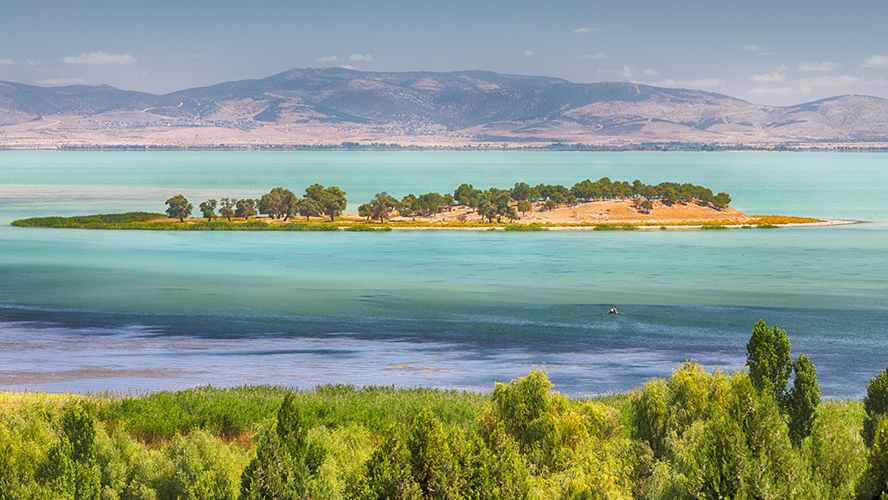
Another worthwhile sight is Beyşehir Lake, a haven of biodiversity where you can go bird watching and enjoy boat trips. Its crystal clear waters reflect the sky with an almost unreal purity, making it a perfect place to unwind and connect with nature.
Finally, if you feel like going a little further afield, there are two other highly recommended places. The town of Akşehir, some 130 kilometres away, takes you on a journey into the Ottoman past and pays homage to Nasreddin Hodja, the legendary character from Turkish folklore famous for his stories of wisdom and humour.
You can also go to Tuz Lake, one of the largest salt lakes in the world. Its waters change colour depending on the light, creating a surreal landscape where the sky and earth seem to merge. In summer, when the water evaporates, a thick layer of salt forms, turning the lake into a natural mirror.