























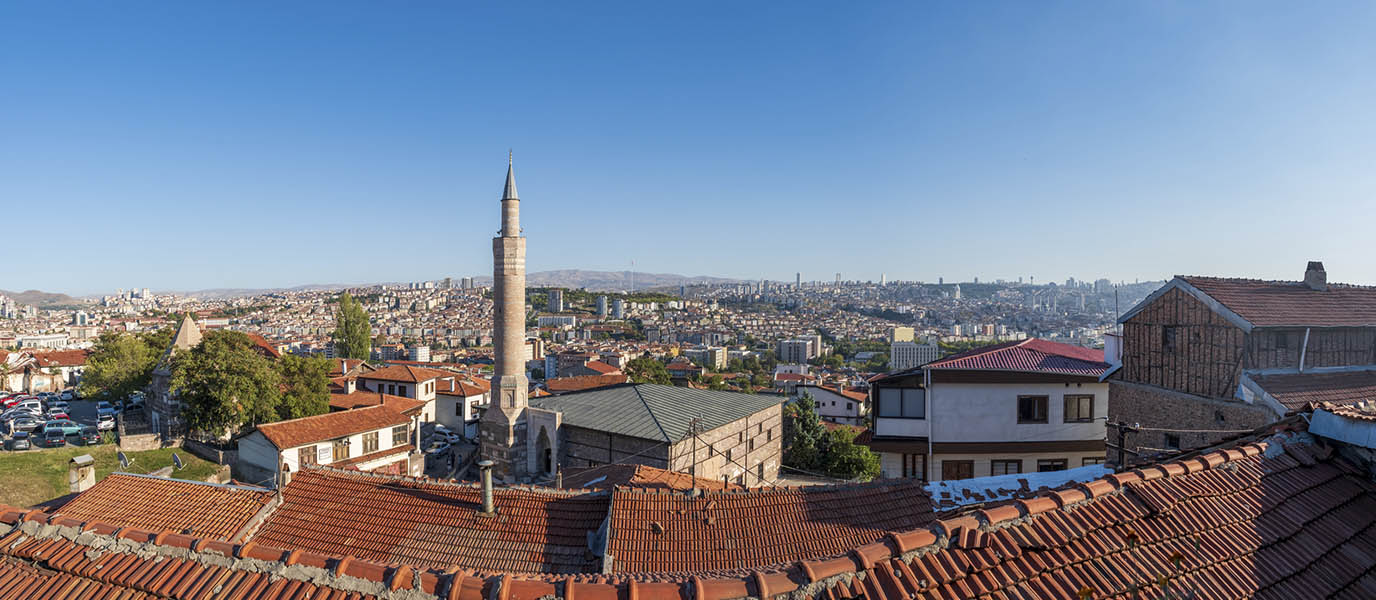
In the historic neighbourhood of Ulus, where the cobbled streets are steeped in centuries of history, stands the Arslanhane Mosque, an architectural jewel that transports visitors back to the splendour of medieval Anatolia. This temple, built in the thirteenth century under Seleucid rule, is one of the few wooden mosques that still survive in Turkey, a remarkable vestige of the accomplished craftsmanship of the age. Its name, which means “Mosque of the House of the Lion”, comes from the sculpture of a lion carved in stone that can still be seen in its courtyard, an image that evokes the strength and nobility of the civilisation that built it. Beyond its historical value, the Arslanhane Mosque is a sanctuary of calm in the midst of the bustling Turkish capital. The mosque’s juniper wood columns, with their capitals carved with intricate geometrical patterns, tell a story of devotion and patience, where every last detail has been conceived to reflect the harmony of the Islamic vision of the universe.
- The history of the Mosque Arslanhane, a witness to medieval Anatolia
- Information of interest to visitors: a sanctuary of peace in the midst of Ankara that must be respected
- What you can see inside: a forest of juniper and light
- Other religious monuments in Ankara, a city driven by faith
The history of the Mosque Arslanhane, a witness to medieval Anatolia
The history of the Arslanhane Mosque dates back to the late thirteenth century, when Ankara still formed part of the Sultanate of Rum, the great Seleucid kingdom that dominated Anatolia. At that time, the city was a melting pot of cultures, in which Byzantine, Arab and Persian influences mingled in its architecture and its daily life. It was in this context of cultural effervescence that a group of artisans and local intellectuals drove forward the construction of this mosque, seeking a perfect equilibrium between the spiritual and the aesthetic. The temple is also known by the name Ahi Şerafettin, a prominent Turkish Sufi and leader of the Ahi Order that built the mosque, an organisation similar to a guild of artisans and merchants.
The Arslanhane Mosque differs from many other mosques in that, instead of stone, it made innovative use of wood. Its columns, beams and ceiling were carved from juniper wood, a material known for its resistance to the passage of time and for the delicate aroma that emanates from it, filling the air with a subtle fragrance, even centuries later. This is not a minor detail: the Seleucids believed that the materials used to construct sacred places should not only last, but should also enrich the sensory experience of the faithful.
The mihrab, carved from marble and decorated with Qur’anic inscriptions in Kufic scripts, is another of the mosque’s distinctive features. Its relief decoration displays an exquisite combination of geometric and floral arabesques, an artistic style typical of the Seleucids, which would later influence Ottoman architecture.
During the Ottoman age, Arslanhane underwent several restorations that respected its original design, but with the addition of decorative touches typical of the new empire. Nevertheless, the mosque retained its Seleucid character intact, making this one of the few wooden mosques that have survived up to the present day.
Over the centuries, this place has witnessed countless prayers and religious lessons and gatherings. Its location, on a hill near Ankara’s Citadel, has granted it a central role in the spiritual life of the city. Still today, the walls of Arslanhane echo to the sound of the sermons and conversations that have shaped the religious and cultural identity of the region.
Information of interest to visitors: a sanctuary of peace in the midst of Ankara that must be respected
Located near Ankara’s Citadel, in the Ulus district, the mosque is easily accessible to anyone exploring the city’s historic quarter. Admission is free of charge, making this an essential stop for tourist and locals interested in history and architecture.
It is important to remember that this is an active place of worship, and therefore visitors must observe the relevant protocols. It is advisable to dress modestly, covering your shoulders and knees, and women need to cover their heads with a scarf. In addition, visitors must take off their shoes before entering, so it can be a good idea to wear socks for extra comfort.
The mosque is open to the public every day, but it is best to avoid prayer times, particularly at midday on Fridays, when the mosque is more crowded with worshippers. Mornings tend to be the quietest time for a relaxed, contemplative visit.
What you can see inside: a forest of juniper and light
Stepping through the door of the Arslanhane Mosque is like entering another age. The first thing you will notice is the ceiling of dark wood, supported by a series of 24 juniper wood columns. These columns, positioned in perfect symmetry, create the impression of a petrified forest, where architecture and nature merge in a single space. Each column is finished with a capital finely carved with geometrical patterns inspired by Islamic teachings on the mathematical perfection of the universe.
The mihrab, set into the south wall, is a masterpiece in carved stone. Its marble structure is decorated with intertwined motifs that evoke infinity, while lines from the Qur’an carved into its surface demonstrate the Seleucids’ mastery of calligraphy. Next to the mihrab is the minbar, the pulpit from which the Iman leads the services. Made of wood, it is an impressive feat of exquisite marquetry, inlaid with mother-of-pearl and geometric motifs symbolising the divine order.
Light plays a vital role in the atmosphere that pervades the mosque. Instead of large windows, Arslanhane has small apertures decorated with latticework that filters the light from outside and projects it in shifting patterns on the floor and walls. This effect, which changes according to the time of day, lends the space an air of reflection and contemplation.
Another detail that does not pass unnoticed is the fragrance that pervades the air. Unlike stone mosques, which tend to have colder temperatures and acoustics, the use of wood at Arslanhane creates a warmer, cosier atmosphere. The Juniper wood, with its characteristic scent, contributes a unique sensory dimension, so that visitors can not only see and hear, but also smell the history of this place.
In one corner inside the building, a small ablution fountain reminds us of the importance of water in the Islamic tradition, not merely as a means of purification, but also as a symbol of life and spiritual renewal.
Other religious monuments in Ankara, a city driven by faith
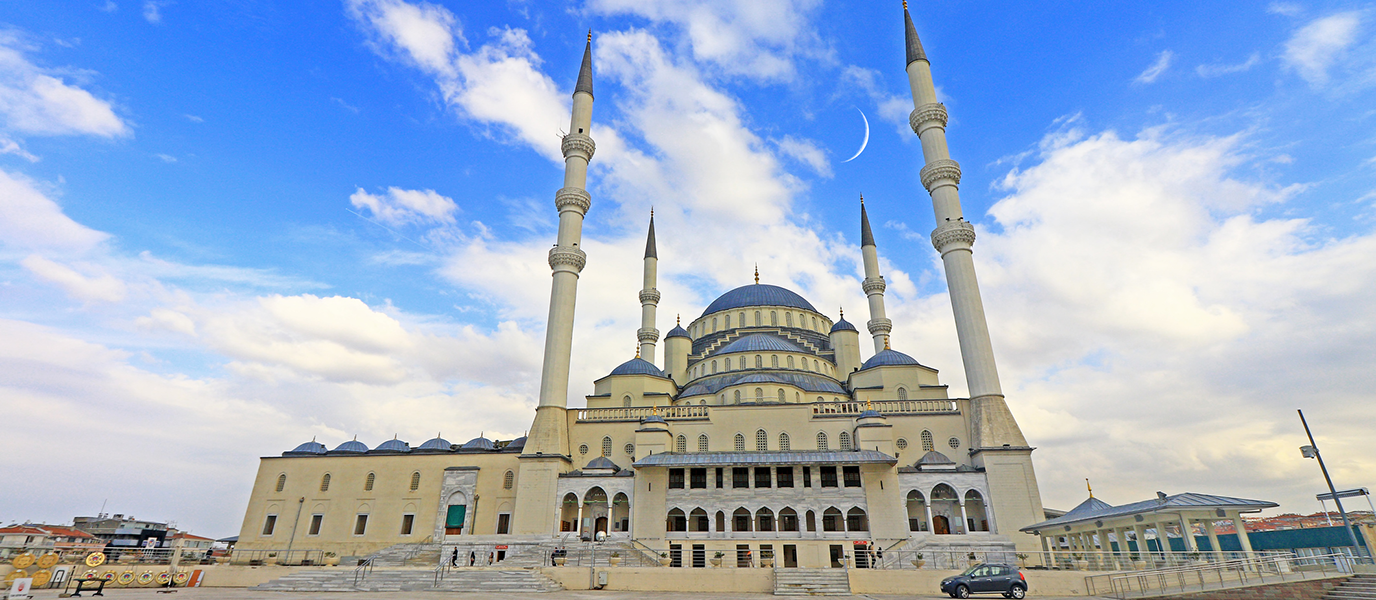
Beyond its modern façade as an administrative capital, Ankara is home to a wealth of religious monuments that attest to the diversity and depth of its spiritual heritage. One of the most outstanding examples is the Mosque of Kocatepe, a monumental edifice that dominates the city’s horizon. Built between 1967 and 1987, its design combines traditional, Ottoman elements with contemporary touches, and provides space for over 24,000 worshippers. Its four minarets and large central cupola make it an unmistakeable reference point in Ankara.
Another point of interest is the Hacı Bayram Mosque, located in the Ulus district. Erected during the fifteenth century in honour of the poet and mystic Hacı Bayram Veli, this temple is an exquisite example of early Ottoman architecture. Its proximity to the Temple of Augustus and Rome, a vestige of the Roman age, emphasises the historical continuity and co-existence of different religious traditions in the city.
Then there is the Mausoleum of Ataturk, known as Anıtkabir which, although not a religious monument in the traditional sense, is a national place of pilgrimage. This majestic complex houses the tomb of Mustafa Kemal Atatürk, the founder of the Republic of Turkey, and is a symbol of the secularism and modernity that he advocated.