











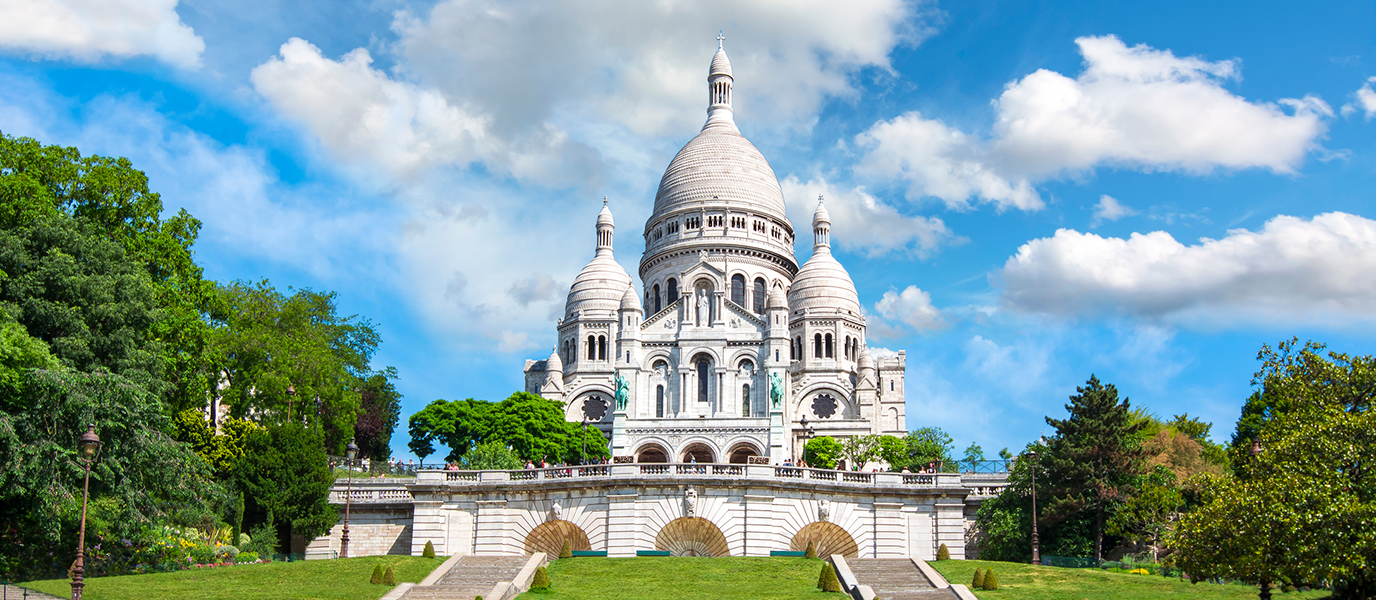
Going up to Montmartre is like entering a different Paris, frozen in time. Its steep, cobbled and stair-lined streets tell stories of artists, revolutionaries and dreamers who transformed this village into one of the most famous districts in the world. At the end of the 19th century, Montmartre became the artistic hotspot of Parisian life: in its taverns and cabarets, the pictorial and literary avant-gardes that marked an era were conceived. Today, although overrun by tourists, it retains a magic that makes it unique: from the imposing Sacré-Coeur Basilica to the Place du Tertre, where open-air painters still set up shop, every corner invites you to stop and find out about an anecdote, a legend or a piece of history. Strolling through Montmartre means getting lost among cafés frequented by Picasso and Dalí, variety theatres that marked an era, and cemeteries where universal artists rest. The neighbourhood has never ceased to reinvent itself, thus keeping its bohemian aura intact.
- History of the bohemian quarter of Paris: from vineyards to the birthplace of modern art
- Highlights when visiting Montmartre: a living postcard
- Where to eat in Montmartre: among centuries-old bistros and tables with a view
- Curiosities and facts about the neighbourhood: legends among cobblestones
History of the bohemian quarter of Paris: from vineyards to the birthplace of modern art
Before becoming a neighbourhood, Montmartre was an independent village until 1860, when it was annexed to Paris. Its origins date back to Roman times, when a temple dedicated to Mars was erected there, from which it derives its name: ‘Mons Martis’ or ‘Mount of Mars’. In the Middle Ages, Montmartre was full of mills and vineyards, some of which still survive, such as the famous Clos Montmartre, a testimony to the fact that the neighbourhood has always been rural and urban at the same time.
In the 19th century, Montmartre began to attract a different population: artists, poets, writers and revolutionaries found in this cheap and popular neighbourhood the ideal place to live and create. The Paris Commune of 1871 had Montmartre as one of its main focal points, and its taverns were soon filled with political and cultural gatherings. Cheap electricity, tax-free wine and nightlife attracted characters who are now part of the legend: Picasso painted at the Bateau-Lavoir, Van Gogh lived with his brother Theo on Rue Lepic, and Toulouse-Lautrec immortalised life at the Moulin Rouge.
The first artistic avant-gardes originated there: cubism, fauvism and surrealism were conceived in improvised workshops and cafés where artists, intellectuals and prostitutes mingled. That cultural effervescence turned Montmartre into a legend, the essence of which can still be felt as you stroll through its steep and narrow streets.
Highlights when visiting Montmartre: a living postcard
Montmartre is not just for visiting monuments, it is also a place where every corner seems to tell a story. While strolling, travellers will encounter churches, cabarets, artists’ houses, modern murals and panoramic views that sum up the entire city.
Sacré-Coeur Basilica: the white crown overlooking Paris
Erected after the French defeat in the Franco-Prussian War, the Sacré-Cœur Basilica is both a religious and political symbol. Its construction began in 1875 and was completed in 1914, although it was consecrated in 1919. Roman-Byzantine in style, its white travertine façade dominates the hill and has become one of the most recognisable landmarks in the Parisian landscape.
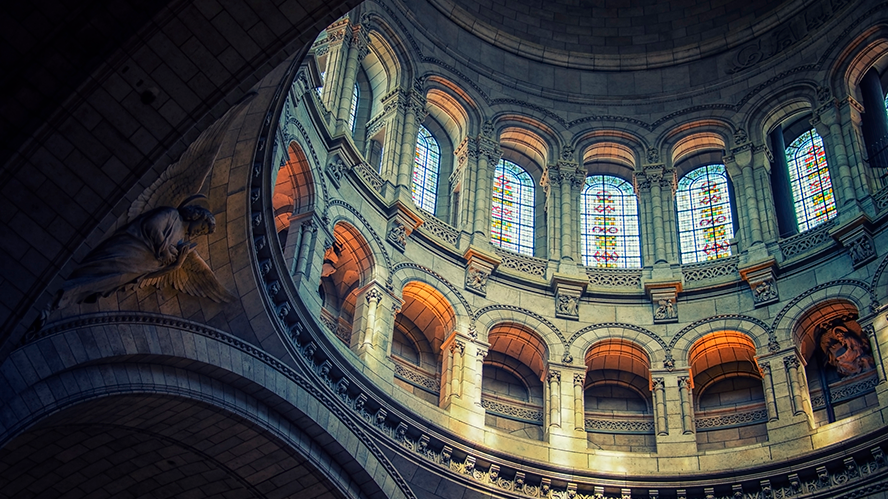
By climbing the more than 300 steps up to it, you will be rewarded with one of the best views of the city. From the Sacré-Cœur esplanade, Paris opens out onto a skyline dotted with domes and towers, with the Eiffel Tower and Notre Dame in the distance. Inside, visitors can admire one of the largest mosaics in the world, the ‘Christ in Majesty’, which covers the central vault.
Place du Tertre: the open-air painters’ workshop
A few steps from the basilica is the Place du Tertre, the artistic hotspot of Montmartre. In that small area, surrounded by cafés and terraces, dozens of painters set up their easels to portray tourists or sell Parisian landscapes. Although today the place has become a tourist attraction, it still retains the spirit of a neighbourhood that was home to the great masters of modernity.
The square, whose name means ‘hill’ in old French, has been a meeting place for artists since the 19th century. Many of them exhibited their first works there before they became famous. Today, in addition to the painters, the square is an excellent place to stop for a coffee and watch life go by, in an atmosphere where art is still present.
Moulin Rouge: lights, sequins and the origin of the cancan
Moulin Rouge, which opened in 1889, stands at the foot of the hill on Boulevard de Clichy. Its façade, with the characteristic red windmill, is one of the Paris icons. It was there that the famous French cancan was born, a daring dance that scandalised the society of the time and which Toulouse-Lautrec immortalised in his posters and paintings.
Moulin Rouge was a meeting place for artists, aristocrats and bohemians, a place of freedom where all social classes mingled. Today, as a world-famous extravaganza, it continues to provide its lavish revues every night, with feathers, choreography and live music, keeping alive a tradition that has been going on for more than a century.
Montmartre Cemetery: the silence of geniuses
Founded in 1825, Montmartre Cemetery is one of the most melancholic and fascinating corners of the neighbourhood. Among its tree-lined avenues lie figures as diverse as the composer Berlioz, the novelist Alexandre Dumas (son), the singer Dalida (with a sculpture that has become a place of pilgrimage) and the filmmaker François Truffaut. Strolling among the graves is a journey through France’s cultural memory.
Beyond its celebrities, the cemetery is a place of calm, with beautiful funerary sculptures and an atmosphere that contrasts with the hustle and bustle of the nearby streets. It is somewhat another side of Montmartre: that of remembrance and introspection.
Where to eat in Montmartre: among centuries-old bistros and tables with a view
Gastronomy is also part of the Montmartre experience. Rue Lepic and Rue des Abbesses are full of small bistros serving French classics such as coq au vin and soupe à l’oignon. Some venues retain their period atmosphere, with poster-covered walls and wooden tables where painters and writers used to sit.
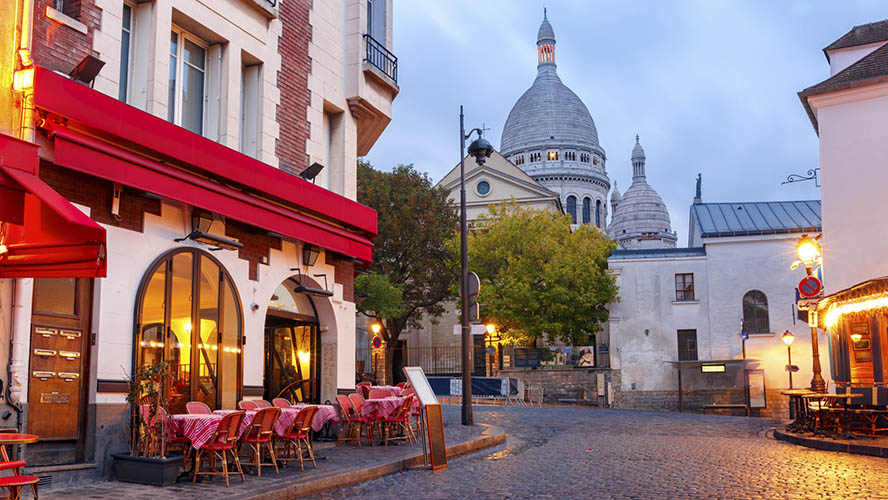
One of the most famous restaurants is La Maison Rose, a picturesque pink house that appears on countless postcards and was the haunt of artists such as Picasso. Another must is Le Consulat, a century-old café that still retains its bohemian charm. For those looking for something more contemporary, the area also has plenty of creative cuisine and wine bars serving labels from small French producers.
Curiosities and facts about the neighbourhood: legends among cobblestones
Montmartre is full of details that evade the hasty visitors. Hidden in its streets is the last urban vineyard in Paris, Clos Montmartre, which produces a few bottles of wine every year that are auctioned at the Harvest Festival. You will also find the ‘I Love You Wall’ at Place des Abbesses, where the phrase ‘I love you’ is written in more than 300 languages.
The neighbourhood was the setting for the film ‘Amélie’, and many of its corners, such as the Café des Deux Moulins, continue to attract fans of this classic French film. On Rue Norvins there is also a small carillon that still works and on Rue Saint-Vincent there is the Cabaret Au Lapin Agile, one of the oldest in Paris, where you can still listen to live French chansons.