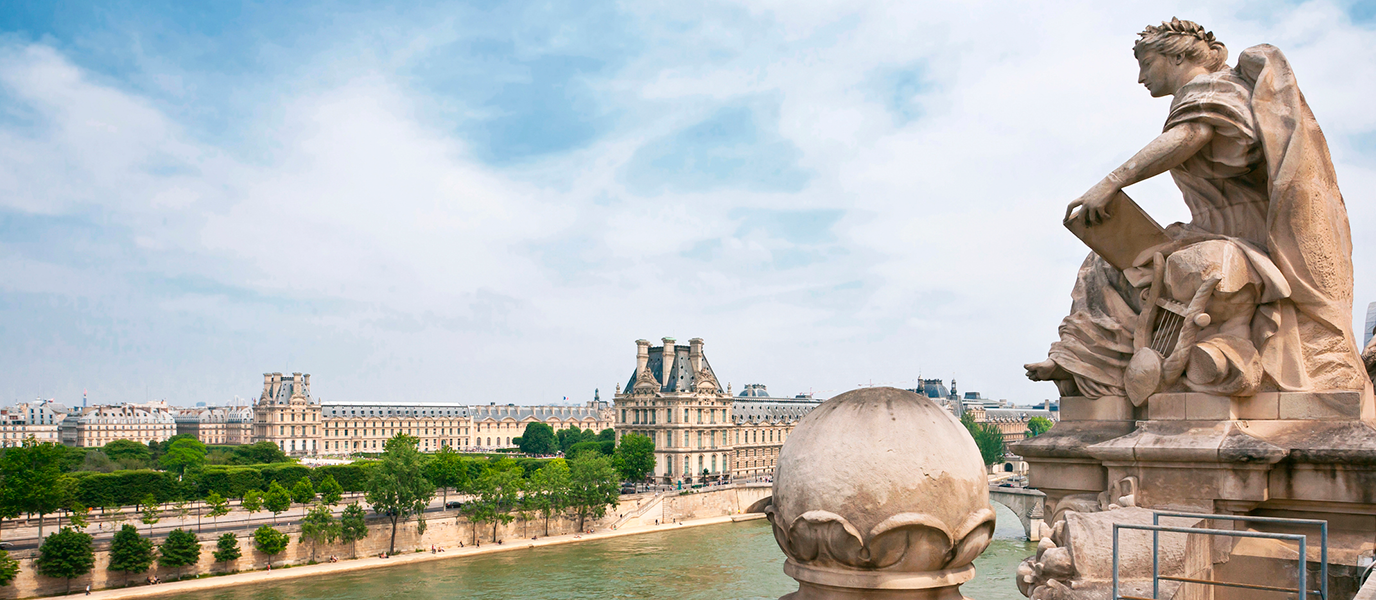



















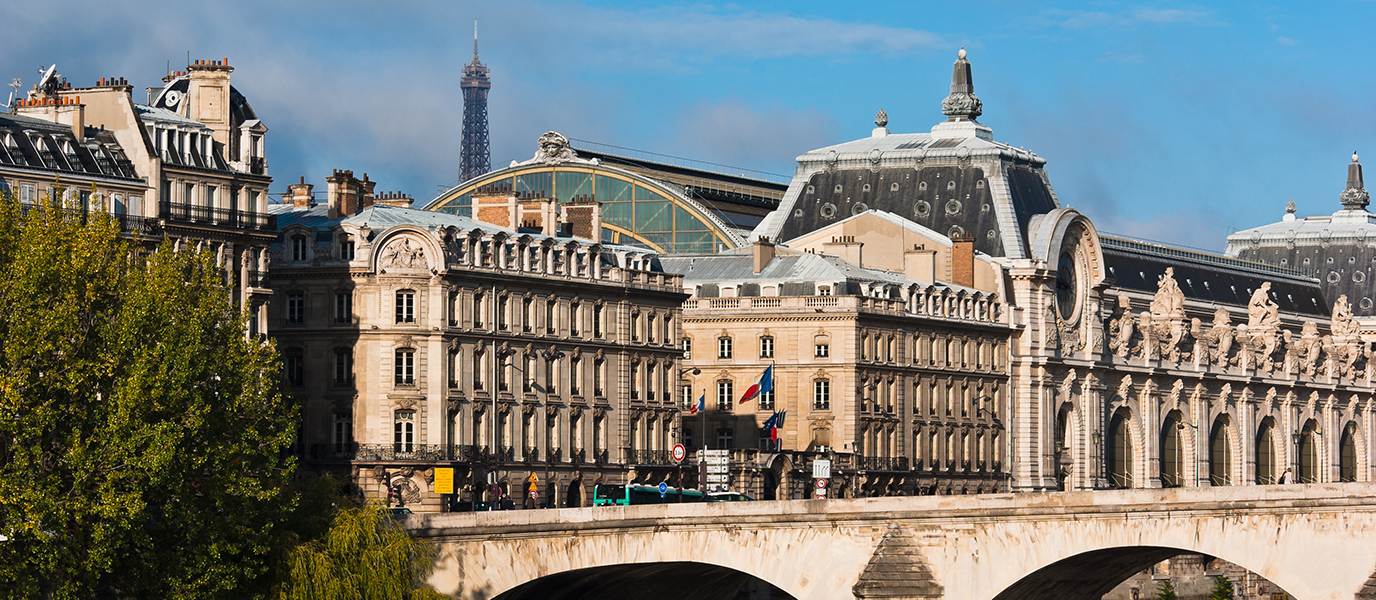
If you are interested in Impressionist art and you happen to be in Paris, you absolutely must visit the Musée d’Orsay, famous throughout the world as the home of the most important collection of Impressionist works, an outstanding collection including names such as Van Gogh, Degas, Monet, Renoir, Cézanne, Gauguin, Courbet and other painters from this twentieth-century artistic movement. Set in the heart of Paris, in the former Orsay railway station, this art museum also houses a valuable collection of art from the 1848 – 1914 period.
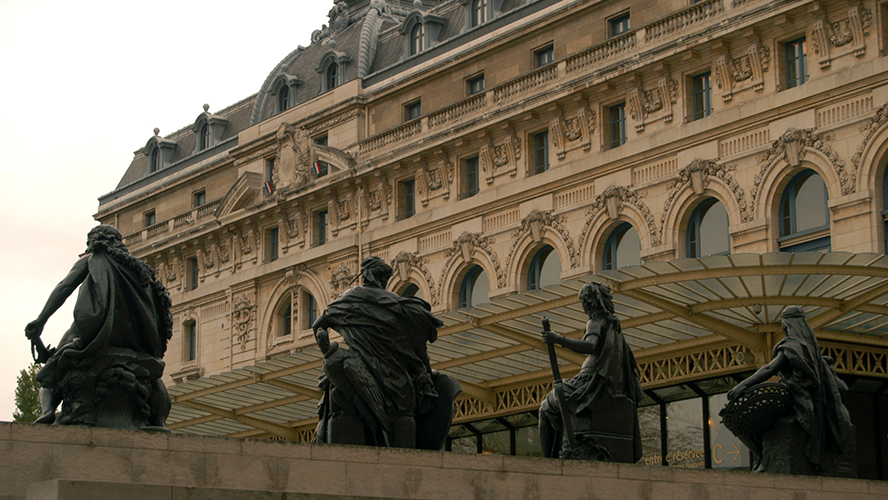
The old Orsay railway station was built in the late nineteenth century for the 1900 Universal Exposition of Paris, on land previously occupied by the Council of State and the Court of Public Accounts. Both institutions were housed in a building that was destroyed by fire in 1871 during the time of the Paris Commune.
- The history of the building: from a railway station to a museum
- What to see at the Musée d’Orsay: artists and outstanding works
- Information for visitors: opening hours, tickets, length of time needed…
- How to get there, and what to see near the Musée d’Orsay
The history of the building: from a railway station to a museum
Victor Laloux was the architect who designed the hotel and railway station that would, exactly 39 years later, become the Paris Museum of Impressionists. The decision was taken in 1973 by the Management Board of French Museums, when the railway station was already at risk of falling into ruins. The building’s iron structure made the task of adapting it to its new use easier, as it conformed to the aesthetic that reigned in the design of new museums at the time. Nevertheless, the station’s great central aisle had to be completely cleared so that the building could accommodate an itinerary appropriate to a museum. The work of converting the railway station to a museum was undertaken between 1981 and 1986, and the prestigious architect Gae Aulenti was appointed to lead the conversion of the interior. The museum was officially opened by President François Mitterrand on 1st December 1986.
What to see at the Musée d’Orsay: artists and outstanding works
The three floors that comprise the Musée d’Orsay house an art collection unique in the world (which is drawn from many different French museums), placed in chronological order. It includes exceptional works by painters such as Delacroix, Degas, Millet, Manet, Monet, Renoir, Pisarro, Derain, Seurat, Gauguin, Van Gogh, Cézanne, Fantin-Latour, and many others.
The Musée d’Orsay proudly exhibits twentieth-century masterpieces of painting and sculpture such as Edouard Manet’s ‘Le Déjeuner Sur l’Herbe’ [Luncheon on the Grass] and ‘Olympia’; a copy of the statue ‘Petite danseuse de quatorze ans [Dancer aged 14] by Degas; ‘Bal du moulin de la Galette’ [Dance at the Moulin de la Galette] by Renoir; several essential works by Courbet, and five paintings by Monet from his ‘Série des Cathédrales de Rouen’.
In addition to the great Impressionists, this museum also includes other twentieth-century artistic movements which are represented by pieces by Ingres and Puvis de Chavannes, among others. The museum also houses architectural projects, decorative objects, drawings and photographs. And as if that wasn’t enough, a donation from the Spencer and Marlene Hays art collection was received in 2016, consisting of over 600 works by artists such as Modigliani, Caillebotte, Odilon Redon and Pierre Bonnard.
The Musée d’Orsay now can be said to cover that essential period in the history of art that links the Old Masters (the Louvre Museum) with modern and contemporary art (the Georges Pompidou Centre).
Information for visitors: opening hours, tickets, length of time needed…
How much does it cost to visit the Musée d’Orsay? A general ticket of admission to the Musée d’Orsay costs 14 euros at the ticket office, but there is a reduced price of 11 euros for certain groups, such as adults accompanying a young person under the age of 18, and members of large families. Children under the age of 18 are admitted free of charge, as are young people under 25 who live in the European Union. The visit is also free for unemployed people, and disabled people plus their carers. On Thursdays, after 6.00 p.m., there is a special evening price of 10 euros. An admission ticket allows visitors to access both the permanent collections and the temporary exhibitions. On the first Sunday of every month, admission to the museum is free, but you have to book for a specific time.
The Musée d’Orsay is open from Tuesday to Saturday, 9.30 a.m. – 6.00 p.m. On Thursdays, opening hours are extended until 9.45 p.m. with the special evening price. On Mondays, the museum is closed, as well as on 1 May and 25 December.
It is advisable to set aside at least a couple of hours for a visit to the Musée d’Orsay.
How to get there, and what to see near the Musée d’Orsay
The Musée d’Orsay stands in the heart of Paris on Esplanade Valéry Giscard d’Estaing. The best way to reach it is either to take Metro line 12 and get off at Solferino station, or take RER line C and get off at the Musée d’Orsay stop. You could also use bus routes 63, 68, 69, 73, 83, 84, 87 or 94. You can travel there in a private vehicle, as there are two car parks nearby — an underground car park in the Carrousel du Louvre, which can be accessed from Avenue de General Lemonnier, and the Bac Montalembert car park.
It is advisable to arrive early in the morning in order to avoid the crowds.
As the Museum is in the historic centre of Paris, there are lots of tourist attractions nearby. These include the Tuileries Gardens, the Musée du Louvre, the well-known Place Vendôme, and the Arc du Triomphe du Carrousel, as well as the Vivienne Gallery and the Le Marais district.