























































Beneath the streets of Paris, where the bustle of the boulevards conceals its darkest secret, stretches a vast network of tunnels holding the remains of over six million people. The Catacombs of Paris, now one of the most intriguing and fascinating places in the French capital, are far more than an ossuary; they’re a journey into the hidden history of the city, its B-side, a setting where geology, urban planning and memory intertwine in an extraordinary tale. Exploring them means walking through endless corridors, between walls built with human bones that create a landscape as disturbing as it is hypnotic.
- History and function of the Catacombs of Paris: the old stone quarry turned monumental ossuary
- How to visit the Catacombs of Paris: a descent into the heart of the earth
- What you’ll see on your visit: inscriptions, altars and walls made of human bones
- Tips: what to bring, accessibility, restrictions and curious facts
History and function of the Catacombs of Paris: the old stone quarry turned monumental ossuary
The Catacombs of Paris are built on ancient underground limestone quarries, dug since Roman times to extract the material that shaped many of the city’s most iconic buildings. For centuries, these tunnels remained a forgotten network beneath the surface, until in the 18th century they acquired a new and macabre purpose: housing the dead.
By the late 18th century, the cemeteries in Paris were overflowing. The most famous one, the Cemetery of the Innocents in the very heart of the city, was a source of epidemics and foul smells that worried both residents and authorities. In 1786, the Council of State decided to transfer the human remains to the underground galleries of the abandoned quarries. For nearly two years, nightly processions carried bones in carts covered with black cloths, accompanied by priests reciting prayers, until they were laid to rest in this new underground ossuary.
Over time, the catacombs ceased to be just a repository of human remains and became a space with a more symbolic meaning. In the 19th century, engineers such as Louis-Étienne Héricart de Thury gave the galleries a more organised and aesthetic arrangement, stacking the bones into geometric patterns and adding inscriptions that reminded visitors of the passage of time and the fragility of life. The catacombs therefore evolved from a sanitary problem into a kind of monumental memento mori, reflecting Paris’s relationship with death and with its own history.
How to visit the Catacombs of Paris: a descent into the heart of the earth
Today, only a small part of this vast network is open to the public: a route of about 1.5 kilometres starting at Place Denfert-Rochereau. Entry means descending over 130 steps, plunging into an environment radically different from surface Paris. There, the constant temperature hovers around 14 degrees and moisture seeps into the stone walls, creating a unique atmosphere that shapes the entire experience.
The visit, which usually lasts between 45 minutes and one hour, is strictly controlled. The number of visitors per day is limited to ensure both safety and preservation of the site. For this reason, it’s advisable to purchase tickets in advance. The catacombs aren’t accessible to people with reduced mobility and aren’t recommended for those who suffer from claustrophobia or heart problems due to the conditions of the tour.
What you’ll see on your visit: inscriptions, altars and walls made of human bones
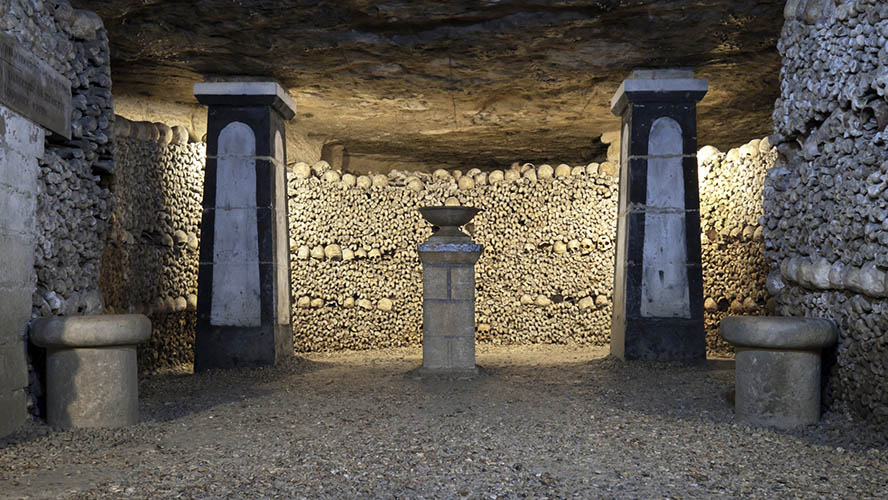
The tour of the catacombs begins with explanatory panels recounting the history of the old quarries and their transformation into an ossuary. After passing through dark and damp corridors, you reach a stone inscription that warns: “Arrête! C’est ici l’empire de la mort” (“Stop! This is the empire of death”). From that point, visitors enter fully into the ossuary, where the walls are clad with tibias and skulls stacked with architectural precision.
Among the most striking corners are the commemorative altars and circular columns built entirely of bones. Also noteworthy are stone inscriptions quoting philosophical and literary phrases about the transience of life. Some of them date back to the early 19th century, making the visit almost meditative.
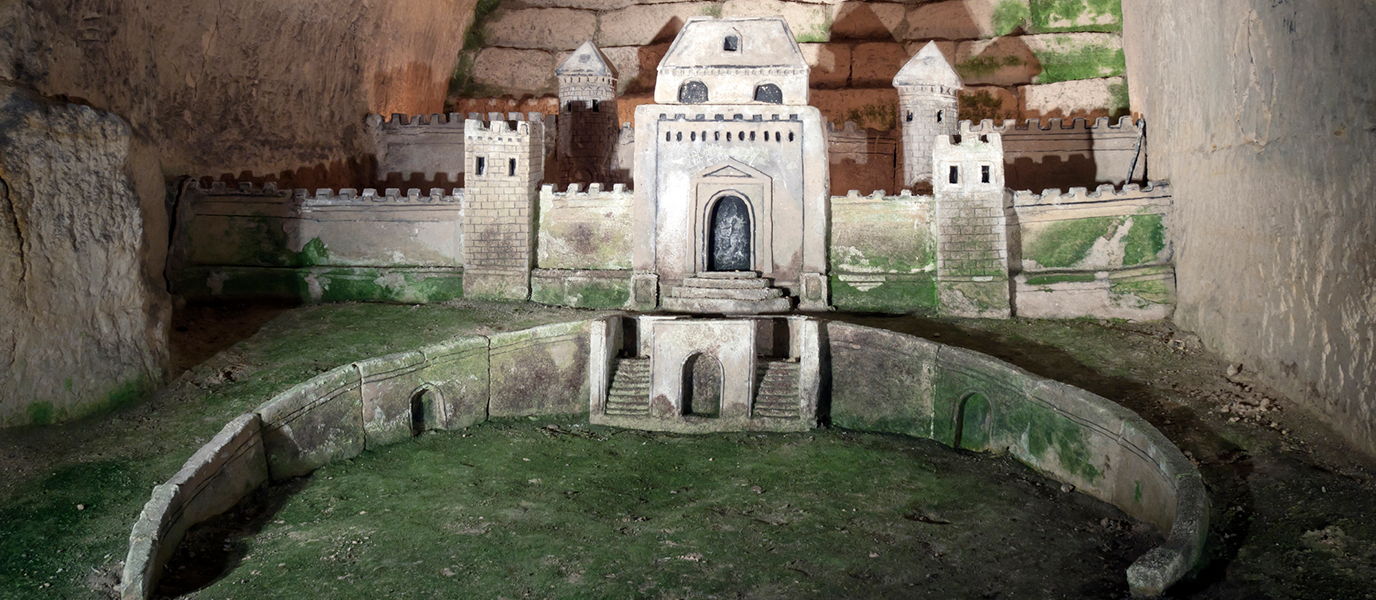
In addition to bones, the route reveals curious details such as the Fountain of the Samaritan, a small cavity where underground water once flowed, or rooms used by the General Quarry Inspectorate for maintenance work. In more recent times, these passages also served as a refuge for the French Resistance during the Second World War and even as improvised meeting places for urban explorers.
Tips: what to bring, accessibility, restrictions and curious facts
As it’s an underground space with a cool and constant temperature, it’s advisable to bring a light jacket, even in summer. The ground is uneven and sometimes damp, so comfortable closed shoes are essential. Large backpacks and suitcases aren’t allowed, and photography is restricted: only no-flash photos are permitted to avoid damaging the remains.
It’s important to note that access isn’t suitable for people with reduced mobility, and children under 14 must be accompanied by an adult. The experience may be too overwhelming for very young children, which is something each family must assess. The visit is designed for small groups, which helps preserve the atmosphere of solemnity that characterises the site.
A curiosity few visitors know is that, outside the official area open to the public, there exists a vast clandestine world. The so-called “cataphiles”, urban explorers, venture into the closed sections of the catacombs, where they have created murals, improvised rooms for parties and concerts, and even underground cinemas. Although this practice is illegal and punishable, it’s part of the contemporary imagination of the catacombs, which continue to inspire both official and underground fascination.