







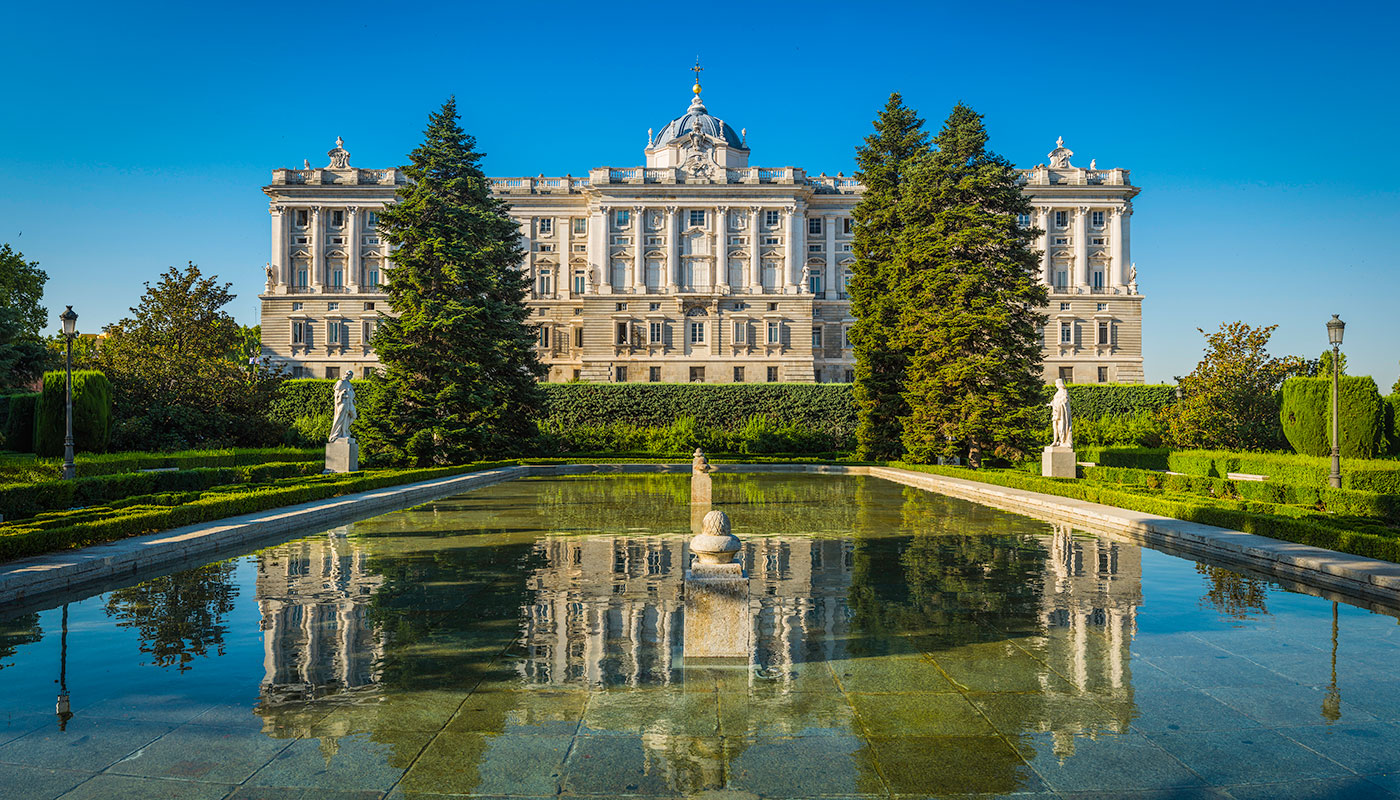



You gain an understanding of Paris by walking the city: from the historic axis of the Louvre to the Place de Concorde to the hill of Montmartre, and from the banks of the Seine to the nineteenth-century covered walkways. This itinerary brings together the essential sights of the imposing and inscrutable City of Light with precise information — dates, figures, locations, architectural details — so that you can plan your visit with ever-curious eyes and an efficient schedule. Come with us.
- The Eiffel Tower
- The Louvre Museum
- Musée d’Orsay
- Notre-Dame
- Sainte Chapelle
- Montmartre
- The Latin Quarter
- The Arc de Triomphe
- A walk along the river Seine
- Place Vendôme
- The Champs-Élysées
- The Tuileries Gardens
- The Paris Town Hall
- The Paris Catacombs
- The Luxembourg Gardens
- The Hôtel National des Invalides
- Opéra Garnier
- Moulin Rouge
- The Sacred Heart
- La Conciergerie
- The Paris Panthéon
- Paris galleries
- Other museums to visit
- Places to visit nearby: Versailles and Disneyland, less than an hour from Paris
The Eiffel Tower: the ‘iron monster’ that changed the horizon of Paris
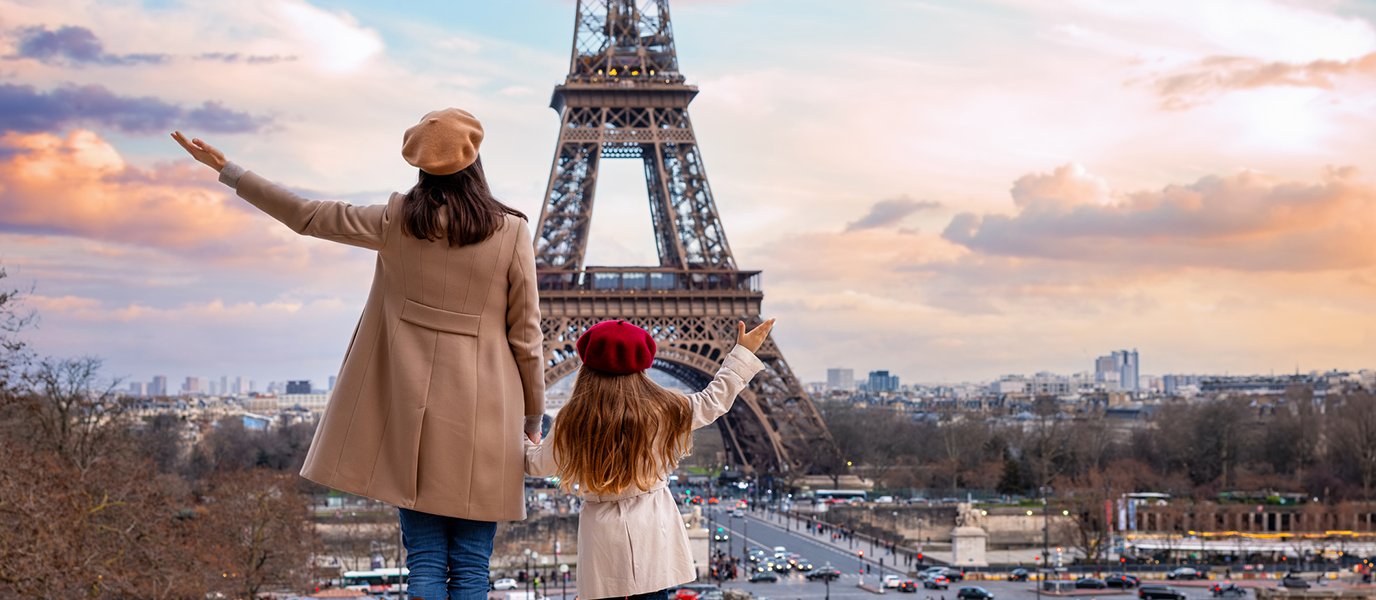
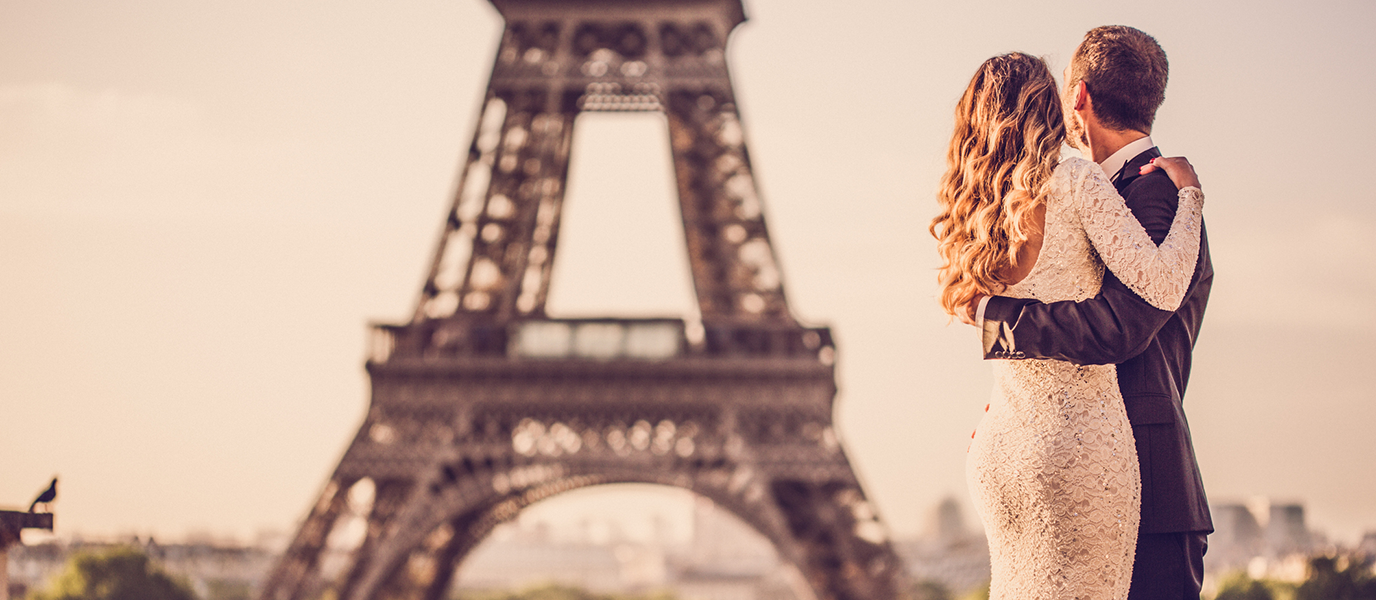
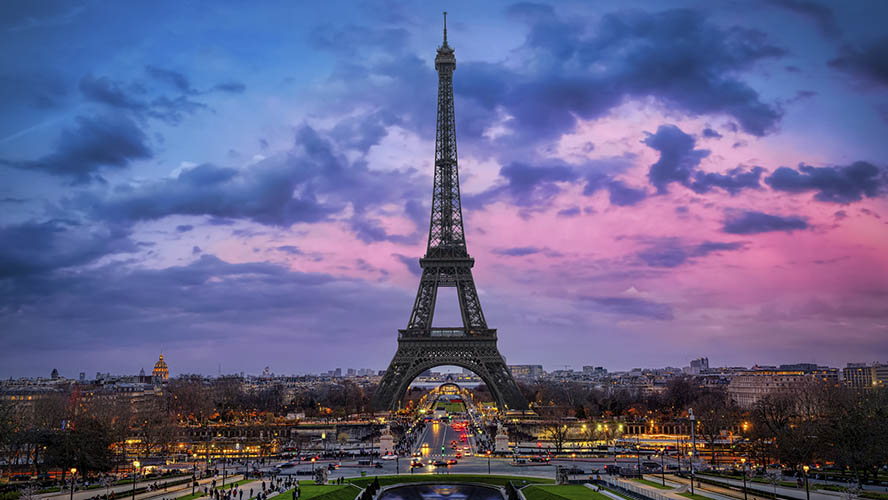
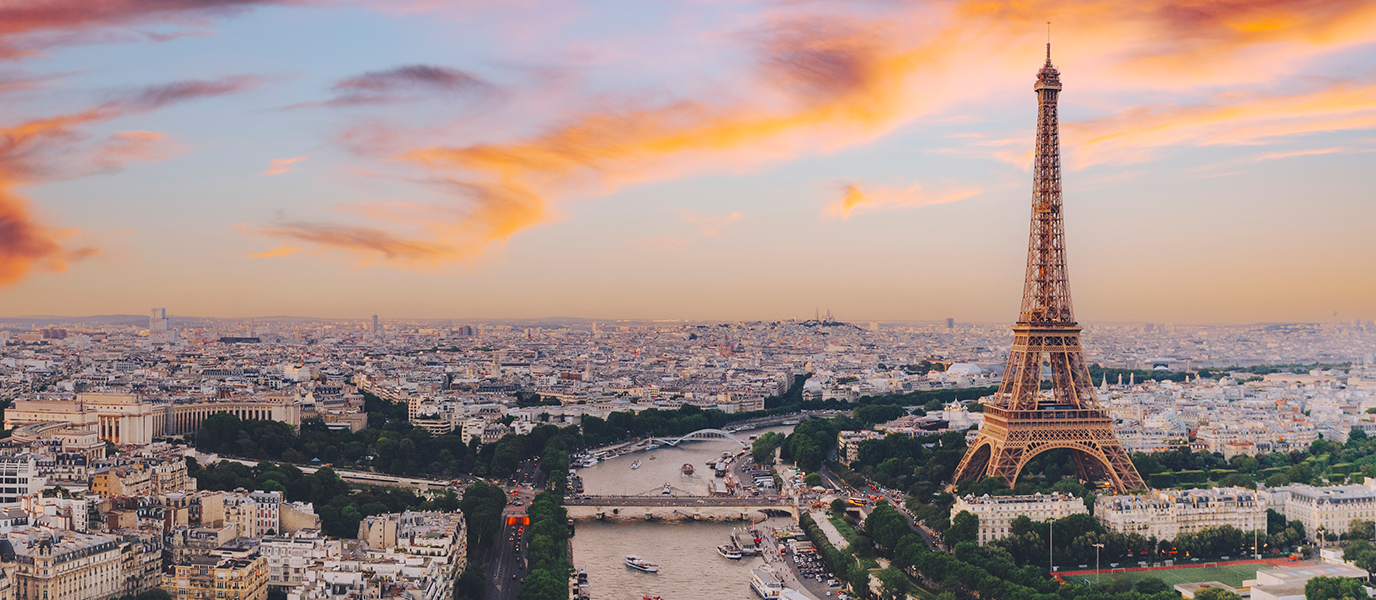
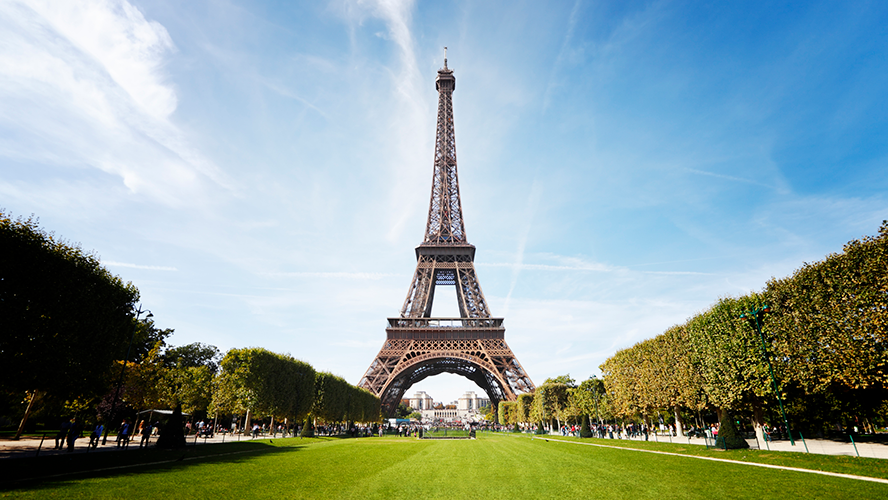
Opened in 1889 for the Universal Exposition and conceived by Gustave Eiffel’s company, the tower received an unenthusiastic welcome: intellectuals such as Maupassant and Huysmans labelled it a metal monstrosity. Nevertheless, its 18,038 riveted iron pieces marked a milestone in ironwork architecture and in modern engineering. Measuring 300 metres up to the highest platform (330 metres if you include the aerial) and weighing around 7,300 tonnes, it was the tallest structure in the world until 1930, and become the city’s emblem par excellence, painted every seven years in a range of three shades of ‘Eiffel Tower bronze’.
The first floor comes as a surprise with its suspended glass floor, the second floor offers the most balanced panorama of Paris’s monuments, and the top, reached by a lift, displays Paris like a wind rose. Every hour, from dusk onwards, 20,000 lights make it blink for five minutes. The nearest Metro station is Bir-Hakeim, and the nearest RER-C station is Champ de Mars–Tour Eiffel. To capture the classic postcard scene, head for the Trocadero viewing point on the opposite bank of the Seine, where you can enjoy a rest with views, and the Champs de Mars at your feet.
The Louvre Museum: the medieval fortress that became the world’s greatest art museum
Originally a fortress in the twelfth century, it then became a royal palace until the seventeenth century and has been a museum since 1793. The Louvre displays almost 35,000 works in its 72,000 m2 exhibition space. Its star works — the Mona Lisa, the Venus de Milo, the Hammurabi Code — co-exist among less showy treasures in the Denon, Sully and Richelieu wings. Added in 1989, I M Pei’s glass pyramid organises the flow of visitors and has become a contemporary symbol in its own right.
If you are looking to plan an efficient tour, set aside time for the classical sculpture in the Michelangelo Gallery, the Napoleon III Apartments, and the Dutch and Italian schools. On rainy days, the Carrousel underground entrance provides a faster-moving alternative to the queue in the square.
Musée d’Orsay: the railway station dedicated to the Impressionists and the Belle Époque
Opened in 1900 as a railway station to receive visitors to the Universal Exposition, the iron-and -glass edifice designed by Victor Laloux seemed destined for demolition after becoming obsolete during the 1930s. Repurposed as a museum in 1986, the Orsay now houses the world’s biggest collection of Impressionist and Post-Impressionist art, with masterpieces by Monet, Renoir, Cézanne, Van Gogh and Gauguin. The huge clock overlooking the Seine and the central nave lit by a glass ceiling serve to remind visitors of the building’s former life as a railway station, now transformed into a temple to modern art.
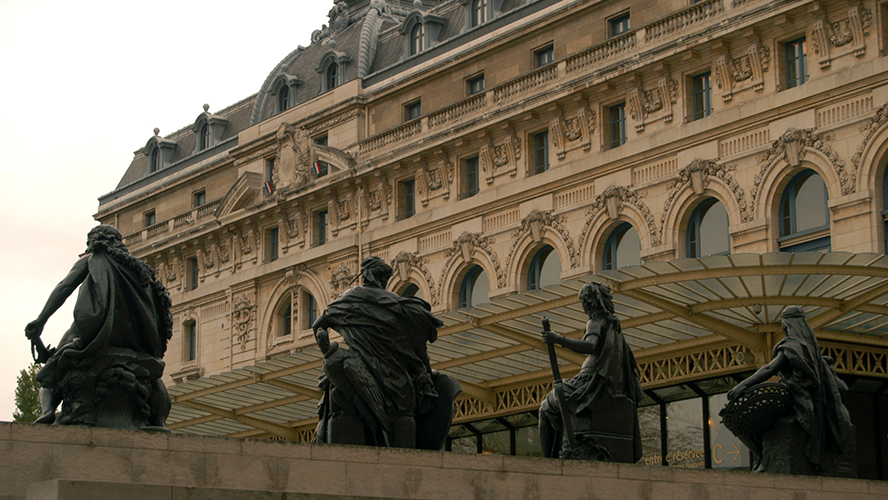
Apart from the paintings, the museum offers an insight into Europe’s cultural life between 1848 and 1914 through decorative arts, sculpture, architecture, and photography. Wandering among scale models of the Opéra Garnier, Art Nouveau furniture, and portraits by Nadar provides a global perspective of the Belle Époque. At the end of your visit, the terrace of the café on the fifth floor offers a unique panoramic view of the Louvre and the Tuileries Gardens.
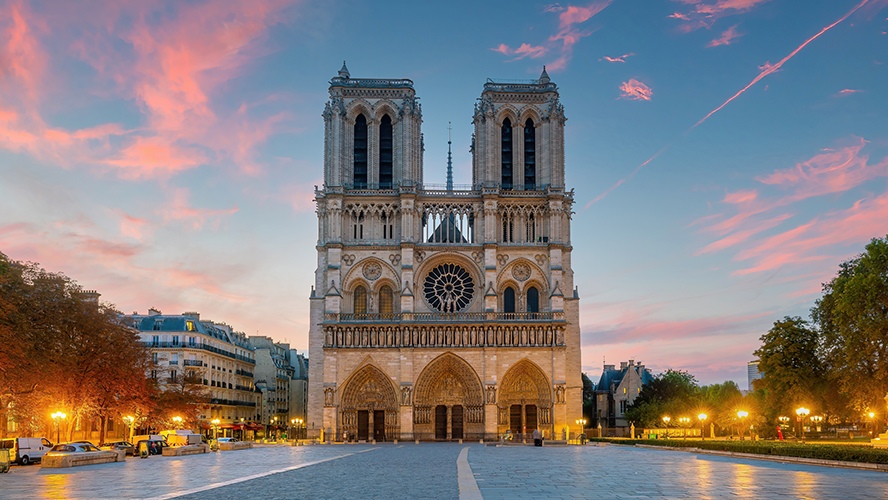
Notre-Dame: the cathedral that taught us to look up
Begun in 1163 and completed during the fourteenth century, Notre-Dame crowned the Gothic canon with flying buttresses and stained glass windows. This was the setting for Napoleon’s coronation in 1804, and it retains both a civic and a religious significance in the minds of the French. After the 2019 fire, the cathedral reopened (with its steeple rebuilt) for religious worship and visits in December 2024, resuming its central role in the Île de la Cité.
The pedestrian walkway that surrounds the cathedral allows visitors to view the flying buttresses from unusual angles. The nearby Place Jean XXIII, near the chancel, is the perfect spot from which to admire the backlit stained glass windows of the transept.
Sainte Chapelle: stained glass windows that transform light into architecture
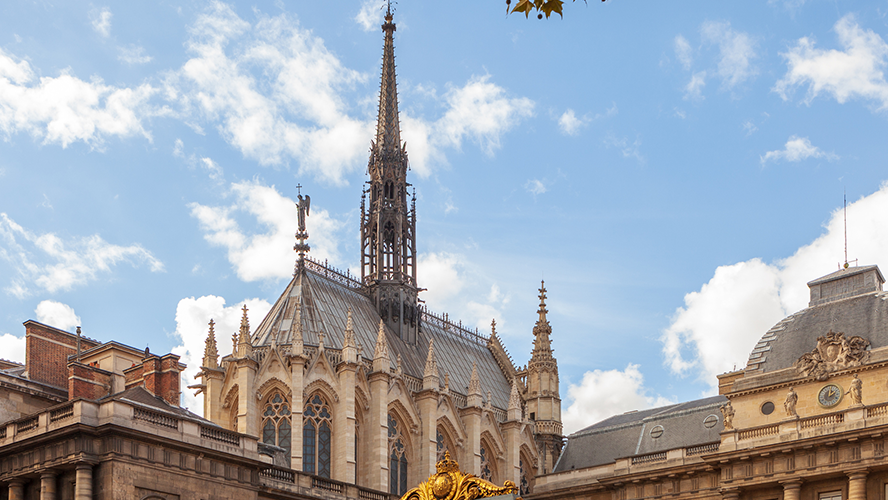
Built on the orders of Louis IX and consecrated in 1248 to house relics of the Passion, Sainte Chapelle is a wonder of the Gothic Rayonnant period. Its 15 stained-glass windows, each measuring 15 metres, illustrate over a thousand biblical scenes in a chorus of reds and blues that, in the morning sun, bathes the walls as if they were solid light.
The upper chapel is the star attraction, but the lower chapel, with its domes studded with blue and gold, has its own intimate charm. The experience is greatly enhanced if you visit at times when the light is slanting (in the early morning or late evening) intensifying the colour even further.
Montmartre: the hill of artists and eternal bohemian existence
In the far north of Paris, Montmartre still retains vestiges of its bohemian heritage: the Bateau-Lavoir where Picasso marked a major shift in the art world with ‘Les Demoiselles d’Avignon’, the Lapin Agile cabaret, the Clos Montmartre vineyard (where the grape harvest still takes place every October) — and the Place du Tetre with its street artists. If you ride in the funicular (you can use your Metro ticket), or climb the steps of Rue Foyatier, you can revisit those golden bohemian years in the history of art.
Further on, go and see the Mur des ‘Je t’aime’ (‘I love you’ wall) in the Place des Abesses and walk lesser well-known streets such as Rue de l’Abreuvoir and the Allée des Brouillards. From the viewing point in the Basilica of Sacré-Cœur, the vast city stretches out before you as far as La Défense.
The Latin Quarter: books, cafés and student life by the Seine
The Latin Quarter owes its name to Latin, the language of the medieval Sorbonne which drew students from all over Europe from the thirteenth century onwards. Its streets still retain their cosmopolitan and academic air: bookshops that seem to stretch back endlessly, such as the legendary Shakespeare and Company, co-exist alongside bistros with checked tablecloths and the hustle and bustle of the Rue Mouffetard market, one of the city’s oldest markets. Beneath the Latin Quarter’s façades, the past is revealed in the Arènes de Lutèce — a first-century Roman amphitheatre and a surprising sight among the modern buildings.
On the hill of Sainte-Geneviève, the Panthéon emphasises the district’s intellectual and civic status, reminding us that this is a meeting point for philosophy, science and revolution. The terrace cafés on the Place de la Contrescarpe tempt the visitor to linger among the students and residents, while a sunset stroll along the Quai de la Tournelle will be rewarded with one of the most evocative views of the Seine. The Latin Quarter has always been the cultural heart of Paris, where centuries of history live in harmony with the youthful energy of each new generation.
The Arc de Triomphe: the symbol of the French homeland on the Champs-Élysées
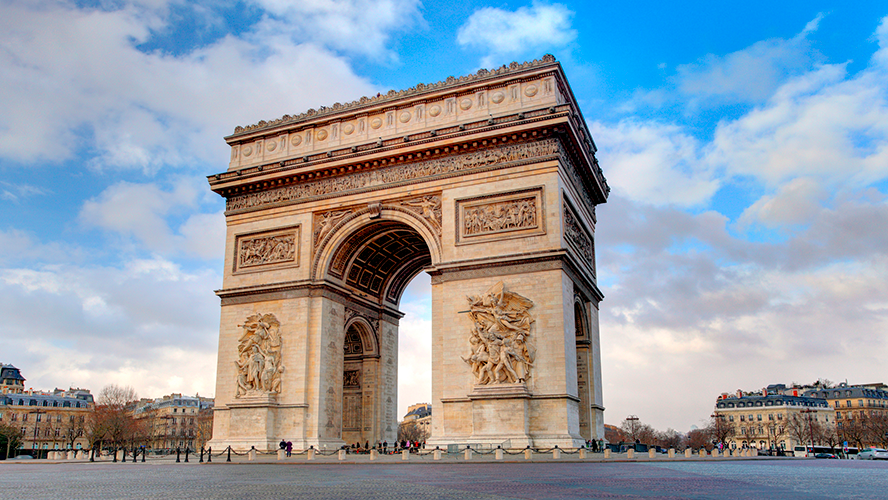
Built on the orders of Napoleon in 1806, the Arc de Triomphe (50 metres tall and 45 metres wide) honours the French military. At the base of the monument, there burns an eternal flame on the Tomb of The Unknown Soldier which is refuelled every evening, a ritual that adds a degree of solemnity to the traffic circling the Place de Charles de Gaulle.
On the pillars of the Arc de Triomphe, relief carvings, such as of Rude’s ‘La Marseillaise’, immortalise episodes from France’s war history. The Arc’s terrace offers a unique, 360-degree view of the twelve avenues that emanate from the square and from the historic axis as far as La Défense.
A walk along the river Seine: bridges, islands and night-time reflections
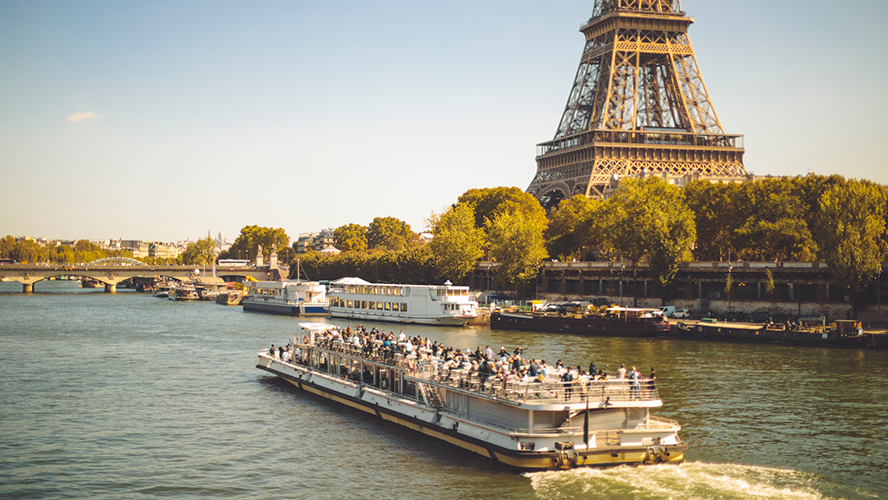
The quays of the Seine are a World Heritage Site and an open-air museum. The Pont Neuf (1607) is, paradoxically, the oldest bridge, while Pont Alexandre III, with its nymphs and gilded candelabra, is the most decorative. The bouquinistes in their green cabins sell books, prints and postcards at the riverside, between the Institut de France and Notre Dame.
An evening cruise shows the illuminated face of Paris to its best advantage, but walking around the islands — the Île de la Cité and Île Saint-Louis — allows the visitor to discover the courtyards, churches and artisanal ice cream parlours on a leisurely tour.
Place Vendôme: the geometry of Parisian luxury
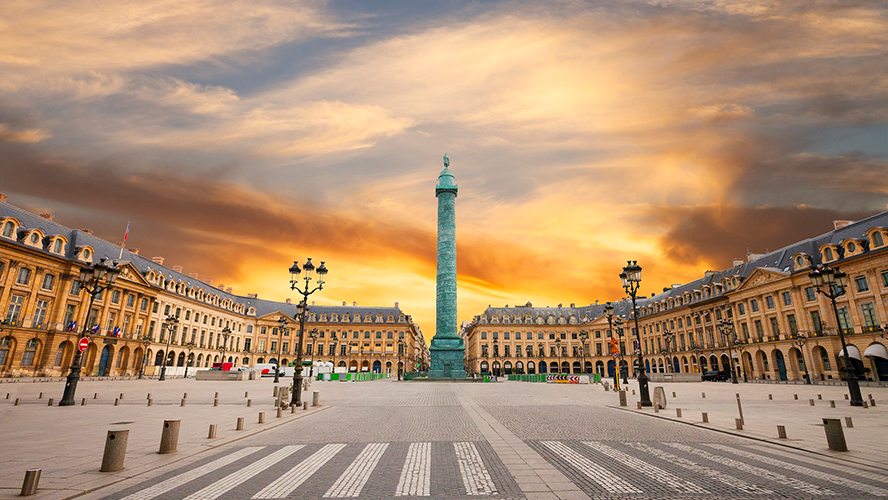
Designed in the late seventeenth century by Mansart, Place Vendôme is a perfect octagon which is now home to high-class jewellery shops and legendary hotels. The square’s original column, cast from bronze from cannons captured during the battle of Austerlitz, was destroyed during the Paris Commune in 1871 and then restored after the Third Republic.
The numbered doors conceal elegant courtyards and plaques that recall famous residents such as the writer Honoré de Balzac, the sculptor François Boucher, and the actress Sarah Bernhardt. The austere façades serve to emphasise the dazzling appearance of the luxurious window displays.
The Champs-Élysées: the great avenue where the vital pulse of Paris beats
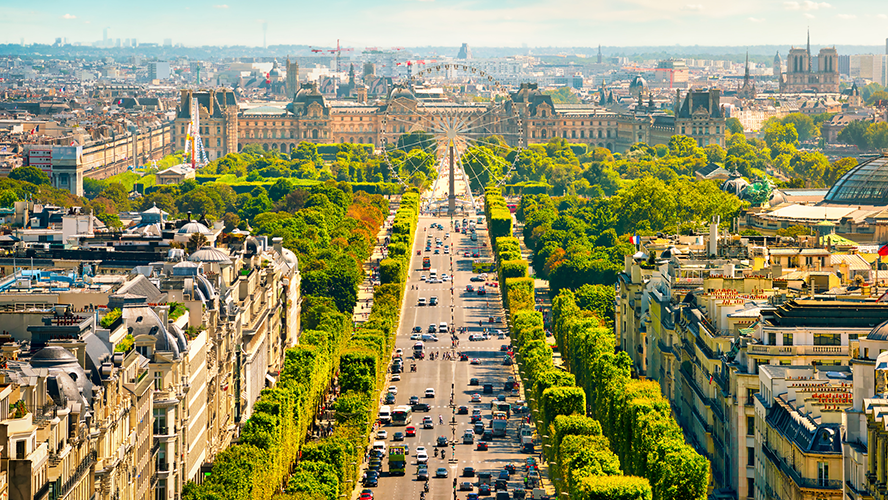
The Champs-Élysées, 1.9 kilometres long and 70 metres wide, connects the Place de la Concorde with the Arc de Triomphe, forming an urban axis that reflects centuries of Paris’s history. Along the avenue, a series of cinemas dating back over a century (such as the Gaumont Champs-Élysées), historic theatres, iconic cafés such as Fouquet’s and internationally renowned boutiques such as Louis Vuitton, Cartier and Sephora, co-exist with cake shops and gourmet food shops, to maintain the local charm. The avenue is still the setting for the 14th of July procession and the arrival of the Tour de France.
As evening falls, attention is drawn to the area around the Arc de Triomphe while a few blocks away, the church of Saint-Philippe-du-Roule offers a haven of neo-Classical calm, inviting passers-by to take a short rest in the beating heart of the city.
The Tuileries Gardens: a breath of freshness between the Louvre and the Place de la Concorde
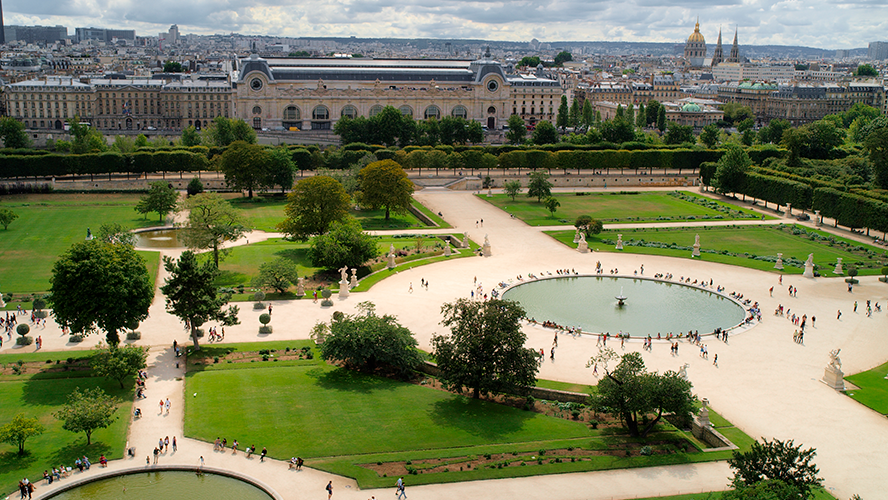
Designed by André Le Nôtre, the father of French gardening, the avenues, hedges and lakes of the Tuileries Gardens direct the gaze of the visitor in a way that is almost choreographed. The metal seats are an invitation to sit, whether to read at the water’s edge or to watch the children as they sail model sailing ships on the grand central lake. Along the walkways, sculptures by Maillol, Rodin and Giacometti hold a constant dialogue with the landscape, transforming every corner into a small, open-air gallery.
On the far western side, the Orangerie is home to the famous Water Lilies by Monet, where the light changes the colour of the surfaces and turns the painting into a reflection of the garden outside. During the summer, the bank presents a lively scene as a temporary fairground is set up, with merry-go-rounds and toy stalls, creating a vibrant contrast between the classic geometry of the garden and the summer holiday mood of the visitors.
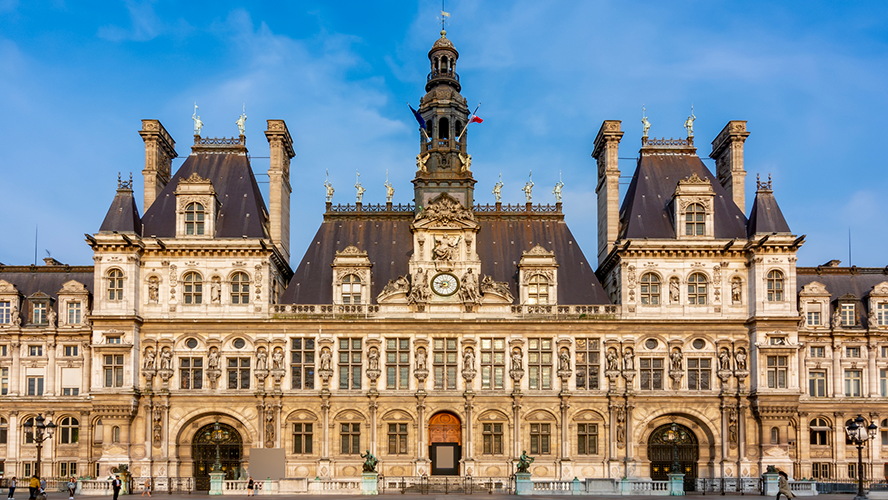
The Paris Town Hall: the centre of Paris’s government since the fourteenth century in the historic Place de Grève’
The Hôtel de Ville has been the seat of Paris’s government since 1357, although the present building — in a neo-Renaissance style — was built after the devastating fire of 1871. Its façade, covered in statues of famous figures such as Napoleon Bonapart and Vitor Hugo, opens on to a square that has been the setting for events ranging from free exhibitions to concerts and demonstrations: a historic stage for Paris’s political and social life.
Apart from its administrative function, the Hôtel de Ville serves as the entrance to Le Marais: a walk along Rue de Rivoli takes you from the grandeur of the seat of local government to the narrow, medieval streets, designer boutiques and historic cafés that characterise this emblematic neighbourhood.
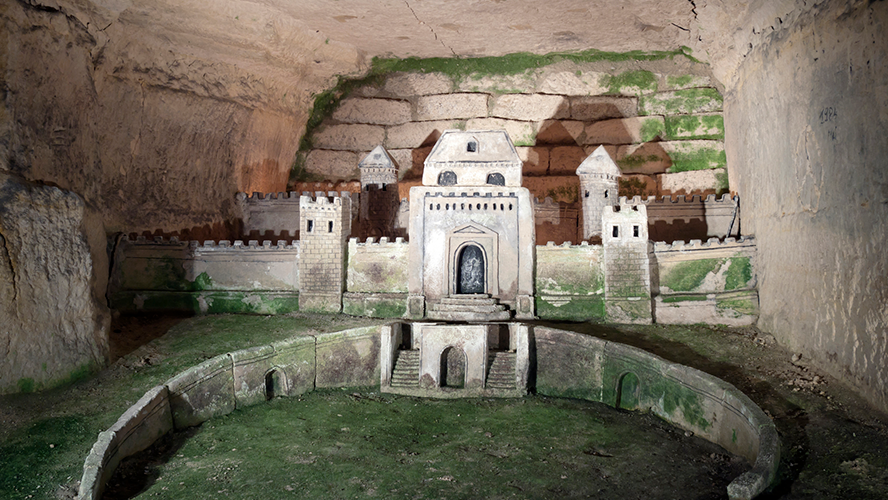
The Paris Catacombs: the ‘B’ side of the city beneath the asphalt
About 20 metres below the surface, the old limestone quarries were converted into a silent cemetery: the remains of over six million Parisians were transferred here from collapsed cemeteries from 1785 onwards. The full network of catacombs extends for around 300 kilometres, although the area open to the public covers approximately 1.5 kilometres, with 131 steps down and 112 steps back up, and a constant temperature of 14 °C. Due to the confined space, bulky luggage cannot be brought into the catacombs.
Visitors will find galleries where skulls and femurs are set out in an almost sculptural order, creating a powerful visual effect that evokes a mixture of respect and fascination. The nineteenth-century moral inscriptions etched on the walls encourage visitors to reflect on time, on the brevity of life and on the city that grows on, unmoved, above this labyrinth of memories.
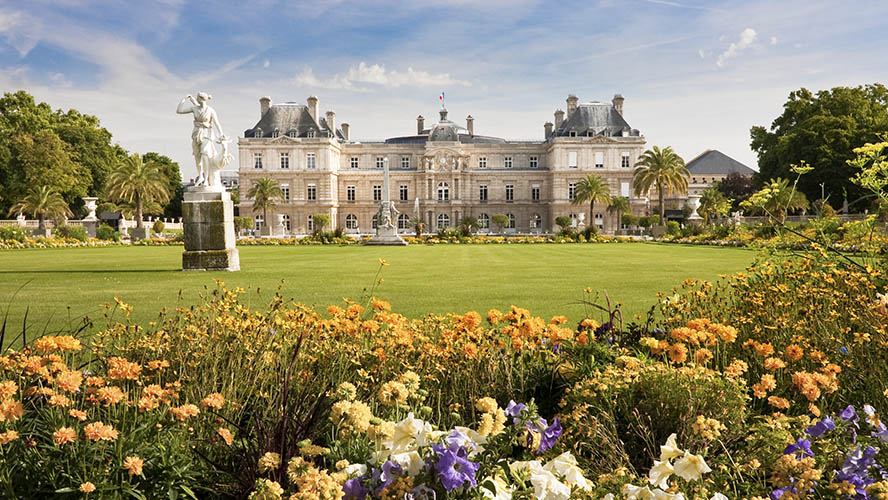
The Luxembourg Gardens: lakes and historic sculptures in the heart of the 6th arrondissement
Created in 1612 by María de Médici, the widow of King Henry IV, to complement the Palace of Luxembourg, this 23-hectare garden combines the precision of French-style formal flower beds with meadows and tree-lined avenues to offer shade and tranquility. The Medici fountain, inspired by the Italian Renaissance, and the great circular lake form the epicentres of life in the park: children sail wooden boats, Parisians rest on the iconic green seats…
The gardens’ collection of art works is as noteworthy as the plant life: over a hundred sculptures are dotted around, of subjects ranging from queens of France to writers and artists, in a dialogue with the hedges and avenues. A small apiary and a beekeeping school, both here since the nineteenth century, remind visitors of the park’s educational and scientific tradition. The Luxembourg Gardens are more than just an urban oasis: they reflect the power and tastes of the Parisian aristocracy since the seventeenth century, their cultural and social relevance kept alive in the heart of the Latin Quarter.
The Hôtel National des Invalides: the golden dome that preserves the memory of Napoleon
Founded in 1670 by Louis XIV to care for soldiers wounded in battle, the Hôtel National des Invalides became a symbol of French military might and organisation. Its gilded, 107-metre-tall dome houses the tomb of Napoleon Bonaparte, a sarcophagus of rose quartzite on a green granite base, impressive in its austere grandeur.
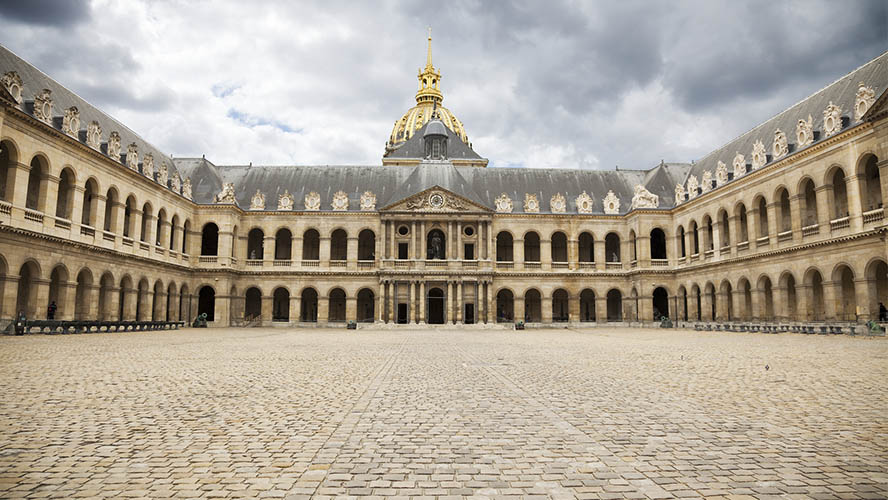
The palace complex includes spacious courtyards, Baroque churches and museums that tell the story of centuries of European military history. The Army Museum offers a detailed tour of weapons, uniforms, scale models and historic documents that contextualise the development of the French armed forces. From the courtyards, the view towards the Pont Alexandre III and the Grand Palais allows visitors to appreciate how the classic urban architecture relates to the historic monuments of Paris.
Opéra Garnier: its famous staircase, the Chagall dome and the legend of the phantom of the Opera
Opened in 1875, Opéra Garnier is an expression of the magnificence of nineteenth-century Paris. Its ceremonial staircase, its hall of mirrors and its red velvet seats are a foretaste of the theatricality to come on the stage. The dome, painted by the artist Marc Chagall in 1964, included scenes from the opera and ballet, bringing together architectural tradition and modern artistic audacity.
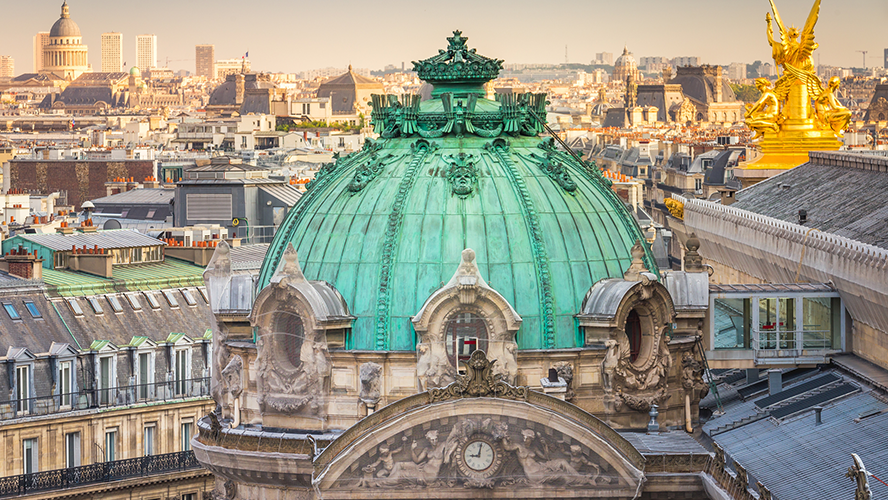
Apart from its aesthetic value, the building has become a literary myth, thanks to the ‘phantom of the opera’. Beneath the stage, an ingenious technical lake enables special effects to be created, a hydraulic solution that spawned a legend.
The Moulin Rouge: the legendary red lights of the can-can that seduced Paris
Since 1889, the Moulin Rouge in the Boulevard de Clichy has been the epicentre of Parisian cabaret. The painter Toulouse Lautrec immortalised its bohemian nights, and nowadays its shows combine classic choreography with modern stage technology. Shows with dinner allow visitors to enjoy a more exclusive ambience, while the second evening session is cheaper for those seeking the pure experience of the spectacle.
The façade of the Moulin Rouge is an iconic sight that contrasts with the Pigalle district where theatres, cocktail bars and music shops combine to create a lively nightlife. By day, the neighbourhood reveals its history and geography, while at night the neon lights heighten the magical, sensual atmosphere that transformed the cabaret into legend.
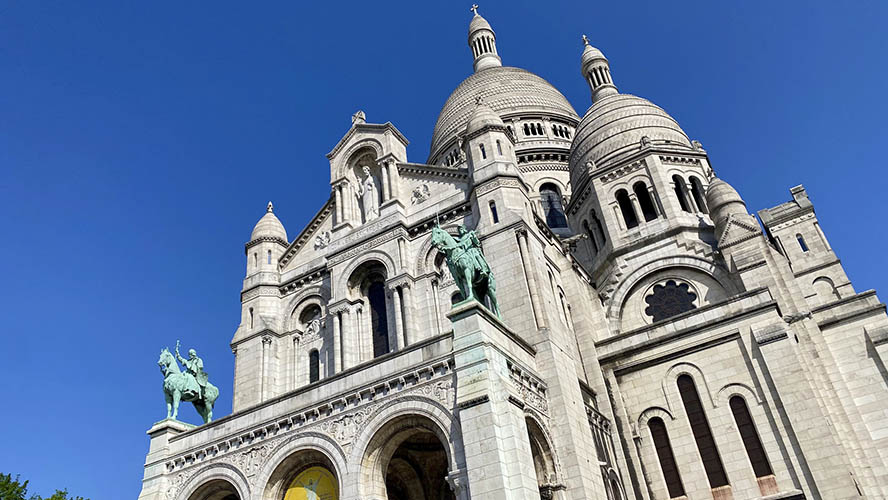
The Sacred Heart: the white basilica that dominates Montmartre
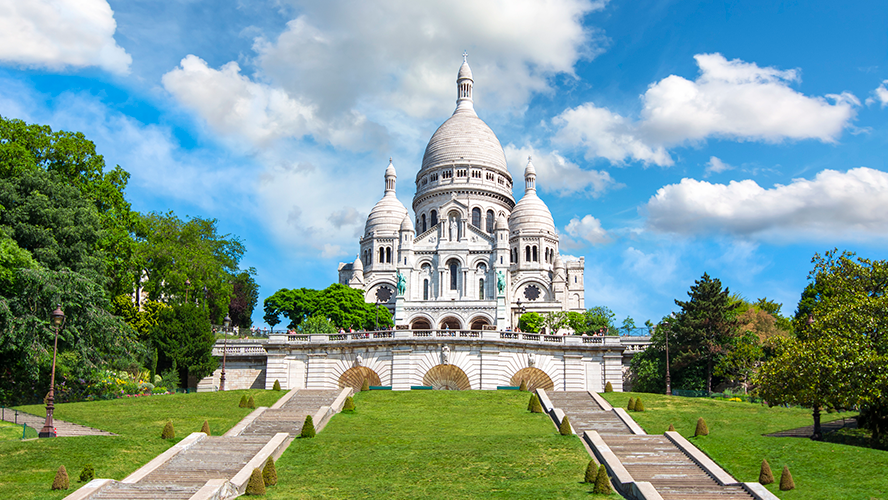
The Sacré-Cœur, built in white travertine and completed in 1914, is much more than a mere religious monument: it is a viewing point that offers an almost panoramic view of Paris. The basilica’s apse contains a 475m² mosaic of Christ which is striking in both its scale and its richness of colour. Going up to the dome involves climbing over 300 steps, but the visual reward justifies the effort.
The esplanade outside the basilica is one of the city’s most popular viewing points, while nearby spaces such as Place Louise Michel offer tranquility and alternative views. If you walk around the basilica along Rue du Chevalier-de-la-Barre, you will discover quieter spots and you can admire the architecture of Montmartre from different angles.
La Conciergerie: a royal prison and memories of the Revolution
A former palace belonging to the Capetos, and converted into a prison, the Conciergerie contains Gothic halls such as the Salle des Gens d’Armes. Here Marie Antoinette was imprisoned before her execution, a memory evoked by a commemorative chapel.
The building forms part of the Île de la Cité complex, along with the Palace of Justice and the Sainte Chapelle. A visit here completes the triptych of power, faith and law of Paris’s primordial island.
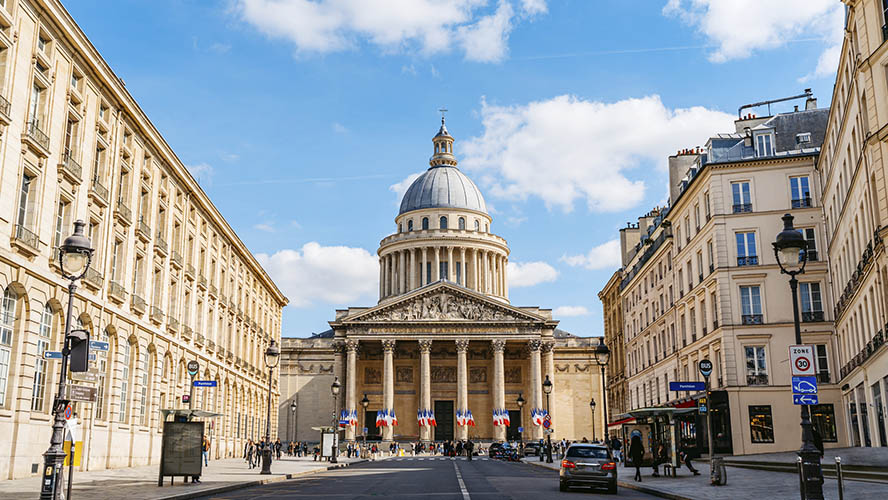
The Paris Panthéon: the national mausoleum on Montagne Sainte-Geneviève
Originally a church dedicated to St. Geneviève and secularised following the Revolution, the Panthéon’s crypt brings together figures including Voltaire, Rousseau, Victor Hugo, Émile Zola, Marie Curie and Alexandre Dumas. The dome dominates the neighbourhood and, in summer, the external access to the colonnade is opened to allow visitors to enjoy the superb views of the city centre.
In its nave is a reminder of Foucault’s pendulum experiment, which demonstrated the Earth’s rotation. The inscription on the façade — ‘To the great men, from a grateful nation’ — sums up the building’s civic vocation.
Paris galleries: from arcades to great nineteenth-century department stores
The arcades of Paris — Panoramas, Jouffroy, Verdeau, Vivienne — combine filtered light, mosaics and shops selling antiques, books and gourmet products, offering a walk through nineteenth-century Paris. They link streets and epochs, and are the perfect escape on rainy days. On the Right Bank, Galerie Lafayette and Galerie Printemps are an impressive sight with their Art Nouveau domes and terraces offering views, while on the Left Bank discreet refinement is represented by Le Bon Marché. La Samaritaine, reopened opposite the Pont Neuf, brings together Art Nouveau and Art Déco in a unique retail setting.
To visit these shopping malls means much more than just going from one shop to another: it is to immerse oneself in the city’s history, to discover how commercial architecture shaped modern Paris.
Other museums to visit: from the Rodin to the Pompidou
The Rodin Museum is housed in Hôtel Biron, surrounded by gardens where ‘The Thinker’ communes with cypress trees. The Pompidou Centre, with its coloured pipework and external stairways, houses one of the finest modern art collections. The Quai Branly – Jacques Chirac explores arts and cultures from outside Europe in a building and garden by Jean Nouvel.
Then there is the Orangerie with its Water Lilies, the Petit-Palais with its free collection, the Picasso Museum in the Marais, and the Carnavalet Museum which explores the history of Paris. The list could be almost endless, but these not-to-be-missed museums will keep you busy for as much time as you have.
Places to visit nearby: Versailles and Disneyland, less than an hour from Paris
About 17 km away, Versailles explains the absolutism of Louis XIV better than any book. The Hall of Mirrors, the King’s Chambers and the gardens by Le Nôtre gardens form a complex in which architecture blends harmoniously with the landscape. The RER C drops you at Versailles Château–Rive Gauche; expect the journey to take 45-60 minutes from the centre.
At Marne-la-Vallée, the world-famous Disneyland Paris attraction awaits you. It comprises two parks: Disneyland Park — with its castle — and Walt Disney Studios. The RER A takes 40 minutes to reach Marne-la-Vallée–Chessy; it is worth getting up early to make the most of the day and switch between visiting attractions and shows for relaxation.