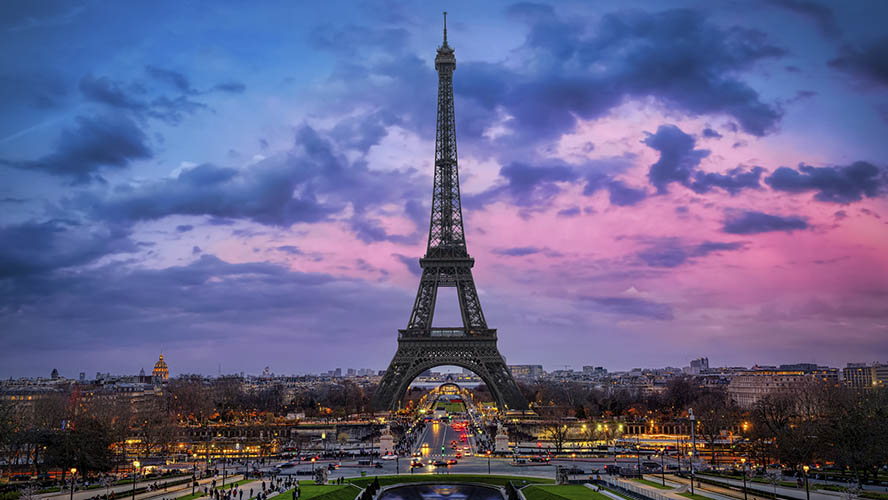
















If you’re visiting Paris and you are interested in art, the Louvre is one of those must-see attractions that you will enjoy in the capital of the Seine. Not only is it the biggest and most visited museum in the world, it is also the emblem of ART in capital letters. Its collection numbers over half a million paintings and sculptures within an area of over 7,000 square metres. Every year, over seven million people visit this art museum to see the ‘home’ of Leonardo da Vinci’s ‘La Gioconda’, the ’Raft of the Medusa’, the ‘Victory of Samothrace’, and the ‘Venus de Milo’.
Before it became a museum, the Louvre was a castle and a royal palace. There is a good reason why it is in the heart of Paris, close to the river Seine and very near the Palais des Tuileries. It was after the French Revolution (in 1793 to be exact) that this museum opened, having been planned several years before it came into being.
- The history of the Museum and the Louvre Palace
- What to see at the Louvre Works not to be missed
- Information about the Louvre Museum: opening hours, admission, and so on
- From the ‘Gioconda’ to the ‘Winged Bulls’
- How to get to the Louvre, and what to see nearby
The history of the Museum and the Louvre Palace
In its name, the Louvre pays homage to its origins. The word ‘louvre’ (apparently derived from the term ‘leower’) means ‘fortified place’ because it was a fortress before it was a museum. It was also the residence of the royal family, until Louis XIV moved to the the Palace of Versailles in 1682. What is the history of the Louvre Museum? After the French Revolution, which led to the abolition of the monarchy, the Louvre palace was used for artistic and scientific purposes, and the royal art collections were transferred here. It was not until the 8th of November 1793 that the museum’s doors were first opened to the public; the museum was then much smaller than it is today.
In 1808, the Carrousel Arc de Triomphe was built, designed by the architect Charles Percier on the orders of Napoleon I to celebrate his military victories; later, various extensions were added, such as the new wing in 1852 – 1857, which was covered in sculptures.
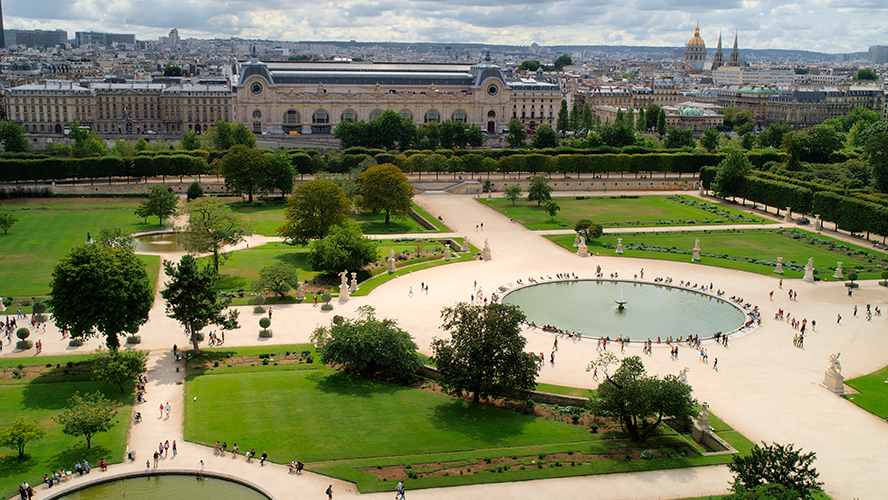
The Louvre building was joined to the Palais des Tuileries until 1871, when the latter was destroyed and its artistic treasures were lost during the Paris Commune. Since then, one end of the Louvre’s courtyard has been left permanently open as a Courtyard of Honour.
The present Louvre Palace is an almost rectangular structure, a complex whose outstanding feature is the glass Pyramid which rises over the visitor centre. The museum is divided into three sections: the Sully Wing, the Richelieu Wing, and the Denon Wing. During the 1980s, the museum underwent a major refurbishment which resulted in what is known as the Grand Louvre — with a second phase following in the 90s and the ‘Inverted Pyramid’ completed in 1993. In 2004 a new wing opened, dedicated to Islamic art.
What to see at the Louvre Works not to be missed
The Louvre Museum exhibits thousands of works, but there is a series of masterpieces that you should not miss on your visit to this renowned art museum. We are referring, for example to La Gioconda, also known as the Mona Lisa, perhaps the most famous painting in the world, and the emblem of the Louvre. Or the Venus de Milo, one of ancient Greece’s most important sculptures. Other essential attractions are ‘The Seated Scribe’, one of the best-preserved figures from Ancient Egypt, and the Code of Hammurabi, a stela measuring over two metres on which are engraved the 282 laws of the world’s oldest legal document.
Other works held in the Louvre include the oil painting ‘The Wedding at Cana’, by Veronese; ‘Psyche Revived by Cupid’s Kiss’, a sculpture by Antonio Canova, and the painting ‘Liberty Leading the People’, by Eugène Delacroix. It is also worth stopping to admire the painting ‘The Coronation of Napoleon’, by Jacques-Louis David; the sculptures known as the ‘Winged Bulls’ from Mesopotamia and, of course, the ‘Victory of Samothrace’, one of history’s most famous works, along with ‘The Raft of Medusa’.
Information about the Louvre Museum: opening hours, admission, and so on
For general admission to the Louvre Museum, visitors must book in advance, even those who are entitled to free entry (such as people with special needs along with their carers, EU residents under the age of 26, and children). The cost of general admission is 22 euros. The art museum is open every day of the year, apart from Tuesdays and 1st January, 1st May and 25th December. Visiting is allowed between 9.00 a.m. and 6.00 p.m. on Mondays, Thursdays, Saturdays and Sundays, and from 9.00 a.m. until 9.00 p.m. on Wednesdays and Fridays. The museum is closed on Tuesdays.
With over 40,000 exhibits, it is impossible for visitors to see all the museum’s treasures. As there is so much to see, it is recommended to allow at least three hours for a visit to the Louvre. It is also possible to book a guided tour in English. On Friday evenings from 6.00 p.m. onwards, admission to the museum is free — except in summer, and on 14th July (Bastille Day). A ticket for admission to the Louvre includes access to the permanent collections, to the temporary exhibitions, and to the Eugène Delacroix Museum, but only within 48 hours of its first use. The complex has several restaurants.
From the ‘Gioconda’ to the ‘Winged Bulls’
Si no sabes muy bien por dónde empezar la visita al Museo del Louvre, te recomendamos seguir los recorridos temáticos que te interesen. Uno de los más atractivos es la Ruta de las Obras Maestras, que tiene paradas obligadas en la ‘Gioconda’ y en la ‘Victoria de Samotracia’, ambas en el Ala Denon. También se pueden explorar las pinturas más sobresalientes desde la Edad Media hasta mediados del siglo XIX. Otra ruta interesante es la de Historia Antigua, que muestra las piezas más célebres de Egipto, Grecia y Roma y que se detiene en la ‘Venus de Milo’ y en los famosos ‘Toros alados’ de Khorsabad.
How to get to the Louvre, and what to see nearby
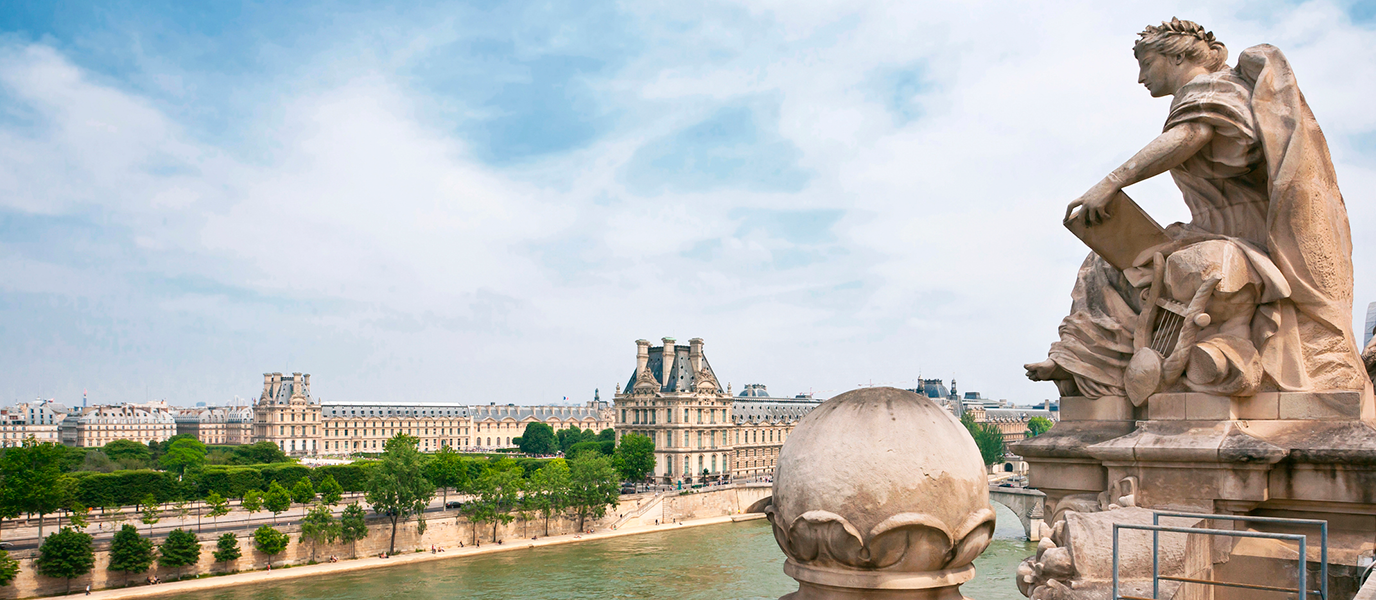
Where is the Louvre Museum? The museum stands in the heart of Paris, on Rue de Rivoli, on the banks of the river Seine.
The best way to get to the Louvre is to take Metro Line 1 (yellow) or 7 (pink), and get off at the Palais Royal – Musée du Louvre station. You could also use bus routes 21, 24, 27, 39, 48, 68, 69, 72, 81 or 95. You can travel there in a private vehicle, as there is an underground car park in the Carrousel du Louvre, which can be accessed from Avenue de General Lemonnier.
It is advisable to arrive early in the morning in order to avoid the crowds.
As the Louvre Museum is in the historic centre of Paris, there are lots of tourist attractions nearby. These include the Tuileries Gardens, the Musée d’Orsay, the well-known Place Vendôme, and the Arc du Triomphe du Carrousel, as well as the Vivienne Gallery and the Le Marais district.