









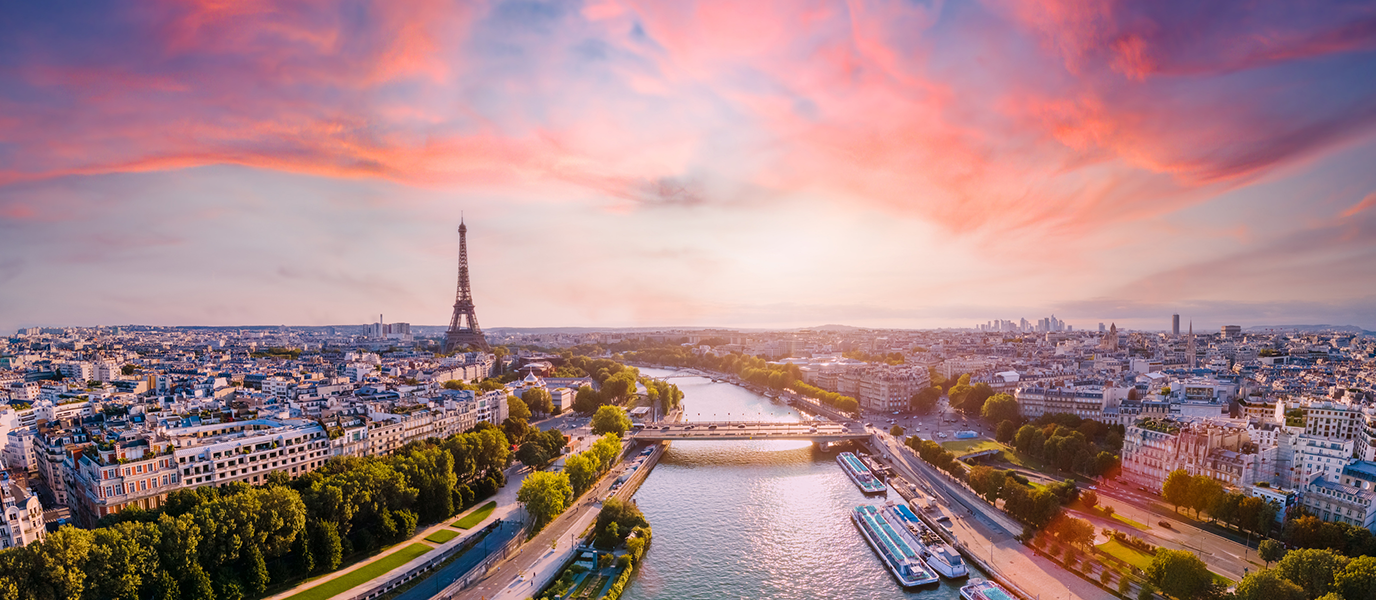
The history of the city of Paris revolves around the River Seine. According to various historians, the site where the French capital stands today is believed to have been founded around 250 BC by a Celtic tribe of fishermen known as the Pairisios (Parisii in Latin), who settled close to the Seine. In the first century BC, the same people fortified the Île de la Cité, a historic island in the heart of the City of Light.
Flowing a total of 776 kilometres, the section of the Seine that passes through Paris is 13 kilometres long, dividing the city in two between the right bank and the left bank. Thirty-seven bridges cross the river, and the city’s main monuments can be found on the riverbank, including the Eiffel Tower, Notre-Dame, Les Invalides and the Louvre Museum, among others.
Strolling along its banks and historic quays at any time of day, but especially at sunrise and sunset, is one of the greatest experiences to be had in Paris.
- History of the Seine: the historic heart of Paris
- Walking along the Seine: what monuments to see
- Strolling along the banks of the Seine
- Famous bridges over the Seine
- Recommended activities: from taking a dip to sailing in the bateaus monches
History of the Seine: the historic heart of Paris
With over 10,000 years of history, the Seine is the living history of France and Paris. The French capital was founded and developed around its banks. Dockworkers, soldiers, merchants, sailors, laundresses and transients have all lived alongside one another on the banks of this great river.
The current course of the river is the result of thousands of years of flooding, ramification and channels. So much so that the coat of arms of Paris bears a ship with unfurled sails and its Latin motto was Fluctuat nec mergitur (“Tossed by the waves but does not sink”).
During Roman times, present-day Paris was called Lutetia, and it was during this period that the first bridge to cross the Seine appears to have been built. Furthermore, the Pillar of the Boatmen, the base of a statue offered to Emperor Tiberius by a guild of boatmen in the first century AD, is one of the oldest archaeological remains to be found in Paris.
Centuries later, in 1313, the first docks, Conti and Grands-Agustins, were built. These quays were built to control the river’s course and to prevent flooding. By this time, maritime trade on the river was already highly developed.
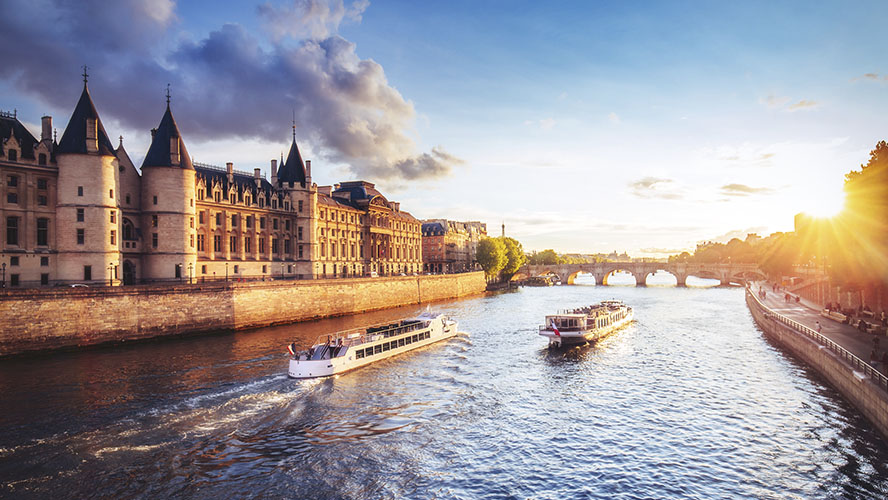
It was in the eighteenth century, under Napoleon, when a canal construction project (Canal de l’Ourcq, Canal Saint-Martin, and Canal Saint-Denis) was carried out to relieve maritime traffic by diverting boat traffic away from the city centre. Thanks to these canals, drinking water also began to reach the city.
Over time, more bridges, dams, locks and factories were built. In the mid-nineteenth century, washhouses were dotted along the riverside until running water reached homes in the twentieth century. With Baron Haussmann’s transformative project under Napoleon III in the mid-nineteenth century, the Seine, as it flows through Paris, was also transformed.
In the 1960s, roads began to be built along its banks, such as the Voie Georges-Pompidou, a 13-kilometre stretch of asphalt on the right bank of the river. Since the 1990s, and especially in recent years, there has been much debate about pedestrianising said roads, and in some sections this has already been implemented, such as the 2013 ban on vehicle traffic on the left bank expressway.
The latest major intervention by the French authorities on the Seine was in preparation for the 2024 Paris Olympic Games. A project to clean up its waters saw investment of more than 1.4 billion euros.
Flooding has occurred throughout the Seine’s millennial history. Parisians look to the statue of Zouave on the Pont de l’Alma as an unofficial marker of the water level. When the water rises too high, its feet get wet. The last major flood was in 1910, when water overflowed through tunnels, drains and sewers.
Walking along the Seine: what monuments to see
In 1991, UNESCO included the banks of the Seine on its World Heritage List due to their grandeur in housing some of the most historically significant and emblematic buildings and monuments in the City of Light.
Below are some brief descriptions about the most important ones:
The Eiffel Tower and the Trocadero Gardens
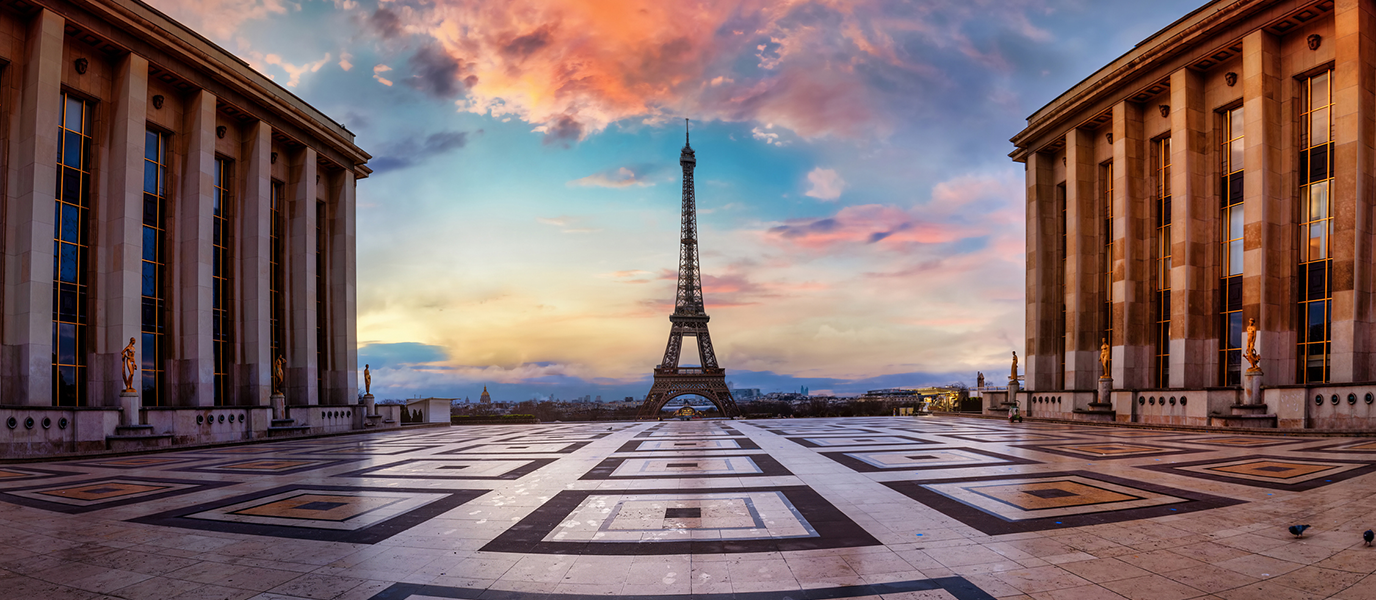
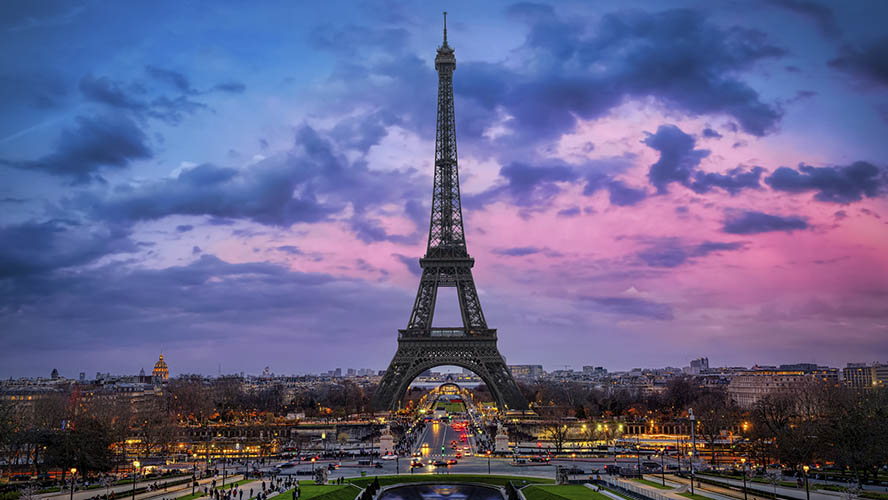
The great iron tower of Paris, designed by Gustave Eiffel and unveiled to the world during the 1889 Universal Exposition, is located on the left bank of the Seine, at the end of the Champs de Mars. The Eiffel Tower is the great icon of Paris, visited by millions of tourists every year.
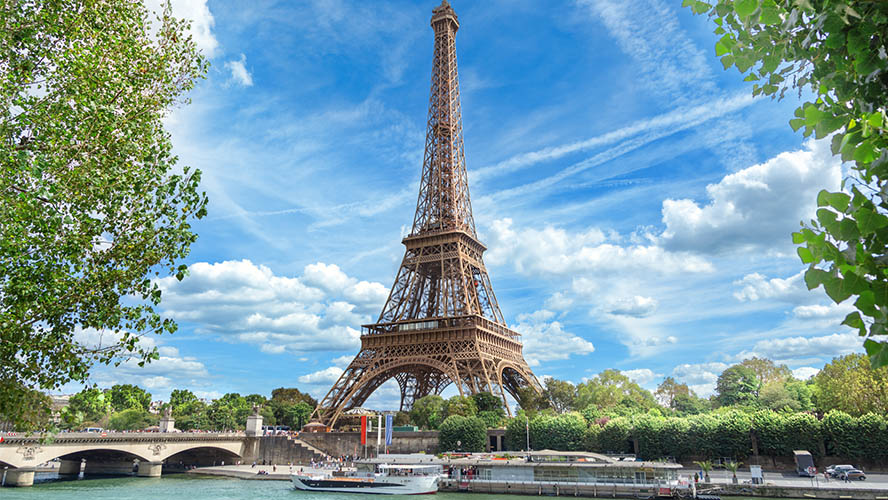
Opposite it are the Trocadero Gardens, Chaillot Palace, and the popular “Trocadero Terrace” or Human Rights Plaza, from which you can admire one of the most impressive views of the Eiffel Tower.
Grand Palais and Petit Palais
On the right bank from the Trocadero, heading towards Place de la Concorde, are the Grand Palais and Petit Palais, two of the city’s most famous landmarks. Both are very close to one of the most famous bridges in the French capital, the Pont Alexandre III.
The Grand Palais and Petit Palais were built for the 1900 Universal Exposition and were designed by Charles-Louis Girault. From afar they are particularly striking due to their unique façades and, in the case of the Grand Palais, the combination of metal, glass and stone. The Petit Palais houses the City of Paris Museum of Fine Arts.
Les Invalides
Returning to the left bank of the Seine, after crossing the impressive Pont Alexandre III, you can admire, a few metres away, views of the imposing Les Invalides building. Founded in 1670 by Louis XIV, the Hôtel National des Invalides is a must-see for any visitor. It houses the tomb of Napoleon Bonaparte, which is surrounded by collections that recount stories featuring battles, uniforms and weapons from different eras.
Place de la Concorde and Tuileries Gardens
Moving onwards from the area around the Pont Alexandre III, the Grand Palais and the Petit Palais, on the right bank of the Seine, you will come to Place de la Concorde. Located at the beginning of the Champs-Élysées, this is one of the most emblematic squares in Paris with its distinctive fountains and the obelisk from the Temple of Luxor in Egypt, which was installed in the square in 1837. The square has witnessed momentous events in French history, such as the execution of Louis XVI and Marie Antoinette during the French Revolution.
Adjacent to it, continuing onto the Louvre, are the Tuileries Gardens. Its landscaped areas and ponds invite passers-by to sit on the metal chairs, relax a little and soak up the Parisian sun surrounded by sculptures by Rodin and Giacometti, among other great artists.
Louvre Museum
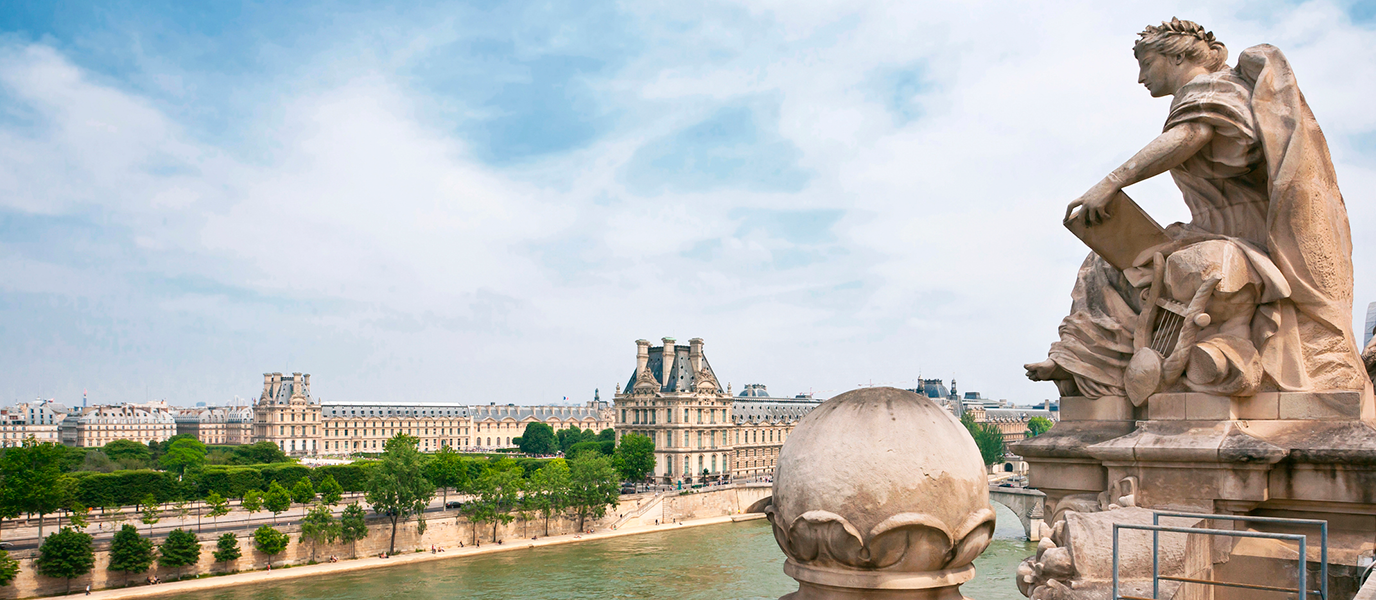
At the end of the Tuileries Gardens lies another one of Paris’ crown jewels: the Louvre Museum. In addition to gazing at the inverted pyramid designed by Norman Foster, before they even enter visitors are met by the enormous building of the great Parisian museum par excellence and are captivated by the vast number of works of art and historical pieces it houses (35,000 pieces on display and a collection of more than half a million works). The building was constructed after the French Revolution of 1789.
Musée d’Orsay
Returning to the left bank of the Seine, not far from the Louvre, you can visit another one of Paris’ most visited museums, the Musée d’Orsay. Dedicated to nineteenth-century visual art, it houses the largest collection of Impressionist works in the world, featuring pieces by Manet, Renoir, Gauguin, Cezanne, Van Gogh, Toulouse-Lautrec and many other great painters. The collection is exhibited in a building that was constructed as a railway station for the 1900 Universal Exposition.
Notre-Dame and Sainte-Chapelle
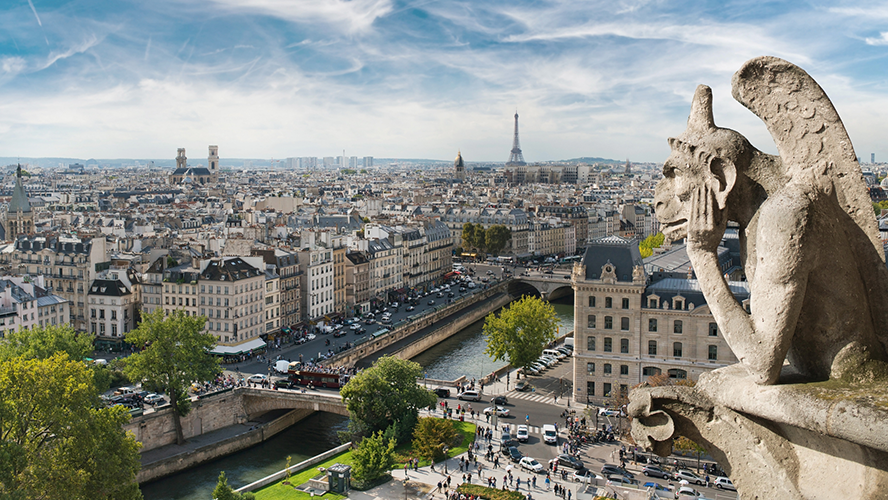
Between the banks of the Seine lies the Île de la Cité, the true historical heart of the City of Light. Two of Paris’ greatest monuments were built here: Notre-Dame cathedral and Sainte-Chapelle.
Construction of Notre-Dame cathedral began in 1160 by order of Maurice de Sully, Bishop of Paris. In 1272, work was completed on this fine example of Gothic architecture, which has witnessed some of the most important events in French history: during the French Revolution, it was transformed into the ‘Temple of Reason’; in 1804, Napoleon Bonaparte was crowned emperor there; and in 1944, the liberation of Paris from the Nazis was celebrated in the presence of General Charles de Gaulle, among other historical events. On 15 April, 2019, the world watched as a fire engulfed several of its towers; fortunately, thanks to extensive reconstruction work, it reopened its doors to the public in December 2024.
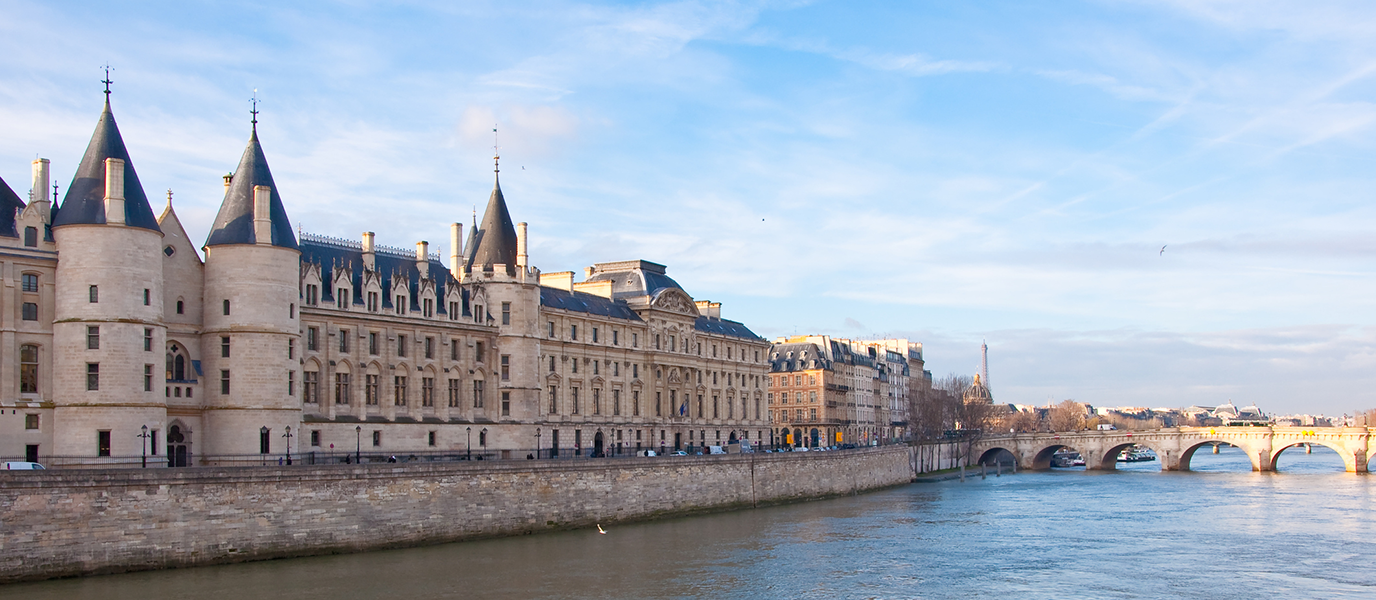
Another of the great works of French Gothic architecture is the Sainte-Chapelle. Housed within the Palace of Justice—the former residence of the kings of France—it was built in the nineteenth century by order of Louis IX, later known as Saint Louis, to house one of the most famous relics in history: the Crown of Thorns of Jesus Christ, which has been in Notre-Dame cathedral since 1806. Along with this, the monarch also acquired other relics of the Passion of Christ, including a fragment of Jesus’ cross.
Visitors can easily experience Stendhal syndrome when viewing the interior of its upper chapel: its beautiful polychrome stained glass windows narrate 1,113 scenes from the Old and New Testaments until the arrival of the relics in Paris in the thirteenth century.
Strolling along the banks of the Seine
Strolling along the banks of the Seine is a unique experience that allows you to enjoy the beauty of Paris and discover some of its main monuments and tourist attractions that tell the secrets behind part of France’s history.
It is from April, in spring, that the intensity of the French capital’s light can be captured, thanks to the arrival of good weather and the hustle and bustle of its streets and wide avenues.
As it passes through Paris, the course of the Seine encounters two famous islands, Saint-Louis and Cité, both almost adjacent to one another. Although the latter is the most popular, Île Saint-Louis (also known as the “Island of Palaces”) is well worth a stroll. After crossing Pont de la Tournelle or Pont de Sully, you can stop to see the silhouette of Notre-Dame in the distance. Then, you can take a leisurely stroll through the streets of this opulent neighbourhood, visit an art gallery, or enjoy an ice cream at Berthillon.
The Île de la Cité is a must-see. A good itinerary could start at the Clock Tower, which has been telling the time since 1371, then the Palais de Justice and Sainte-Chapelle, followed by Notre-Dame cathedral. It is well worth getting a little lost in its streets, ending up at the Pont Neuf at the Equestrian Statue of Henry IV of France, and strolling through the small gardens opposite.
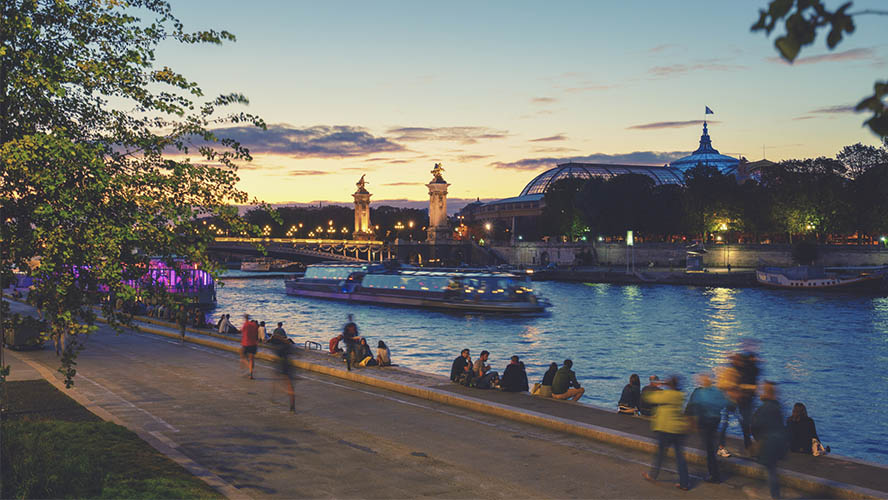
It is less than five kilometres from the Quai de la Mégisserie to the Quai d’Orsay. If you cross the Pont Neuf, you will come across some of the bouquinistes stalls, the typical Parisian booksellers who also crowd the right bank of the Seine. This street trading tradition, which began in the sixteenth century, is recognised as French intangible cultural heritage and is still thriving, with thousands of literary works, both ancient and contemporary, as well as engravings, stamps, specialised magazines and collectible prints. To your right, you will be able to see the Louvre, the Tuileries Gardens, the Place de la Concorde, the Grand Palais, the Petit Palais, and, once you cross the famous Pont Alexandre III, you will be able to admire Les Invalides from the front. A few metres further on, heading back towards Île de la Cité, you will find the Musée d’Orsay.
Quai Branly is the closest to the Champs de Mars and the Eiffel Tower. Coming from the bank facing Les Invalides, you will pass the famous Pont de l’Alma, where the statue of Zouave stands, which Parisians look to when there are floods. Interestingly, on the left you can see the new Russian Orthodox cathedral of the Holy Trinity. Further on is none other than the iconic Eiffel Tower, facing the Champs de Mars on one side and the Trocadero on the other.
Famous bridges over the Seine
As it flows through Paris, the Seine passes under 37 bridges. Below, we explain the most notable and famous ones:
Perhaps the most well-known bridge for tourists visiting Paris is the Pont des Arts, due to the padlocks attached to its railings. The padlocks are left for posterity by smitten couples, sealing their love and throwing the key into the Parisian river. The bridge, built with a cast iron structure in the early nineteenth century to connect the Louvre (known at the time as the Palace of Arts) and the Institute of France, was also made famous by the Argentine writer Cortázar in his novel Hopscoth through the character of La Maga.
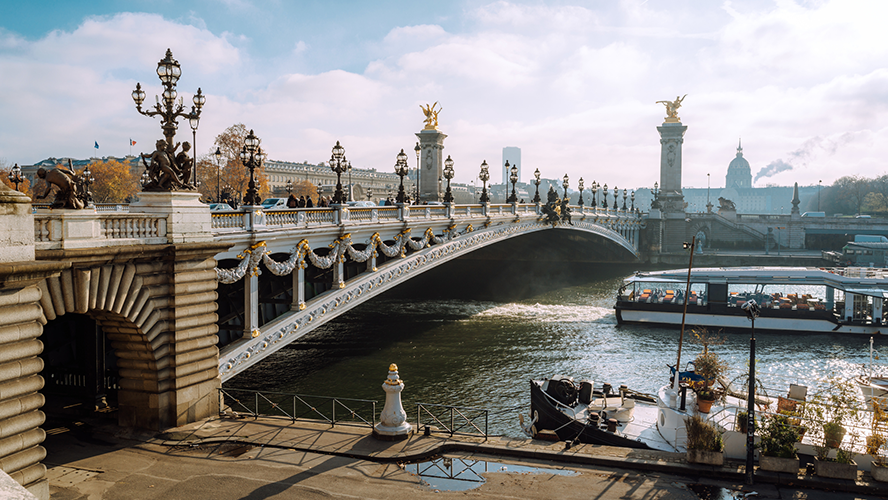
The Pont Alexandre III crosses the Seine, connecting Les Invalides with the Grand Palais and the Petit Palais. Although it was built for the 1900 Universal Exposition, the real reason was to celebrate the military alliance between Russia and France promoted by Tsar Alexander III, who did not live to see the bridge being built due to his death several years before its inauguration. In fact, the first stone was laid by Tsar Nicholas II in 1896. The golden glow of its four sculptures with winged horses, its 17-metre-high columns and its beautiful street lamps are particularly noteworthy.
The third best-known bridge crossing the Seine is the Pont Neuf, which, paradoxically, is the oldest. Dating back to 1607, it is located at the very end or tip of the Île de la Cité. It boasts 12 semi-circular arches, a series of 381 masks carved into its walls, and connects the Louvre (right bank) with the left bank across the Île de la Cité (where the Equestrian Statue of Henry IV stands).
Recommended activities: from taking a dip to sailing in the bateaus monches
Since 1923, swimming in the waters of the Seine had been prohibited due to its uncleanliness and unsanitary conditions. However, with the arrival of the 2024 Paris Olympic Games and the Olympic trials held on the Seine, French authorities have invested more than 1.4 billion euros in a project to clean up its waters. Since July 2025, both Parisian citizens and tourists have been able to swim (up to 1,000 per day) in three designated areas: Bras de Grenelle, near the Eiffel Tower; Bras-Marie, opposite the Île Saint-Louis; and Bercy, near the François-Mitterrand Library.
A classic image of Paris and the Seine are the bateaux mouches, boats that travel along part of the city’s great river so that passengers can admire some of its main monuments from the water. The term is a registered trademark of the Compagnie des Bateaux Mouches, the best-known boat operator in Paris, founded in 1949, but the word is also used colloquially to refer to all types of boats that offer these famous sailing trips along the Seine. You can hop on one of the boats for a sightseeing tour or also have lunch or a romantic dinner on them.