






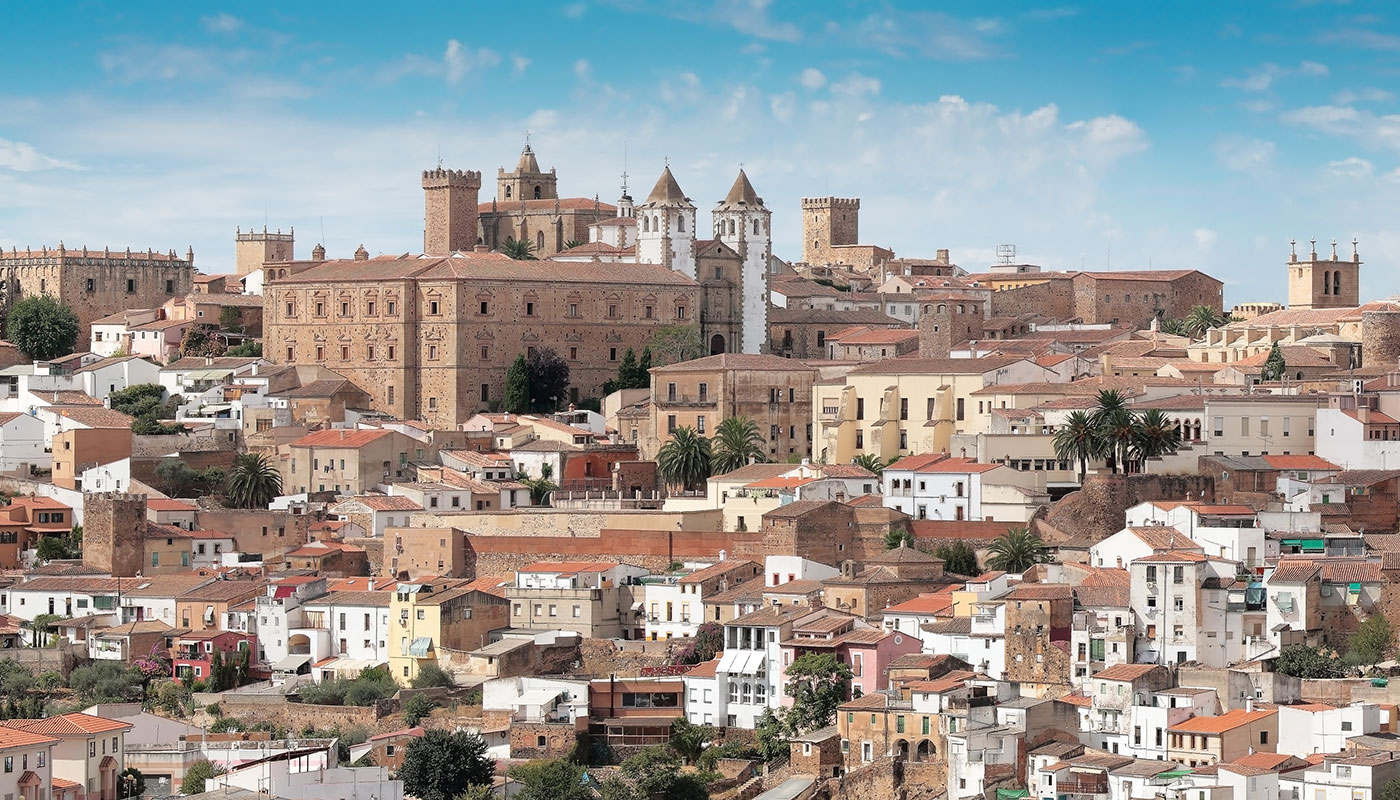






Valladolid doesn’t reveal itself all at once. It doesn’t have the flashiness of other monumental capitals or an instant postcard image that explains everything. Here, beauty is discovered on foot: a porticoed square that appears after a narrow street, a Renaissance church wedged between ordinary buildings, a 19th-century shopping arcade that looks like it was taken from Paris, a bar where roast suckling lamb sizzles behind the glass. A former court of the Catholic Monarchs and capital of the empire during decisive years of the 16th century, the city retains a surprising historical depth on a human scale. It’s easy to explore on foot: almost everything is located within a 15-minute radius. Valladolid is less about isolated great monuments and more about a coherent urban whole, with historic squares and streets where everyday life still outweighs tourism.
- Valladolid Cathedral: Juan de Herrera’s great unfinished project
- Plaza Mayor: the urban model that inspired Madrid
- Church of San Benito: from military monastery to modern art museum
- Church of San Miguel and San Julián: hidden Baroque splendour behind an understated façade
- Church of San Pablo: Isabelline filigree opposite the Royal Palace
- La Antigua: the Romanesque tower that shapes the city skyline
- Campo Grande: peacocks, ponds and shade in the city’s green lung
- Plaza del Viejo Coso: the first bullring turned neighbourhood courtyard
- National Sculpture Museum: the pinnacle of Spanish religious sculpture
- Palacio de Santa Cruz: Spain’s first Renaissance courtyard
- Pasaje Gutiérrez: a Parisian passageway in the heart of the city
- Pinchos route and where to eat: roast suckling lamb, Ribera wine and packed bars
- Centre and shopping area: pedestrian streets and traditional shops
- Pinchos route and where to eat: roast suckling lamb, Ribera wine and packed bars
What to see on your visit to Valladolid: a historic centre to explore like an open book
The historic centre is organised around Plaza Mayor, from which shopping streets such as Santiago and Teresa Gil radiate out, along with a string of churches, palaces and museums. The best way to visit is to plan a circular route: start at the cathedral and the University, head down towards San Pablo and the National Sculpture Museum, cross over to La Antigua and finish at Campo Grande or at a pinchos bar.
The city is fairly flat, which makes it easy to walk around. What’s more, many façades retain the golden limestone characteristic of Castile, which takes on a very photogenic warm tone at sunset. Valladolid is especially enjoyable late in the day, when the light fades and the terraces fill up.
Valladolid Cathedral: Juan de Herrera’s great unfinished project
The Cathedral of Nuestra Señora de la Asunción impresses with its austere beauty. Designed by Juan de Herrera, the architect of El Escorial, at the end of the 16th century, it was meant to be one of the most monumental churches in Spain, in a Valladolid that was the capital of the Kingdom between 1601 and 1606. Lack of funding and several collapses left the building incomplete, with only about half of the original project ever being built.
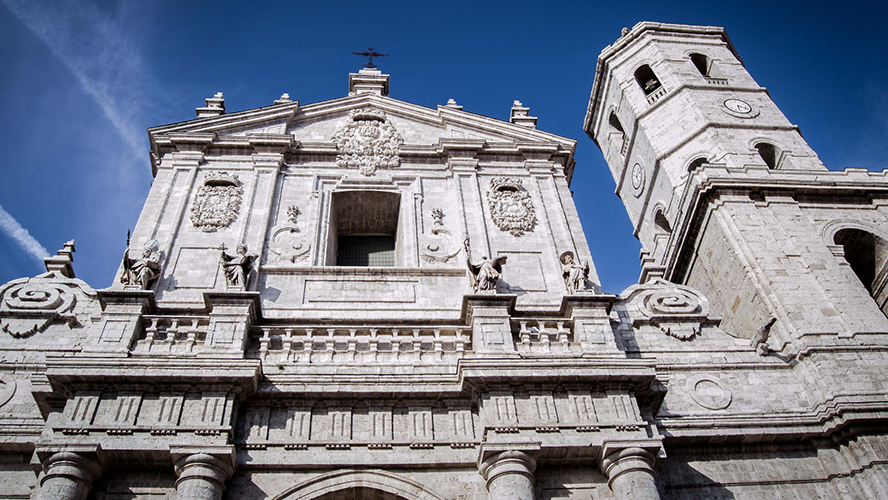
That unfinished nature is part of its personality. Inside, the cathedral feels spacious and bright; highlights include Juan de Juni’s Baroque main altarpiece and the cathedral museum, which houses carvings and paintings from parishes across the diocese. Climbing the tower offers a clear view of the city’s rooftops and helps you understand the true scale of the unfinished project.
Plaza Mayor: the urban model that inspired Madrid
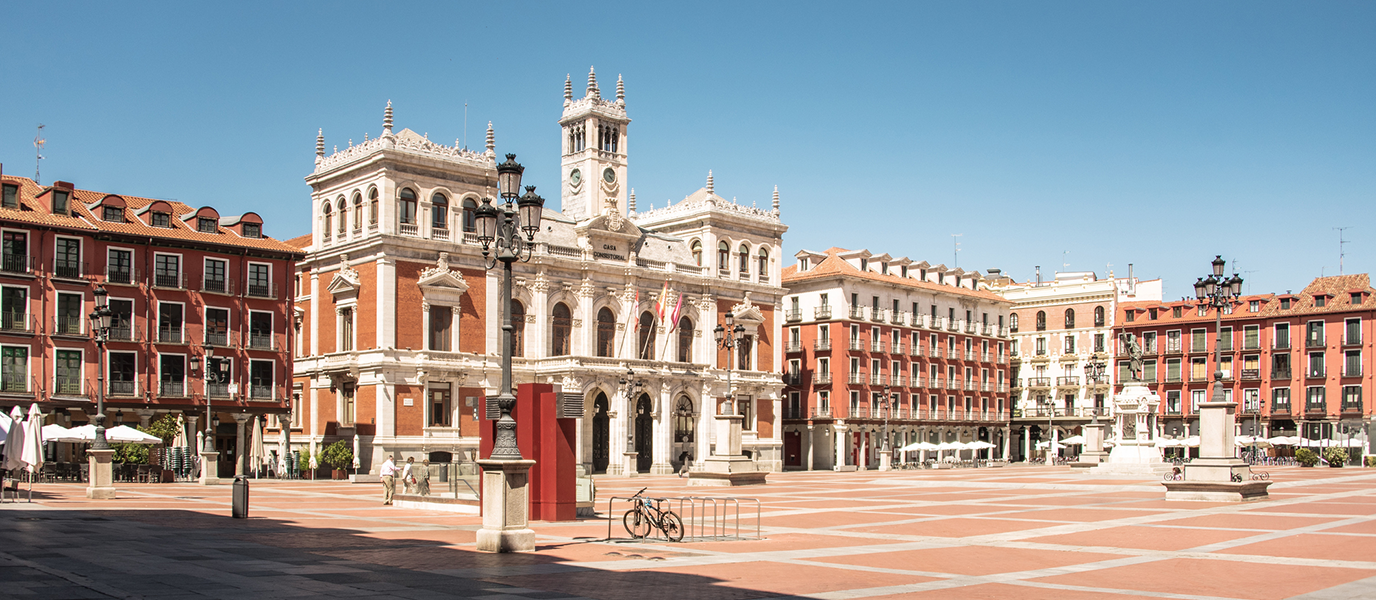
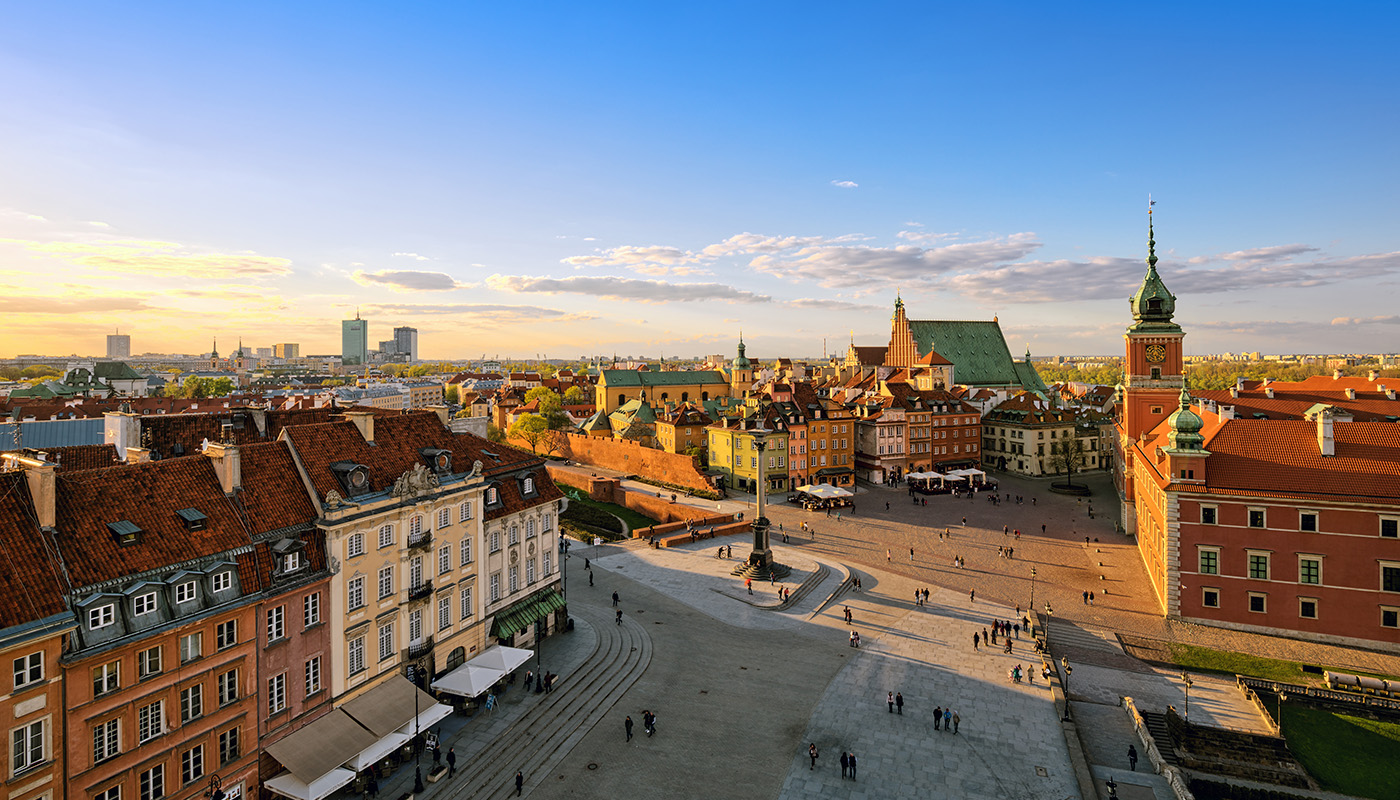
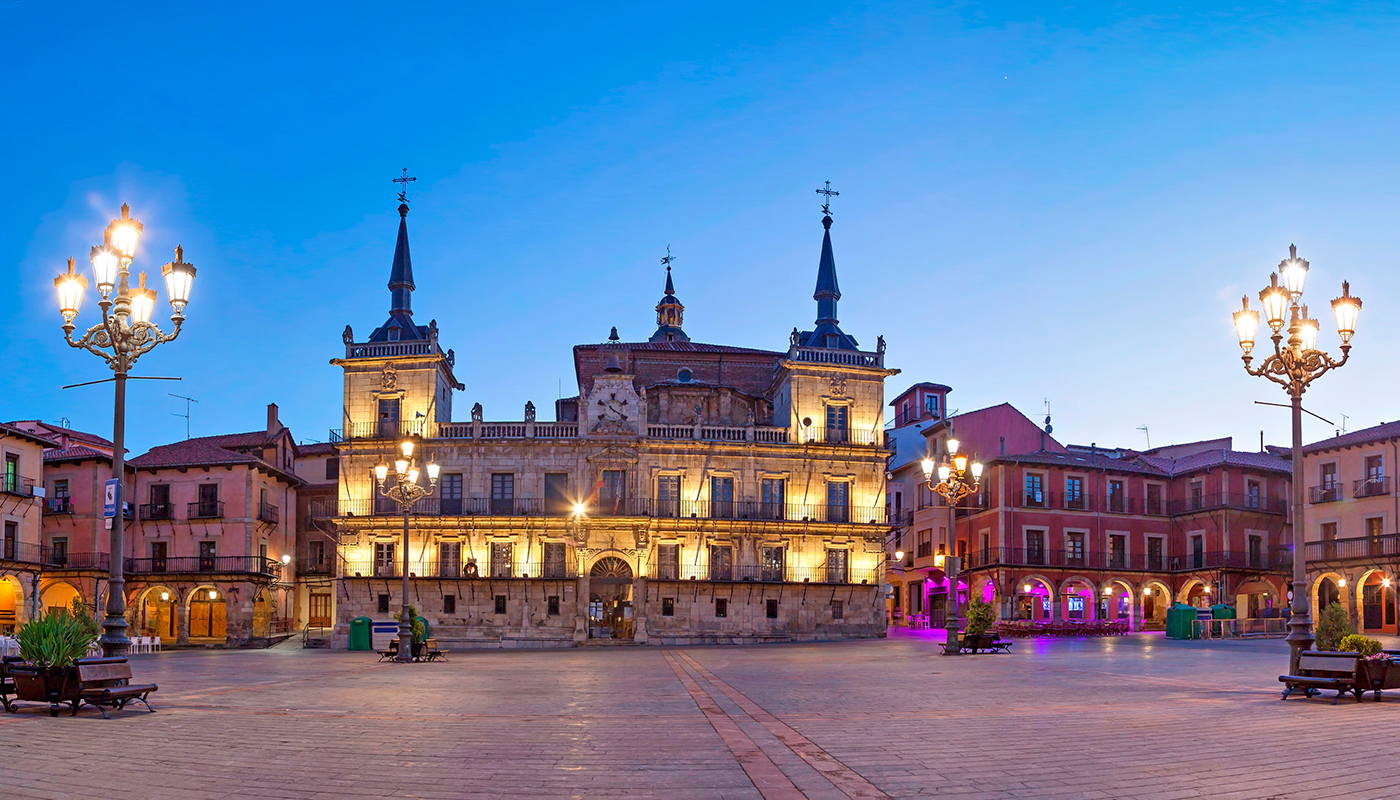
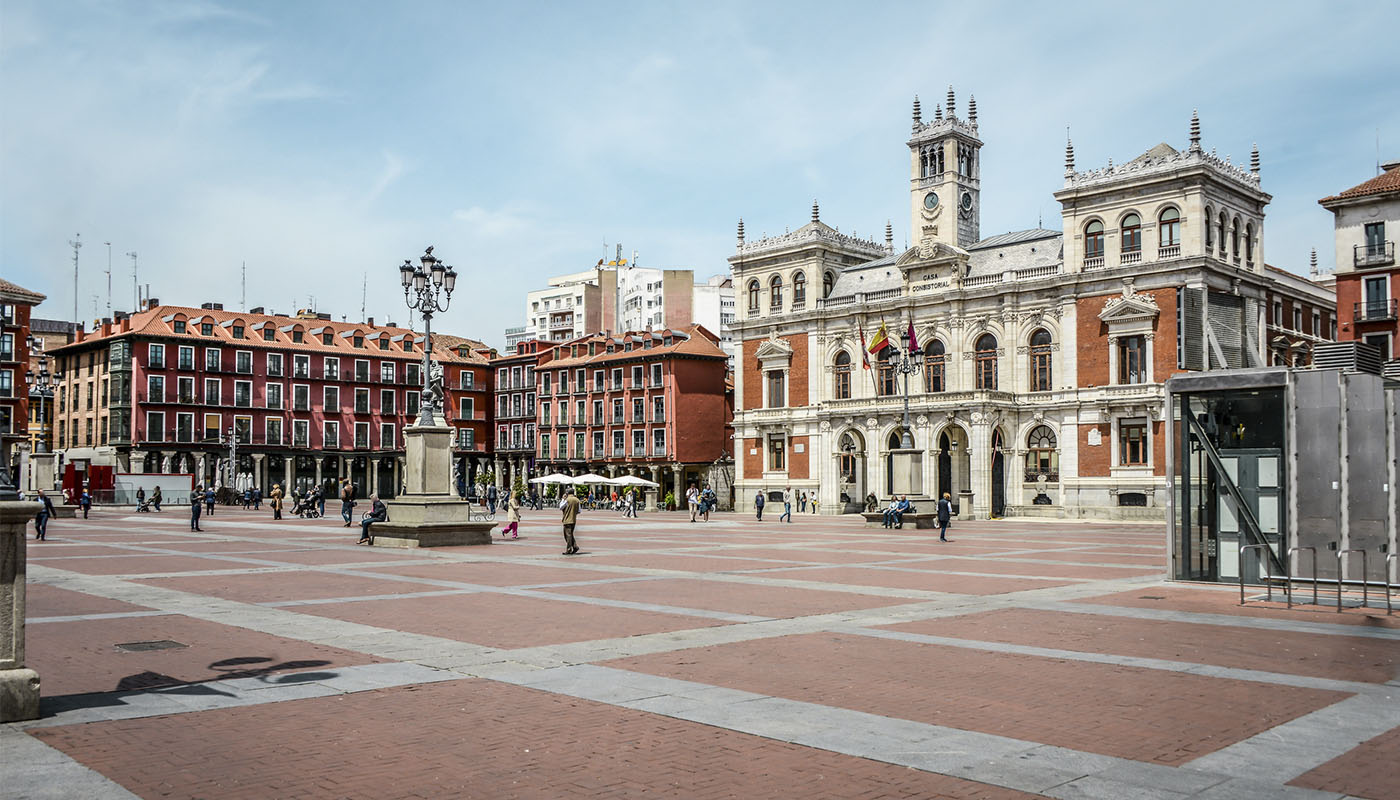
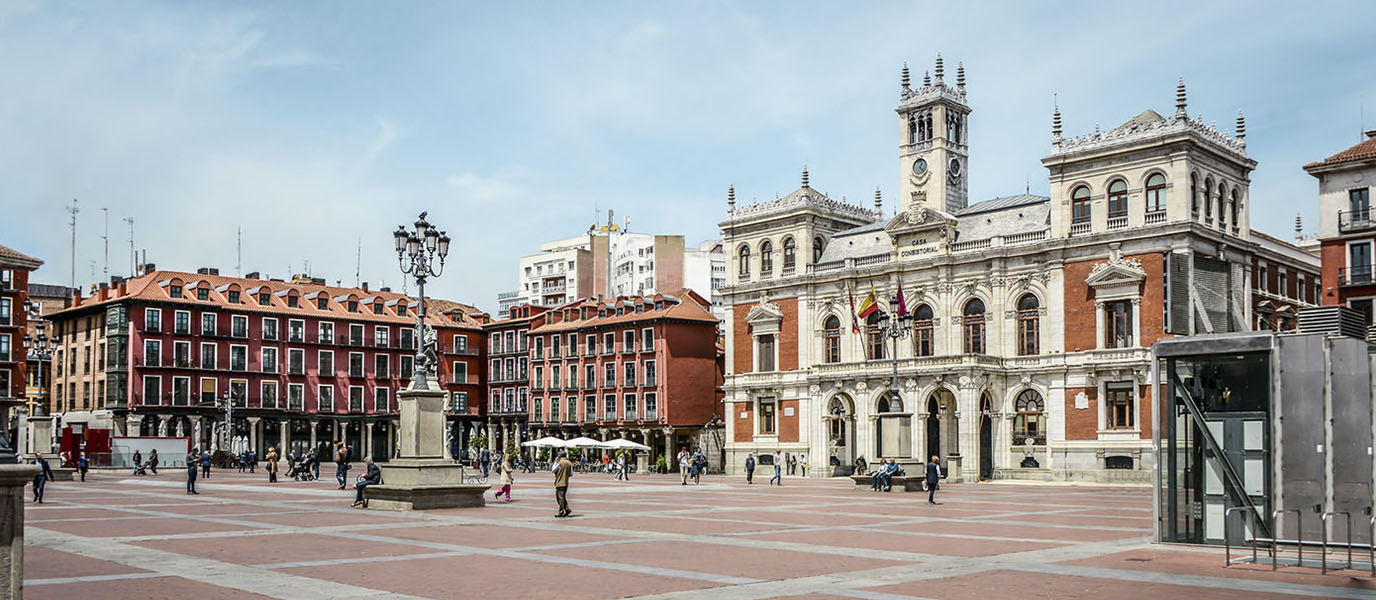
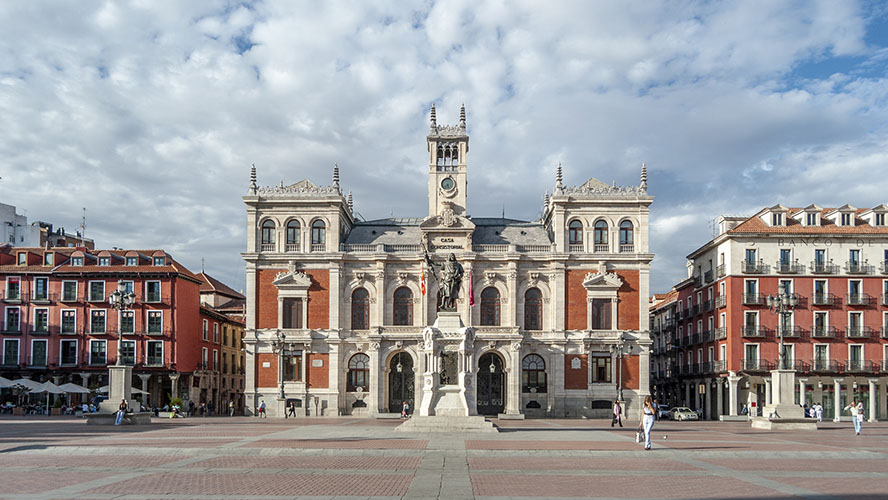
After the fire of 1561, Valladolid rebuilt its main square with a regular, porticoed, rectangular design that served as a model for other Spanish squares, including Madrid’s, and those of the American viceroyalties. Its arcades, reddish façades and the Town Hall building form a harmonious ensemble that works as a genuine urban drawing room.
Book fairs, concerts, Christmas markets and Valladolid’s famous Holy Week are held here. By day it’s bustling, while by night, when it’s lit up, it has a theatrical air. It’s the best place to begin any walk.
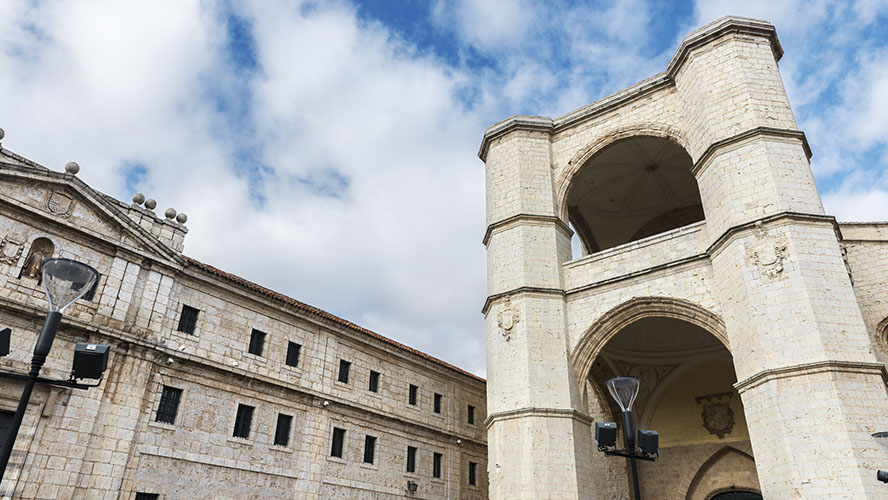
Church of San Benito: from military monastery to modern art museum
The former Benedictine monastery of San Benito el Real was one of the most powerful monastic complexes in Castile. Its late Gothic church preserves an impressive open nave and Renaissance altarpieces by Berruguete. A few steps away, the Herrerian courtyard houses the Museum of Contemporary Spanish Art, located within the former convent buildings.
The combination of historic heritage and modern art creates one of the most interesting cultural spaces in the city. It’s easy to spend several hours here switching between exhibitions and strolls through the cloisters.
Church of San Miguel and San Julián: hidden Baroque splendour behind an understated façade
Housed in a mid-16th-century building that originally served as the Professed House of the Society of Jesus, it almost goes unnoticed from the outside, but inside it surprises with its Baroque exuberance. Gilded altarpieces, processional sculptures and soft lighting create an atmosphere very different from the Castilian sobriety outside. It’s a brief but intense stop.
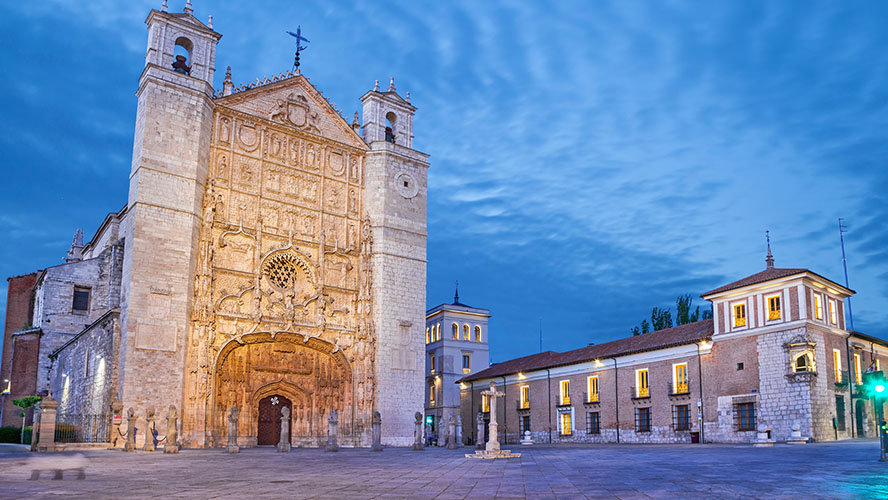
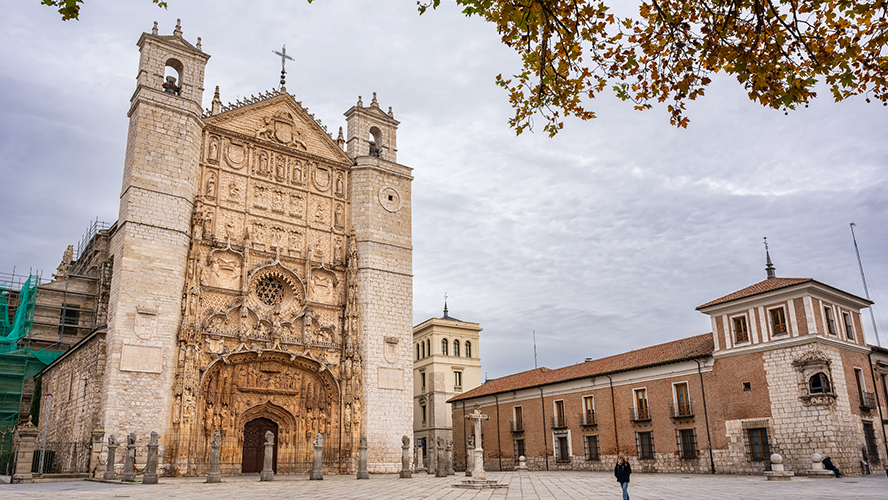
Church of San Pablo: Isabelline filigree opposite the Royal Palace
The façade of San Pablo is one of the finest examples of Isabelline Gothic in Spain. Pinnacles, coats of arms and reliefs cover the stone like lace. Opposite stands the Royal Palace, where the monarchs resided when Valladolid was the capital. The square, spacious and solemn, sums up the political and religious power of the 16th century.
La Antigua: the Romanesque tower that shapes the city skyline
The church of Santa María la Antigua preserves an elegant 12th-century Romanesque tower and a later Gothic portico. It’s one of Valladolid’s most photogenic spots, especially at dusk, when the lighting highlights the silhouette of the bell tower. The small adjoining garden invites you to sit and take in the scene.
Campo Grande: peacocks, ponds and shade in the city’s green lung
This historic 11-hectare park stretches between the railway station and Plaza Zorrilla. Tree-lined paths, ponds, artificial waterfalls and free-roaming peacocks create an almost 19th-century atmosphere. It’s common to see locals reading on benches or children chasing pigeons.
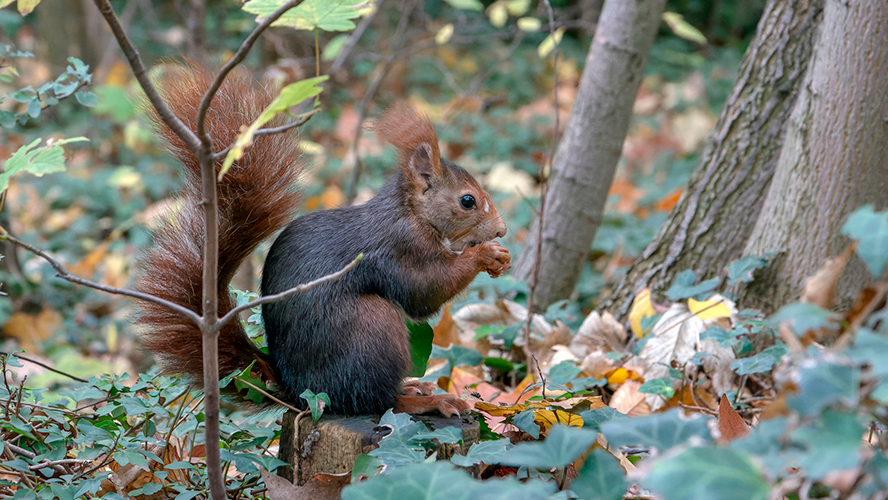
As well as sculptures dedicated to writers such as Zorrilla, there are viewpoints and quiet spots where you can rest after exploring the monuments. In summer it’s the best refuge from the heat.
Plaza del Viejo Coso: the first bullring turned neighbourhood courtyard
Hidden behind Calle San Ignacio, this 19th-century circular square was once a bullring. Today it’s surrounded by houses with wooden balconies facing the centre, like a small domestic theatre. It’s one of the most distinctive and least-known spaces in Valladolid.
National Sculpture Museum: the pinnacle of Spanish religious sculpture
Housed in the Colegio de San Gregorio, a late Gothic gem, this museum brings together the finest collection of polychrome sculpture in Spain. On display here are masterpieces by Gregorio Fernández, Alonso Berruguete and Juan de Juni, many of them central to Holy Week.
More than a museum, it’s an emotional experience: the recumbent Christs, the Pietàs and the processional floats convey an expressive intensity that’s difficult to forget.
Palacio de Santa Cruz: Spain’s first Renaissance courtyard
Home to the University of Valladolid, this 15th-century palace introduced the Italian Renaissance to Castile. Its two-storey square courtyard, in pale marble, is a haven of tranquillity. Inside, there are temporary exhibitions and a historic library.
Pasaje Gutiérrez: a Parisian passageway in the heart of the city
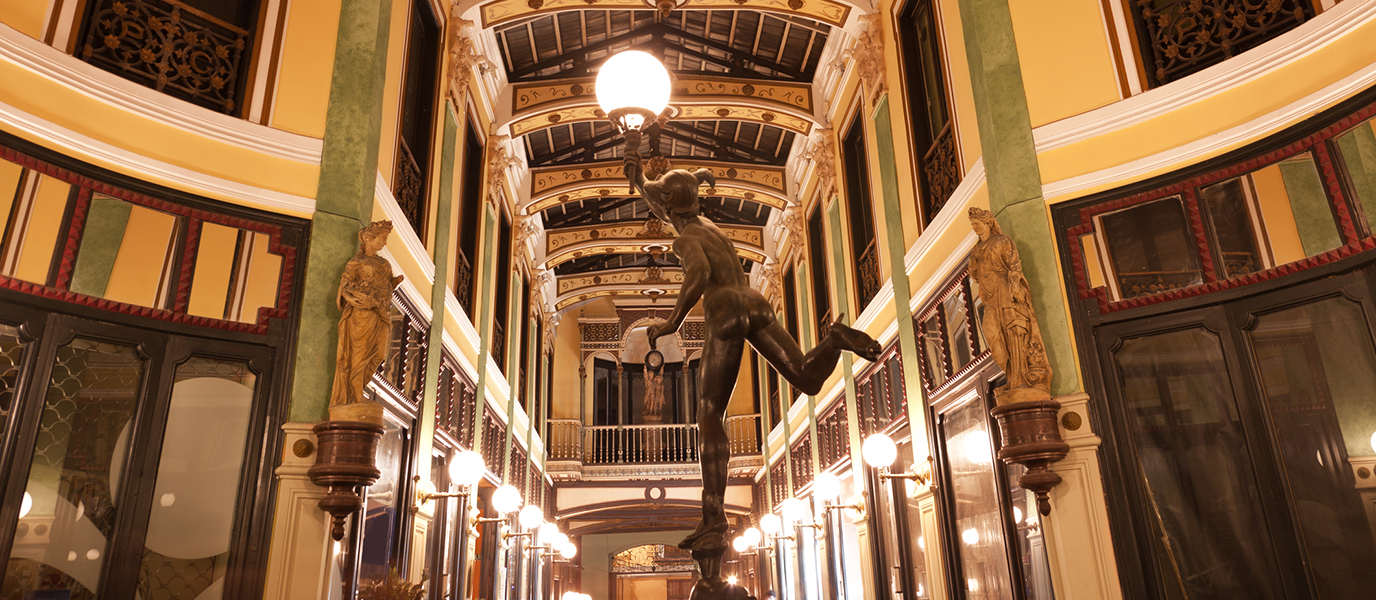
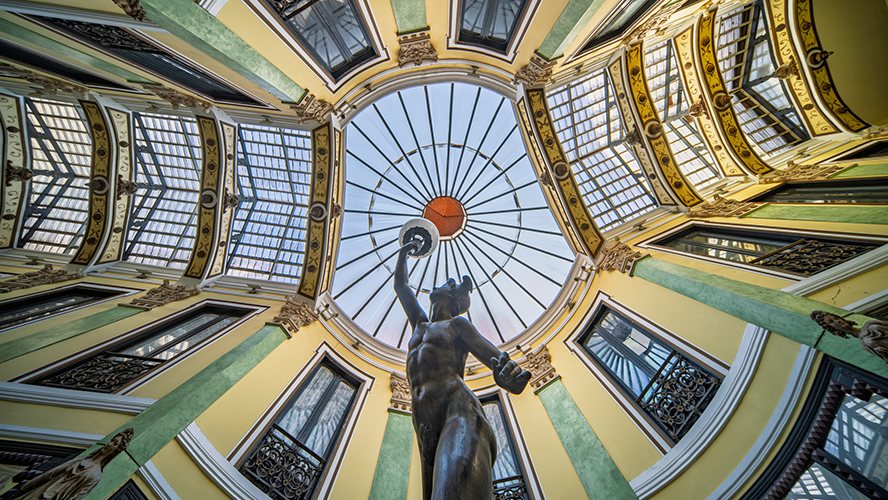
Built in 1886, this covered passage connects Fray Luis de León and Castelar streets beneath a glass-vaulted roof. Allegorical sculptures, mosaic floors and classic shopfronts are reminiscent of 19th-century shopping arcades. It’s perfect for sheltering from the cold or rain and browsing small shops and cafés.
Academia de Caballería: military grandeur beside Campo Grande
The current building, in historicist style, was erected at the beginning of the 20th century after a fire. Its crenellated silhouette and towers are reminiscent of a neo-medieval castle. It houses a museum tracing the history of Spanish cavalry, with uniforms, weapons and historic carriages. The complex, opposite the park, is one of the city’s most recognisable sights.
Centre and shopping area: pedestrian streets and traditional shops
The streets of Santiago, Teresa Gil, Mantería and Regalado are home to fashion shops, historic bookshops and classic pastry shops. It’s worth stepping into places with a long history such as El Bombón or Cubero to try traditional sweets, or wandering through the small shopping arcades.
Commercial life here isn’t just for show: people in Valladolid still use the centre every day, which keeps the atmosphere authentic.
Pinchos route and where to eat: roast suckling lamb, Ribera wine and packed bars
Valladolid boasts some of the best tapas in the country. For creative pinchos, Los Zagales (Plaza Mayor) is a nationally renowned establishment, with creations such as “Obama in the White House” or tigretostón. Jero, on Calle Correos, offers an endless bar of hot and cold topped toast dishes. La Tasquita and Villa Paramesa are other reliable stops.
If you prefer traditional food, El Figón de Recoletos and La Criolla roast suckling lamb from the Churra breed of sheep in wood-fired ovens. For more contemporary cuisine, Trigo (which holds a Michelin star) works with local produce using modern techniques. And for wine, bars such as El Corcho or Sarmiento serve Ribera del Duero by the glass. Eating in Valladolid isn’t just a practical necessity: it’s an essential part of the trip.