











Plaza Mayor in Valladolid doesn’t strike visitors at first glance; it reveals itself in layers. The traveller slips in almost without noticing from narrow streets, and then suddenly the space opens up with a geometric precision that reveals deliberate planning. There’s no improvisation here: every metre reflects a clear idea of order, control and representation of urban power. It’s not a medieval square shaped by history, but a deliberate creation, designed to organise public life in a city that once aspired to be the capital of Spain. More than a monumental space, the square functions as a collective living room. For centuries, it has been a hub for trade, celebrations, protests, markets, fairs and everyday leisure. To understand Plaza Mayor in Valladolid is to understand how the city reimagined itself after a catastrophe and how that model would end up being exported across much of the world.
- History and significance of Plaza Mayor in Valladolid
- The largest main square in Spain
- What buildings you’ll find
- Leisure and gastronomy
- The square as a stage
History and significance of Plaza Mayor in Valladolid: the fire that changed everything
The origin of Plaza Mayor is directly linked to the great fire of Valladolid in 1561, which destroyed much of the medieval centre. Far from rebuilding in a chaotic way, the council decided to use the tragedy to impose a new urban order. The project was entrusted to Francisco de Salamanca, an architect in the service of the Crown, who conceived a regular, spacious and unified space, something entirely new in 16th-century Spain. That decision turned Valladolid into an urban laboratory of the Spanish Renaissance.
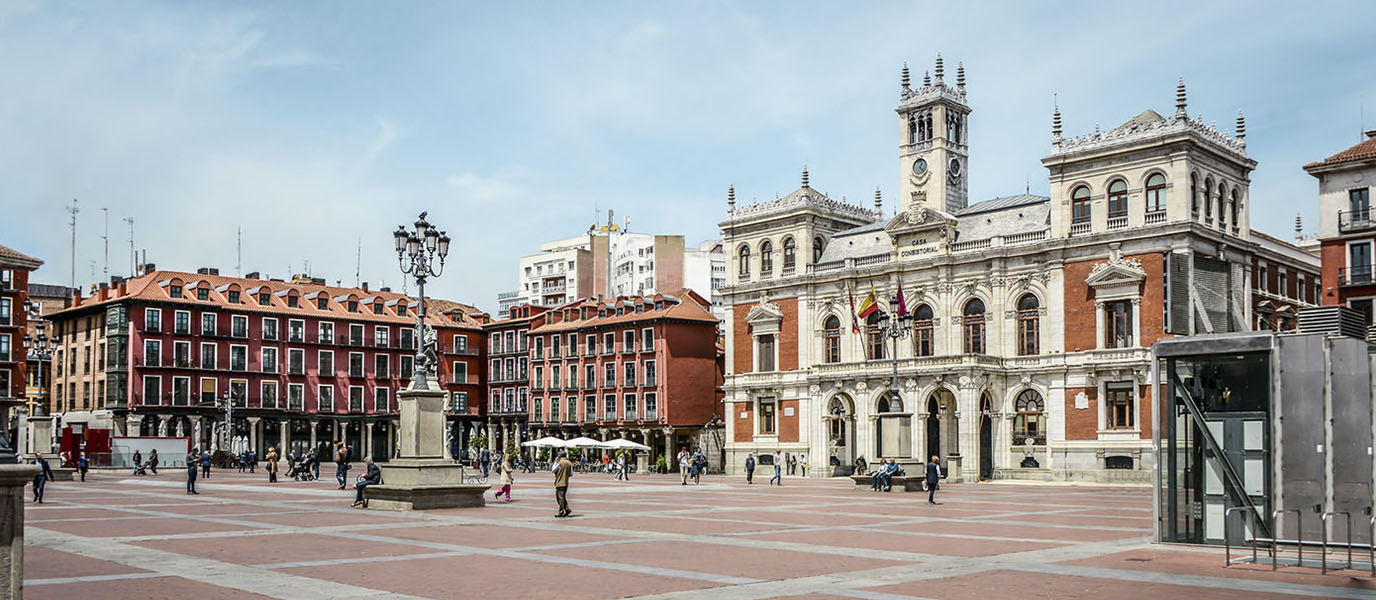
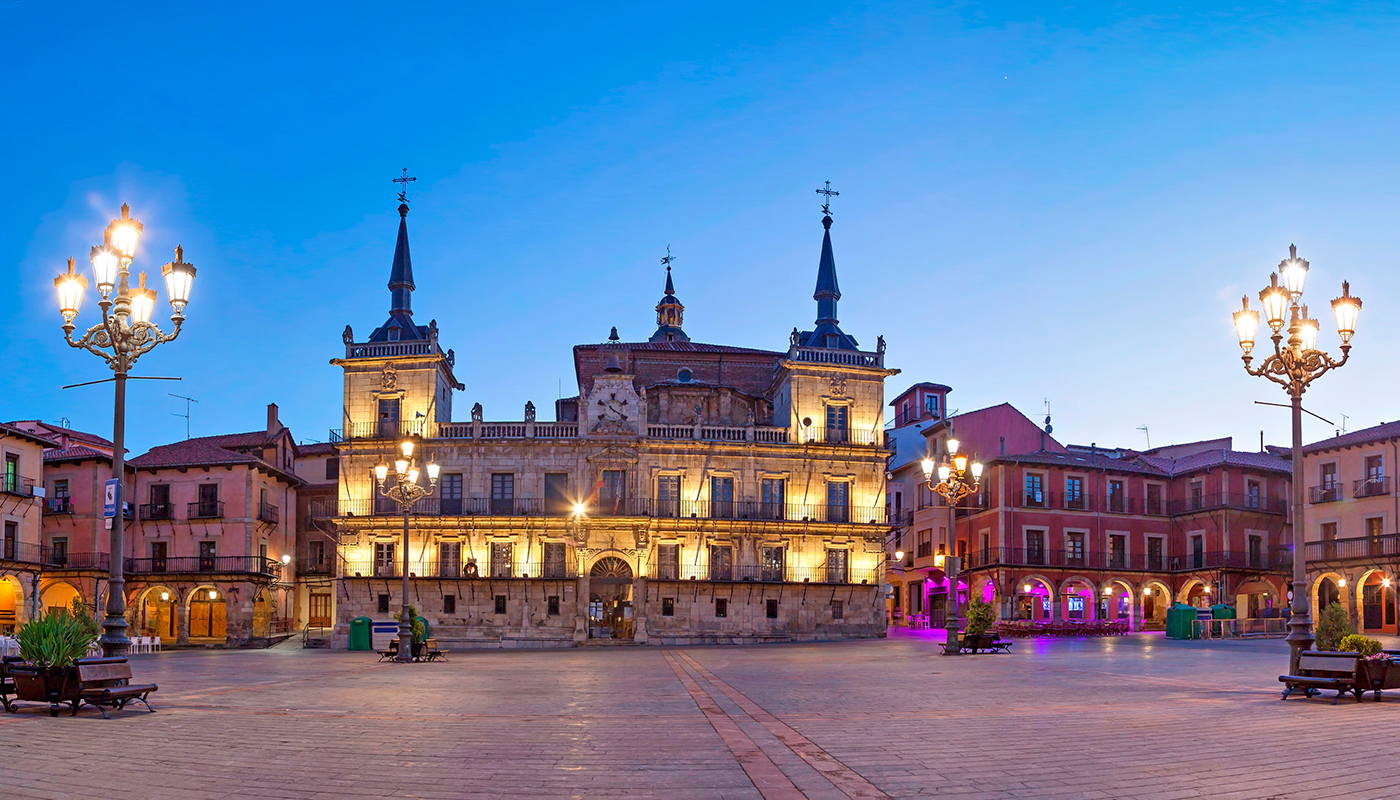
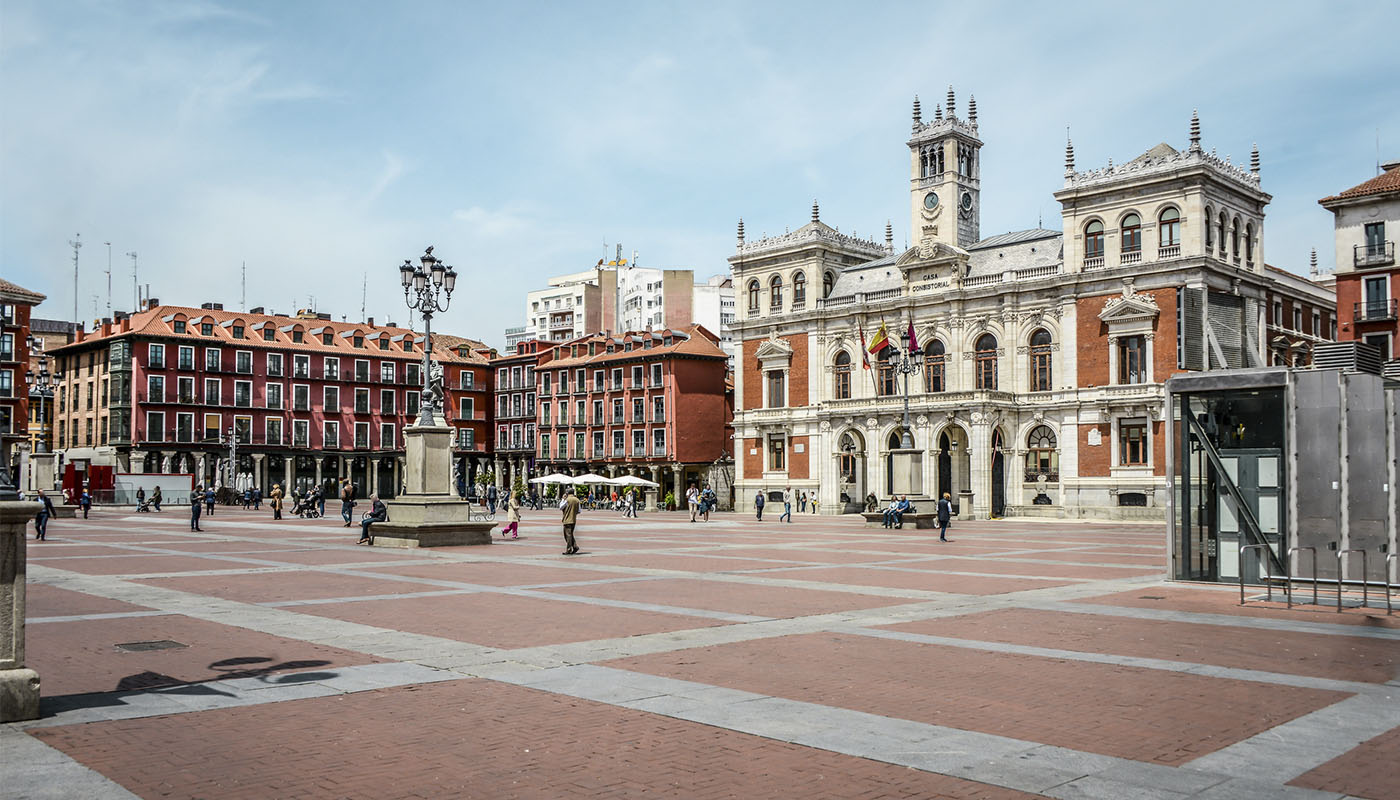
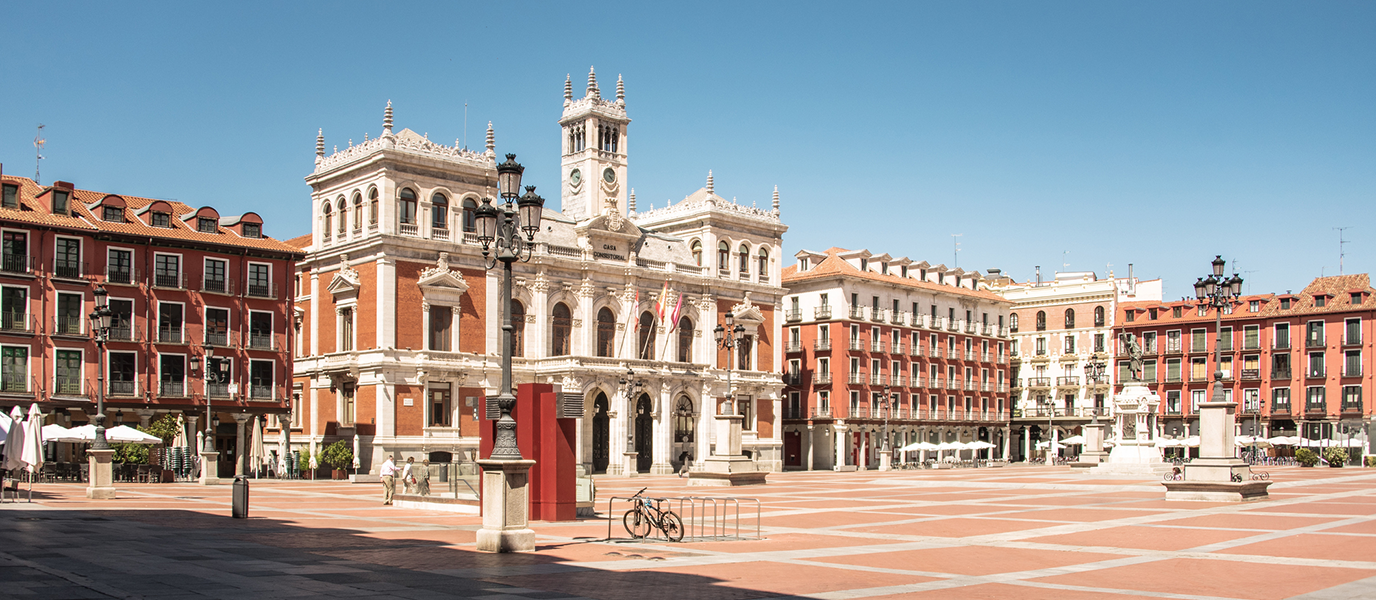
The new square was designed as a closed rectangle, with buildings of uniform height, continuous arcades and uniform façades. This approach broke with the medieval tradition of irregular squares adapted to the terrain. Here geometry rules, and it does so in the service of civil power: the Town Hall stands on one of the main sides, symbolically presiding over the space.
This model, based on symmetry, continuity of arcades and the mixture of political power, trade and everyday life, would later be imitated in cities across the empire. From Madrid to many main squares in Latin America, the model created here served as a reference. More than a monumental square, it functions as an operational space: a market, a setting for royal proclamations, bullfights, popular festivals and everyday gatherings.
The largest main square in Spain: scale, proportion and real use
At approximately 14,000 square metres, the Plaza Mayor in Valladolid is one of the largest in the country, although any claim to the “title” depends on the criteria used. Beyond the figures, what really matters is the way that scale is handled. Unlike other large but disjointed squares, here the space feels compact, contained and functional.
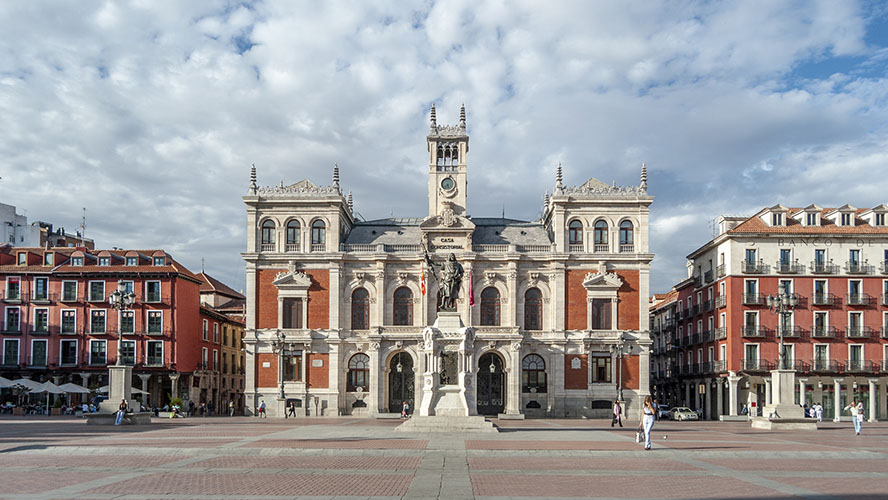
The proportion between width, building height and side length is carefully calculated so the square doesn’t feel impersonal. The arcades create a constant transition between interior and exterior, allowing you to walk through it even on rainy days or in extreme heat. It’s this balance that allows the square to remain somewhere people use, rather than simply look at.
What buildings you’ll find: arcaded façades, theatres and civic memory
The most visible building is Valladolid Town Hall, on the north side. The current building, inaugurated in 1908 after demolition of the Renaissance town hall, has an eclectic façade with neoclassical elements and richer ornamentation than its initial appearance suggests. Its towers and institutional balconies continue to mark the symbolic axis of municipal power, reinforcing the square’s historic role as a political stage.
A few steps away, on one side of the square, stands the Zorrilla Theatre, inaugurated in 1884 and dedicated to the Romantic writer José Zorrilla, author of Don Juan Tenorio. Its presence introduces a cultural dimension into a space traditionally linked to civil power and trade. The façade, with historicist decoration, recalls Valladolid’s role as a literary centre in the 19th century and connects the square with the city’s theatrical and cultural life.
Another important element is the historic headquarters of the Bank of Spain in the square, reinforcing the ensemble’s economic nature alongside buildings that for centuries housed merchants, guilds and prominent families. All follow the same pattern: three storeys, semicircular arcades, red brick and rows of balconies. This uniformity wasn’t simply an aesthetic choice, but a political statement: visual order, control of space and continuity of economic activity.
Leisure and gastronomy: historic bars and outdoor tables
Plaza Mayor is one of Valladolid’s main meeting points for leisure. Under its arcades are bars and cafés with terraces that bustle throughout the year. Places such as Café Continental, El Corcho, famous for its roast suckling lamb pincho, and La Mejillonera form part of the local gastronomic ritual.
In the immediate surroundings are more established restaurants such as Los Zagales, a benchmark for creative tapas in Valladolid, or La Sepia, a classic option for informal meals. The square also serves as the gateway to a vibrant food scene extending along streets such as Santiago, Ferrari and Pasión.
The square as a stage: fairs, processions and public life all year round
Throughout the year, the Plaza Mayor hosts some of the city’s main events. During Holy Week, which has been declared an event of International Tourist Interest, it becomes a key point for processions. At Christmas it hosts the Christmas market and during patron saint festivities, it’s the setting for concerts and popular events.
But beyond major events, the square keeps its everyday role: children playing, residents crossing it daily, demonstrations, sporting celebrations and spontaneous gatherings. That continued use is what keeps it alive five centuries after its creation.