












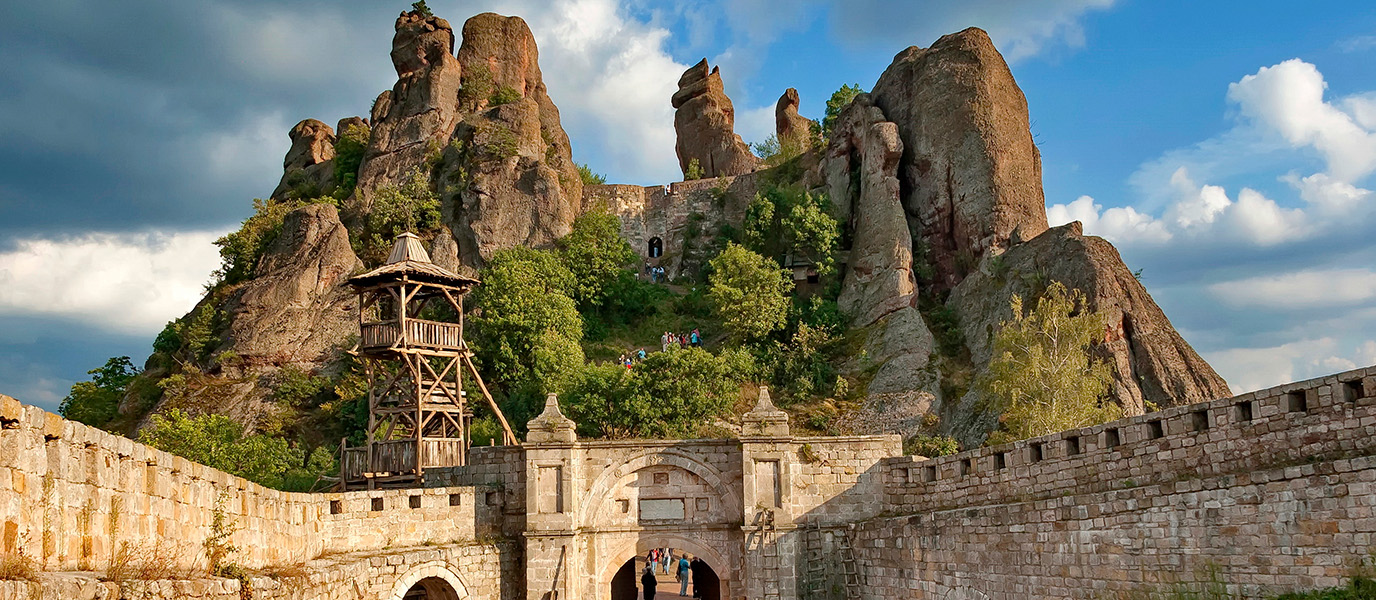
In the northwest of Bulgaria, among hills covered by lush forests and valleys that seem forgotten in time, Belogradchik dazzles with one of the most unique landscapes in Europe. This small municipality, close to the borders with Serbia and Romania, is home to the famous Belogradchik Rocks, a set of unique geological formations that were carved out by erosion over more than 200 million years into colossal figures standing up to 200 metres tall. At the foot of these gigantic natural sculptures is Belogradchik Fortress, a medieval bastion that seems to have melted into the rocks themselves.
- Natural context: the unique rock formations of Belogradchik
- What to see on your visit: discovering Belogradchik Nature Park
- What else to see in the area: nature, cave art and a beautiful lake for a picnic
- How to get there and tips for your visit
Natural context: the unique rock formations of Belogradchik
The Belogradchik Rocks are undoubtedly the region’s most iconic treasure. This geological phenomenon, unique in Europe, is the result of millions of years of erosion carving out these impressive formations. Spanning more than 30 kilometres, the natural sculptures reach heights of up to 200 metres and stand out for their reddish, ochre and orange tones, which contrast vividly with the emerald green of the surrounding forests.
Each rock seems to tell its own story. Their peculiar shapes have inspired popular imagination for generations, giving rise to names reflecting human figures, animals and mythological scenes. Among the most famous are the Monk, the Nun and the Knight, which according to local legends are the result of ancient incantations or divine punishments. Another one of the formations, known as the School, resembles a group of students sitting in class, while the impressive figure of Bear Rock appears to be silently surveying the landscape.
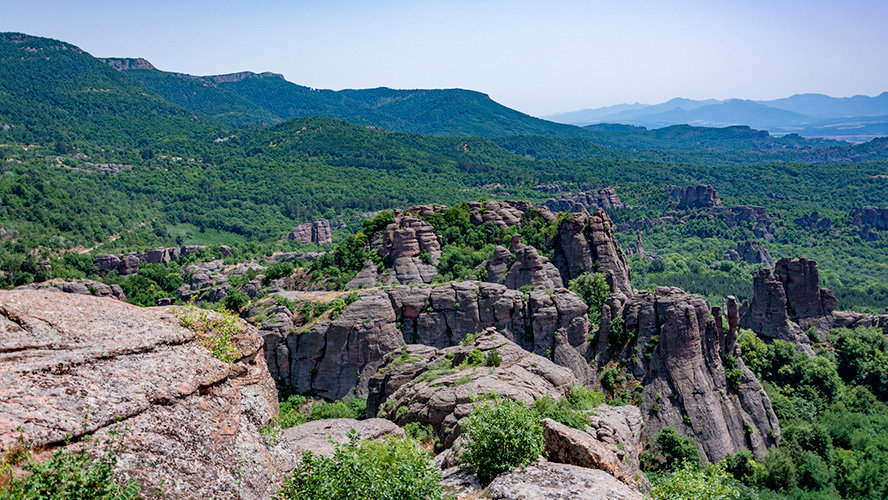
The rocks are not only a visual spectacle but also testament to the passage of time and the vagaries of nature. Their origin dates back to the Triassic period, more than 200 million years ago, when sand and clay sediments began to compact and rise due to tectonic movements. Subsequently, the combined effects of wind, rain and temperature changes carved out these extraordinary formations. This unique natural setting not only invites contemplation but also serves as a magnet for hikers and photographers.
What to see on your visit: discovering Belogradchik Nature Park
Belogradchik fortress: an unassailable bastion embedded in the rock
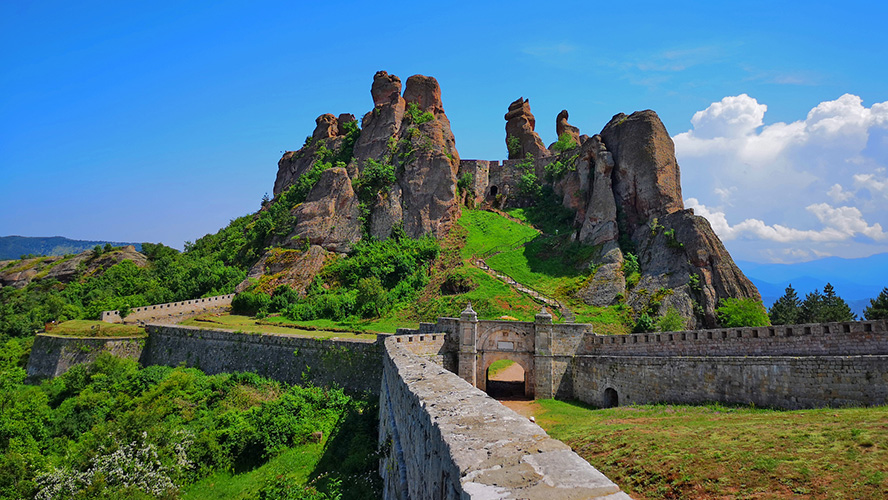
Belogradchik fortress, known as Kaleto, is an excellent example of how human ingenuity and the forces of nature can come together in a monumental and impenetrable work. Originally built by the Romans in the 1st century AD, it was expanded during the Bulgarian Empire and later under Ottoman rule. Its strategic location, surrounded by towering rock formations, made it virtually unassailable.
What distinguishes the fortress from others is how the natural rock walls are integrated into its design, reducing the need for man-made walls. Walking through its courtyards, bastions and towers, it is easy to imagine how the structure witnessed countless battles. From the top, the views are unbeatable: a panorama of hills, forests and, of course, the spectacular rock formations that surround the site.
The rock formations: natural sculptures steeped in mystery
Besides being a visual spectacle, Belogradchik Rocks also serve as a starting point for exploring the region’s rich oral tradition. Each rock tells a story: the legend of the Monk and the Nun, for example, tells of the tragic love between a priest and a nun who were transformed into stone as divine punishment.
One of the most impressive is the Madonna, a rock that, according to locals, resembles the silhouette of a woman with a child in her arms. According to legend, she is a nun who was expelled from her convent and turned into stone by God for having sinned by having a child with a shepherd. Also noteworthy is the Knight’s Rock, whose figure is reminiscent of a warrior with a sword. These details make a visit an almost magical experience, where imagination plays as important a role as sight.
Hiking routes: the best way to discover the area
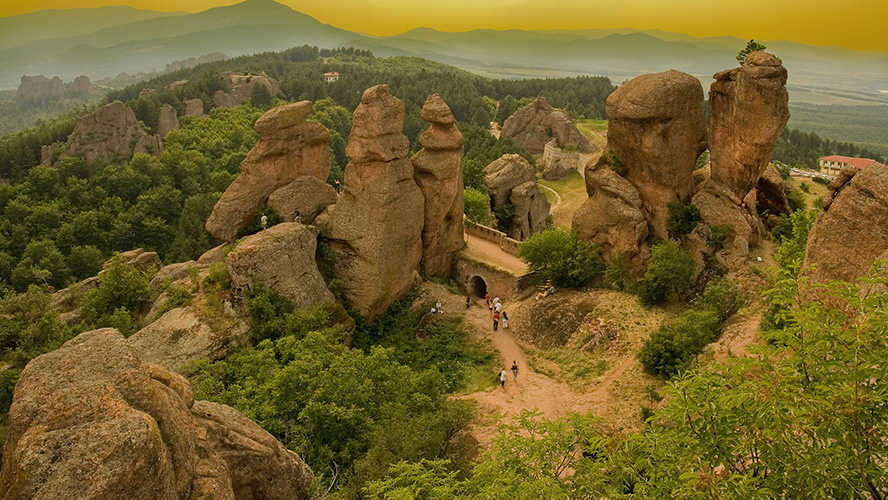
For those who want to get into the heart of the landscape, the hiking trails that criss-cross the area are a marvel. The trails are well signposted and offer different levels of difficulty, ranging from easy hikes to more challenging treks.
One of the most popular is the one leading to the Borov Kamak viewpoint, from where you can appreciate the sheer size of Belogradchik Rocks in all their splendour. Another recommended route goes through the Belogradchik Nature Park, home to rich native flora and fauna, as well as natural viewpoints that look like something out of a painting.
What else to see in the area: nature, cave art and a beautiful lake for a picnic
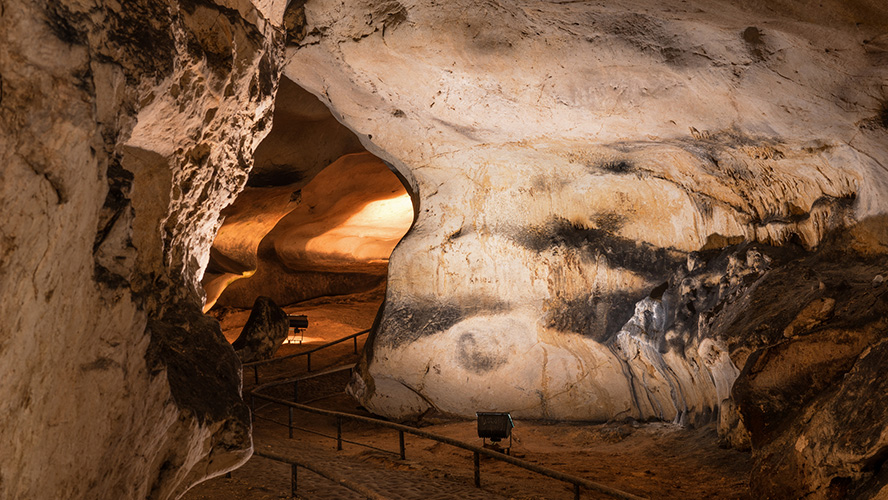
The area surrounding Belogradchik offers a range of attractions that complement the experience of exploring the rocks and fortress. One of the highlights is Magura Cave, located about 25 kilometres from the town. This imposing cavern, with galleries up to 2.5 kilometres long, is one of the largest in Bulgaria and a veritable sanctuary of prehistoric art. The cave paintings on its walls, dating back between 12,000 and 8,000 years, depict hunting scenes, rituals and geometric figures, some of which are associated with ancient solar calendars. This impressive legacy, declared a Cultural Monument of National Importance, provides insight into the symbolic universe of the region’s first human communities. The cave is also known for its spectacular stalactites, stalagmites and columns, which add a dramatic touch to the tour.
Very close to the cave is Rabisha Lake, an artificial reservoir that has become a haven of peace for nature lovers. Surrounded by gentle rolling hills, the lake is the largest landlocked lake in Bulgaria, and its calm waters invite you to relax with activities such as kayaking, paddle boarding or even fishing. It is also an excellent place for bird watching, as many migratory species stop here. In summer, the shores of the lake are perfect for a picnic, while at sunset, the reflection of the hills in the water creates a picture-postcard landscape.
How to get there and tips for your visit
Getting to Belogradchik is relatively easy. The city is about a three-hour drive from Sofia, the capital of Bulgaria. If you don’t have your own vehicle, it’s also possible to take a train or bus to Vidin, the nearest town, and from there continue on by taxi or local transport.
To get the most out of your visit, comfortable shoes are recommended, especially if you plan to explore the hiking trails. The weather can be unpredictable, so a raincoat and some water are always useful. If visiting in the high season, also consider arriving early to avoid crowds at the fortress and the most popular areas.