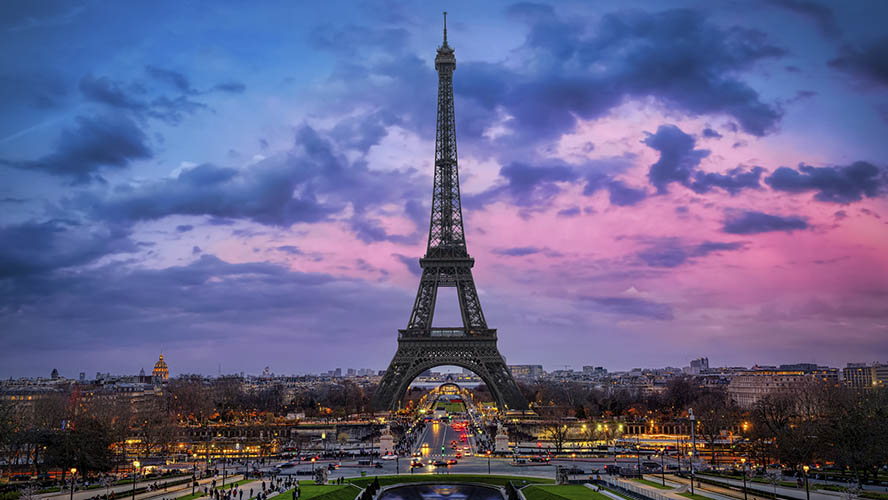












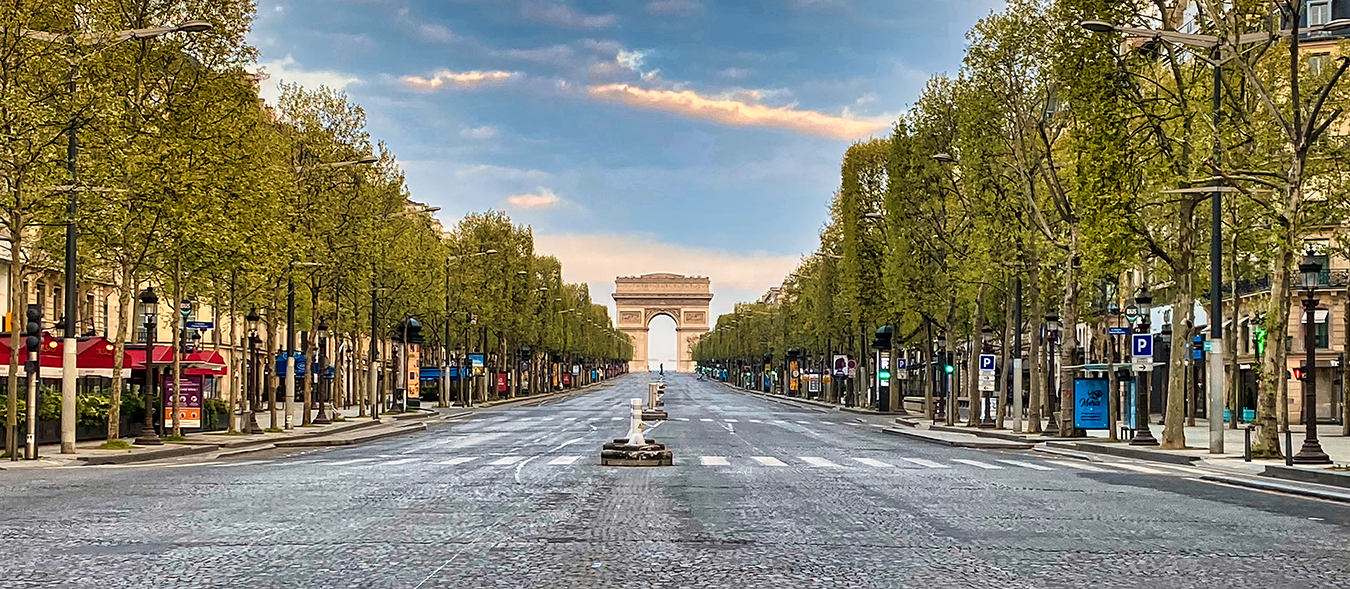
Anyone walking along the Champs-Élysées steps into a space that condenses the essence of Paris: an avenue almost two kilometres long that links the Arc de Triomphe with Place de la Concorde, lined with perfectly pruned trees, window displays that set trends worldwide and cafés that were once havens for writers and politicians. But beyond the sparkle of the lights and the impeccable façades, this avenue has witnessed chapters that defined France’s history, from the coronation of Napoleon to the Liberation parades of 1944, and not forgetting the celebrations of the 1998 World Cup. A boulevard that changes with each era yet retains an immortal air, as if Paris looked at itself in this urban stage and recognised itself time and again.
- History of the most famous avenue in Paris: from royal gardens to the boulevard of revolutions
- A walk along the Champs-Élysées: from Concorde to the Arc de Triomphe
- Shops, cafés and monuments: luxury showcases and corners that transport us to the 19th century
- Activities and events on the avenue: from 14 July to year-end celebrations
- What to see near the Champs-Élysées: squares, museums and gardens that make up the soul of Paris
History of the most famous avenue in Paris: from royal gardens to the boulevard of revolutions
The origins of the Champs-Élysées go back to the 17th century, when André Le Nôtre, landscape designer of Louis XIV and creator of the gardens of Versailles, designed a tree-lined promenade extending the axis of the Tuileries Palace westwards. At that time, it was a simple path through geometric gardens, designed for the nobility to stroll along. Its name evoked Greek mythology; the Elysian Fields were the resting place of virtuous souls after death. The choice was no accident; the avenue was intended to be a prestigious space, a monumental gateway to the heart of Paris.
During the 18th century, the promenade became a fashionable spot for the aristocracy, but also a popular space where Parisians came to breathe fresh air, watch impromptu shows and enjoy fairs. It was then that cafés and theatres appeared, adding life to the place. In the 19th century, with the construction of the Arc de Triomphe on Napoleon’s orders, the avenue acquired its symbolic dimension, a boulevard that wasn’t only beautiful but represented the grandeur of France and its military feats.
The Champs-Élysées became a political and social stage. In 1848 it witnessed revolutionary demonstrations; in 1940, the German occupation; and in 1944, the triumphant entry of the Resistance alongside General de Gaulle. Every 14 July, the military parade runs along its length, and since 1975 it has been the final stage of the Tour de France, an event that has turned the avenue’s cobblestones into part of cycling folklore. In short, its history isn’t just urban but that of a nation that has always gathered here to celebrate, protest or commemorate.
A walk along the Champs-Élysées: from Concorde to the Arc de Triomphe
Walking the Champs-Élysées means beginning at Place de la Concorde, presided over by the Luxor Obelisk brought from Egypt in 1833. From there, visitors enter the first stretch of the avenue, where gardens still dominate the landscape, with wide green areas, classical sculptures and open-air cafés. It’s the most peaceful part, perfect for a leisurely stroll.
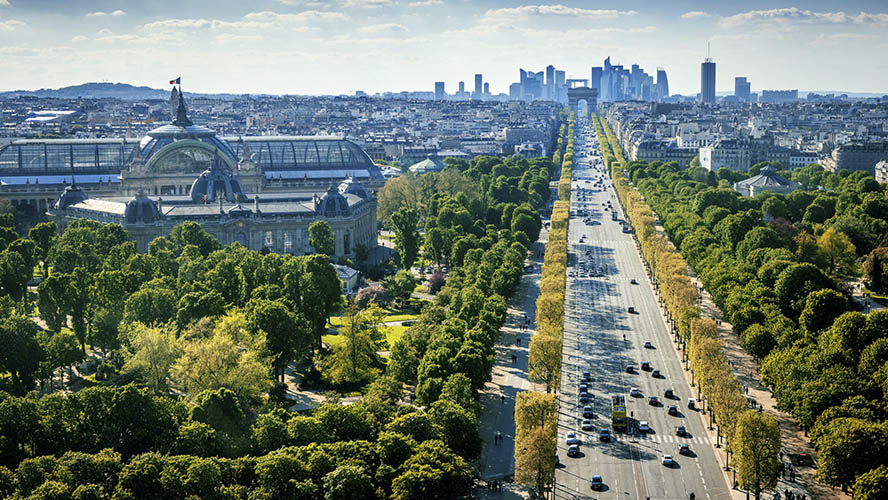
As you head westwards, the avenue becomes a different kind of place. The stretch between Avenue Winston Churchill and Avenue George V turns into a luxury showcase, with haute couture shops, iconic car showrooms and historic cinemas like the Gaumont Champs-Élysées. At the same time, cafés such as Fouquet’s remind us that the avenue has also been a meeting place for artists and politicians. The walk eventually comes to an end at Place Charles de Gaulle, where the Arc de Triomphe rises, surrounded by the endless traffic of 12 avenues converging on the square.
Shops, cafés and monuments: luxury showcases and corners that transport us to the 19th century
The Champs-Élysées are famous for hosting some of the most prestigious shops in the world. Brands such as Louis Vuitton, Cartier and Guerlain maintain their flagship boutiques here, many of them in historic buildings. But the avenue also preserves cinemas that recall its golden age as a cultural centre, when premiering a film on the Champs-Élysées was a guarantee of success.
Cafés play a central role in its daily life. Fouquet’s, opened in 1899, was the scene of literary and political gatherings and still retains an air of exclusivity. Other venues, like the Lido de Paris, combine entertainment and gastronomy, continuing the tradition of shows that date back to the first theatres of the 18th century. Apart from the Arc de Triomphe, monuments such as the Grand Palais and Petit Palais stand out, built for the 1900 Universal Exhibition, which are now museums that offer a cultural counterpoint to the commercial bustle of the avenue.
Activities and events on the avenue: from 14 July to year-end celebrations
Few avenues in the world host as many events as the Champs-Élysées. The most solemn is the 14 July military parade, France’s National Day, which runs along its length from the Arc de Triomphe to Concorde. With planes flying overhead and troops marching in step, it’s a spectacle that sums up the symbolic importance of the place.
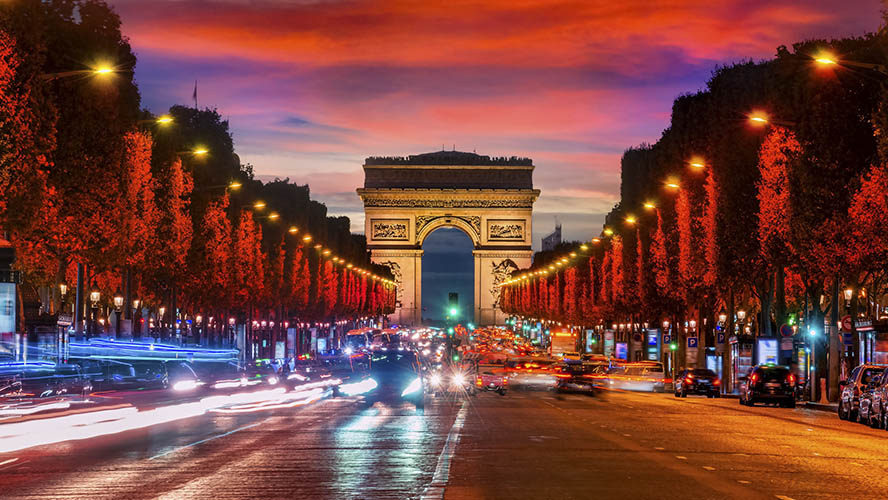
But there are also popular celebrations: every year, the final stage of the Tour de France turns the avenue into an open-air stadium where thousands of spectators cheer on the cyclists as they reach the finish line. In winter, the Champs-Élysées are transformed with Christmas lights that turn the boulevard into a tunnel of light. Until recently, they also hosted a Christmas market stretching from Concorde, keeping alive the tradition of fairs that livened up the area since the 18th century. All this reinforces the idea that the avenue isn’t just a place to pass through but a living stage where Paris celebrates its most memorable moments.
What to see near the Champs-Élysées: squares, museums and gardens that make up the soul of Paris
The surroundings of the Champs-Élysées enhance the visitor’s experience. To the east, Place de la Concorde is a place steeped in history, as it was here that the guillotine took the lives of Louis XVI and Marie Antoinette during the Revolution. Today, the Egyptian obelisk and monumental fountains serve as reminders of Paris’s cosmopolitan spirit.
To the south, across the Seine via the Pont Alexandre III, are Les Invalides, with Napoleon’s tomb beneath the great golden dome. To the north, elegant Avenue Montaigne displays haute couture window displays that rival the main avenue itself. And just steps away, the museums of the Grand Palais and Petit Palais offer excellent exhibitions of classical and contemporary art. Strolling around shows that the Champs-Élysées aren’t an isolated island but the heart of a monumental network that defines Paris’s identity.