























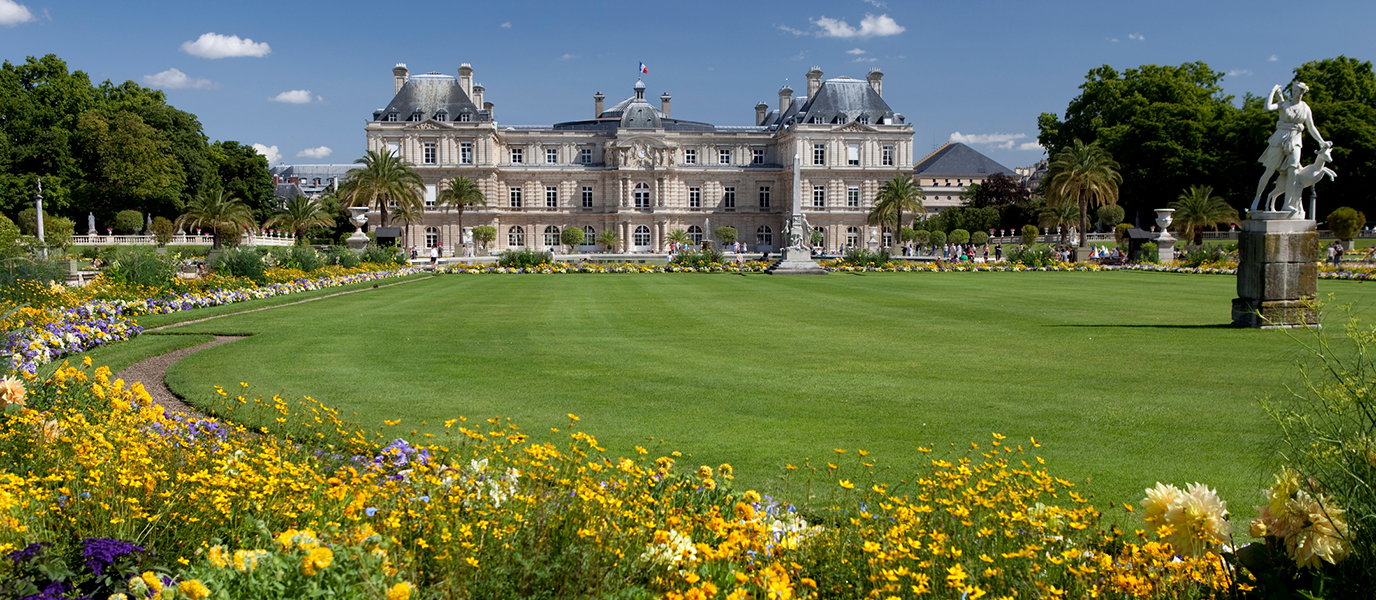
In the heart of the Latin Quarter, among the hustle and bustle of the Sorbonne and the aristocratic calm of the 6th arrondissement, lies one of the most unique and beloved spaces for Parisians: the Luxembourg Gardens. With its 25 hectares, the park combines the geometric rigour of the French garden with corners that invite you to stroll slowly, relax by a pond or admire the sculptures scattered under the shade of chestnut trees. Created thanks to a royal whim in the 17th century which today is a collective heritage site, the Luxembourg Gardens are much more than a green lung: they are an open-air museum, a scene of everyday life and a living testimony to the urban history of Paris.
- Brief history of the Luxembourg Gardens: Marie de Medici’s private dream which the French Revolution opened up to Parisians
- Where is the park and how to get there: the green lung of the Latin Quarter
- Things to see in the Gardens: the Senate Palace, octagonal ponds, historic sculptures and surprises on every path
- Useful information for visitors: opening times, prices and estimated duration
- Activities and places to eat: daily life in the Luxembourg Gardens
Brief history of the Luxembourg Gardens: Marie de Medici’s private dream which the French Revolution opened up to Parisians
The Luxembourg Gardens date back to 1612, when Marie de Medici, widow of Henri IV and regent of the young Louis XIII, decided to build herself a residence reminiscent of her native Florence. She acquired the Hôtel de Luxembourg and commissioned the architect Salomon de Brosse to design the new palace. Around it, she ordered the creation of a garden inspired by those at Boboli, with long avenues, geometric flowerbeds and classical sculptures evoking Italian Renaissance splendour.
Over the centuries, the destiny of the gardens became closely linked to that of France. During the French Revolution, the palace was confiscated and turned into a prison, and the gardens were transformed into a public space open to the citizens. In the 19th century, under Napoleon III, the design was extended southwards, providing a more landscaped style that balanced classical geometry with more natural areas. That was also when the metal chairs that today form an inseparable part of its iconography were installed.
The Luxembourg Gardens have also been the scene of cultural life in Paris. Writers such as Victor Hugo and Paul Valéry, impressionist painters such as Renoir, and generations of students have found inspiration and refuge there. Today, under the administration of the French Senate, they retain their historic nature while remaining a democratic space, open to everyone.
Where is the park and how to get there: the green lung of the Latin Quarter
The park is located in the 6th arrondissement of Paris, bordering the Latin Quarter and Saint-Germain-des-Prés. Its main entrance is opposite the Palais du Luxembourg, on Rue de Vaugirard, although the park has multiple accesses that connect it with streets such as Rue de Médicis and Rue Guynemer.
Getting to the Luxembourg Gardens is easy thanks to the large Parisian transport network. The nearest metro station is Odéon (lines 4 and 10), but you can also get there by RER B, which stops at Luxembourg, literally a few metres from the park. Several bus lines (21, 27, 38, 82, 85) stop nearby, making it easy for those who prefer to travel above ground. For those who enjoy walking, the park is about ten minutes from the Pantheon and fifteen minutes from Notre Dame, so it fits in well with a walking tour of the city’s historic area.
Things to see in the Gardens: the Senate Palace, octagonal ponds, historic sculptures and surprises on every path
The Luxembourg Palace, the dream residence of Marie de Medici, is today the seat of the French Senate. Although it is not open to the public on a regular basis, its imposing Renaissance façade is one of the park’s most recognisable features. The central esplanade stretches out in front of it, organised around a large octagonal pond where children and adults alike are entertained by the traditional miniature sailing boats, a custom that has been maintained since the 19th century.
The park has more than one hundred sculptures scattered throughout its avenues and corners, making it a true open-air museum. Among them are the statues of French queens and illustrious women lining the central terrace, the monument to Baudelaire and the bust of Verlaine, a reminder of the close relationship between the neighbourhood and French literature. It is also home to the famous Medici Fountain, designed by Tommaso Francini in 1630, which is reminiscent of the Italian Renaissance gardens thanks to its elongated pond and sculptural ensemble.
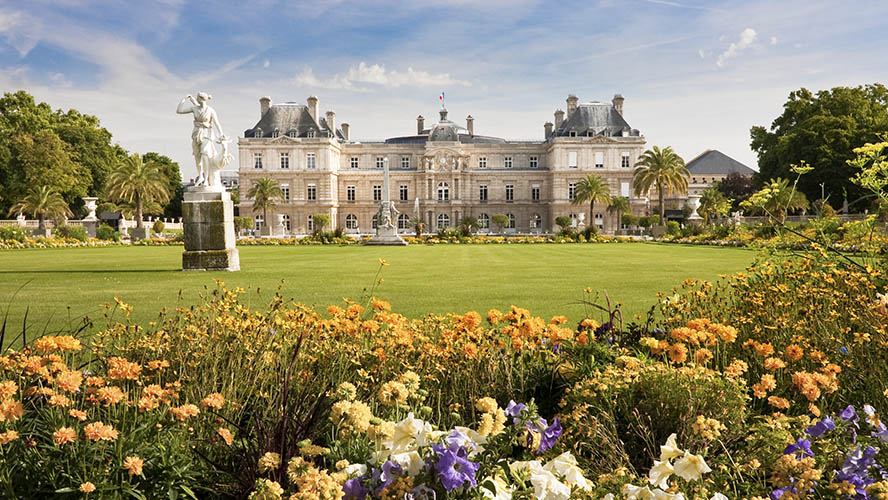
Those visiting the park in a leisurely way will find unexpected corners: a small fruit orchard run by the National Horticultural School, a historic beehive where beekeeping courses are held, or children’s areas where a puppet theatre has enchanted generations of Parisians.
Useful information for visitors: opening times, prices and estimated duration
Admission to the Luxembourg Gardens is free, which contributes to its open and popular nature. The opening hours vary according to the season: in winter the gardens are usually open between 8 a.m. and 5 p.m., while in summer they close until 9:30 p.m., taking advantage of the long Parisian evenings. Access is regulated by gates that close on time, so be aware of the opening hours to avoid surprises.
The ideal length of the visit depends on each traveller’s interest. A quick walk around the central area and the Medici fountain takes about one hour. Nevertheless, to appreciate the entire site, from the sculptures and ponds to the hidden corners, at least two hours are recommended. Those who wish to blend in with the locals can extend their stay, sitting on the iconic green chairs with a book or enjoying a picnic in the picnic areas.
Activities and places to eat: daily life in the Luxembourg Gardens
In addition to being a place for strolling, the Luxembourg Gardens are the setting for many activities. On weekends, it is common to see improvised chess games on the tables at the west end, while in summer music fills the air thanks to the concert kiosk, where orchestras and bands provide free performances. Children especially enjoy the play area with its playground and the rental of ponies for short rides on the trails.
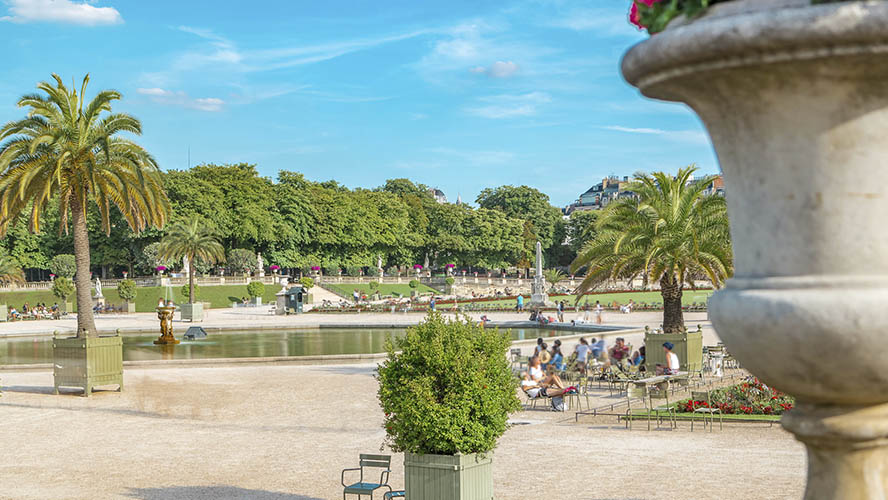
If you want to eat nearby, there are several options. Within the park itself there is a café-terrace where you can buy drinks and simple snacks. Outside, the adjacent streets offer a huge variety: from the traditional brasseries on Rue de Vaugirard to the patisseries on Rue de Médicis, where it is almost impossible to resist a freshly baked croissant. The surrounding area is also full of historic bookshops and cafés, which are ideal places to extend your visit with a literary Parisian touch.