






















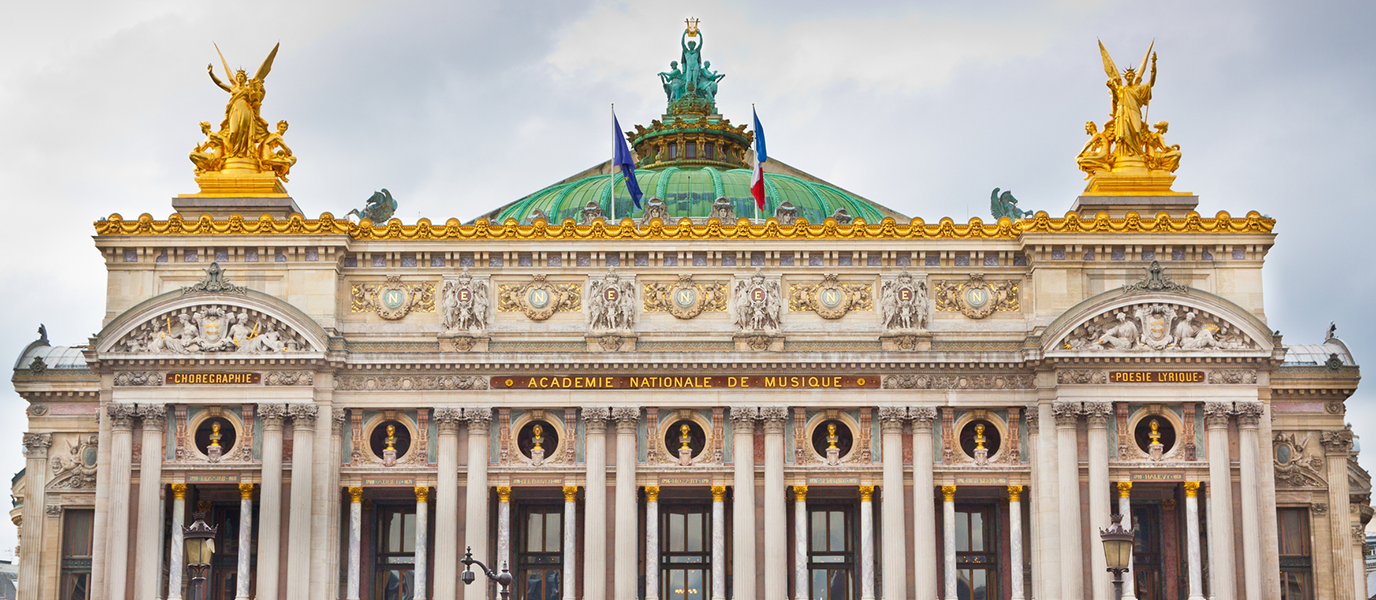
Visiting the Paris Opera, also known as Palais Garnier, is one of the most sophisticated experiences the French capital can offer. It is like stepping into a temple to elegance and good taste. Built on the express orders of Napoleon III and opened in 1875, Opéra Garnier is one of Paris’s most impressive monuments. It bears the name of its architect, Charles Garnier, who had the ability to create a magical balance of the arts of sculpture, painting and design.
The Palace of the Opera stands in the heart of Paris, and visitors are astonished by this architectural gem, with its onyx balconies, its sumptuous marble, its exquisite frescoes, and its exuberant gilded embellishments. It is a space built for dreaming. The sight of its monumental staircase or of its majestic Grand Salon is enough to prompt the imagination to take flight and transport the visitor to an age of even more extravagant luxury than the present.
- From the phantom of the opera to Marc Chagall
- What you can see on your visit to the Opéra de Paris
- Shows and how to buy tickets
- Practical advice for your visit to Opéra Garnier
From the phantom of the opera to Marc Chagall
The walls and salons of the Paris Opera guard many secrets of the aristocracy. If they could talk, they would tell a thousand and one secrets of the great artists who have paraded through here over the last century and a half. Busts of the most renowned singers of the lyrical art are scattered throughout the building, along with mythological figures, allegorical sculptures, and images of animals, including salamanders, owls and bats.
Palais Garnier has also inspired one of Paris’s best-known characters. This is the phantom of the Opera, the product of the imagination of the French writer Gaston Louis Alfred Leroux, which apparently occupied box number 5 on the first floor of Opéra Garnier.

It is worth noting that the Opéra’s main hall is home to a great treasure — a gigantic fresco measuring 220 square metres, and covering almost the entire ceiling, painted by no less than the celebrated artist Marc Chagall. The hall, decorated in red and gold, strikes the visitor as an opulent, modern space, a monument whose glory would be hard to match.
What you can see on your visit to the Opéra de Paris
The Opéra de Paris is an edifice highly representative of the ‘Belle Epoque’, and a reflection of the splendour of France during the so-called Second Empire. The young architect Charles Garnier was selected from among over 170 candidates to design this monument, work on which began in 1861 and took 15 years. With 1,900 seats, it is Europe’s largest opera house. Originally christened the Opéra de Paris, it was renamed Opéra Garnier or Palais Garnier when the Opéra de la Bastille opened in 1989.
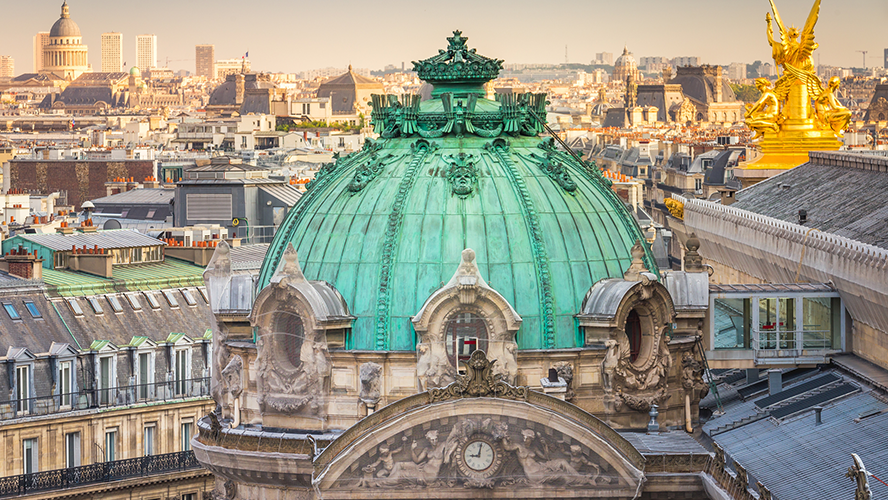
The beauty of the building’s interior is overwhelming. Visitors should look at the cupola, the grand staircase and the hall of mirrors, but above all it is important to appreciate Marc Chagall’s gigantic fresco. It is also worth exploring the Bibliothèque-musée de la Opéra and the famous ‘Rotonde des abonnés’. Your admission ticket also allows you to visit the temporary exhibitions that the Opéra Garnier organises from time to time.
Shows and how to buy tickets
What about tickets to Opéra Garnier? If you want to attend one of the Opéra Garnier’s great performances, the best plan is to obtain tickets from the Opéra National de Paris official website, or from one of the authorised ticket sales platforms. Prices are not cheap, but it is possible to obtain last-minute special offers for an opera or ballet performance, or for a symphonic concert, a recital or a chamber music concert. It is worth checking the schedule of performances beforehand to choose a show that best matches your tastes.
Practical advice for your visit to Opéra Garnier
There is no doubt that Opéra Garnier is one of those impressive places that you should visit on any sightseeing trip to Paris. It is worth remembering that this palace enjoys an exceptional location, right in the heart of Paris. The nearest Metro stations are Opéra, Chaussée d’Antin – La Fayette, Richelieu – Drouot and Auber.
The Opéra is open to the public every day, from 10.00 a.m. until 5.00 p.m. in summer, and until 4.00 p.m. during the rest of the year. The building is only closed on the 1st of January and the 1st of May. However, visits to the main hall or auditorium can be subject to restrictions for artistic or technical reasons.
The cost of general admission is 15 euros with a multimedia guide, but certain groups, such as young people under the age of 25, can claim discounts. Children under the age of 12 are admitted free of charge, as are unemployed people, those with a disability and their carers. Visitors can join a guided tour or go on an independent tour. It is recommended to use the multimedia audioguide to learn the building’s best-kept secrets. For children between the ages of 6 and 13, there is a special multimedia guide — the little dancer Zoé. The tour lasts about an hour.
Lovers of mystery can book a special tour known as ‘Arsène Lupin and the secret of the Opéra’. This is a fun experience for those who love a mystery and detective work.