











































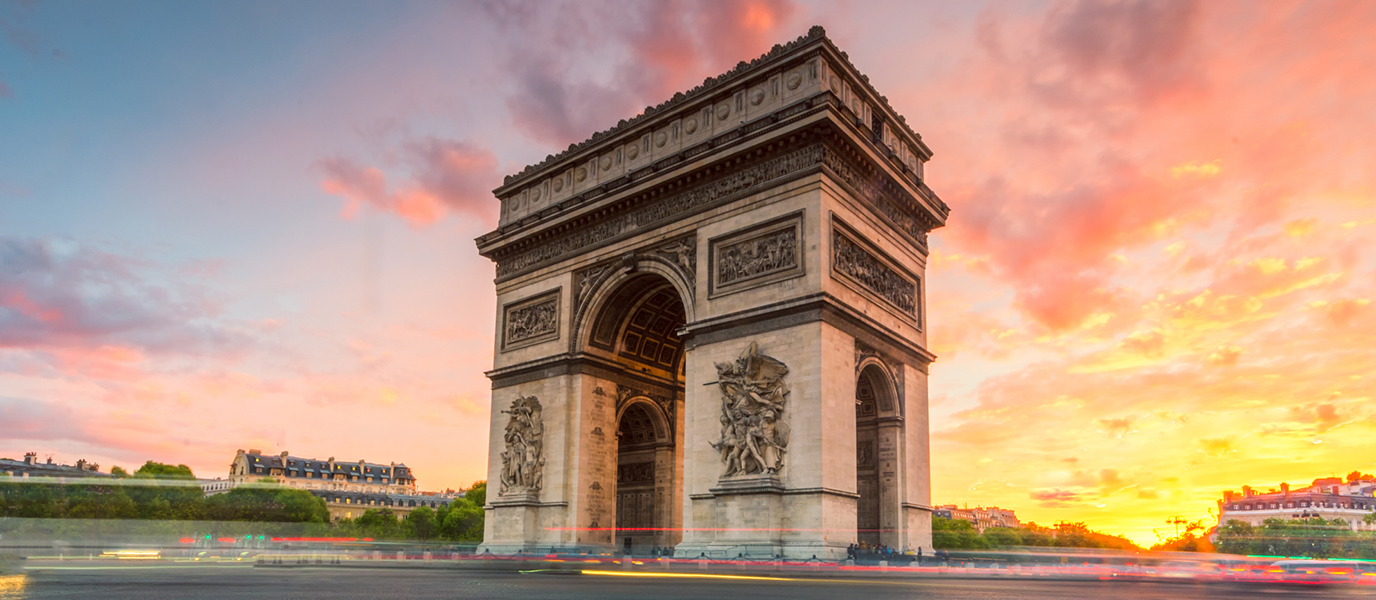
Amid the bustle of Place Charles de Gaulle, where 12 avenues meet and intersect like the spokes of a wheel, the Arc de Triomphe towers imposingly. This monument, one of the most recognisable in Paris, isn’t just a grand work of architecture, it’s also an open book carved in stone that tells the military, political and emotional history of France. With its meticulous reliefs, its symbolism steeped in patriotism and its strategic position at the end of the Champs-Élysées, the Arc is both a tribute to French heroes and a prime vantage point from which to look out over the city.
- The history and symbolism of the Arc de Triomphe: France’s memory carved in stone
- It’s possible to visit inside and climb the Arc de Triomphe: a unique viewpoint of Paris
- What you’ll see on your visit: 19th-century reliefs, military inscriptions and centuries-old ceremonies that are still alive
- Opening hours, tickets and prices: what you need to know before your visit
The history and symbolism of the Arc de Triomphe: France’s memory carved in stone
The Arc de Triomphe was conceived in 1806 by order of Napoleon Bonaparte, after his victory at the Battle of Austerlitz. The emperor wanted to erect a monument to the glory of his Grande Armée, immortalising the strength and power of France at that historic moment. He chose a location steeped in meaning, the western end of the Champs-Élysées, on a high point from which much of the city is visible.
The works went on for decades. Although Napoleon fell from power before the project was completed, successive governments carried on with the construction, aware that it was no longer just an imperial whim but a national symbol. The Arc was finally inaugurated in 1836, during the reign of Louis-Philippe I. Since then, it has witnessed key episodes in French history, military parades, state funerals, celebrations after the First and Second World Wars and moments of collective mourning.
The monument’s sculptural decoration reinforces this symbolic role. On its southern face is the famous relief La Marseillaise, by François Rude, depicting the homeland as a winged figure calling volunteers to defend France. On the inner and outer walls are inscribed the names of over 600 generals and of the main battles fought by the French army. At its base, since 1921, the eternal flame of the Tomb of the Unknown Soldier has burned, remembering the fighters who fell in the First World War, and it remains one of the most solemn places in Paris.
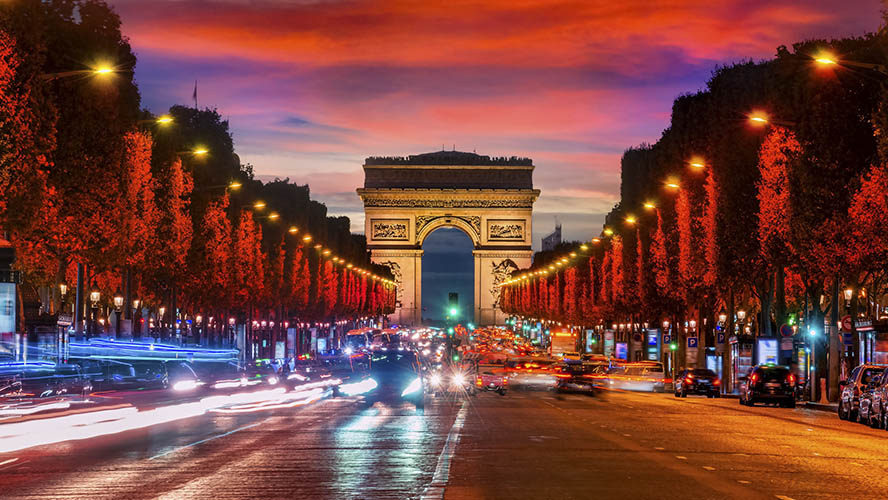
Beyond its military significance, the Arc de Triomphe has become a cultural and urban icon. It represents both the country’s historical strength and the city’s ability to reinvent its memory. Every year, on 14 July, the monument takes centre stage in the national parade for Bastille Day, reaffirming its role as the axis of French identity.
It’s possible to visit inside and climb the Arc de Triomphe: a unique viewpoint of Paris
Although it’s often seen as a monument to admire from outside, you can visit the inside of the Arc de Triomphe, revealing secrets that the unsuspecting visitor would never have guessed. Inside there’s a small museum tracing the monument’s history, from its conception under Napoleon to the present day. Interactive panels, models and engravings help you understand how it was designed and how it has withstood the ups and downs of two centuries.
The real attraction, though, is being able to climb to its upper terrace. After tackling 284 steps of a spiral staircase, which requires some physical effort, visitors are rewarded with one of Paris’s most spectacular views. From there, you can clearly see the radial design of Place Charles de Gaulle, with its 12 avenues converging like sunbeams. The perspective over the Champs-Élysées is unmatched, but you can also spot iconic monuments like the Eiffel Tower, the Sacré-Cœur basilica in Montmartre, the Louvre or the La Défense district with its modern skyscrapers.
The contrast between the Arc’s stone classicism and the modernity of Paris’s skyline makes this visit unique. Many visitors agree that the view from the Arc rivals that of the Eiffel Tower, with the added advantage of the tower itself being part of the panorama.
What you’ll see on your visit: 19th-century reliefs, military inscriptions and centuries-old ceremonies that are still alive
Beyond the climb to the terrace, the Arc de Triomphe offers details worth a closer look. Each of its four façades is adorned with sculptural groups that narrate different episodes in France’s history. Notable alongside La Marseillaise are the compositions The Triumph of 1810, by Jean-Pierre Cortot, and Resistance and Peace, by Antoine Étex. These sculptures aren’t mere decorations; they offer a true visual narrative of the country’s aspirations and struggles in the 19th century.
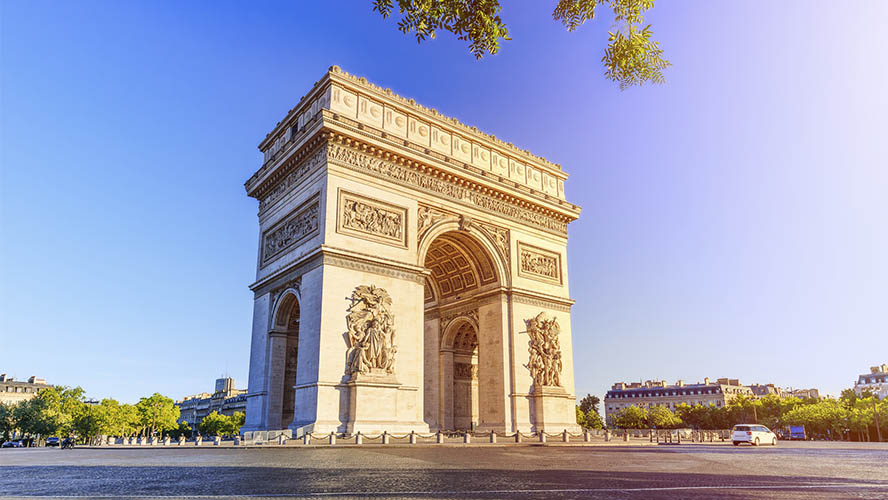
You can also read the names of battles and generals carved into the walls. Those underlined mark the soldiers who died in combat, a detail that adds a solemn touch to the experience. In the monument’s vault, you can see intricate decorative motifs recalling the grandeur of Roman architecture, which inspired its design.
One of the most significant moments of any visit is witnessing the daily ceremony of rekindling the eternal flame at the Tomb of the Unknown Soldier, held every evening at 18:30. This tradition, maintained without interruption since 1923, makes the Arc a living space of collective memory, where respect for the fallen still beats in the heart of Paris.
Opening hours, tickets and prices: what you need to know before your visit
The Arc de Triomphe is open to the public all year round, though hours vary by season. From April to September, you can visit it between 10:00 and 23:00, while from October to March the opening hours are shortened until 22:30. Keep in mind that entry to the monument closes about 45 minutes before the official closing time.
The general admission price is 22 euros, though there are discounts for young people, students and groups. In addition, under-18s can get in free, as can EU citizens under 26. Holders of the Paris Museum Pass also have entry included.
To reach the monument, the best option is to take the metro to Charles de Gaulle–Étoile station, which connects directly with the square. It’s important to remember that crossing the road to reach the Arc is extremely dangerous; access is via an underground passageway that leads directly to the base of the monument.
Those wanting to avoid long queues, especially in high season, can buy tickets online in advance. This makes it easier to get inside and make the most of the visit.