









The Place du Trocadéro et du 11 Novembre is located in the district of the same name, the 16th arrondissement of Paris, on the right bank of the Seine.In the centre of the square, set on a lawned area among trees, is the equestrian statue of Maréchal Foch, which was unveiled in 1951. Foch played a vital role during World War I, and from his statue six avenues radiate.To the west, the square borders the Passy cemetery, and below it is the Trocadéro metro station.
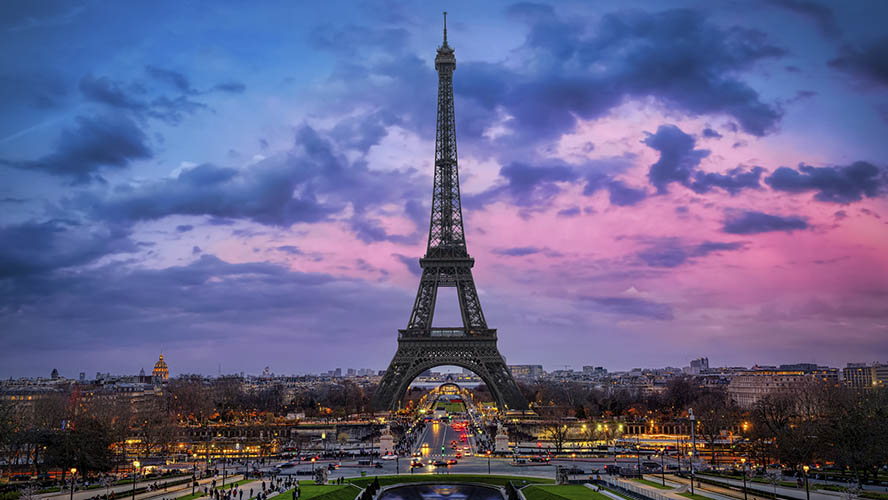
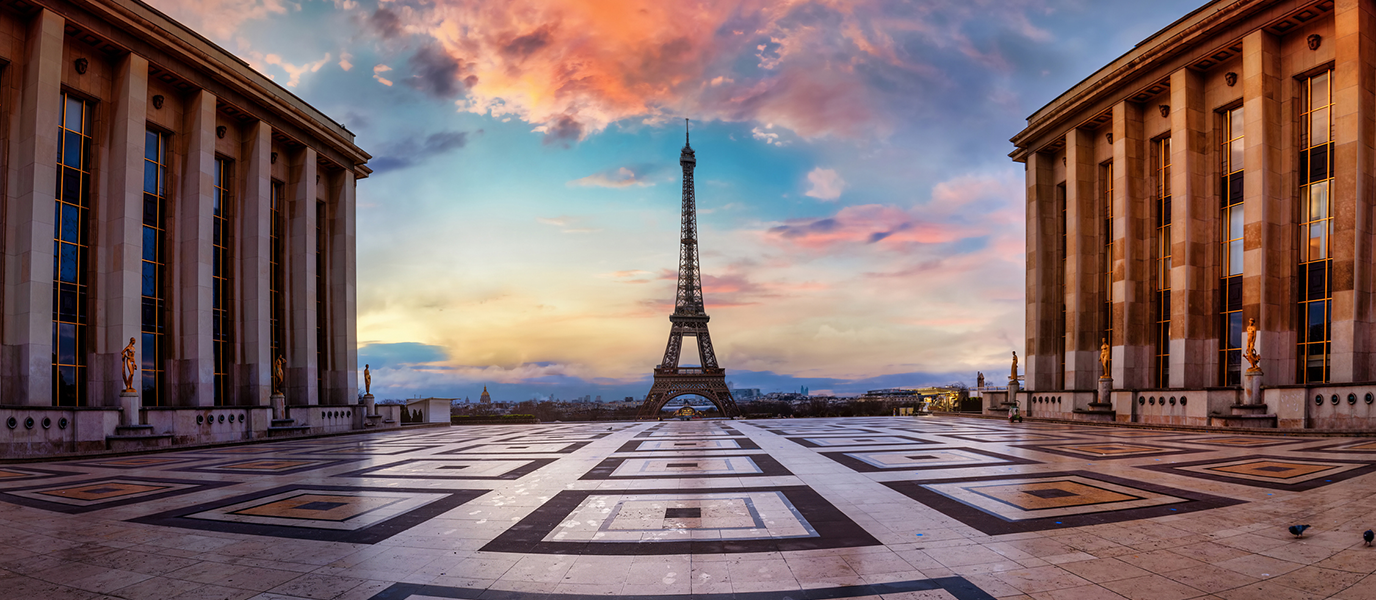
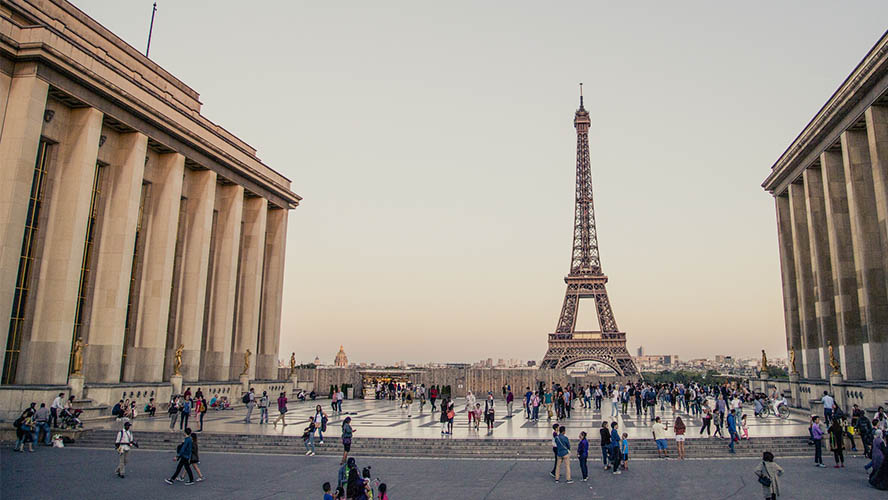
But the Place du Trocadéro’s main claim to fame is as a means of access to the esplanade of Chaillot Palace, known as the Place des Droits de l’Homme, which affords one of the most beautiful and popular views of the Eiffel Tower. As you walk down the steps from the Place des Droits de l’Homme (also known as the ‘Terrace du Trocadéro’), you will come to the Jardins du Trocadéro.
- The history and development of the Place du Trocadéro
- What you can see in the Place du Trocadéro
- Things to do in the square
- Places to visit in the surrounding area
The history and development of the Place du Trocadéro
The origins of the Place du Trocadéro date back to 1869, the year in which it was opened under the name of Place du Roi-de-Rome [Square of the King of Rome]. A great circular space and the axis of several wide avenues, the square was designed to honour Charles Joseph Bonaparte, the son of Napoleon I.
In 1877, it was renamed as the Place du Trocadéro when the palace of the same name was built in commemoration of a battle that took place in August 1823 in Spain, ending the Trienio Liberal (1820-1823) with the capture of the city of Cádiz, which was under the control of Spanish Liberal Revolutionaries. This palace was demolished to build the Chaillot Palace we see today. The battle for Trocadero marked the restoration to power of absolute monarchy under Fernando VII, thanks to the support of the French army in the Cien Mil Hijos de San Luis [Hundred Thousand Sons of St. Louis] expedition.
The addition of ‘11 novembre’ celebrates the date of the Armistice signed on 11 November 1918 in Le Francport (France) which put an end to the fighting of World War I.
What you can see in the Place du Trocadéro
If we take into account the space known as Trocadéro, the square that bears the same name is one more attraction to visit, along with the Chaillot Palace and the Trocadéro Gardens.
The Palais de Chaillot
The palace was built for the 1937 Universal Expo, on the spot where the Palais de Trocadéro once stood. This majestic, iconic edifice comprises two pavilions in the neo-Classical style in the shape of two curvilinear wings (or arms), each measuring over 190 metres in length.
The palace houses four great French cultural institutions: the Musée National de la Marine, the Musée de l’Homme, the Museum of Architecture (Cité de l’Architecture et du Patrimoine), and the National Dance Theatre.
The famous esplanade that separates the two pavilions is called the Place des Droits de l’Homme because on the 10th of December 1948, the Chaillot Palace hosted the United Nations General Assembly that adopted the Universal Declaration of Human Rights.
The Trocadéro Gardens
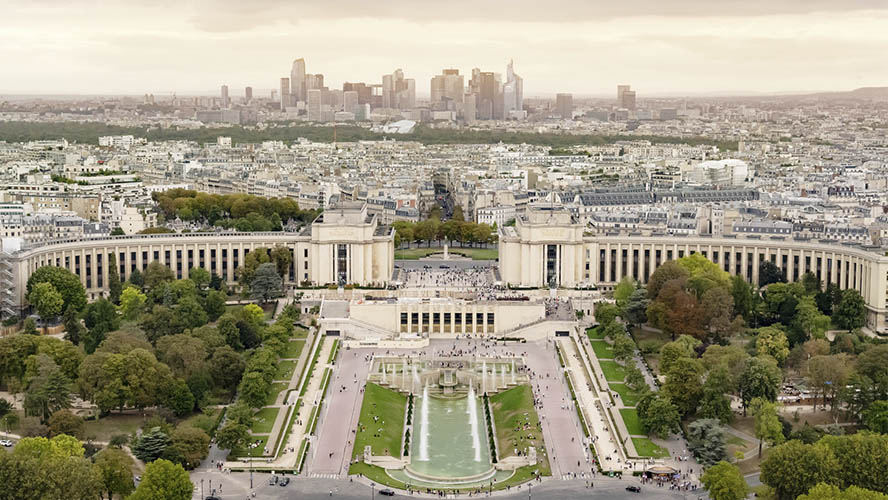
As you go down the steps from the Place des Droits de l’Homme, you come to the Trocadéro Gardens.These, too, were created for the 1937 Universal Expo.
Occupying over 90,000 square metres, their most striking feature is what is known as the Warsaw Fountain: a lake with a huge number of water jets and various sculptures (including golden horses and a bull’s head). During the summer, there are light and water shows here.
On each side of the fountain, there are gardens and areas planted with chestnut, beech and lime trees.
Things to do in the square
Chaillot Palais offers tourists a broad range of cultural interests through the organisations based there.
The Musée de l’Homme
The Museum is located in the Passy wing of the palace.In this splendid cultural facility, tourists can travel back into the history of the human race, thanks to one of the most important anthropology and palaeontology collections in the world. Open every day between 11.00 a.m. and 7.00 p.m., except Tuesdays.
The National Maritime Museum
This is one of the oldest maritime museums in the world. It offers visitors a vast collection of artefacts relating to French maritime history (scale models, armoury, globes and navigation tools, diving suits, pictures and sculptures). Open every day between 11.00 a.m. and 7.00 p.m., except Tuesdays.
The Museum of Architecture (Cité de l’Architecture et du Patrimoine)
Scale models, sculptures, drawings, photographs, old books… An endless array of artefacts to trace the history of architecture from the eleventh century up to the present day: from Romanesque art to the architecture of Le Corbusier. This museum also provides a wide cultural programme, with temporary exhibitions, presentations, workshops and talks, along with other events.
Paris Aquarium
Set in the Trocadéro Gardens, the Paris Aquarium, or Cineáqua as it is known in French, takes children and adults alike on a adventure with over 500 species and 10,000 specimens of marine creatures from the seas that bathe the coasts of France, as well as the Caribbean, the Indo-Pacific region and the Atlantic. There is a total of 43 ponds and five huge aquariums, with the highlight being the Medusarium, the biggest exhibition of jellyfish in Europe.Open every day.
Activities for children in the Trocadéro Gardens
In addition to the green spaces and the Warsaw fountain, which are always alive with children running, jumping and splashing in the water, the Trocadéro Gardens also have carousels to provide children with plenty of fun.
Places to visit in the surrounding area
Thanks to its exceptional location, Place du Trocadéro is the gateway to some of Paris’s main tourist attractions. Four of these are:
The Eiffel Tower
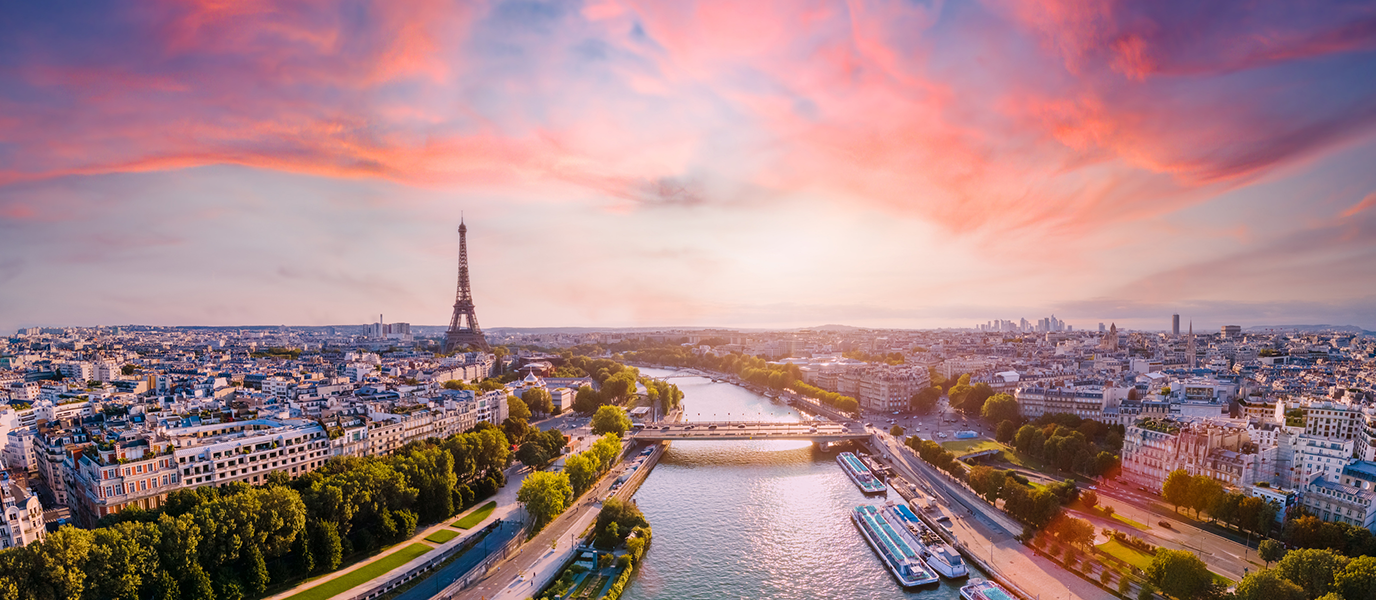
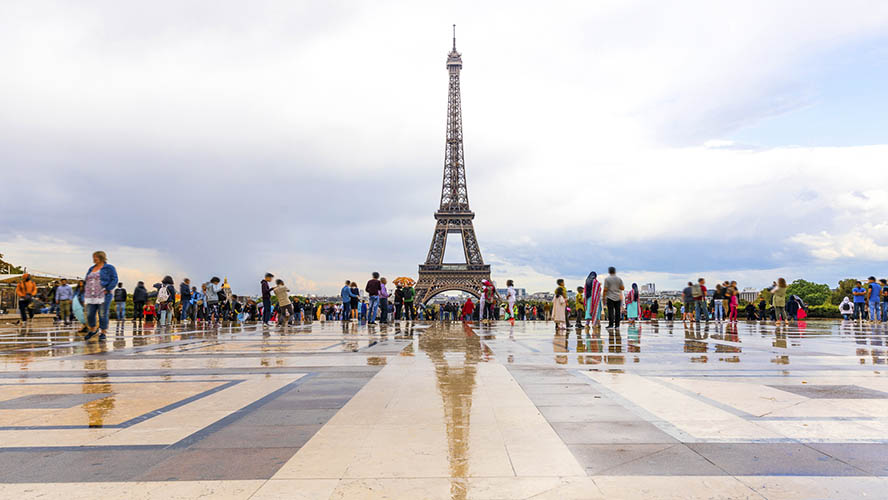
To get to the Eiffel Tower from the Trocadéro Gardens, you only have to leave Trocadéro and cross the Seine via Pont d’Iéna. This great Paris icon was opened in 1889 during the Universal Expo, and was the brainchild of the architect Gustave Eiffel. Any visitor to the ‘City of Light’ should go up a few storeys of this great and beautiful iron monument, which provides a panorama of the majesty of the French capital. The Eiffel Tower can also be viewed from the famous Champs de Mars.
The River Seine
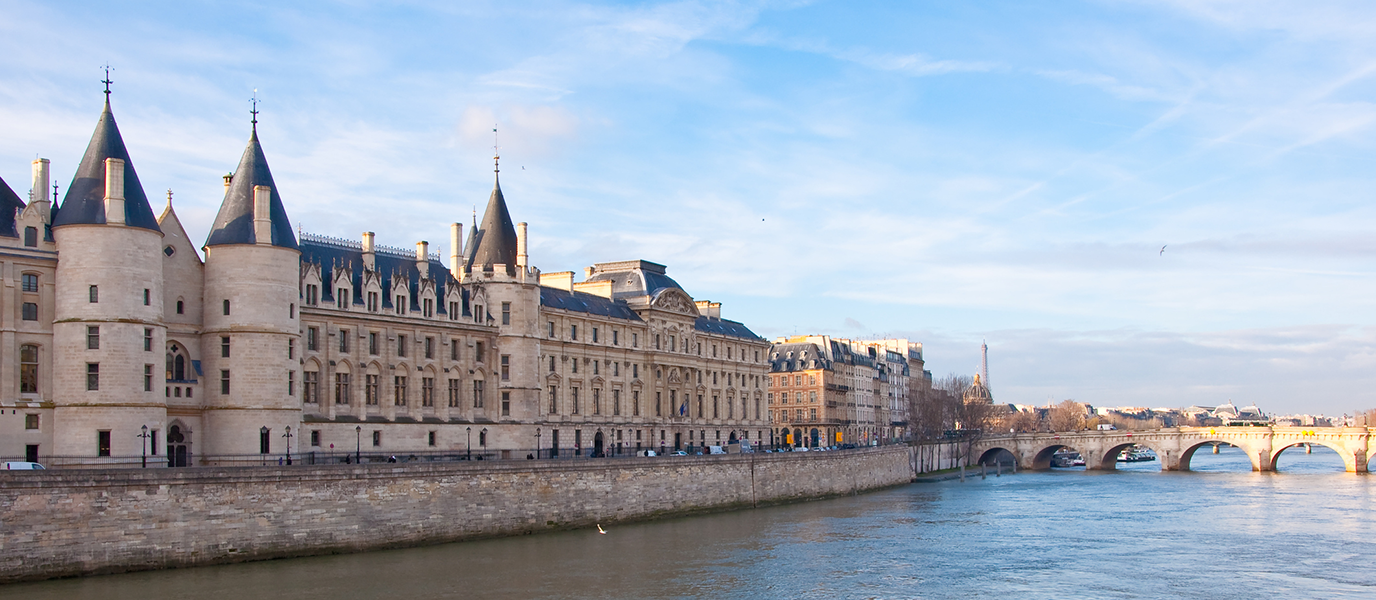
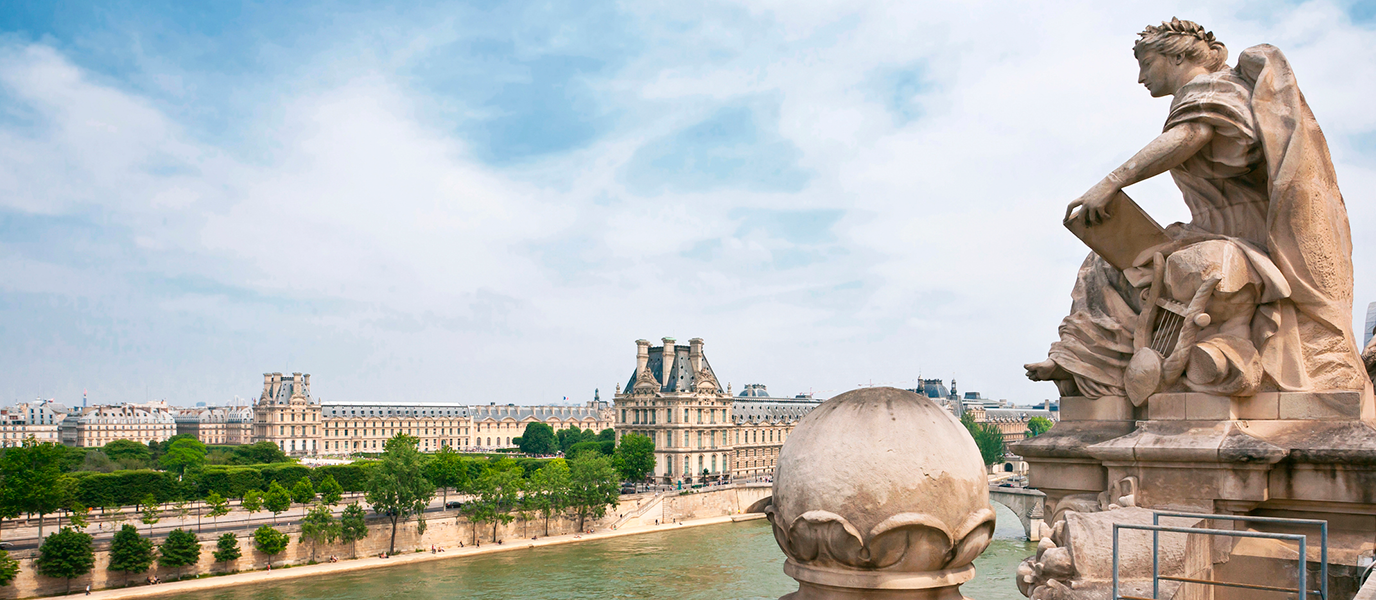
Paris was founded and has evolved from the banks of the impressive river Seine. Its banks have been designated a UNESCO World Heritage Site. From Trocadéro, a good route for a walk is along this historic river lined with monuments, and with a romantic, bohemian ambience that can compete with any capital city in the world that is crossed by a river.
Les Invalides
Along with the Eiffel Tower, this is another of Paris’s great monuments. Built in 1670 on the orders of Louis XIV, the Palais National des Invalides is a pleasant stroll from Trocadéro, and an essential visit for any traveller. It houses the impressive tomb of Napoleon Bonaparte, surrounded by collections that tell the story of battles, uniforms and weapons from different ages.