



























































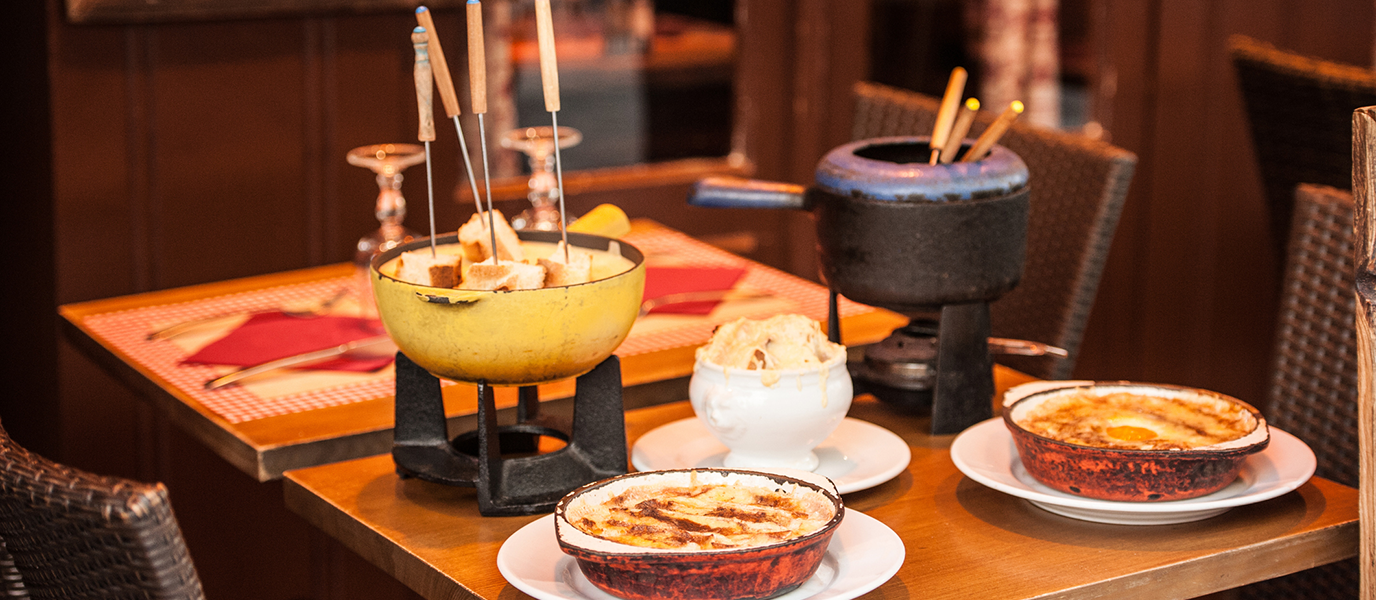
The answer to the question of what to eat when in Paris is whatever you like best. The city is the undisputed world capital of gastronomy and haute cuisine in particular. In fact, countless restaurants have been awarded and/or recognised by the best publications and experts in the field.
It is safe to say that you can eat absolutely anything in Paris. Ingredients, recipes and techniques from all over the world fill the streets of most Parisian districts with flavour, aromas and colour. But there are also a wealth of options when it comes to the most authentic local and French cuisine in Paris.
You will also find traditional regional cuisine, with dishes that go beyond the usual crêpes and galettes, ratatouille, macaroons and cheese boards.
- Traditional Parisian dishes
- Traditional desserts and pastries that you must try
- Typical wine and beverages and where to try them
- Where to try the above dishes: recommended restaurants
Traditional Parisian dishes
When it comes to what to eat in Paris, the most popular dish in Parisian brasseries is steak and chips. That is, with the exception of Italian-style pizzas and pasta, which have taken the menus of many restaurants in the French capital by storm.
But anyone who wants to enjoy the most authentic Parisian and French flavours should consider the following dishes.
Crêpes and galettes
The ‘easy’ answer to what to eat in Paris and the undisputed stars of French fast food. Consisting of pancakes made from flour, eggs, salt and sometimes milk, they are cooked on a special griddle and filled with a wide variety of ingredients.
Eaten immediately, while they are still hot, the difference between them lies in the type of flour used: wheat flour for crêpes and buckwheat flour for galettes. Crêpes also usually contain milk and, by definition, are sweet, unlike galettes. However, there are some ‘savoury’ crêpes: the most common being ones made with ham and cheese.
The way they are served is also different. Crêpes are served in wedges, ideal for eating on the street, while galettes are square, served on a plate and open in the centre so that their ingredients can be seen.

Bœf bourguignon
Beef bourguignon is a beef stew, usually made with aged beef, cooked slowly together with aromatic herbs, onions, carrots and other vegetables.
The secret to tender meat is to cook it for about four hours. As well as the Burgundy wine used to give it flavour.

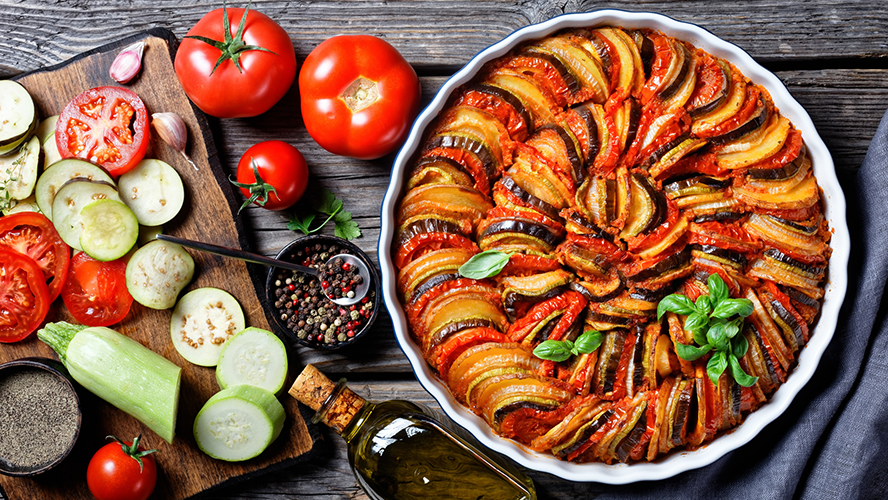
Ratatouille
Vegans and vegetarians have it easy when looking for something to eat in Paris thanks to ratatouille. The city boasts several establishments specialising in what is one of French cuisine’s most famous dishes. Very similar to the Spanish pisto manchego, it is made of tomatoes, peppers, courgettes and garlic, to which onion and aubergine are added.
The mixture is flavoured, according to the cook’s taste, with a selection of Provençal herbs. This is no coincidence, as the recipe originates from the region in the south of France, specifically the city of Nice.
In Paris, it is not usually served as a main dish, but rather as a side dish. And bear in mind that it is a seasonal summer recipe.
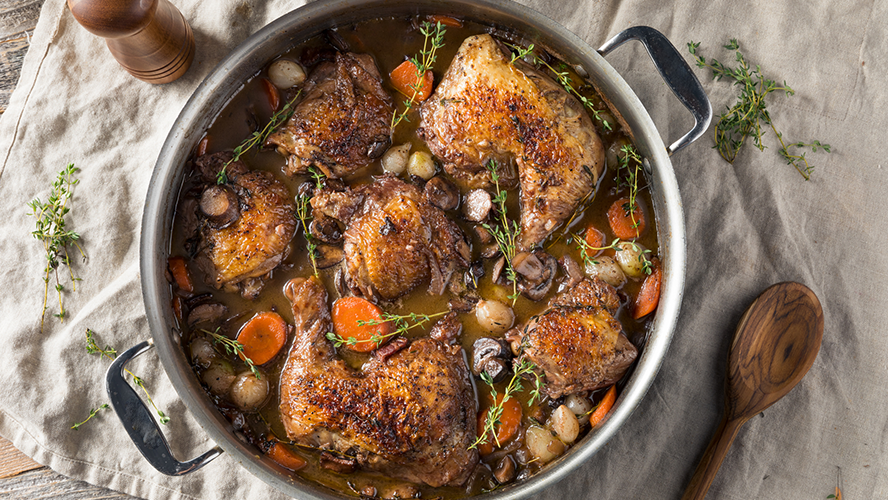
Coq au vin
This dish makes sense in a country whose most iconic animal is the rooster. In fact, the translation of the dish is ‘rooster in wine’. The wine can be either red or white, and the poultry is marinated in it for several hours, then cooked for about two hours with onions, mushrooms, carrots, bacon and spices.
The result is a sumptuous, highly aromatic dish that is perfect for special celebrations.
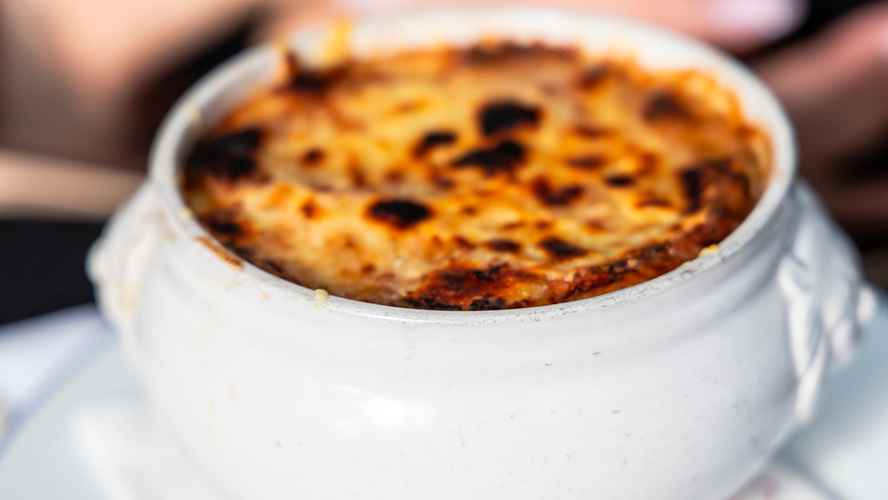
Onion soup
Onion soup is a must-try dish in Paris, especially during the colder months of the year and on those damp days when your body craves something hearty. As such, it appears on the menu of almost every restaurant in the city.
It is a simple dish to prepare, made with onions, the most basic of ingredients, which are caramelised before being cooked with cheese and bread. The result is undoubtedly delicious and comforting.
Escargots
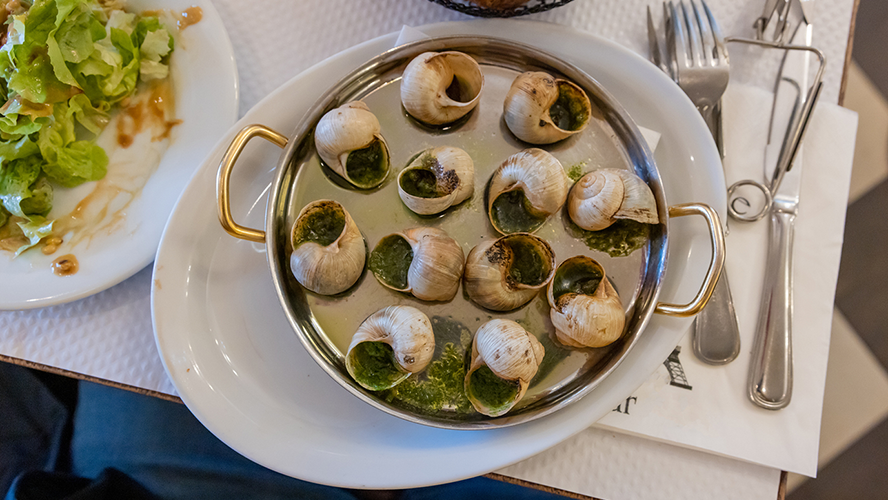
Snails are one of the most famous dishes to eat in Paris. Although there are several recipes for preparing them, the most well-known is à la bourguignonne. According to the traditional recipe, once the snails have been blanched in water and wine, they are filled one by one with a mixture of butter, shallots, ground almonds, parsley and salt, and finished off in a low oven.
They are then served on a special plate and should be eaten very, very hot, so that the filling does not emulsify and become semi-solid.
Croque Monsieur
The Parisian and French version of a ham and cheese sandwich, albeit with some unique features. The first is that, instead of being grilled, it is baked in the oven, but not before being covered with a generous layer of creamy cheese (such as Gruyère or Emmental).
What’s more, in order to give it a more appetising and juicy texture, the slices of bread are usually spread with béchamel sauce on the inside.

Quiche lorraine
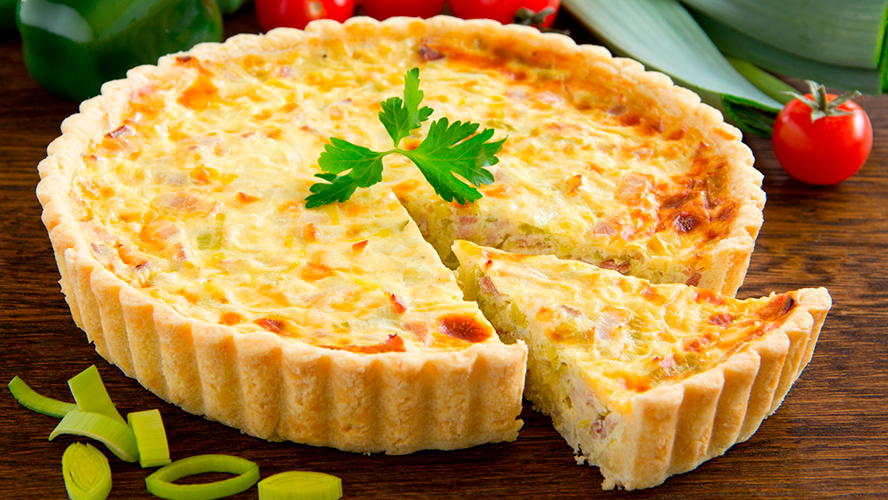
Quiche is one of the French recipes most exported to the rest of the world and is a great choice when deciding what to eat in Paris. Consisting of a savoury short-crust pastry tart, it is then filled with a wide variety of ingredients.
The filling for quiche Lorraine includes cream, cheese, eggs, butter, mushrooms, ham (or bacon), salt, pepper and nutmeg.
Duck à l’orange
Our list of what to eat in Paris would not be complete without duck, the classic meat of French cuisine. Made with orange, it is one of the main dishes on the menu of many restaurants, although there are countless recipes harnessing duck’s powerful flavour that creates truly sumptuous dishes.
Duck à l’orange, in particular, is oven-baked and basted with a sweet and sour sauce made, of course, with orange juice, the skin of the bird itself, wine and, sometimes, a touch of vinegar.

Paté and foie
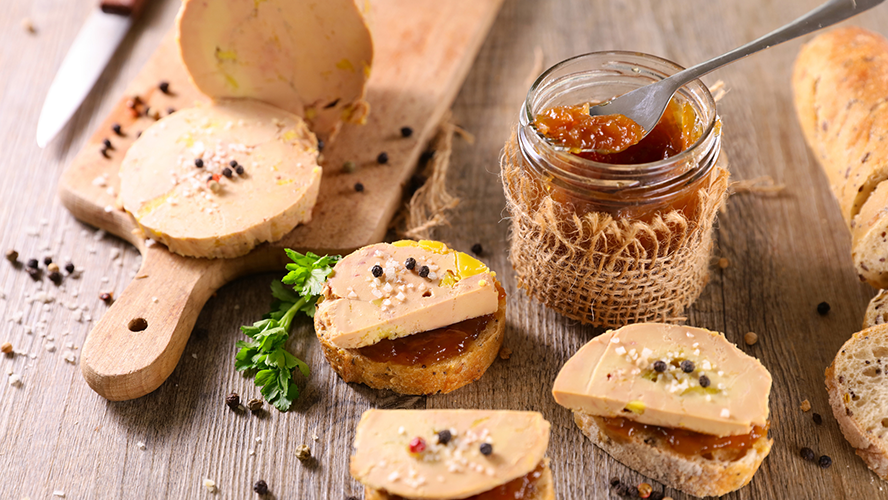
When talking about duck, it is impossible to overlook the importance that French cuisine places on the animal’s liver, known as foie. It can be enjoyed in the form of foie gras, which has a more intense flavour, or foie micuit (half-cooked), which tends to have a slightly milder flavour as well as a smoother texture.
Based on these, all kinds of pâtés can be enjoyed in Paris and the rest of France, made with different types of offal (not only duck but also other poultry or pork), spices, wines, liqueurs and nuts.
Traditional desserts and pastries that you must try
Paris is a very sweet city. A place where confectionery has become part of the concept of haute cuisine, as demonstrated by the creations of pastry chefs of the calibre of Pierre Hermé, Christophe Michalak and Cédric Grolet, among others.
Chefs such as these are responsible for creating sweet delicacies that will go down in history and remain in bakeries around the world for a long time to come. Just as happened in their day with these following Parisian desserts.
Macarons
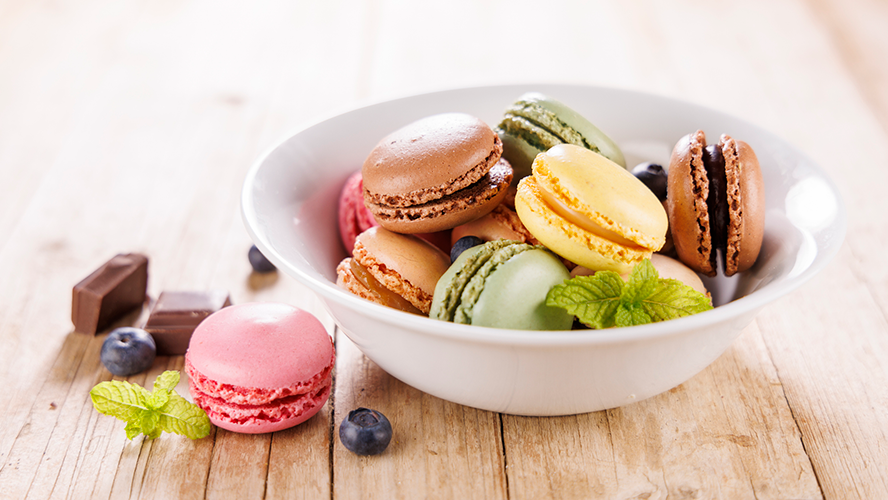
Who hasn’t heard of these delicacies that are so representative of French confectionery? In Paris, they can be seen in the shop windows and displays of all patisseries and are a staple of afternoon tea or mid-morning coffee.
The bite-sized delicacies are made from a dough of almond flour, egg white and sugar, and food colouring of the same shade as their filling. The filling can be chocolate, vanilla, strawberry, pistachio, red berries and much more.
The key to their success, in addition to the different flavours, is the interplay of textures when you bite into them: crunchy on the outside, tender and soft on the inside.
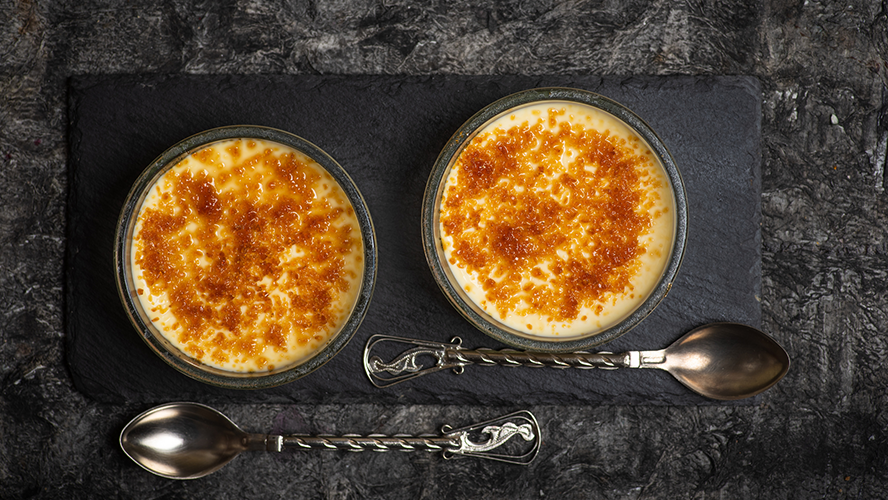
Crème brûlée
This traditional dessert has the same concept and (almost) the same recipe as the Spanish crema catalana. It is made with a mixture of egg, cream, sugar and vanilla, which is heated in a bain-marie until thick.
The final touch is a layer of brown sugar on top, which is burnt or, better still, flambéed with Armagnac, cognac or another liqueur.
Gâteau Saint-Honoré
This old favourite found in patisseries around the world is a cake (gâteau) made from a puff pastry base on which several petit choux, or profiteroles, are arranged in a circle.
The profiteroles may be filled with Chantilly cream (meringue and cream) or Chiboust cream (Italian-style pastry cream and meringue). The whole thing is covered with whipped cream and sometimes with a soft mascarpone cheese cream.
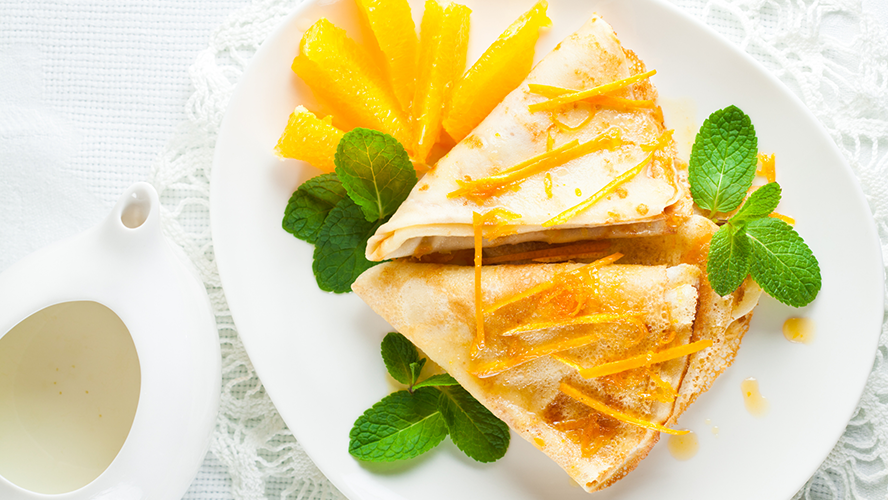
Crêpe Suzette
The most popular crêpe in Paris is the Suzette. This is due to the aromatic combination of the ingredients in which it is “bathed”, such as butter, sugar and orange or mandarin juice.
A crêpe Suzette, however, would not be the same without a flambé with a little cognac or Armagnac.
Éclair
These pastries are also well known throughout the rest of the world and can be found in every bakery in Paris. Consisting of long sticks of choux pastry, they are opened up like a sandwich and filled with custard or chocolate. The top is covered with chocolate or icing sugar.

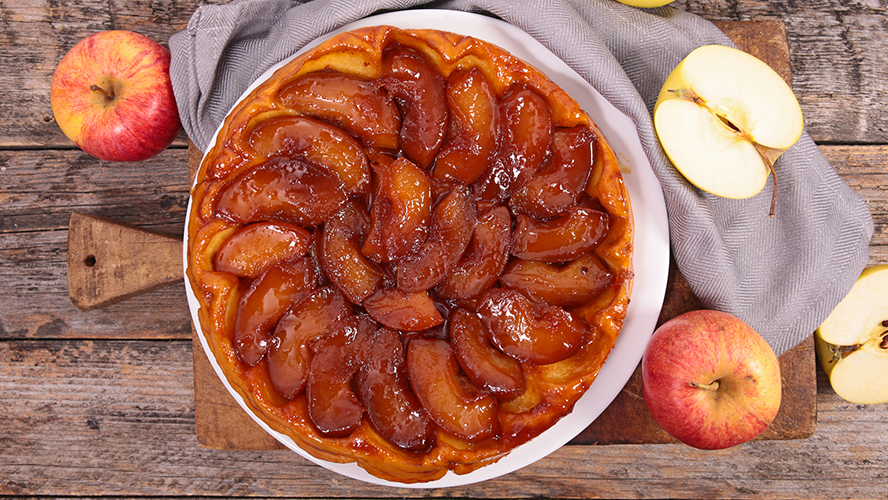
Tarte tatin
The French version of the well-known apple tart is the tatin. Its distinctive feature is that, before being added to the short-crust pastry, the apple pieces are caramelised in butter and sugar.
And there’s more: unlike other versions of this dessert, the apple pieces are not placed on top of the pastry during baking, but remain underneath.
Typical wine and beverages and where to try them
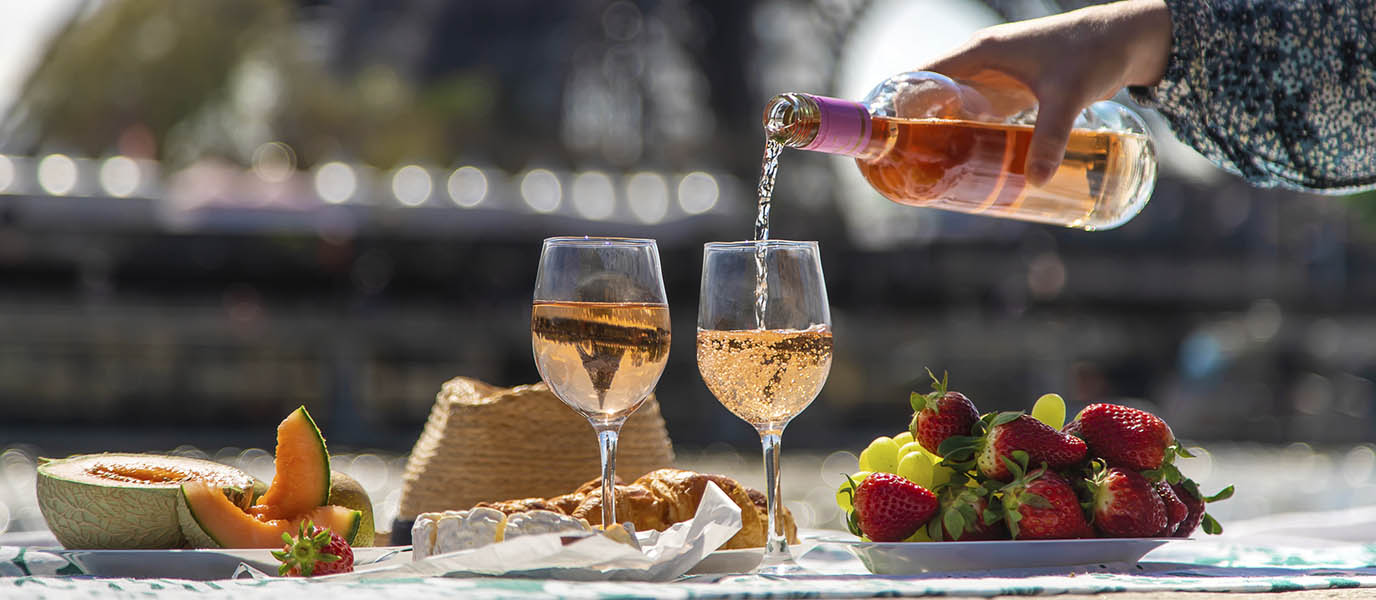
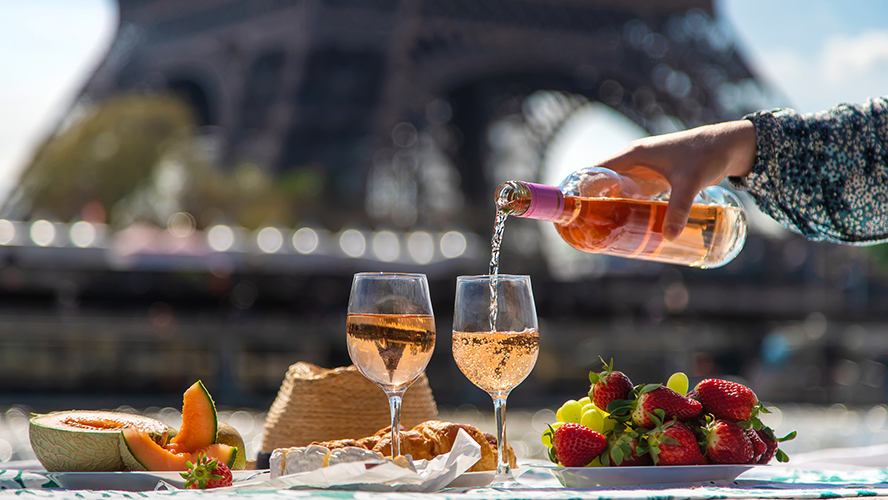
The most clichéd image of Paris is that of a couple toasting with champagne while admiring the Eiffel Tower from a terrace. Of course, this is real and possible, although you should be prepared to pay a bill that could end up being astronomical.
It is more common to enjoy a glass of house wine in one of the many bistros and brasseries found on almost every corner of the city. In this regard, Parisians are very fond of wines from Burgundy, Bordeaux, Rhône and Alsace.
Before lunch, in the city’s many bars, it is customary to have a cassis-based aperitif, a liqueur made from white wine and blackcurrants. Just as popular is pastis, a typical Provençal aniseed-flavoured liqueur, which is also often drunk as a digestif after large meals.
More substantial (and with more personality) are cognacs, calvados and Armagnacs, all served in large glasses together with their own special ritual. It is best to drink them in specialised bars where they know and can advise on the qualities of each one. These establishments allow you to understand the complexity and uniqueness of these beverages.
Where to try the above dishes: recommended restaurants
There are many places to eat crêpes and galettes, but among the most popular are La Galetterie, Cœur de Breizh, Patakrep, Crêperie Bertine and, of course, Crêperie Suzette.
For a good bœuf bourguignon, try Le Pulbot, Le Vieux Bistrot, Au Bourguignon du Marais and Bistrot Richelieu.
The best onion soup in Paris is served at Bouillon République, L’Alsace, and La Jacobine. For ratatouille, head to Chez Janou.
Snails are the speciality at L’Escargot and Au Doux Raisin. And if you fancy a hearty quiche Lorraine, then Kozy Bosquet is the place to go.
For those with a sweet tooth, a visit to patisseries such as Pierre Hermé, Ladurée, Fauchon, La Pâtisserie des Rêves and Café Pouchkine is a must.