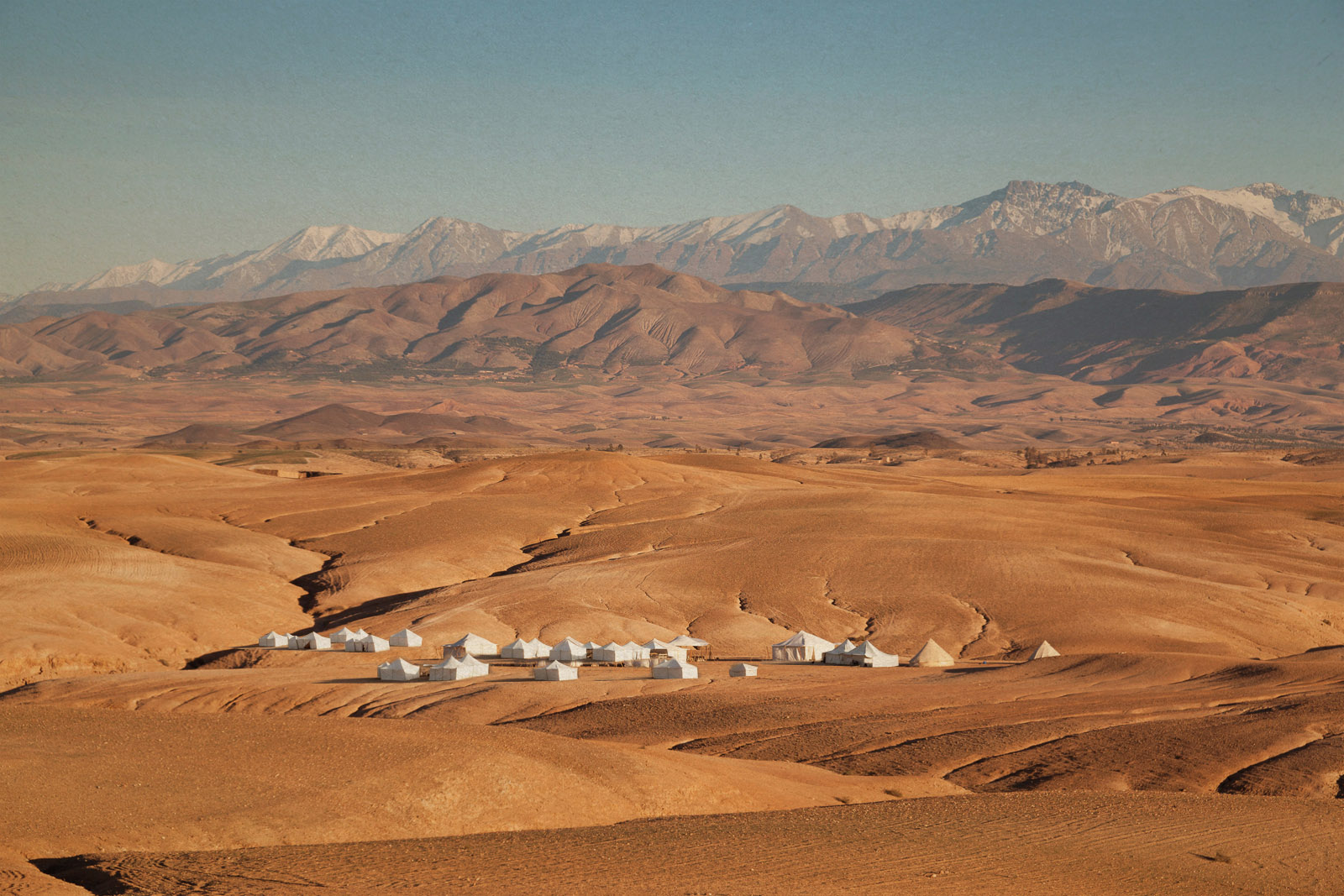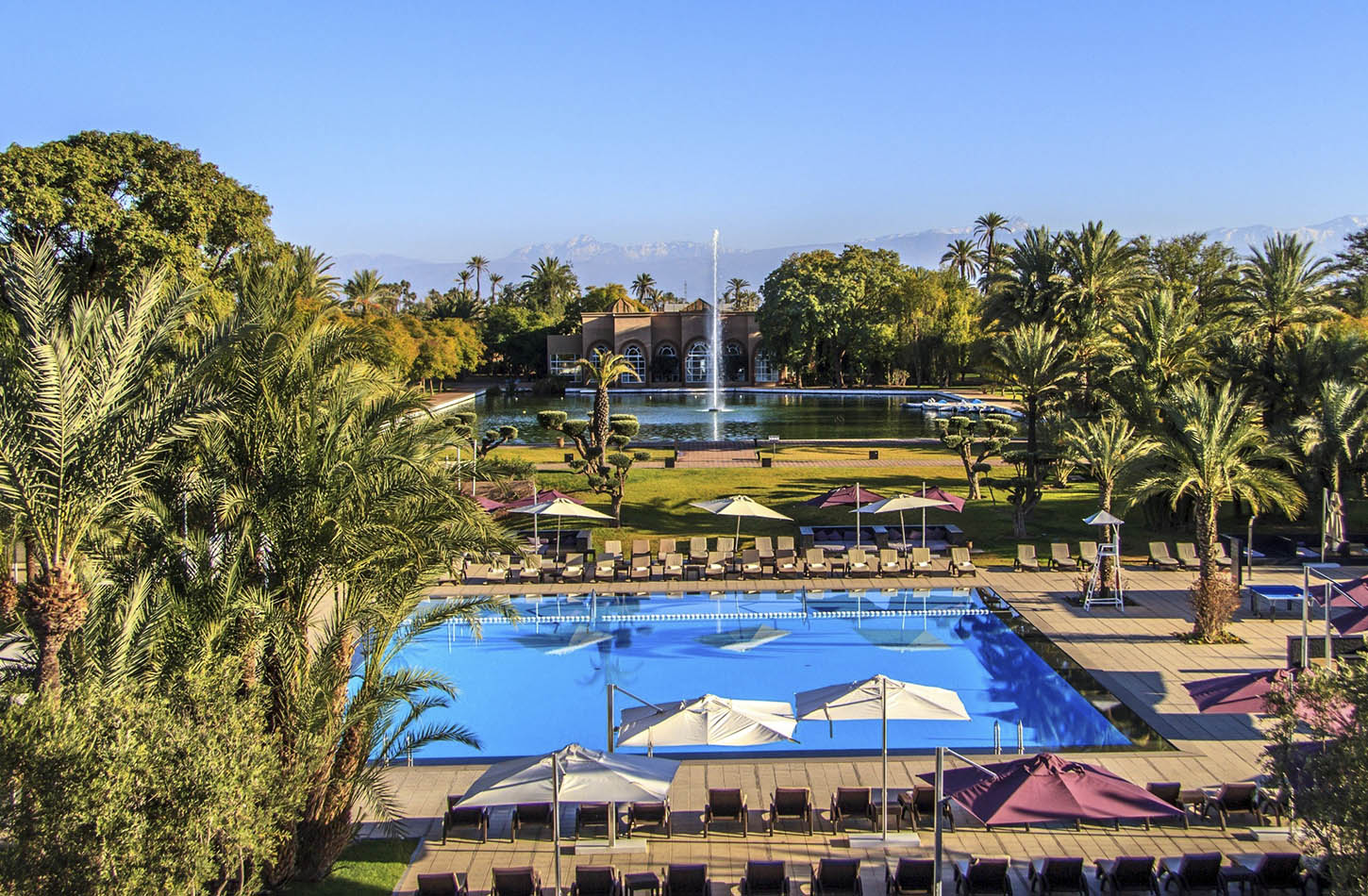










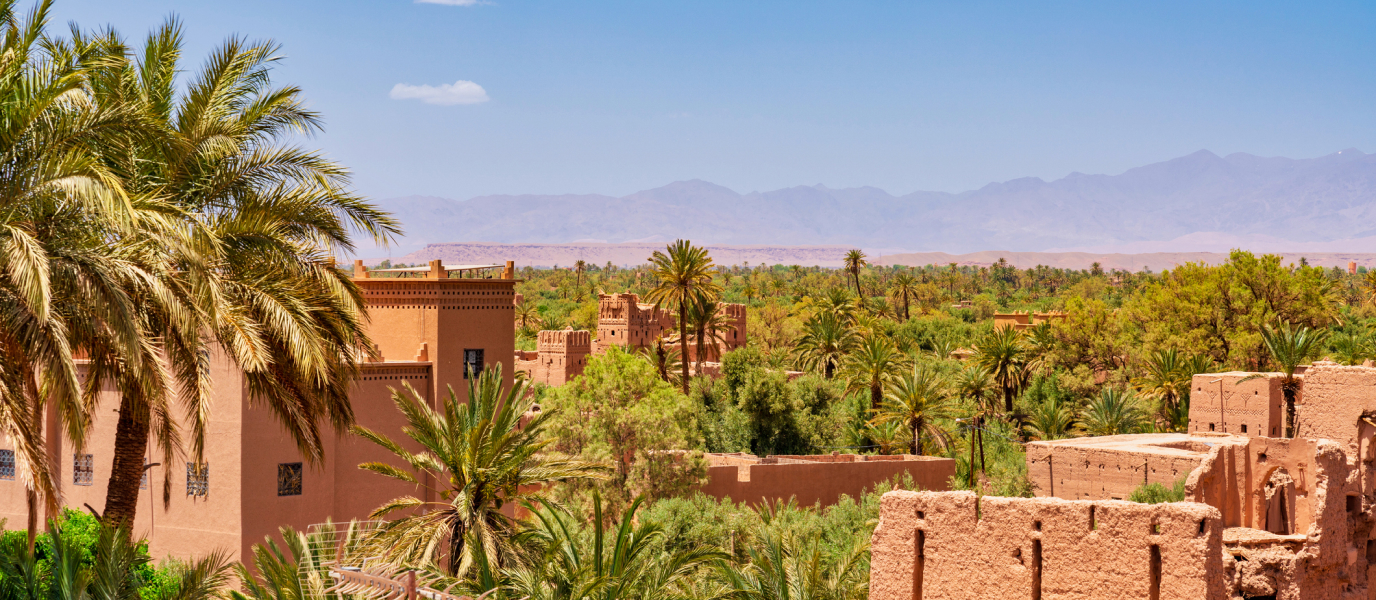
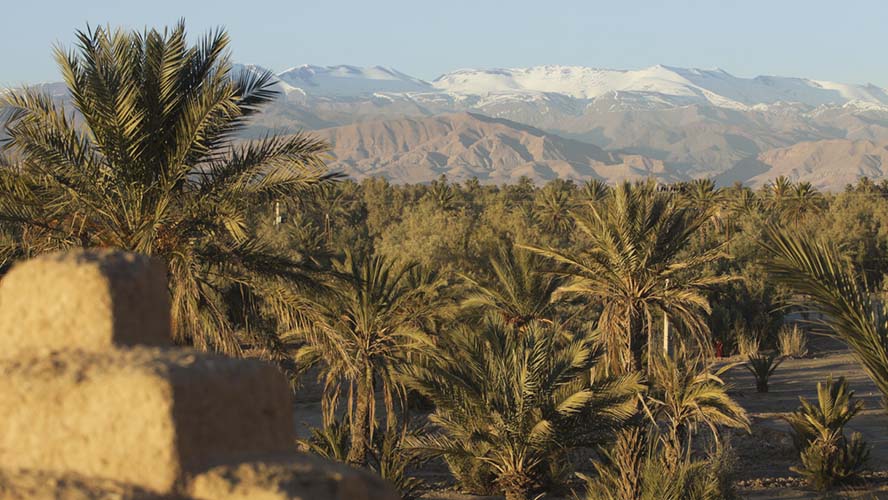
Skoura palmeraie or palm grove is the largest oasis in the Dades Valley (internal link) and lies at the foot of the Atlas Mountains. It’s a giant grove of trees in the middle of the desert with over 70,000 palm, fig, almond and pomegranate trees. This post will reveal what there is to see in Skoura, a landscape straight out of The Arabian Nights.
- Skoura palmeraie: an oasis in the middle of the desert
- What to see in Skoura: the most interesting kasbahs
- Kasbah Ait Abou
Skoura palmeraie: an oasis in the middle of the desert
Skoura palmeraie is like a miracle in the heart of the desert: it’s hard to comprehend how such a lush place could emerge, as if out of nothing, in such an arid area. The answer lies in the dozens of channels and canals that are fed by the Hajaj and Madri rivers, making this land highly fertile. These two rivers flow with water from the highest mountains in the High Atlas; their course isn’t consistent but they’re extremely wide and it’s enough to fill the aquifers in the surrounding areas.
The modern city of Skoura sits on a far side of the oasis, but the original population of this zone is scattered across various villages throughout the length and breadth of the palmeraie. Seen from afar, what most catches your eye in this landscape are dozens of kasbahs. These ancient adobe fortresses, which served as family residences and fortifications against attacks, are one of the main attractions of the Dades Valley.
Skoura is in the middle of the Route of a Thousand Kasbahs, a road that joins Ouarzazate and Tinehrir and is hugely popular among travellers who come to Morocco with a sense of adventure. Each year, hundreds of 4x4s drive along this road; it’s dotted with ancient fortresses and gives visitors an idea of what life was like in Morocco three to four centuries ago.
Nothing is known for certain, and you have to put your trust in oral tradition, but it seems as though the Skoura settlement was formed in the 17th century when sultan Moulay Ismail ordered several fortresses to be built in the area to defend it against enemy incursions.
What to see in Skoura: the most interesting kasbahs
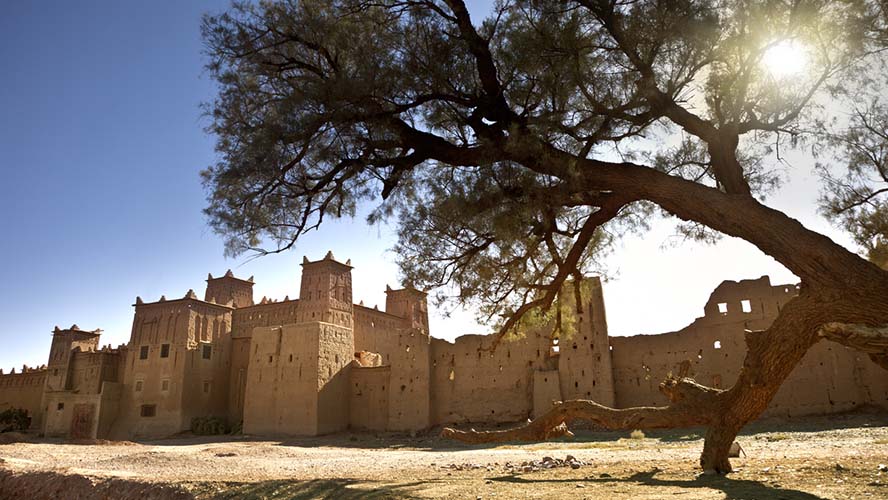
Among the many kasbahs that are scattered across Skoura palmeraie, the star attraction is definitely Kasbah Amridil, one of the most interesting and best conserved in the entire Dades Valley. You may feel a certain dejá vu when you visit it – the feeling that you’ve seen its outline somewhere before. And with good reason: it features on old 50-dirham notes. It’s also been a film location on several occasions and can be spotted in famous films such as Lawrence of Arabia and Ali Baba and the Forty Thieves.
Kasbah Amridil was built in the 17th century by a local family, the Nassiri, whose descendants still own it today. The original centre consisted of eight homes set around a central passageway. The exterior façades formed a perimeter that was marked by defensive towers. The kasbah is well conserved and exploring its interior feels like travelling back in time; visitors can get a sense of what life was like three centuries ago.
Many of the structures in the Kasbah Amridil have been restored and it’s possible to go inside and see wells, bread ovens and even an old press for making olive oil. The Kasbah Amridil has undergone numerous modifications and expansions over the centuries. Today, one of these annexes is a riad that is a great option if you’d like to spend the night. You can visit the entire complex, hiring the services of one of the guides you’ll find at the entrance gate.
One of the most fascinating rooms in the kasbah is the Audience Hall, where the owner of the fortification, who was also the feudal lord of Skoura palmeraie, received local residents to settle conflicts and deal out justice.
Kasbah Ait Abou
Kasbah Amridil is the most famous and tourist-orientated kasbah in Skoura palmeraie but it’s not the only one that can be visited. Kasbah Ait Abou is found in the north zone of the palmeraie, next to Tajanal village, and it’s the highest in the region. It was built many years after Amridil and dates from the beginning of the 19th century; it’s also a group-owned complex and has housed several families since it was built, a common model across the oasis.
At Kasbah Ait Abou, the extra buildings and annexes that were built by resident families were added upwards, vertically, giving it its distinctive height. It also contains a hotel and is perfect for travellers who want to get away from the more touristy and busy parts of Skoura palmeraie.
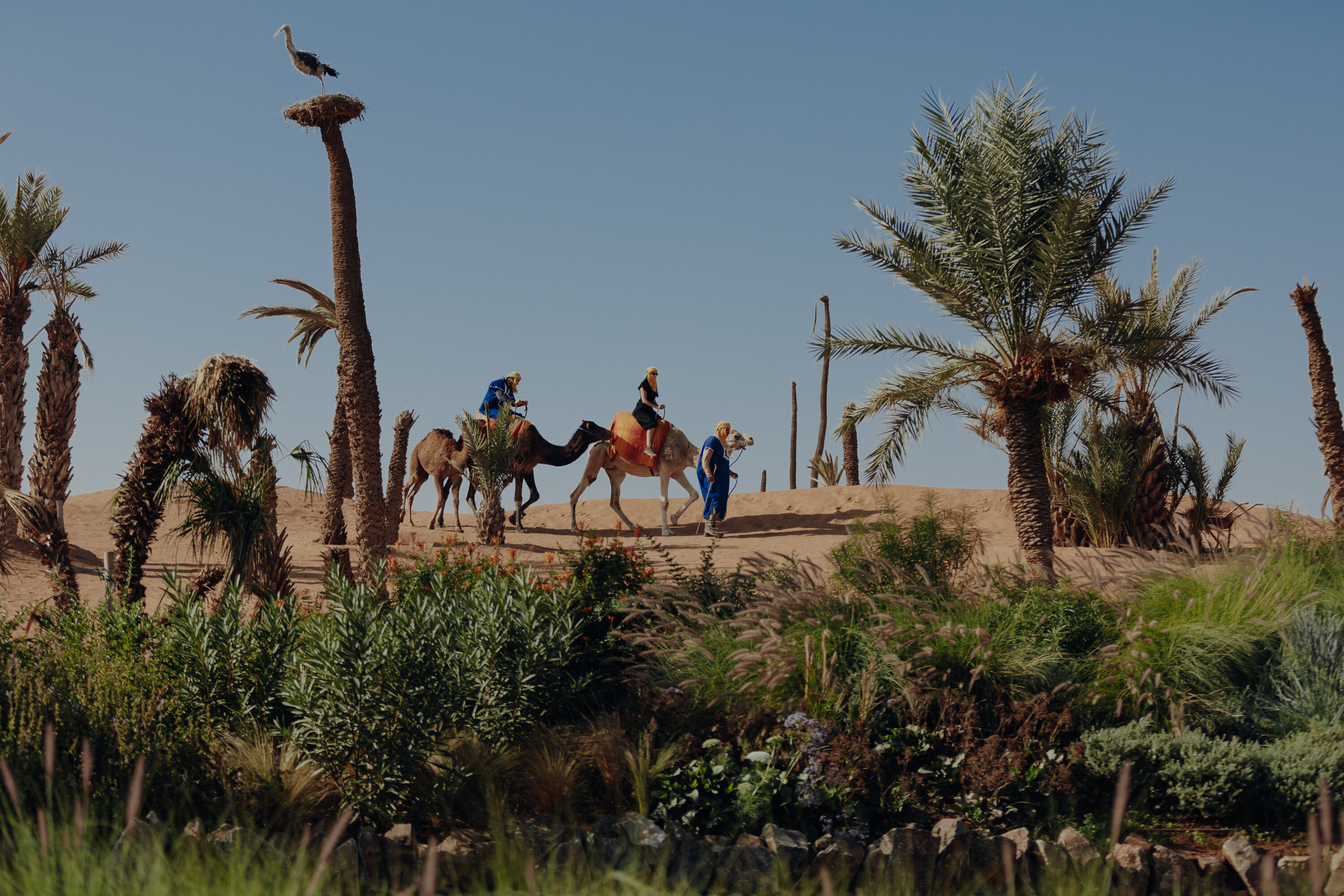
The palmeraie is also the perfect place to lose yourself on a long walk amid its abundant plant life and get a break from the (sometimes overwhelming) hustle and bustle of Moroccan cities. The numerous hotels in the area rent out bicycles, or you can book a horse ride to explore the endless paths and hidden spots within the immense oasis.
What to see near Skoura during your trip
Ouarzazate, Morocco’s Hollywood
A visit to Ouarzazate (or Ouarzazate) is highly recommended, located 40 kilometers from Skoura, or about a 45-minute drive. Surrounded by mountains, Ouarzazate is often considered the gateway to the Moroccan desert. It’s also a stopping point for those traveling the “Oasis Route.” Perhaps the reason it’s attracting more and more travelers lately is because it’s home to film studios. Some even call it “Moroccan Hollywood.” These studios are open to visitors, making it the perfect excursion for movie buffs and social media enthusiasts, as there are plenty of settings for taking selfies.
In addition to searching for filming locations for “Game of Thrones” or other movies, don’t forget to explore the urban environment with Mouahidine Square, the market, and the craft souk.
Taourirt Kasbah
On the outskirts of Ouarzazate is the Taourirt Kasbah, open from 8:00 a.m. to 6:30 p.m., so it’s worth taking this into account when planning your visit. From an aesthetic point of view, this adobe fortress is a marvel, with its crenellated and ornate towers. It is believed to have been built in the 18th century by the Glaoui tribe on the ancient “Gold Route” between Timbuktu and Marrakech. It is recommended to take a guided tour inside to discover the private spaces of the Glaoui dynasty. And if you’re interested in crafts, don’t leave without purchasing something: there is a center where they make and sell magnificent clay objects, rugs, and more.
Ksar of Ait Ben Haddou
Another interesting visit is the Ksar of Ait Ben Haddou. This fortified town is located 30 kilometers from Skoura and admission is free. Its architecture earned it UNESCO World Heritage status in 1987. The image it offers from afar, blending into the hills behind it and with the Ounila River at its feet, is unforgettable. As are the views from its highest point.
The beauty of the town, its winding streets, its adobe ramparts, and its spiked towers have not gone unnoticed by the cinema, as dozens of films have been shot there, from Lawrence of Arabia (1962) to Gladiator (2000), including Queen of the Desert (2015).
The Fint Oasis, a Hidden Orchard
Once your eyes adjust to the play of ochre tones found in Morocco’s most desert-like region, the Fint Oasis appears like a dream. This palm-filled oasis, with the coveted water at its feet, is located about ten kilometers from Ouarzazate (and about fifty from Skoura). It’s best to leave your car nearby (there’s parking) and wander around the area, or even reach the village on foot. The locals are very welcoming, and I’m sure they won’t mind you taking a peek at their way of life. They also make beautiful handicrafts, which will allow you to contribute a little to their family’s economy.