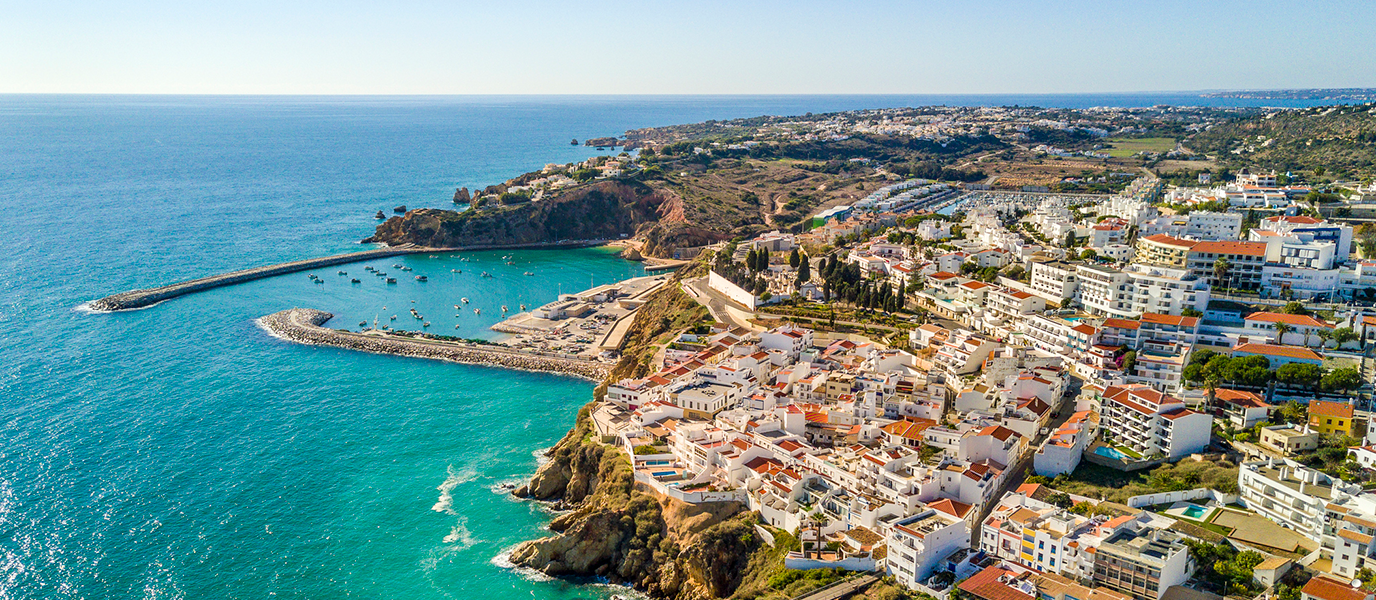












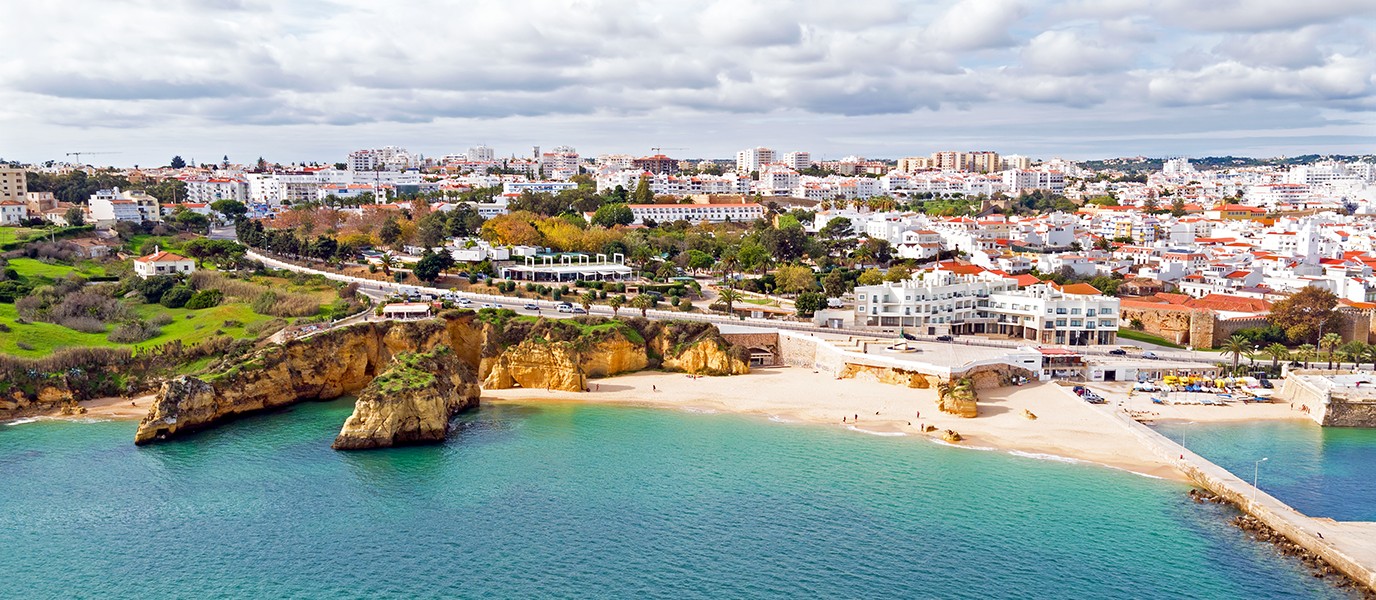
Lagos is not only a tourist destination in the Algarve, it is the original starting point from which Portugal began to trace the contours of the planet. It was from this port, known in ancient times as Lacobriga, that pioneering expeditions set sail at the end of the fifteenth century, such as those of Gil Eanes, the first navigator to round Cape Bojador, and Prince Henry the Navigator, the driving force behind maritime exploration.
From the Iron Age, through to Roman, Visigoth and later Arab control, the city grew in the shadow of its natural harbour, protected by a bay that has witnessed the construction of caravels and ships destined for routes that would connect Europe with Africa, Asia and the Americas. From that time, you can still see the Renaissance walls that surround the old town, which were designed to defend the city from frequent attacks by Berber pirates who, for centuries, plundered the Algarve coast.
Lagos was also the first place in Europe to document the African slave trade, a dark chapter that is nonetheless key to understanding the historical and economic complexity of imperial Portugal. Today, the former Slave Market is an interpretive centre that addresses the subject in a precise yet sensitive manner, reminding us that the greatness of the discoveries has a dark history.
The city also suffered severely in the aftermath of the Lisbon earthquake of 1755, which destroyed much of its old town. The rebuilding of Lagos adhered to the city’s original style, which means it is still possible to stroll through streets that have retained their Medieval character, with their cobblestone squares, baroque churches and façades covered in traditional Portuguese tiles.
- Main attractions to see in Lagos: the most bustling city in the Western Algarve
- The wall of Lagos: a vestige of centuries of defence against privateers
- Ponta da Piedade: majestic cliffs carved out by the Atlantic
- Santo António church: baroque gold and tiles that tell the story of a seafaring faith
- Municipal Market of Lagos: the daily lifeblood of a living city
- Museums: the Slave Market and the Living Science Centre, colonial memories and marine science by the sea
- Forte da Ponta da Bandeira: the stone watchtower at the mouth of the marina
- Lagos marina: a meeting point for nautical adventures
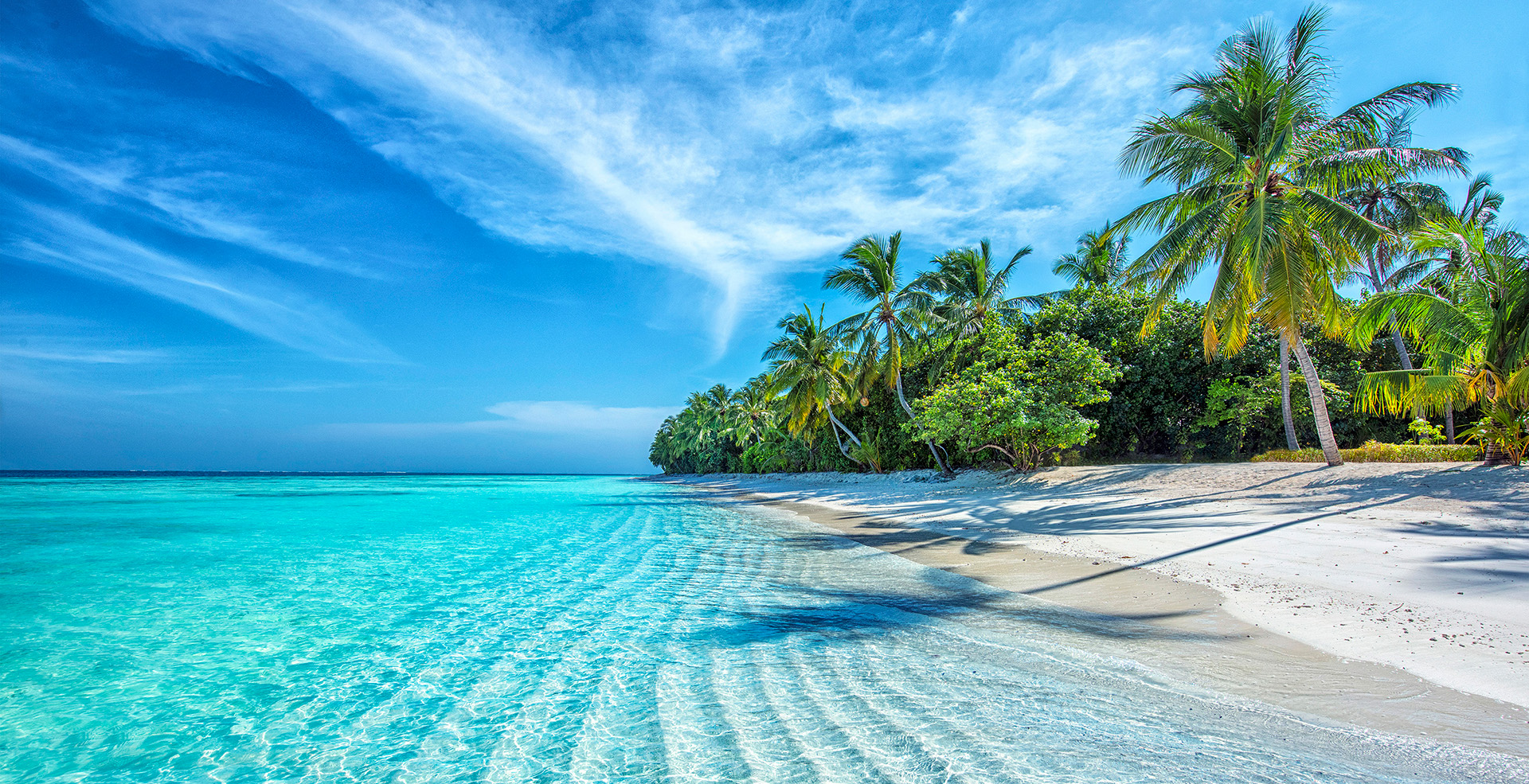
- Beaches in Lagos: a compendium of colours, sounds and textures
- Day trips from Lagos: discover the rest of the Algarve beyond the horizon
- Gastronomy in Lagos: an ocean of flavours combining history and freshness
Main attractions to see in Lagos: the most bustling city in the Western Algarve
The wall of Lagos: a vestige of centuries of defence against privateers
Built in the sixteenth century, the wall of Lagos is a classic example of Portuguese Renaissance military architecture. Not only was it built to protect the city from land and sea attacks, but it also represented the visible frontier of Portuguese power on the Atlantic coast.
The bastions, such as Santa Maria and Ponte da Bandeira, have cannons that can still be seen today pointing out to sea, evoking the constant tension that marked the sixteenth and seventeenth centuries. A walk along the battlements reveals details such as the original cannons and their inscriptions, deep moats and gates carved in stone that bear the wear and tear of centuries of use.
In its interior, the old town boasts narrow cobbled streets, small squares surrounded by whitewashed houses covered in tiles and with wrought iron balconies. The wall not only protected but also limited urban growth, causing the inner city to develop an intimate and profoundly human character that is still palpable today.
Ponta da Piedade: majestic cliffs carved out by the Atlantic
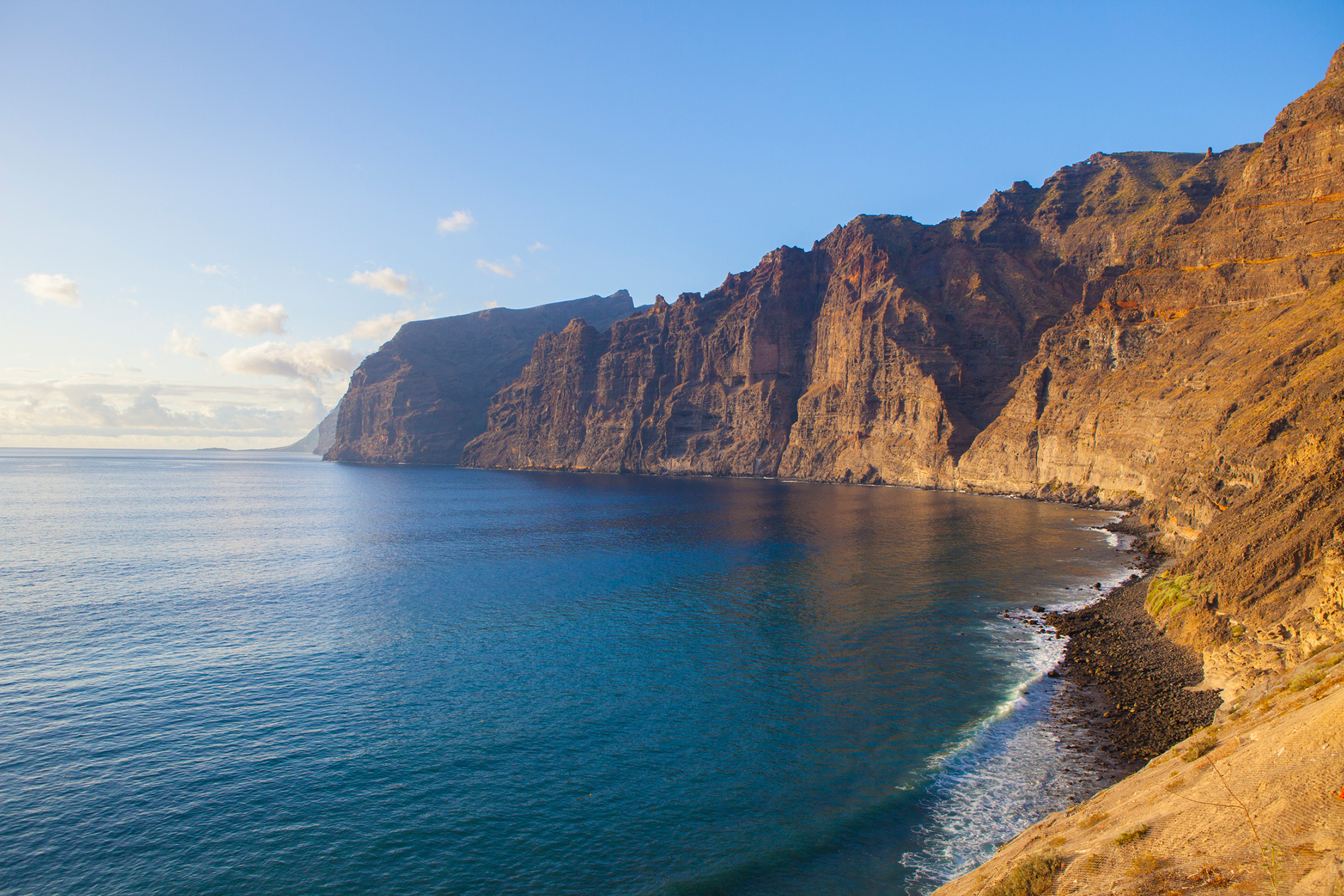
Ponta da Piedade is undoubtedly one of the most emblematic landscapes in the Algarve and a geological spectacle where light merges with the sea. The limestone formations were formed around 150 million years ago in the Jurassic, when the seabed gradually rose and the constant erosion of waves, wind and rain carved out the arches and caves that today look like living sculptures.
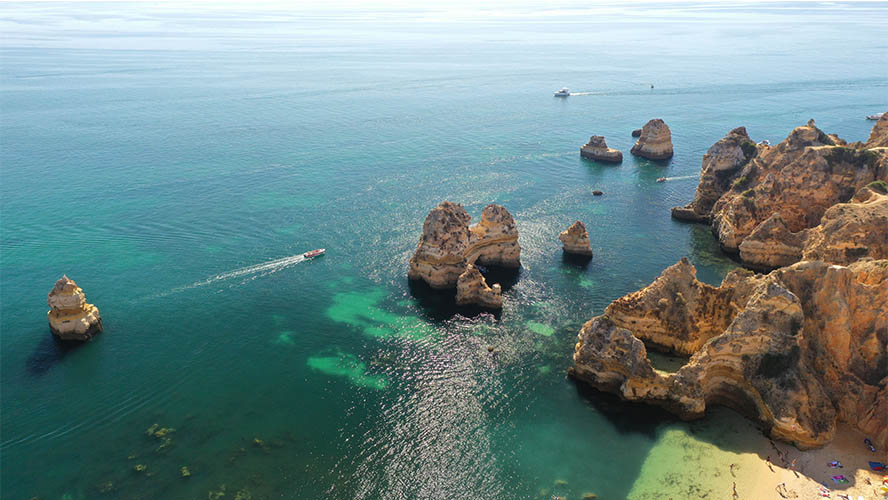
The cliffs reach heights of up to 20 meters and, on its walls, you can see ancient marine fossils embedded in the stone. The sea constantly changes colour, from a deep blue to an emerald green, reflecting the clarity of the water and the light that filters through the cavities.
It is possible to walk along paths that wind their way along the edge of the cliffs to viewpoints where you can contemplate the endless Atlantic ocean, or go down the more than 180 steps to the pier and explore the caves by boat or kayak. Incidentally, in certain caves, such as the famous Ponta da Piedade Grotto, archaeological remains have been found suggesting there were prehistoric human settlements in the area.
Santo António church: baroque gold and tiles that tell the story of a seafaring faith
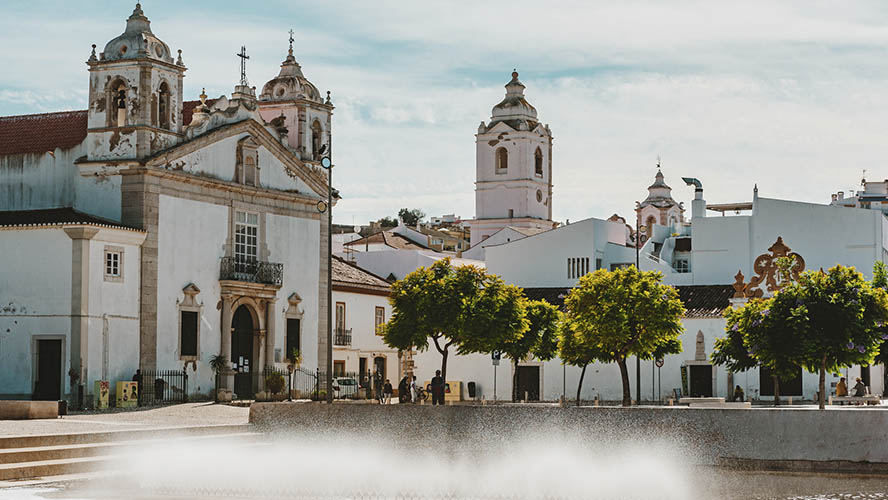
This church, built in the eighteenth century after the earthquake of 1755, is a true artistic treasure that contrasts with the simplicity of the exterior. Its interior is covered with approximately 150 kilos of pure gold that adorn altarpieces, columns and mouldings, giving a sheen that almost overwhelms visitors.
The tiles that cover the walls depict scenes from the life of St Anthony and key moments in Portuguese religious history. The main chapel includes a rococo altar bearing aquatic motifs, reflecting the strong relationship between faith and sea in the port city.
The church also houses works of art and liturgical objects that belonged to maritime expeditions, such as reliquaries brought from Africa and Asia, symbolising the global reach of Lagos in its heyday.
Municipal Market of Lagos: the daily lifeblood of a living city
The Municipal Market, located next to the port, is much more than a commercial space, it is a daily ritual that connects locals and visitors with the city’s beating heart: the Atlantic. Here, every morning, fishermen unload the catch of the day, including sardines, red mullet, horse mackerel, octopus and the region’s coveted shrimp.
Remodelled in 2013, the market retains traditional architectural features such as the Portuguese industrial-style metal roof and large windows that let in natural light, illuminating the stalls and the hustle and bustle.
In addition to fish, local fruits such as Algarve oranges, figs, almonds and oak honey are sold, products that make up the local Mediterranean diet. Climbing up to the market terrace offers excellent views of the port, with the colourful boats and the Lagos lighthouse in the background.
Museums: the Slave Market and the Living Science Centre, colonial memories and marine science by the sea
The former Slave Market, the first documented slave market in Europe, has been transformed into an interpretive centre that deals openly with the human trafficking that took place here. The exhibitions combine documents, images, testimonies and contemporary art to invite people to reflect on history and its consequences.
The Living Science Centre offers interactive exhibits on marine biodiversity, the importance of coastal ecosystems and the history of navigation in the Algarve, including replicas of traditional boats and simulators that allow visitors to understand life on the high seas.
Forte da Ponta da Bandeira: the stone watchtower at the mouth of the marina
Built in 1621, the fort has withstood almost four centuries of wars, looting and transformations. Its pentagonal plan and walls up to five meters thick are evidence of its defensive purpose. The original drawbridge, which is still in operation, is an architectural feature that takes you back to the time when the fort guarded the entrance to the port.
From the upper terraces you can see Batata beach and the island of Porto de Mós, areas of great natural importance that contrast wonderfully with the military setting with a landscape made up of beaches and dunes. The fort also hosts exhibitions that explain the maritime and war history of Lagos, with old maps, weapons and uniforms.
Lagos marina: a meeting point for nautical adventures
The modern Lagos marina is today the most important place for recreational boating in the region. With capacity for more than 600 boats, it accommodates everything from classic sailboats to modern yachts.
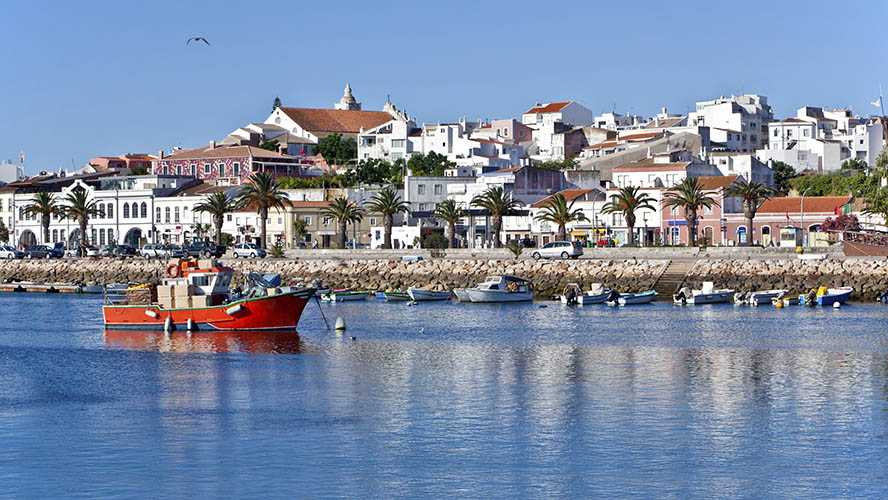
In high season, you can take an excursion to see dolphins in the wild, a unique experience that connects visitors with the local wildlife. The marina is also home to a large number of bars and restaurants with terraces, sport fishing stores and agencies offering kayak rentals to explore the coast’s caves.
Beaches in Lagos: a compendium of colours, sounds and textures
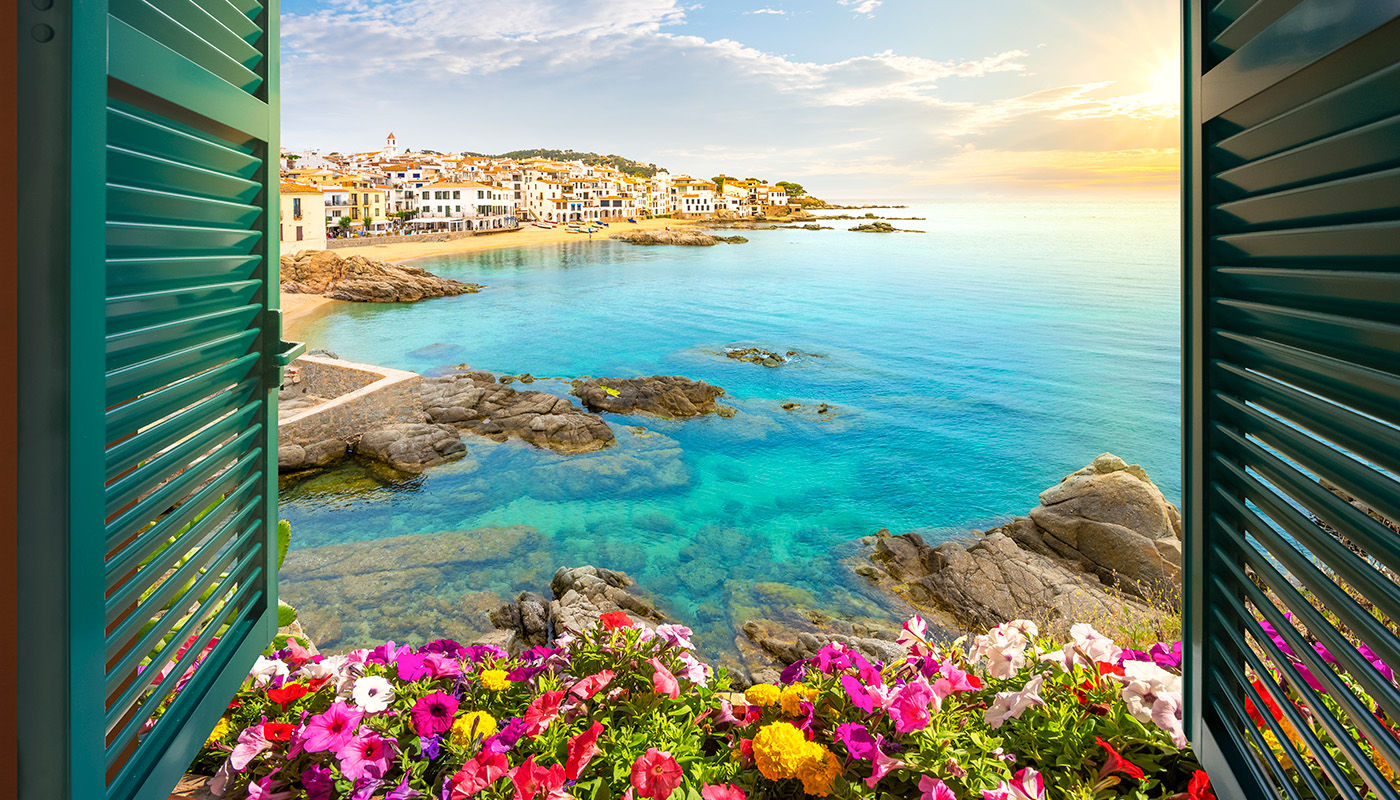
Praia Dona Ana stands out for its reddish cliffs that drop steeply into crystal clear waters, creating small, sheltered coves. The combination of fine sand and rock formations makes it a paradise for photographers and snorkelers
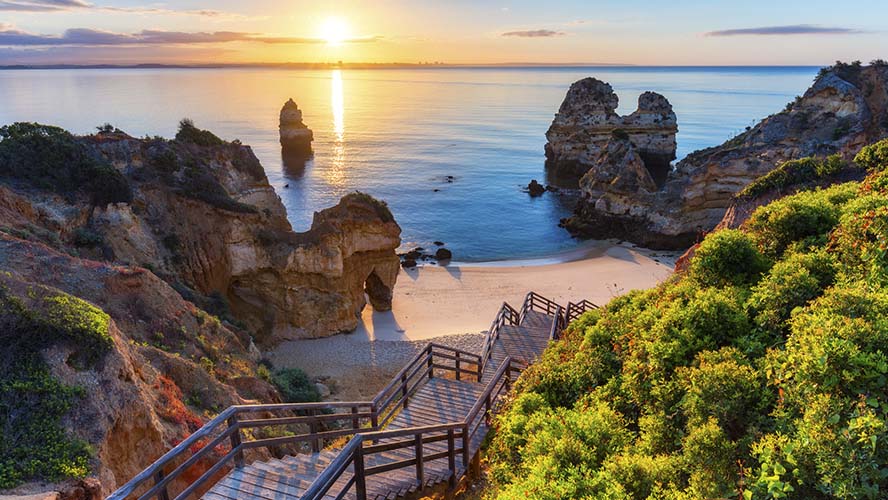
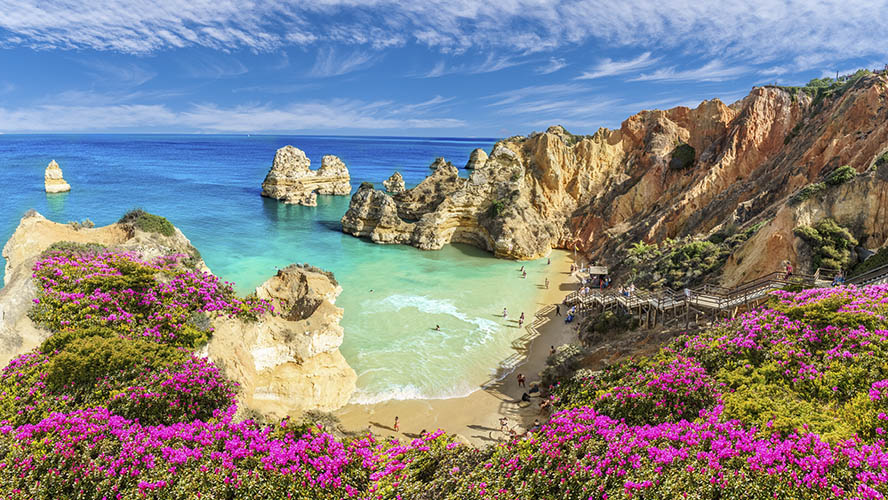
Praia do Camilo, which can be reached by a 200-step wooden staircase, offers a refuge where the waves whisper among limestone formations that seem as if they were sculpted by artists. When the sun sets the setting is tinged with golden and orange tones.
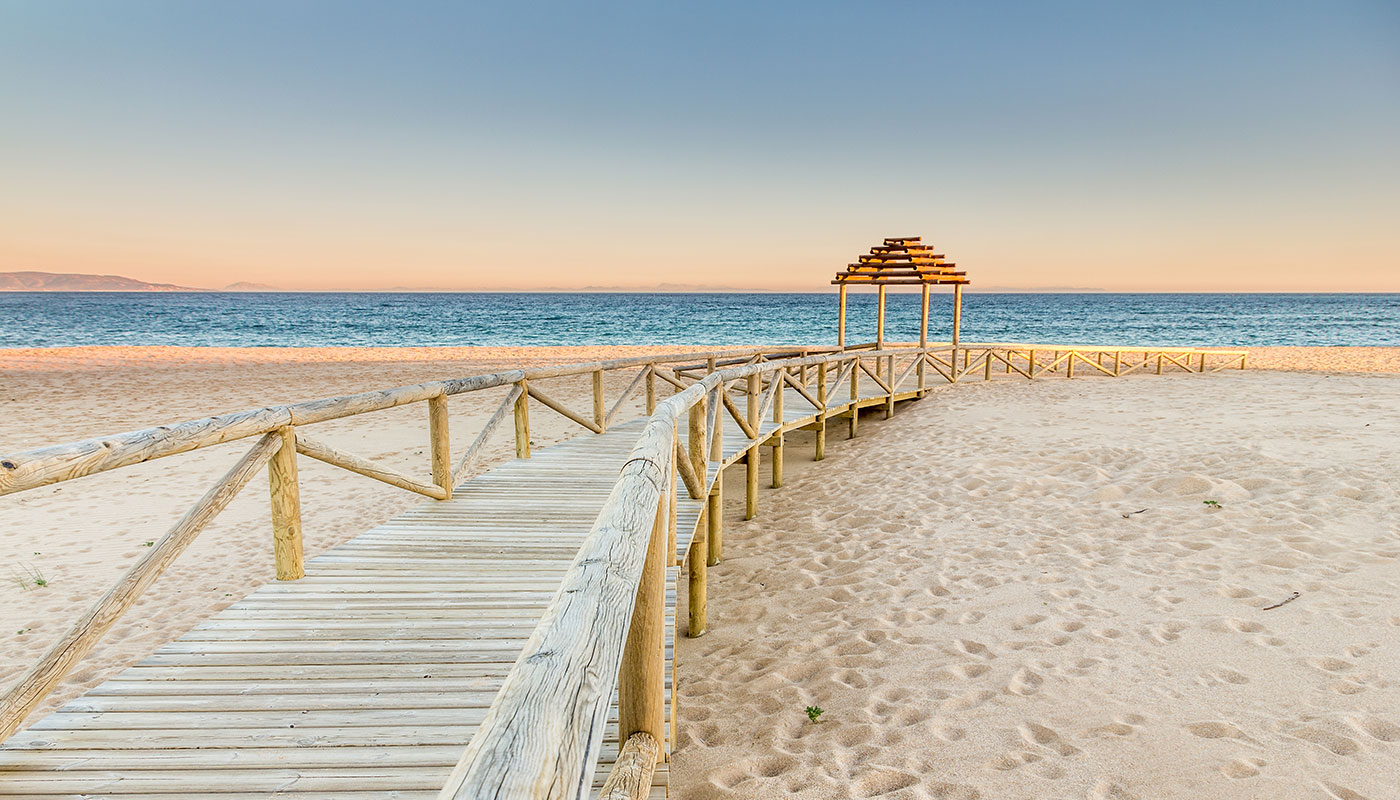
The extensive Meia Praia, spanning over four kilometres, is a favourite spot for water sports such as windsurfing and kiteboarding. Its fine, golden sand stretches as far as the eye can see, with dunes that are home to protected native flora.
Finally, the small and secluded Praia dos Estudantes is a less crowded spot, perfect for those seeking peace and quiet without straying far from the city centre.
Day trips from Lagos: discover the rest of the Algarve beyond the horizon
Less than 30 km away, Cabo de São Vicente marks the end of continental Europe, known for its imposing cliffs and century-old lighthouse, which has been guiding navigators since the nineteenth century. Here, the sense of infinity is overwhelming and sunsets become magical spectacles of light and shadow.
Inland, the villages of Barão de São João and Aljezur retain agricultural and architectural traditions dating back to the Muslim era, with whitewashed houses and rural markets selling organic produce.
On the Camino Vicentino route and the Sete Vales Suspensos route hiking enthusiasts will find cliffs, cork oak forests and vertigo-defying viewpoints, with panoramic views that reach as far as the coast of Sagres.
Gastronomy in Lagos: an ocean of flavours combining history and freshness
The food in Lagos is a direct reflection of the Atlantic and the land that surrounds it. Fresh fish, brought in every morning by fishermen, is prepared according to traditional recipes that shine a spotlight on raw ingredients with no frills. Grilled sardines are a summer classic, while the seafood rice includes shrimps, clams and barnacles, a crustacean that is plucked from the rocks at the water’s edge.
At the restaurant O Camilo, perched on the cliff, you can taste slow-cooked octopus dressed in local olive oil and paprika from the region, in a dish that is pure Algarvian. In the city centre, Casa do Prego reinvents traditional dishes with modern twists, such as confit of cod with chestnut puree, a nod to the autumn season.
For those who prefer simpler, homemade flavours, A Forja offers local stews such as seafood cataplana, a traditional stew cooked in an airtight copper pot.
Sweets such as Dom Rodrigo, made with egg yolk, sugar and almonds, are the perfect finishing touch to a meal in Lagos, recalling centuries of convent tradition.