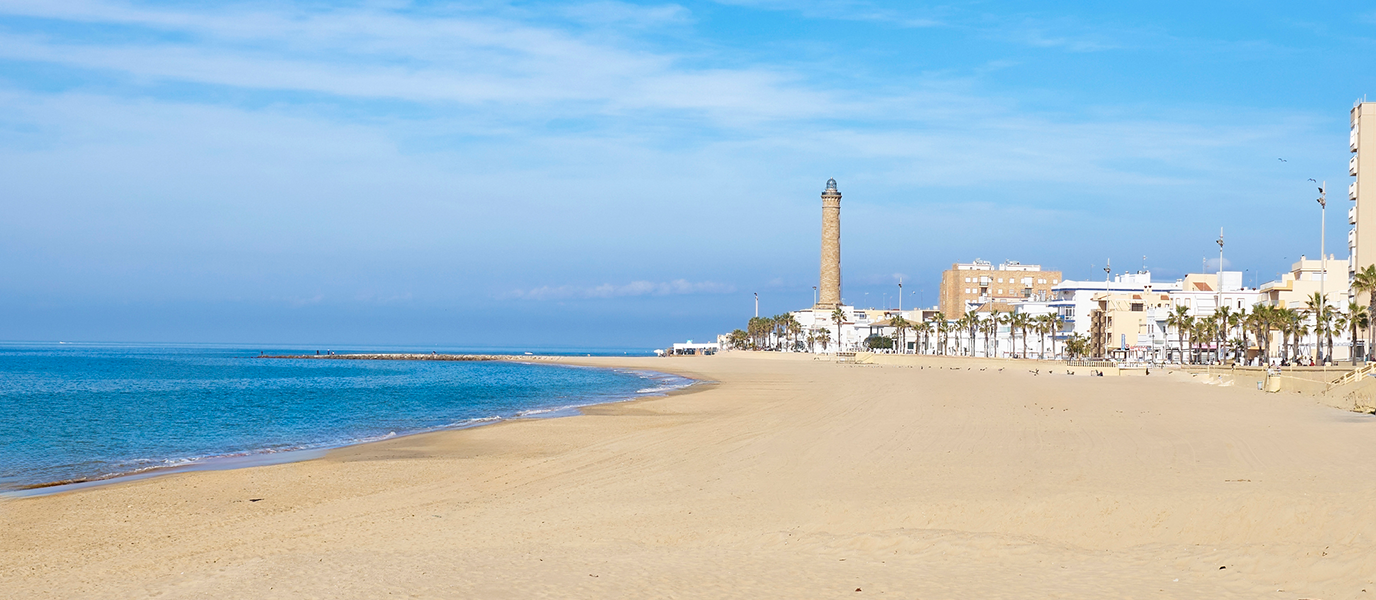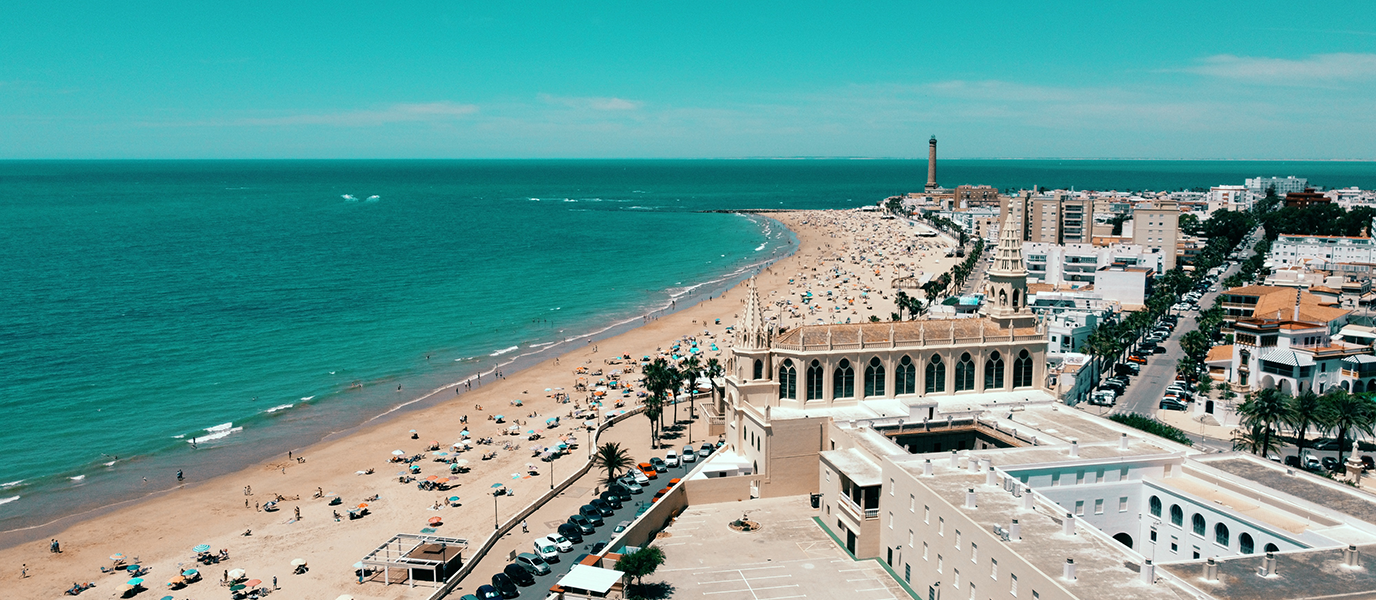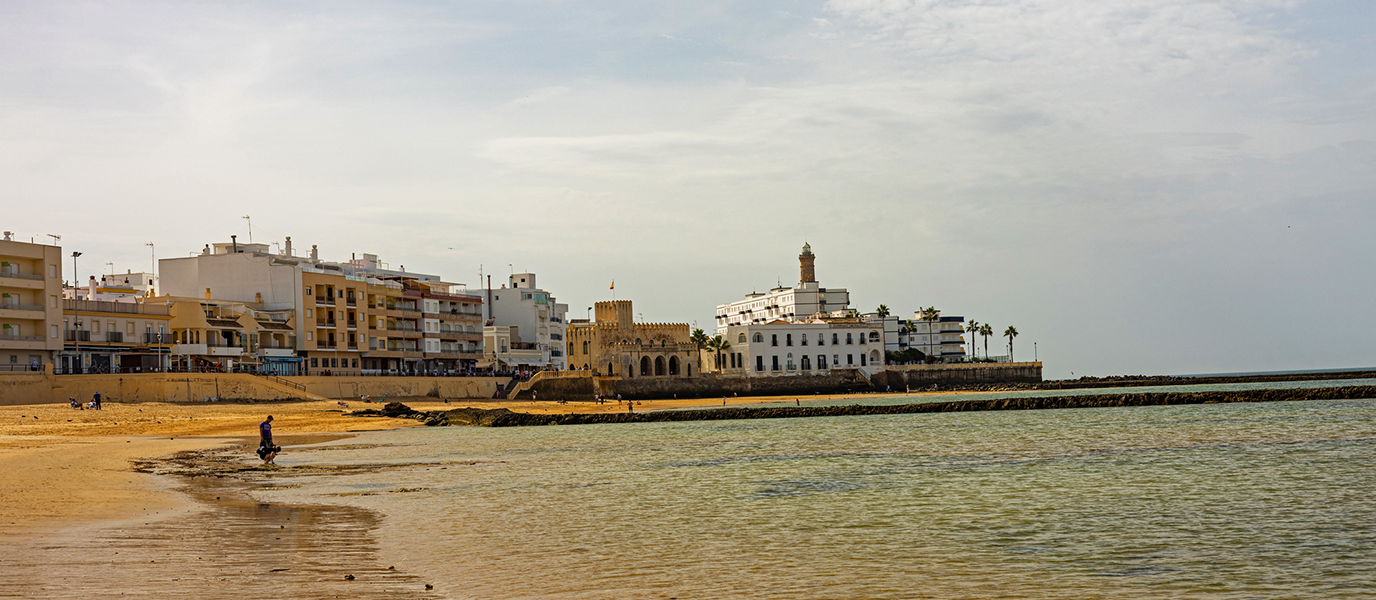























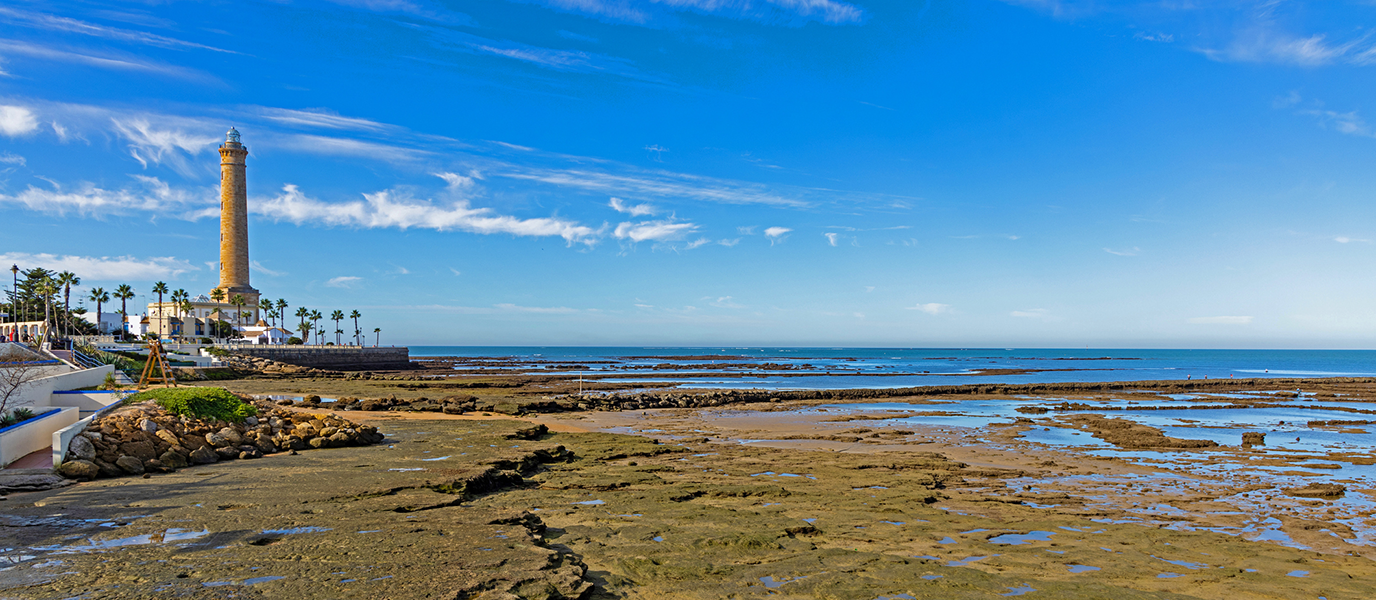
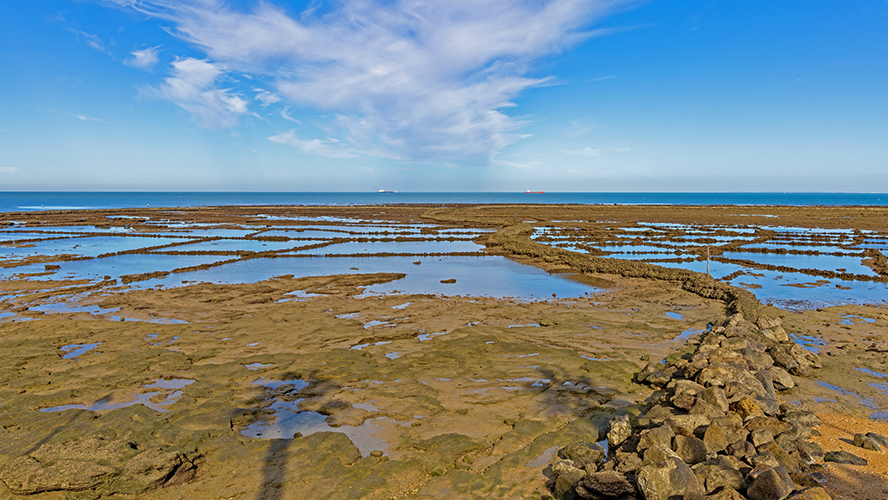
When the tide goes out off the coast of Chipiona the sea reveals an ancient secret that lies beneath its waters: a labyrinth of carefully arranged stones that has been part of the landscape for centuries. One of the most unique ethnographic treasures of the Andalusian coastline, the fishing pens were built with shell stone and shaped by the seafaring wisdom of past generations. The fishing pens are not mere structures for catching fish, they are a living part of the local memory that bring together nature, craftsmanship and landscape. Walking alongside them is like witnessing a ritual that repeats itself with each tide, where the sea delivers its fruits with no technology other than human ingenuity and the rhythm of the waves. Their silhouette, visible only when the ocean recedes, seems to trace ancient writing in the sand, made up of curves, pools and submerged walls. And yet, this is not a static vestige: it is a system that remains alive, continuing to provide food and education, sustained by the Chipiona community and protected as a Site of Cultural Interest.
- Natural context: the Chipiona fishing pens, a sustainable fishing system whose origins get lost in time
- What is caught in the Chipiona fishing pens: the slowest art of fishing at sea
- The most important fishing pens: a map of stone facing the tide
- How to visit the fishing pens: handpicking shellfish, guided tours and shared memory
Natural context: the Chipiona fishing pens, a sustainable fishing system whose origins get lost in time
Fishing pens are traditional fishing systems built in the intertidal zone, designed to take advantage of the tides. They consist of shell stone walls arranged in a semi-circular or irregular shape, forming a natural marine enclosure. At high tide, the water enters the pen, bringing with it fish, crustaceans and molluscs. At low tide, the walls prevent them from leaving, trapping them in pools and ponds where they can be collected by hand.
This technique, which combines efficiency, respect for the environment and popular wisdom, has ancient roots. Although there are theories linking them to Phoenician, Roman and even earlier practices, the first written documents mentioning the fishing pens of Chipiona date back to the fifteenth century. What is beyond doubt is that they are part of a body of knowledge that has survived for centuries, adapted to the geographical conditions of the Cadiz coast and passed down from generation to generation by word of mouth.
In Chipiona, several of these fishing pens are still in use. Their existence is not only a response to fishing needs but also a way of living alongside and connecting with the sea. They embody a collective intelligence that understands the behaviour of the tides, the natural architecture of the coastline and the rhythms of the fish. For this reason, rather than mere fishing structures, the fishing pens are true cultural landscapes. In 2002, the Andalusian Regional Government declared them a Natural Monument, recognising their ecological, ethnographic and educational uniqueness.
What is caught in the Chipiona fishing pens: the slowest art of fishing at sea
The fishing pens’ catches vary depending on the season, sea conditions and biodiversity at the time, but in general, small and medium-sized species that migrate along the Cadiz coast are plentiful. Shrimp, crabs, clams, cuttlefish, octopus, moray eels, white sea bream, mojarra, gilt-head bream and sea bass are usually found in the pens. Sea anemones and small molluscs that get trapped between the rocks also appear, adding gastronomic and biological value to the structures.
The type of fishing practiced in the pens is selective and artisanal. No nets or machinery are used, only hands, buckets and knowledge of the local area. Shellfish are traditionally gathered by local families at low tide, requiring precise knowledge of the local area, the species and the cycles of the sea. Each pool and each crevice has its own name and history, turning the task into an intimate map of the coastline.
Utilising fishing pens is an environmentally friendly fishing practice. Only adult and abundant specimens are collected, and catches are subject to specific regulations to prevent overfishing. The pens also act as natural nurseries for many species, creating a rich and diverse ecosystem. Hence, their ecological importance is equal to their cultural interest.
The most important fishing pens: a map of stone facing the tide
Chipiona currently has several recognised and signposted fishing pens, each with its own unique configuration and history. The most notable are:
Montijo fishing pen
Located in the north of the municipality, near the border with Sanlúcar de Barrameda, it is one of the largest and least affected by tourism. It stretches for about 600 metres and is an excellent example of a traditional fishing system.
Camarón fishing pen
Located on the beach of the same name, it is easy to reach and one of the most visited as part of guided tours. Its proximity to the town centre makes it a type of open-air classroom on traditional fishing.
Las Canteras fishing pen
Named after the presence of old shell stone quarries in the vicinity, it is located opposite Las Canteras beach and has a particularly intricate layout.
Micaela fishing pen
Less well known and smaller in size, it is one of the family fishing pens, managed for generations by local residents. Its importance lies in its intimacy and its effort to keep traditional methods alive.
All the corrals share the same operating logic but vary slightly depending on their orientation, size, depth and type of wall. Visiting them all at the same time allows you to appreciate the range of different solutions applied to the same fishing principle and understand how humans have been able to read the local area in order to interact with the sea without harming it.
How to visit the fishing pens: handpicking shellfish, guided tours and shared memory
The best way to learn about the Chipiona fishing pens is to take part in one of the guided tours organised by the Town Hall through the Tourist Office and in collaboration with local associations such as Jarife. These tours, which usually take place in spring and summer, coincide with the lowest daytime tides, when the structures are completely exposed.
During the tour, local guides explain the origin of the fishing pens, the fishing techniques, the ecological importance of the system and the stories associated with each one. It is not uncommon for the explanations to include family anecdotes or personal memories, which makes the visit an entertaining and intimate experience. Some routes also allow for small-scale shellfish gathering, always in a supervised and respectful manner.
Be sure to wear appropriate footwear for wet rocks, avoid touching the species and not disturb the stones. The fishing pens are fragile, and their conservation depends largely on the responsible behaviour of those who visit them. In the summer, information panels can also be found at the beach entrances, allowing for a more basic self-guided tour.