









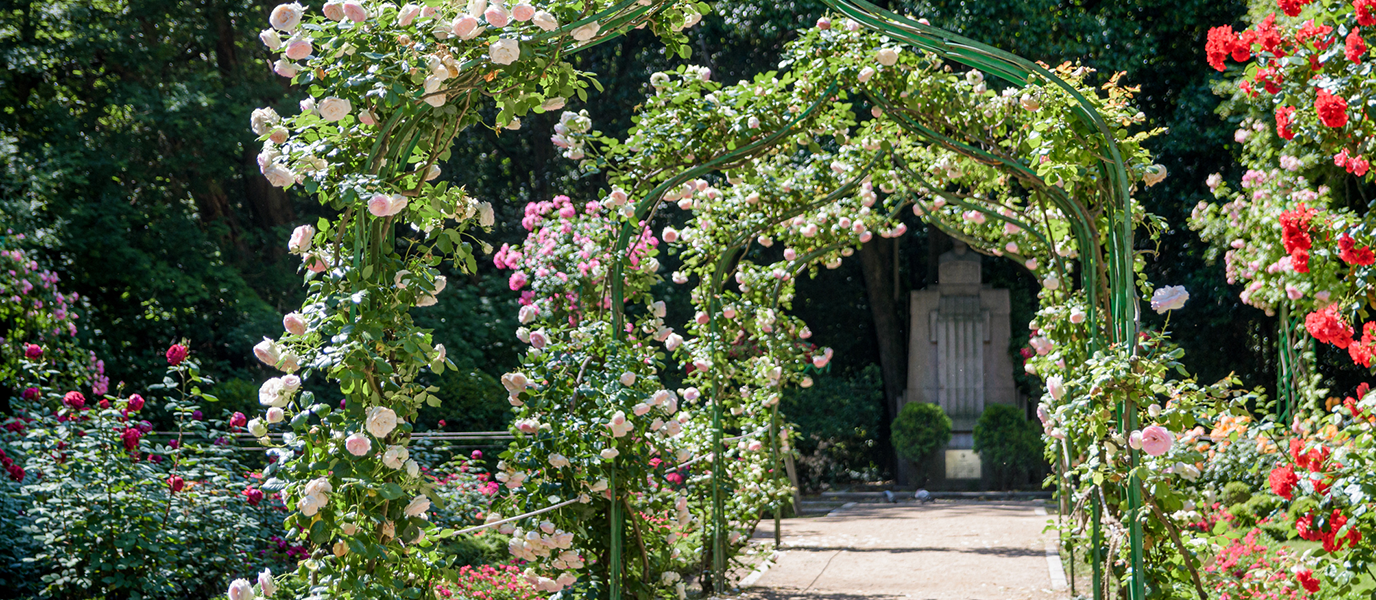
Campo Grande is not just Valladolid’s most emblematic park: it is also key to understanding how the city built its relationship with leisure and nature, and developed this great public space from the late eighteenth century onwards. Located between the railway station and the historic city centre, this urban garden occupies over 11 hectares, and forms the bridge between the nineteenth-century city and modern Valladolid. Its layout, its plant species and its monuments reflect two centuries of social change, from the culture of the bourgeois promenade up to its present everyday function.
- The history and importance of Valladolid’s Campo Grande
- What you can see on your walk around Campo Grande
- Activities in Campo Grande
- Opening times and information for visitors
The history and importance of Valladolid’s Campo Grande: from suburban grazing ground to romantic nineteenth-century park
The park was originally a space outside the city’s walls, linked to the old Puerta del Campo, one of the main gateways into the medieval city. For centuries, this area was used for grazing, cattle fairs, and military exercises — and as a transit point for travellers arriving from the south. Its name, Campo Grand [Large Field], reflects its open, functional nature, outside the control of the city. It was also the setting for popular celebrations, travelling bullfights, and public ceremonies.
The park’s transformation began in the late eighteenth century, and became fully established in the nineteenth century, when Valladolid adopted European models of healthy cities. Inspired by parks such as Madrid’s Retiro and French and English gardens, the space was set out with avenues of trees, geometrical planting schemes, and ornamental features. In 1833, a reorganisation was undertaken to introduce winding pathways, visual perspectives and shaded areas, all designed for social strolling.
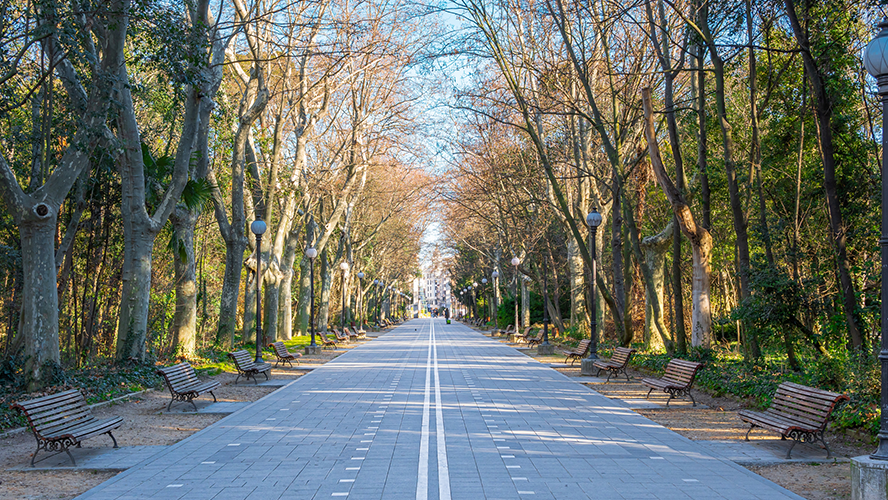
During the last years of the nineteenth century and the early years of the twentieth century, the park became the city’s main location for socialising. The middle classes used it to promenade, and to attend concerts and public events. Sculptures, fountains and gazebos were added, which emphasised the leisure aspect of the park. Monuments such as the one dedicated to Miguel de Cervantes and another to the Cazadores [Hunters] reflect the time when the park was a symbol of modernity and progress.
During the twentieth century, the park became completely surrounded by the urban sprawl, but its romantic structure barely changed. Today, it is still the city centre’s green lung and a place with a distinct identity where tourists mingle with students, families and residents.
What you can see on your walk around Campo Grande: lakes, peacocks and sculptural heritage
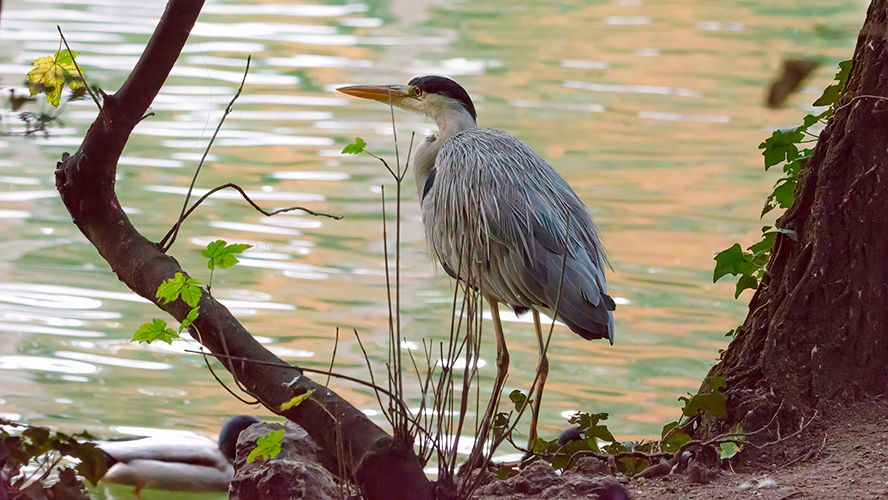
One of the park’s central attractions is the great lake with its fountain, designed to be a focal point. This space forms the visual heart of the park, and is a haunt of aquatic birds. It reflects the plants above, and has areas where visitors can rest. The area was designed to be a controlled landscape where nature is organised for the enjoyment of the city’s people.
The most recognisable symbols of the park are its peacocks. Introduced during the nineteenth century as a decorative element, they are now free to roam and form part of the experience They can frequently be seen strutting along the paths, displaying their tails or resting on low branches. Their presence adds to the park’s romantic, theatrical atmosphere.
Another of the park’s great attractions is its sculptural heritage. As well as the monument to Cervantes, other outstanding features are the Fuente de la Fama [Fountain of Fame] and other commemorative displays linked to local history. These elements turn a stroll into a cultural tour, amid a dialogue between art and the landscape.
From a botanical perspective, the park is home to centuries-old trees: Himalayan cedars, magnolias, horse chestnut trees, London plane trees, and exotic conifers. Many of these were planted during the nineteenth century, and reflect that period’s fascination with plant life from around the world. In autumn, the scene is transformed by the changing colours and becomes one of the city’s most photogenic spots.
Activities in Campo Grande: from bourgeois strolling rituals to modern leisure pursuits
Strolling remains the park’s main activity. Visitors can choose either direct routes or winding paths among groups of trees and bushes. In the early morning, the park fills with joggers and walkers; in the afternoon, it is frequented by families and tourists. This continuity of use connects with the nineteenth-century tradition.
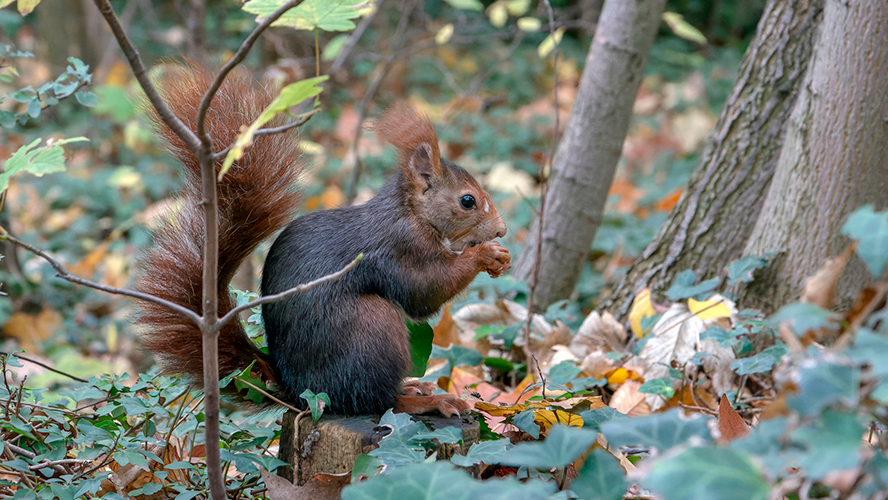
Photographers and nature enthusiasts are drawn to the bird life and the fauna. In addition to the peacocks, visitors can spot ducks, swans, squirrels, blackbirds and small passerines. The relative silence of the park, despite its city centre location, makes it a natural refuge.
It is also a space for reading and studying in the open air. Lots of students use it as an extension of the nearby libraries. In spring and summer, the park hosts concerts, book fairs, children’s activities, and cultural events linked to the life of the city.
Families can find open, safe places for their children to play, while couples and tourists use it as a place to relax on their sightseeing walks. The park’s proximity to the station and to the city centre make it a stopping-off point between visits.
Opening times and information for visitors: access, tours and city links
The park is free and accessible, with opening hours that vary according to the season: from 8.00 a.m. until 10.00 p.m. between 31 October and 31 March, and from 7.00 a.m. until midnight between 1 April and 30 September. The park is closed at night to help conservation. The main entrances are in the Paseo de Zorrilla, La Acera de Recoletos, and near the station.
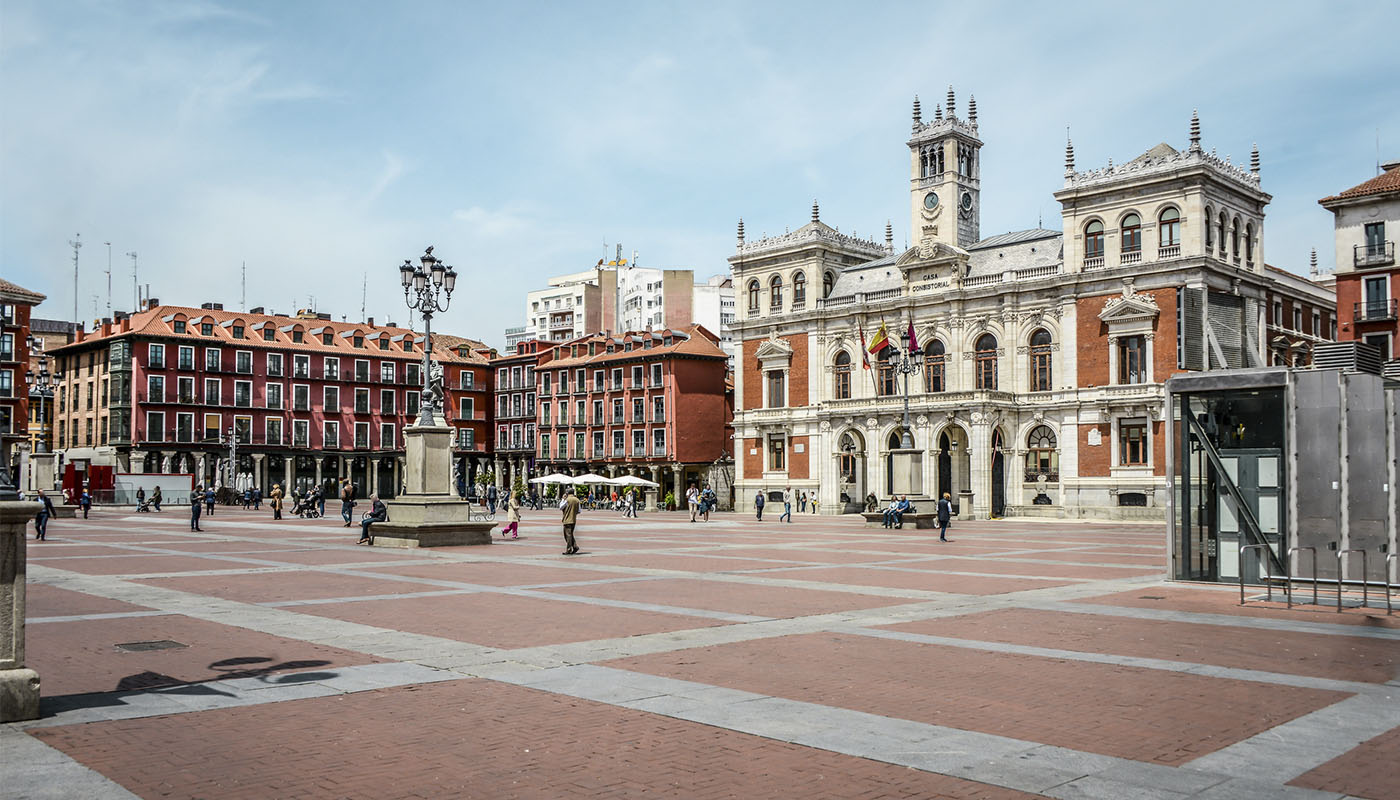
This network of entrances makes it easy to include the park in any tour of the city. From here, you can walk on to Valladolid’s Plaza Mayor [main square], the main shopping area or the museums. Rather than being a closed space, Campo Grande serves as a transition area between the different districts.