

















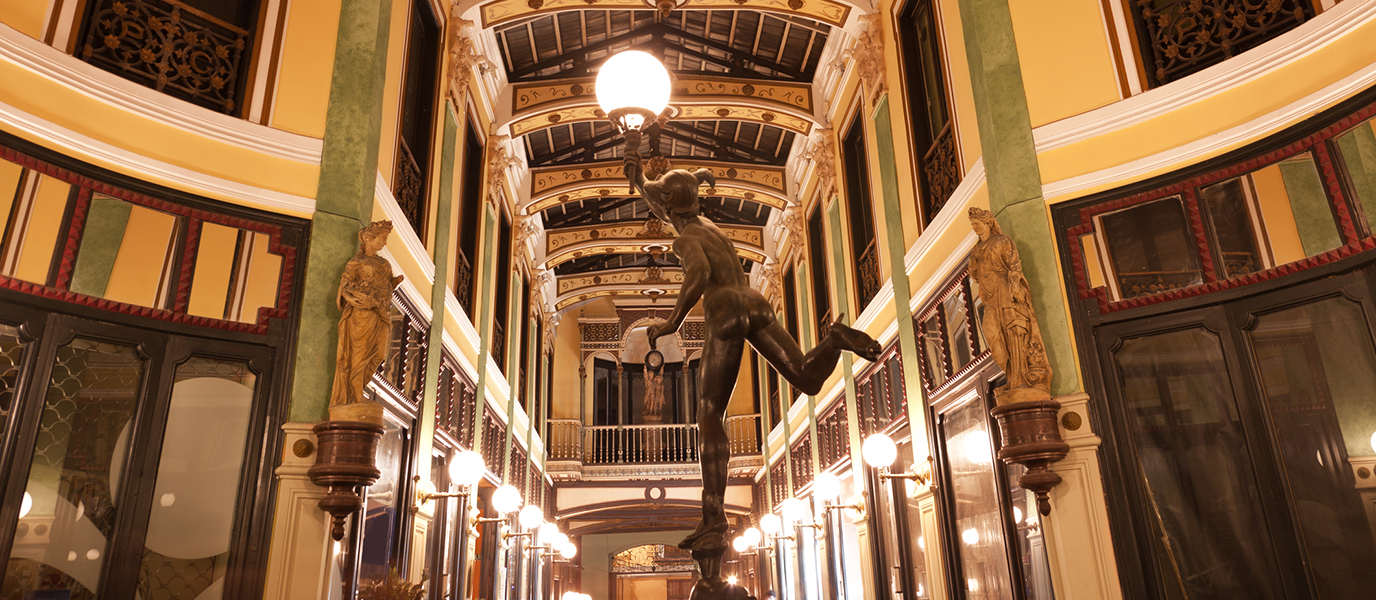
Hidden behind the sober façades of the old town, between the Plaza Mayor and Santiago church, there is a corridor of light that surprises even the locals. Pasaje Gutiérrez is not your typical street or shopping centre but a nineteenth-century covered arcade where wrought iron, glass and ceramics come together to create an almost Parisian atmosphere in the heart of Castile. Going through it means changing pace: the noise of the traffic is left behind, replaced by the sound of footsteps echoing under the glass dome, as if time had stopped in another era.
Although the passage is only 40 to 50 metres long, stretching between Calle de Fray Luis de León and Calle Castelar, it nevertheless has a remarkable historical and urban density. Starting out as a bourgeois real estate venture and a showcase for commercial modernity, it now serves as a refuge for cafés, specialised shops and cultural gatherings. Although it takes no more than ten minutes to visit, understanding it helps to explain much of Valladolid’s transformation in the second half of the nineteenth century.
- What is Pasaje Gutiérrez and what is its history
- Pasaje Gutiérrez architecture
- What can you find at Pasaje Gutiérrez
What is Pasaje Gutiérrez and what is its history: the bourgeois dream of a French-style shopping arcade
Pasaje Gutiérrez is a covered shopping arcade that opened in 1886. It was the brainchild of Eusebio Gutiérrez, a merchant who acquired several plots of land between two streets in the city centre with the intention of creating a space for transit and business similar to the arcades in Paris, Milan and Madrid. At a time when the city was beginning to modernise with the construction of new avenues, cafés and theatres, the concept of an indoor street sheltered from the rain and cold was innovative and appealing to the emerging local bourgeoisie.
Jerónimo Ortiz de Urbina, who also designed the nearby Calderón Theatre, was commissioned to lead the architectural project. He proposed a straight arcade covered with a metal structure and glass windows, flanked by commercial premises on the ground floor and homes on the upper floors. The complex combined the practical purpose of shortening the distance between two streets with an aesthetic function, featuring illuminated shop windows, attractive paving and decorative elements that encouraged people to stroll, not just shop.
For decades, the arcade was a byword for modernity. Hat shops, tailors, watchmakers and specialist shops opened, attracting a wealthy clientele. Strolling along it was a way of showing off and people watching at the same time, a custom inherited from European boulevards. Over time, however, competition from department stores and shopping centres led to a certain decline. Nevertheless, the building survived and was later renovated, preserving its historical character.
Today, Pasaje Gutiérrez has been converted into a hybrid space, combining architectural heritage with a recreational space and small shops. This historical continuity—from a bourgeois arcade to a cultural passageway—is all part of its charm.
Pasaje Gutiérrez architecture: ironwork and glass beneath a luminous dome ceiling
The first thing that catches your eye upon entering is the glass roof, which is supported by a cast-iron structure that filters natural light and creates a uniform sense of brightness, even on cloudy days. Typical of nineteenth-century industrial architecture, the system allowed the interior to be lit without the need for large side windows, which was essential in such a narrow passageway. The result is a space that is surprisingly bright for Valladolid’s winter climate.
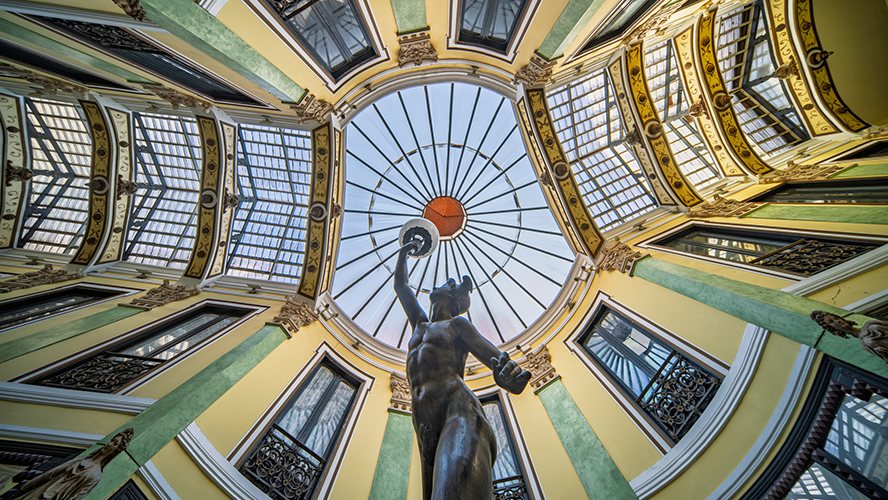
The tiled floor, shop window frames and mouldings retain a historical air that recalls the eclectic aesthetics of the turn of the century. It is lined on both sides by small shops with glass façades, designed for displaying products. There are no large signs or flashy decorations, instead the architecture takes centre stage.
In the middle of the passageway stands a taller dome that marks the main intersection and serves as a small meeting space. The sculptural decoration beneath it adds a theatrical touch, with allegorical figures, reliefs and ornamental details that recall the place’s inherent vocation. If you take a minute to look up at the railings and capitals, you can appreciate the craftsmanship of the construction, which is a far cry from the standardised aesthetics of contemporary shopping centres.
What can you find at Pasaje Gutiérrez: unique shops and tranquillity under one roof
Although it is not large, the arcade offers a varied selection that is very different from that of the big chains. Independent businesses predominate here, from small fashion boutiques and specialised bookstores to creative studios and cultural spaces harnessing the intimate nature of the place. This small scale encourages you to chat with the owners and enjoy a more personal shopping experience.
The arcade also hosts small exhibitions, book presentations and one-off events. The fact it is a covered space means it is comfortable throughout the whole year, especially in winter when the cold Castilian air makes you seek out warm refuges. Rather than a place with big-name brands, it is a place where you can browse at your own leisure, take in the details and let the atmosphere carry you away.
Cafés and local shops: marble-topped tables, coffee roasters and shop windows steeped in history
One of Pasaje Gutiérrez’s biggest draws are its cafés and bars, which retain the feel of traditional salons for social gatherings. Sitting down at one of the small tables and enjoying a coffee or a glass of wine beneath the glass-dome ceiling while passers-by come and go is a very different experience to sitting at the exterior terraces. On rainy or cold days, the arcade becomes a small urban oasis.
Some bars particularly stand out for their style and exquisite décor, such as La Sastrería, Bar Candilejas, and Piscolabis, where you can enjoy a drink and feel like a nineteenth-century Parisian bourgeois. Additionally, you will find gift shops, alternative fashion shops and shops selling artisanal items that change over time, helping to keep alive the original spirit of the arcade as a showcase for specialised commerce. It is this combination of hospitality and small businesses that gives meaning to the complex and prevents it from becoming a mere historical backdrop.