













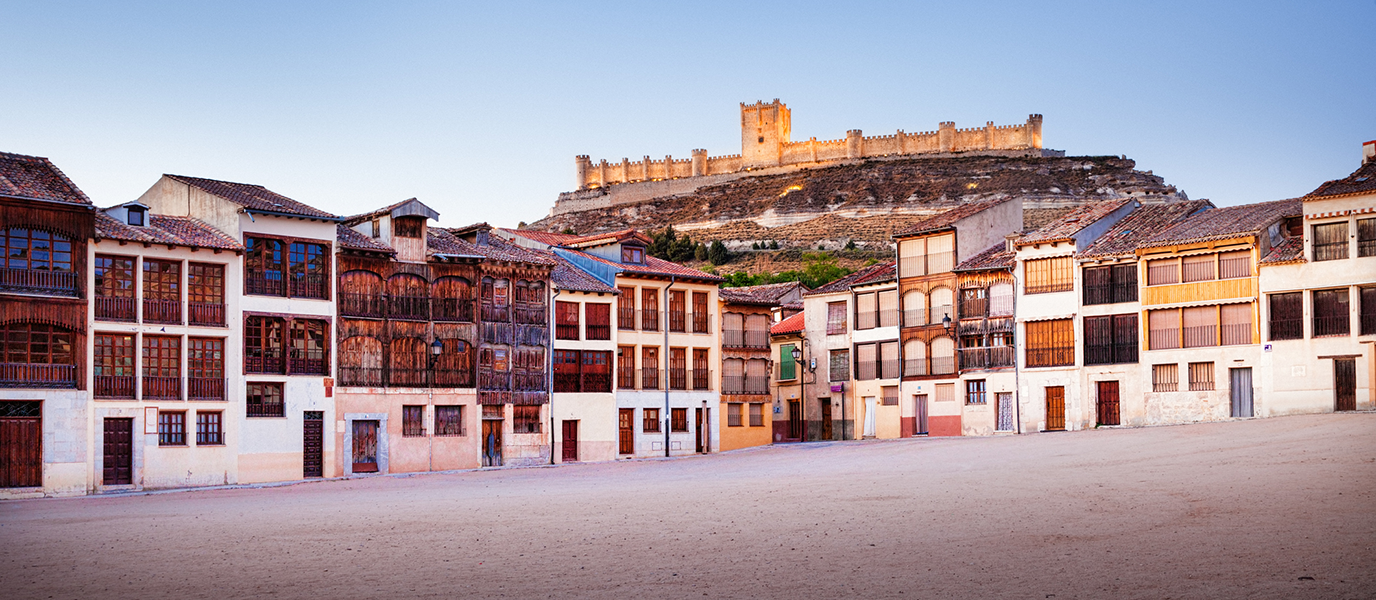
In the Middle Ages, this part of Valladolid was already reserved for bullfighting-related events, which evolved over time. It was not until the nineteenth century, specifically in 1833, when the square was given an octagonal shape, very much in the style of the one in Granada, and became one of the best known in the city. Standing on the sandy ground, you can admire the details of the 48 buildings that surround it and their wooden linteled balconies.
- History of Valladolid’s Plaza del Coso
- Why you should visit the most unusual square in Valladolid and what to see
- What to do in the Plaza del Coso area
History of Valladolid’s Plaza del Coso: a place closely linked to festivities
Evidence of a space in the city associated with this type of fairs and spectacles dates back to the Middle Ages. The current structure, however, was built in 1833, making it the first permanent bullring in Valladolid, with a capacity of 8,000 spectators. Its octagonal design, similar to that of the bullring in Granada and a few others, gave it a very distinctive appearance.
In total, there are 48 buildings that have retained their wooden linteled balconies, which are decorated with arabesque motifs. Most of them were built between the eighteenth and nineteenth centuries specifically for watching bullfighting events. In the 1980s, the bullring began to be converted into residences, for which the boxes were transformed into the homes seen today.
Why you should visit the most unusual square in Valladolid and what to see
The first thing that catches your eye about what was once Valladolid’s first bullring is its octagonal shape, which is very unusual for a Spanish bullring and is a reminder of its final function before it was converted into a residential area. The brick construction of the houses’ façades has been retained and the wooden corridors are reminiscent of a traditional corrala, with a small interior park with trees and benches for resting.
The old balconies of the boxes, where the Valladolid aristocracy used to sit and watch the bullfights, can still be seen today and have since been transformed into an open-air space for the owners of these highly sought-after properties. Although it is very close to Fabio Nelli palace and the rest of Valladolid’s old town, Plaza del Coso remains somewhat hidden and poorly signposted, and is treated almost like a secret place for visitors who want to discover the city.
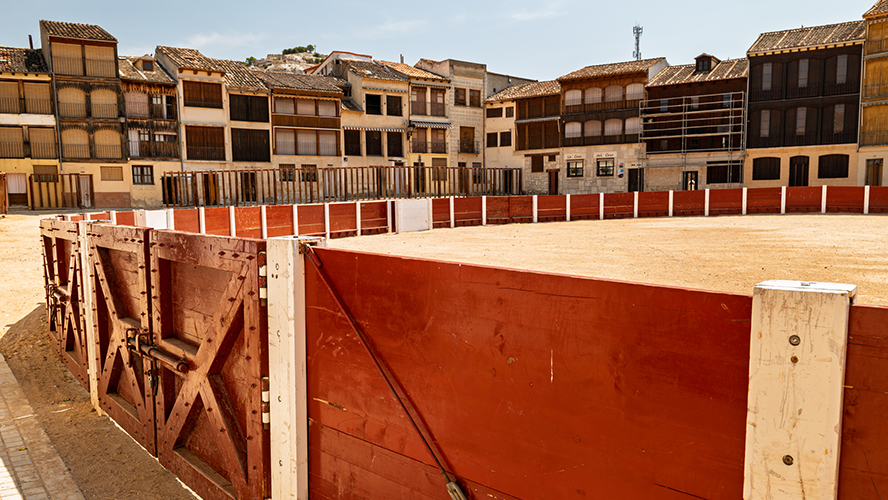
The photos you take on the square are unique due to its shape and how well it is maintained. The square is easy to reach if you enter via Calle San Quirce and Calle San Ignacio. You can also choose to go for tapas in the bars near the Plaza Mayor and its surrounding streets.
What to do in the Plaza del Coso area: surrounded by churches, museums and bars
The first thing to do in Plaza del Coso is to explore its unusual octagonal architecture and enjoy the peaceful atmosphere of this former bullring. Sit on one of the benches next to the trees and admire the wooden balconies, which still bear the marks of their craftsmanship and retain the spirit of those afternoons of festivity. Nearby is the Valladolid Museum, housed in Fabio Nelli palace, which contains archaeological collections of Iberian, Roman and Visigothic artefacts found in the area, as well as fine examples of sacred art and paintings from the sixteenth and eighteenth centuries.
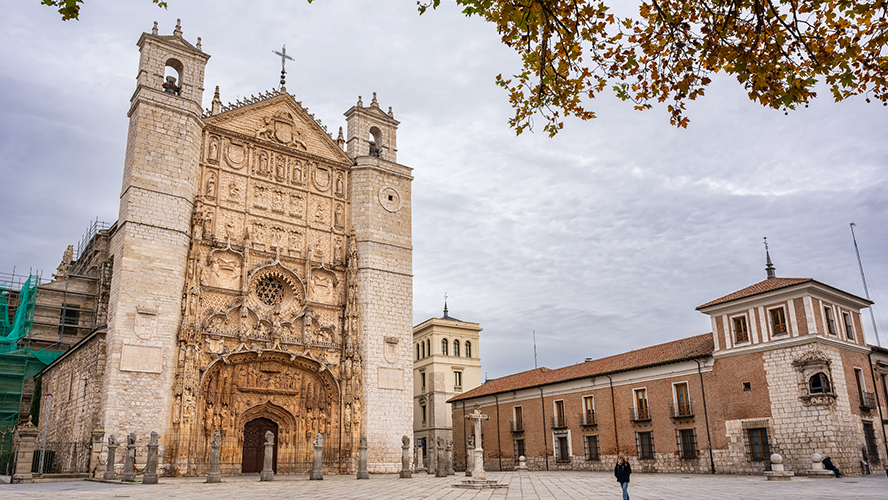
You can also visit San Miguel and San Julián church, one of the city’s most notable churches, with a Baroque façade that is highly praised by visitors. Just a few minutes away is Plaza de San Pablo, which has an impressive façade-altarpiece that is well worth the detour, especially as it is next to the Royal Palace and the lively Plaza Mayor, with its arcades and terraces. Plaza del Coso can also be accessed via Calle de San Quirce, which still has a few small spots where you can have a drink and retains the spirit of traditional Valladolid houses.