

















People usually visit Valladolid for its historic centre, its connection with the Catholic Monarchs or Cervantes’s legacy, but you only need to travel a few kilometres to discover that the true scale of the region lies in its surroundings. Within a radius of barely 70 kilometres, in a landscape shaped by the River Duero and the great pine forests of the plateau, there’s a cluster of towns where international treaties were signed, castles that dominated medieval trade routes and some of the most influential wine-growing landscapes in Spain. The result is a surprisingly diverse territory: from Mudéjar towns and castles that played key roles in dynastic wars to nature reserves where the Duero shapes wetlands full of birds.
- Beautiful villages to visit near Valladolid: historic towns between the Duero and old Castile
- Tordesillas, where Castile and Portugal divided up the planet
- Simancas, home to the famous General Archive of the Spanish monarchy
- Peñafiel, the silhouette of the castle watching over the Ribera
- Medina del Campo, fairs, trade and Castillo de la Mota
- Cigales: underground cellars and wine tradition
- Alaejos, Mudéjar towers among wheat fields
- Wamba, the only village in Spain named after a Visigoth king
- Castles and historic heritage: fortresses that explain the history of Castile
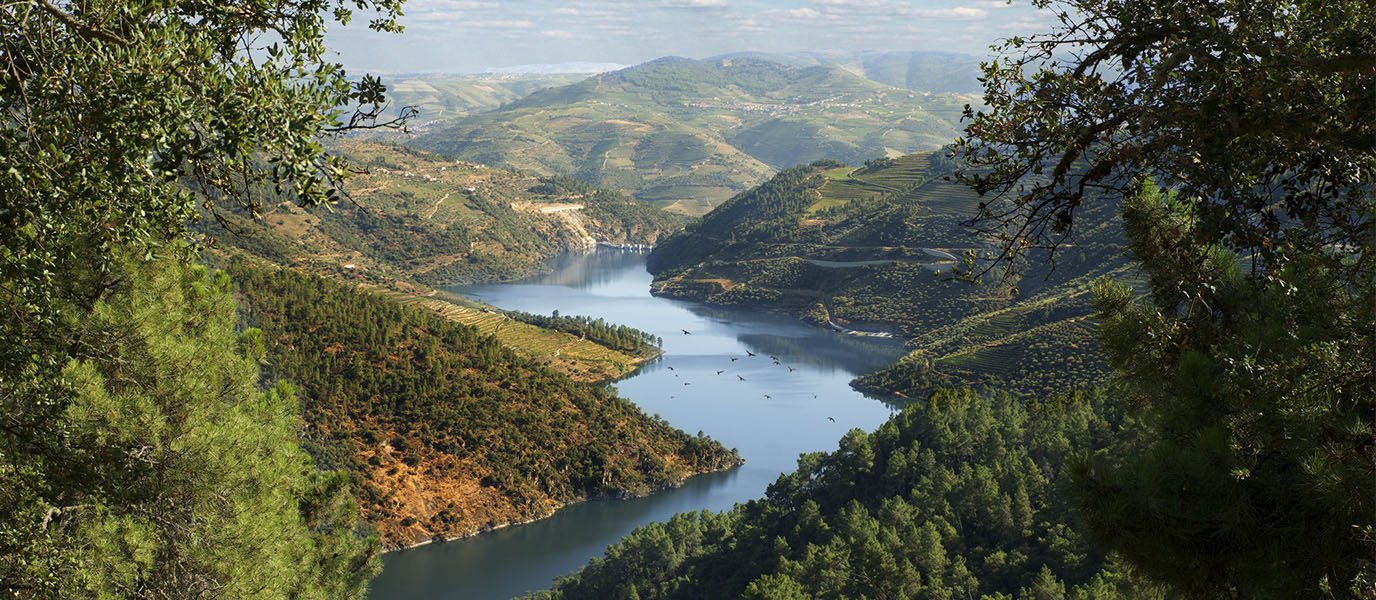
- Nature: landscapes of the Duero and vast pine forests of the plateau
Beautiful villages to visit near Valladolid: historic towns between the Duero and old Castile
Tordesillas, where Castile and Portugal divided up the planet
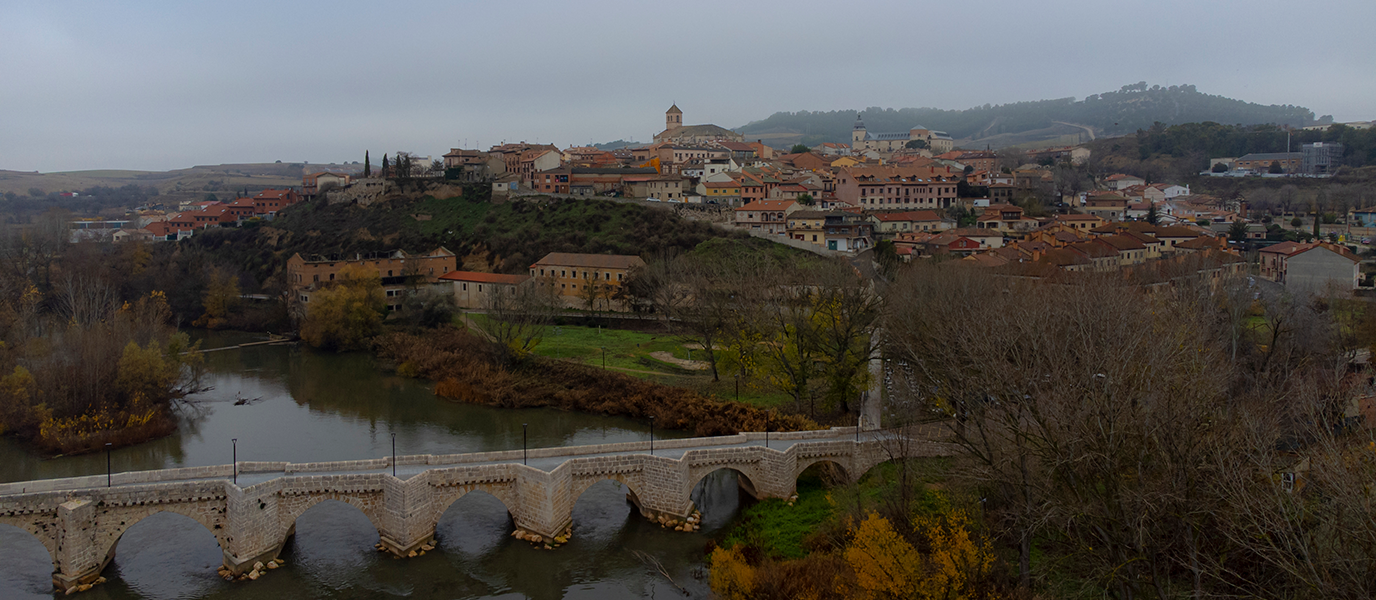
Located about 30 kilometres south-west of Valladolid, Tordesillas occupies a strategic position beside the River Duero. During the Middle Ages, it was an important crossing point between Castile and the west of the peninsula, which explains its political and economic importance. The town is internationally known for the Treaty of Tordesillas of 1494, signed between the crowns of Castile and Portugal to divide the areas of exploration in the New World.
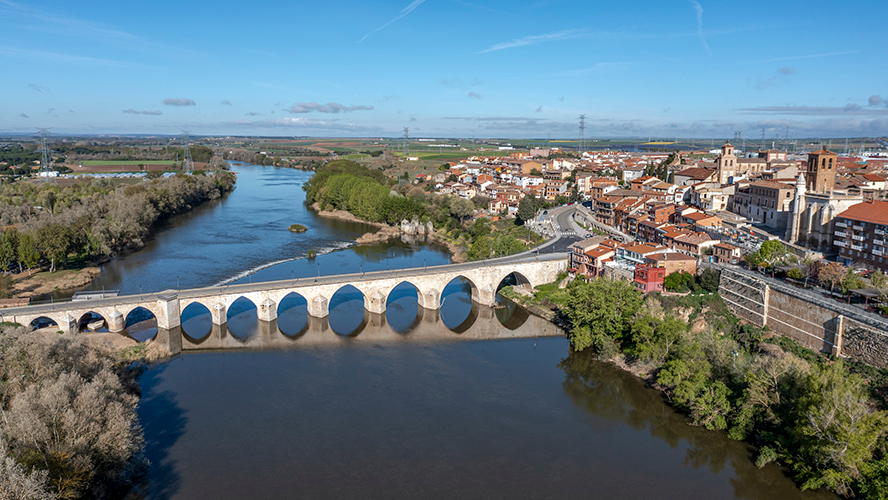
The historic centre preserves porticoed squares, narrow streets and several monumental buildings. Highlights include the Casas del Tratado, where the agreement was signed, and the Monastery of Santa Clara, one of the most important Mudéjar ensembles in Castile and León, linked to a tragic figure in Spanish history: Juana I of Castile, known as Juana la Loca. The queen spent almost half a century confined in the monastery under constant surveillance, making Tordesillas one of the most dramatic settings of the Castilian monarchy. The medieval bridge over the Duero completes the visit, offering a good view of the town and the river landscape around it.
Simancas, home to the famous General Archive of the Spanish monarchy
Simancas lies just 13 kilometres from Valladolid and is virtually part of its metropolitan area. However, its history makes it one of the most important sites in Castilian historic heritage. The town is dominated by Simancas Castle, a 15th-century fortress later transformed into the seat of the General Archive of Simancas.
This archive is one of the most important archival centres in Europe for the study of the Spanish monarchy. Inside, millions of documents relating to the administration of the territories of the Spanish empire are preserved. The town centre retains its medieval layout, with arcaded squares, stone houses and a parish church that dominates the skyline.
Peñafiel, the silhouette of the castle watching over the Ribera
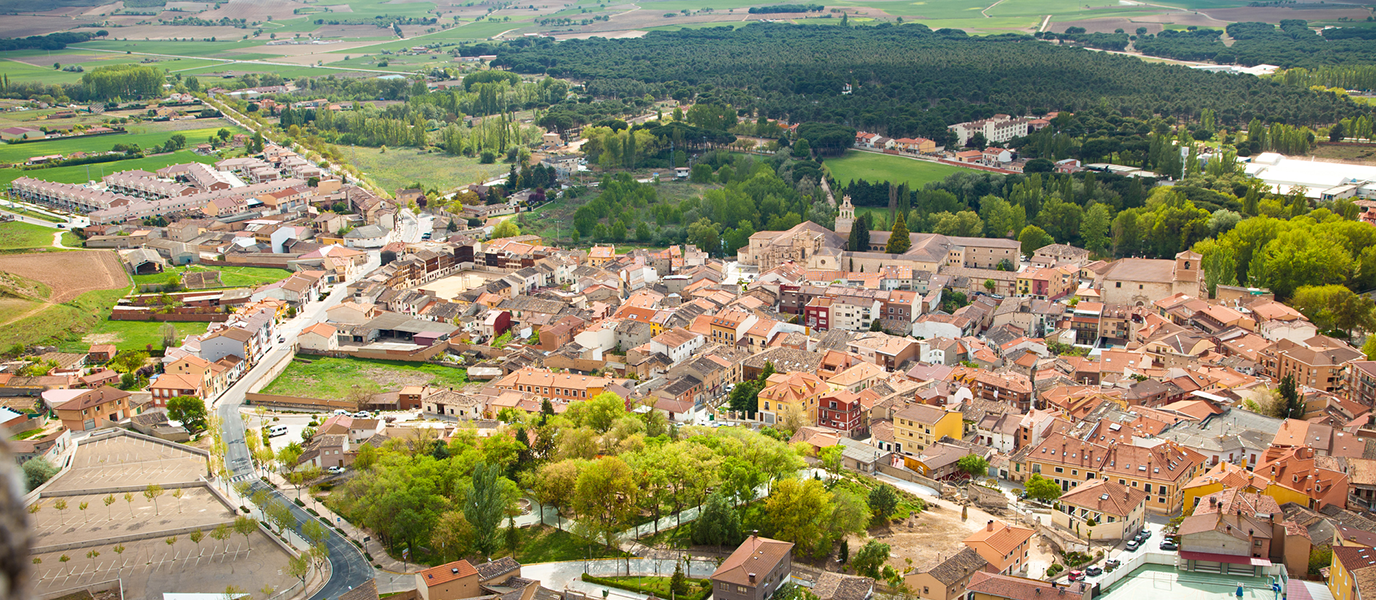
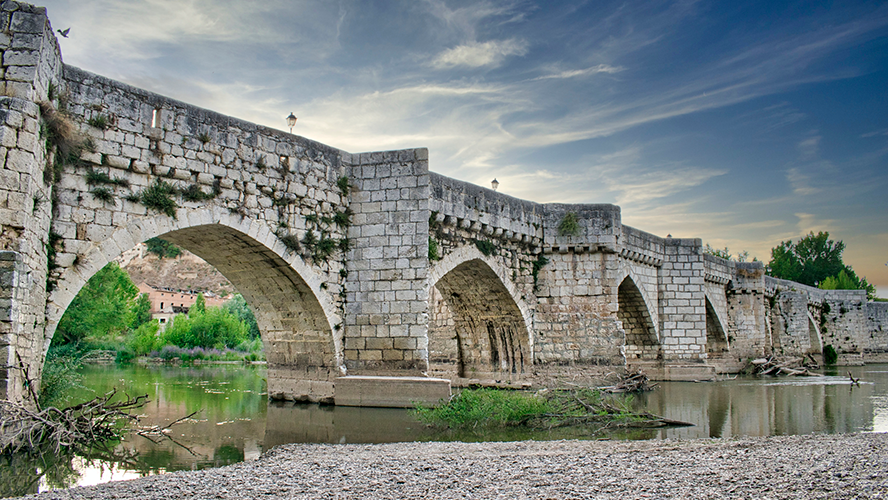
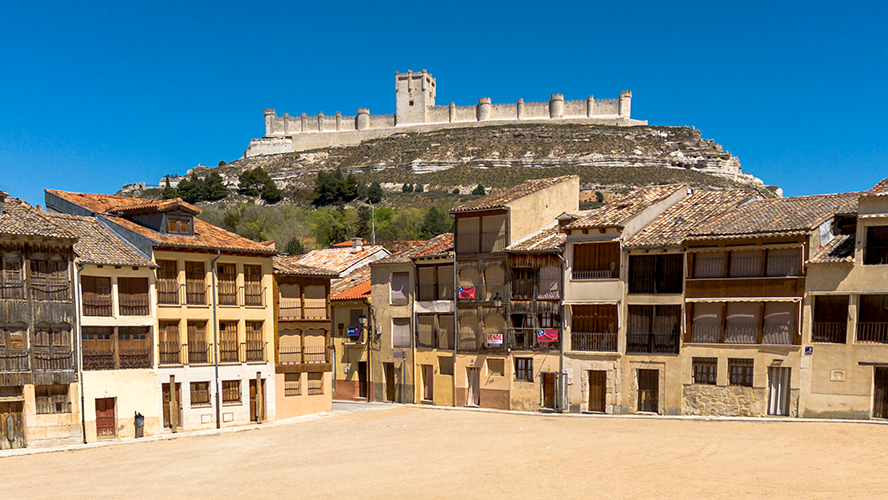
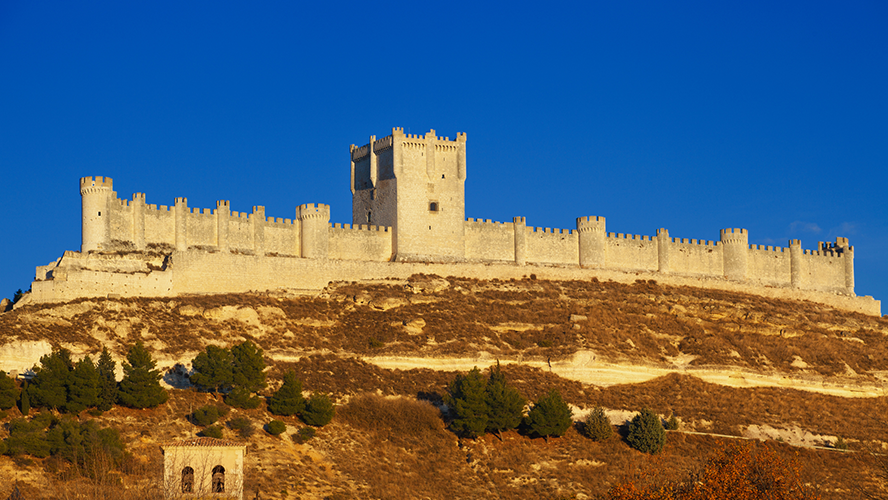
Peñafiel lies in the heart of Valladolid’s Ribera del Duero, about 55 kilometres from the capital. The town stretches at the foot of a long rocky ridge crowned by Peñafiel Castle, one of the most spectacular fortresses in Castile. Its elongated silhouette resembles a stone ship dominating the valley’s landscape.
As well as the castle, which houses the Provincial Wine Museum, Peñafiel preserves an interesting historic centre with Plaza del Coso, a medieval main square traditionally used for bullfighting celebrations. The streets descending towards the River Duratón are lined with traditional wine cellars carved into the rock.
Medina del Campo, fairs, trade and Castillo de la Mota
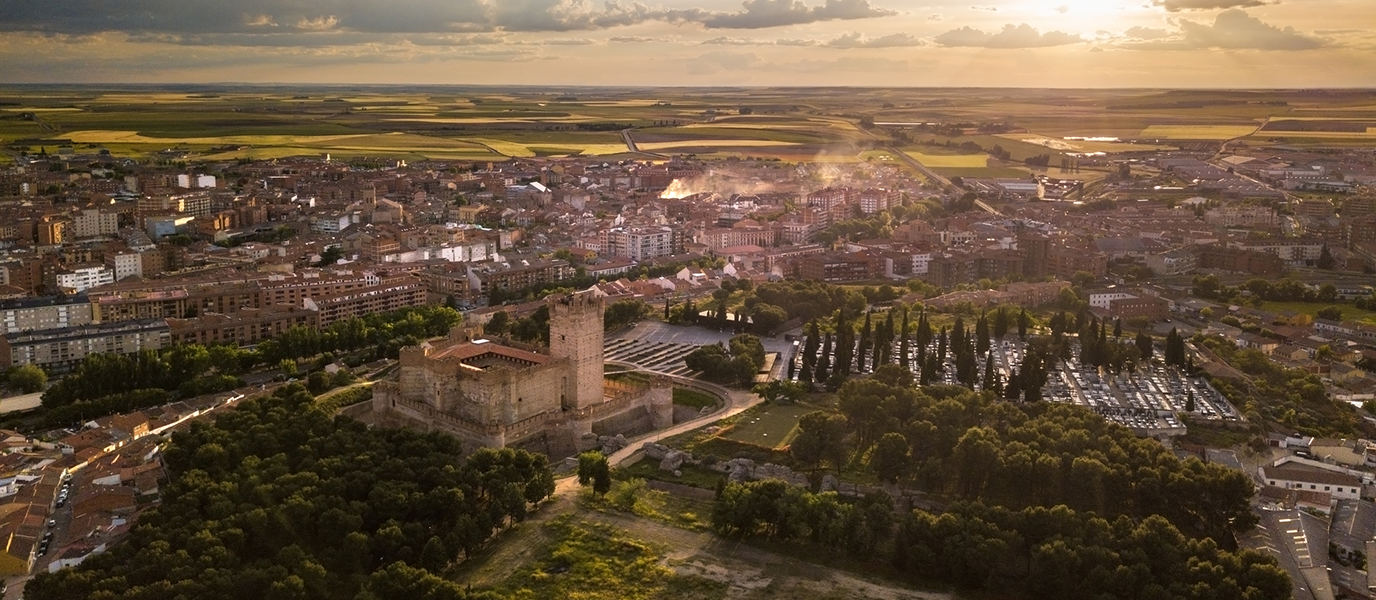
Medina del Campo was one of the most important commercial cities in Castile during the 15th and 16th centuries. Located about 50 kilometres from Valladolid, its development was linked to the great trade fairs that attracted merchants from across Europe.
The town’s main symbol is Castillo de la Mota, a large red-brick fortress dominating the town from a nearby hill. Medina also preserves Plaza Mayor de la Hispanidad, one of the largest public squares in Spain, surrounded by arcades and historic buildings. Walking through its streets reveals the town’s economic importance during the reign of the Catholic Monarchs. In fact, Queen Isabella the Catholic died here in 1504.
Cigales: underground cellars and wine tradition
Cigales lies just 13 kilometres north of Valladolid and is best known for its winemaking tradition. The town gives its name to a designation of origin historically associated with Castile’s rosé wines, although in recent decades high-quality reds have also been produced.
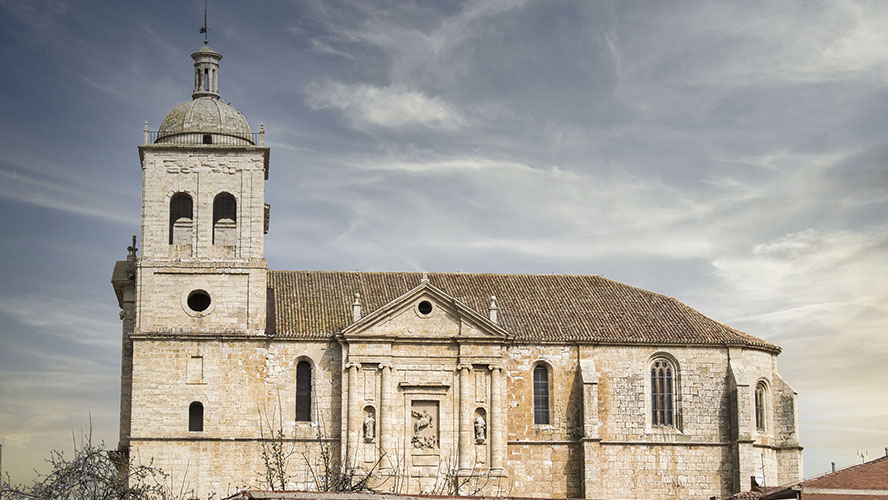
The town centre stands out for the church of Santiago Apóstol, an enormous Renaissance church built in stone, remarkable for its size relative to the town itself. Beneath the town there’s also a network of underground cellars, excavated over centuries to preserve wine.
Alaejos, Mudéjar towers among wheat fields
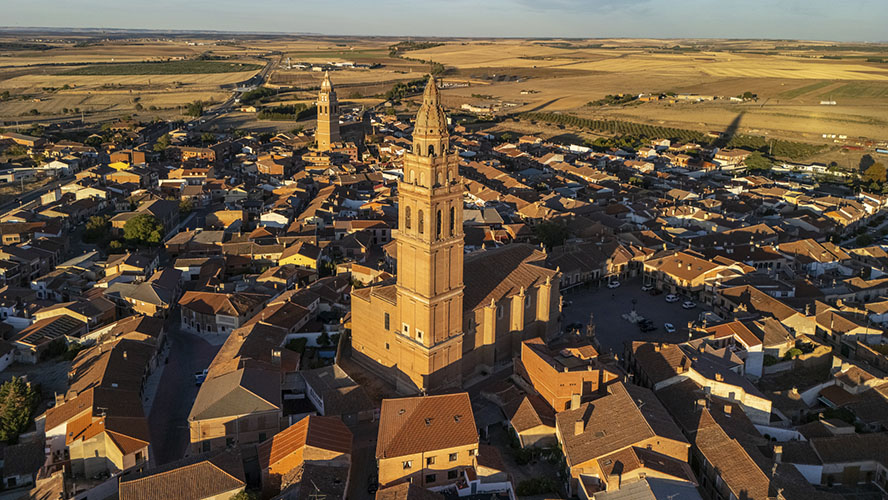
Alaejos surprises with the wealth of monuments it has for such a relatively small town. During the 16th and 17th centuries, it was an important agricultural and commercial centre, which allowed several large churches to be built.
The best known ones are San Pedro and Santa María, two churches combining Renaissance and Baroque elements with structures rooted in the Mudéjar tradition. Their towers dominate the town skyline, visible from the cereal fields surrounding the settlement.
Wamba, the only village in Spain named after a Visigoth king
Wamba is a historic rarity. Its name comes from the Visigoth king Wamba, who ruled Visigothic Hispania in the 7th century. According to tradition, the monarch was proclaimed king near the present-day village in 672, which is said to have given the village its name.
Beyond that historical curiosity, Wamba is known for its church of Santa María, of pre-Romanesque and Romanesque origin, one of the few churches preserving elements of Visigothic architecture in Castile and León. The building was later enlarged by the Order of Saint John of Jerusalem and includes a highly unusual medieval ossuary where hundreds of human skulls and bones are arranged in niches.
Castles and historic heritage: fortresses that explain the history of Castile
Fuensaldaña Castle, a 15th-century noble fortress
Fuensaldaña Castle lies just 15 kilometres from Valladolid and is one of the best-preserved examples of 15th-century military architecture in the region. Built by the Vivero family, the fortress formed part of the defensive system protecting the territories of the Castilian nobility.
The keep dominates the complex and offers a highly recognisable silhouette from afar. For decades, the castle was the seat of the Cortes of Castile and León, giving it a new institutional life. Today, part of it can be visited, offering insight into how these fortified noble residences worked.
Castillo de la Mota, the great fortress of the Catholic Monarchs
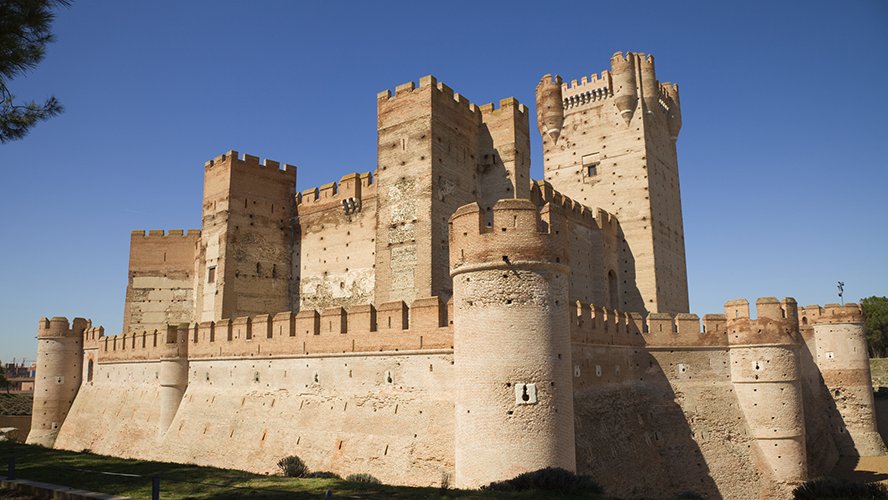
Castillo de la Mota, in Medina del Campo, is one of the most impressive fortresses in Spanish military architecture. Built mainly in the 15th century, its brick structure and defensive system with a moat, stepped walls and towers reflect the evolution of military techniques of the time.
The castle is closely linked to Isabella the Catholic, who used it as a royal fortress. Throughout its history it also served as a prison for illustrious figures, including Cesare Borgia. Today, the monument can be explored through guided visits that allow you to discover courtyards, towers and underground galleries.
Peñafiel Castle, a stone ship above the valley
Peñafiel Castle is probably the most iconic fortress in the province of Valladolid. Built on a narrow rocky ridge more than 200 metres long, its elongated shape makes it unique in Iberian military architecture.
Inside is the Provincial Wine Museum, which offers insights into the historic relationship between the region and winegrowing. From the walls there are also panoramic views over the Duero valley and the vineyards that define this region.
Nature: landscapes of the Duero and vast pine forests of the plateau
Ribera del Duero, tempranillo, vineyards and some of Spain’s most influential wineries
Ribera del Duero is one of the most characteristic landscapes in the province of Valladolid. The river crosses a broad strip of limestone and clay soils where tempranillo grapes, known locally as tinta del país, are mainly grown, providing the foundation for some of the country’s most prestigious red wines.
Across the valley are historic and contemporary wineries that have given the designation of origin international prestige. Among the most influential are Vega Sicilia, considered one of Spain’s most iconic wineries, as well as Pesquera, Protos and Emilio Moro. Many offer visits and tastings that help explain how the plateau’s extreme climate and the valley soils influence the character of the wines.
Pinar de Antequera, Valladolid’s great forest
Pinar de Antequera is one of the largest and best-known natural spaces around Valladolid. Located south of the city, this vast pine forest offers kilometres of woodland tracks ideal for walking, cycling or simply switching off from the urban environment.
For decades, the pine forest has been a regular leisure space for people from Valladolid. Its picnic areas, shady spots and broad paths make it very accessible for all kinds of visitors.
Riberas de Castronuño Nature Reserve, wetlands and birds on the Duero
The Riberas de Castronuño-Vega del Duero Nature Reserve protects one of the best-preserved stretches of river in the province. This natural area contains wetlands, riverside woodland and a wide variety of bird species.
The area has marked routes and wildlife viewpoints that allow you to discover the Duero ecosystem at a leisurely pace. It’s an especially interesting destination for those who enjoy gentle hiking routes or birdwatching.