














































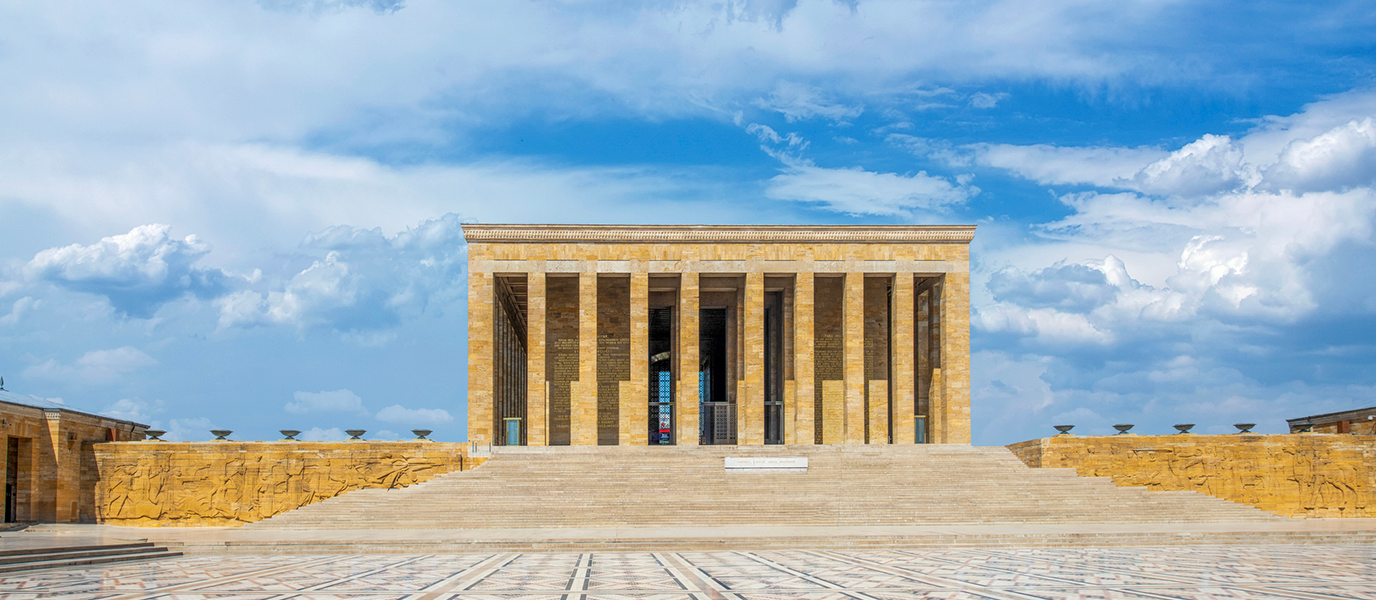
In the heart of Ankara, Anıtkabir rises as a monument to the memory of Mustafa Kemal Atatürk, the strategist and reformer who turned Turkey into a modern, secular republic. More than a mausoleum, this monumental complex reflects the vision of a leader who abolished the sultanate, championed education and laid the foundations for a forward-looking nation. Its grand architecture and profound symbolism make Anıtkabir an unmissable stop for anyone wanting to understand the history and spirit of Turkey.
- History and significance: Anıtkabir, beacon of the Turkish Republic
- Why visit the Atatürk Mausoleum: a journey into the soul of modern Turkey
- Useful information for your visit: plan your trip to Anıtkabir
History and significance: Anıtkabir, beacon of the Turkish Republic
Mustafa Kemal Atatürk, born in 1881 in Thessaloniki, then part of the Ottoman Empire, was the architect of modern Turkey. As a military leader, he commanded the Turkish resistance in the First World War and led the War of Independence (1919-1922), which culminated in the abolition of the already crumbling sultanate and the proclamation of the Republic in 1923.
During his presidency, he spearheaded reforms that transformed the country: he adopted the Latin alphabet, established a secular education system, granted women rights, banned the compulsory wearing of the fez and promoted industrialisation. His modernising vision redefined Turkey, turning it into a secular, sovereign state. When he died in 1938, the Turkish people felt the need to create a monument that would reflect his enduring legacy and serve as his final resting place.
The choice of location for Anıtkabir was no coincidence. A prominent hill in Ankara, known as Rasattepe, was selected so the mausoleum could be seen from many points across the city, symbolising Atatürk’s everlasting guidance for his people. In 1941, an international design competition was held, with the winning project being submitted by Turkish architects Emin Onat and Orhan Arda. Construction began in 1944 and, after overcoming various technical and logistical challenges, was completed in 1953.
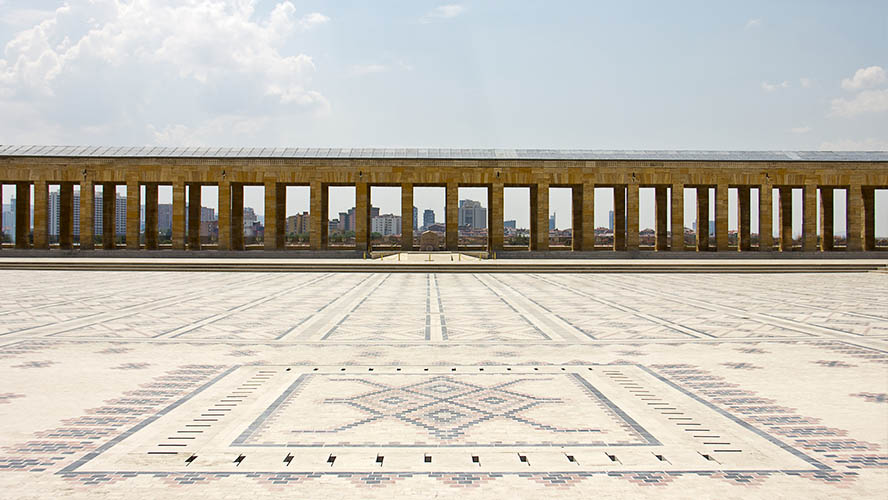
Anıtkabir is more than a mausoleum; it’s a complex featuring several symbolic structures and spaces. The Lions’ Road, flanked by 24 statues of Hittite lions, leads visitors to the Ceremonial Plaza, a vast open area that can accommodate thousands during official ceremonies. The Hall of Honour, where Atatürk’s remains lie, impresses with its solemnity and grandeur, reflecting the essence of the leader it honours.
Why visit the Atatürk Mausoleum: a journey into the soul of modern Turkey
Visiting Anıtkabir is essential to understanding the identity and spirit of modern Turkey. The mausoleum is not only a place of eternal rest, but also a space that captures the history, culture and values of a nation.
The Atatürk and War of Independence Museum, located within the complex, offers a detailed look at the leader’s life and the birth of the republic. Through displays of personal belongings, historical documents and recreations of key events, visitors can immerse themselves in the period of transformation Turkey underwent in the early 20th century.
Anıtkabir’s architecture blends influences that reflect Turkey’s rich cultural heritage. Elements of Hittite, Phrygian and Turkish architectural styles come together in a design that, while monumental, conveys balance and harmony. Every detail, from the reliefs depicting scenes from the War of Independence to the inscriptions of Atatürk’s speeches, is crafted to inspire pride and resilience in the Turkish people.
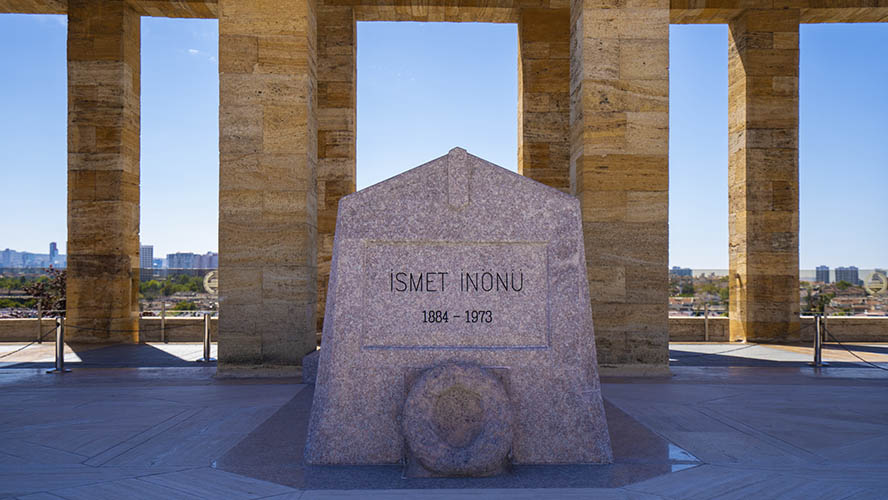
Useful information for your visit: plan your trip to Anıtkabir
Anıtkabir is open to the public every day of the year, and entry is free. Opening hours are usually from 9:00 a.m. to 5:00 p.m., though these may vary with the season, so it’s best to check in advance.
The site offers excellent facilities for visitors, including rest areas, cafés and souvenir shops. It’s worth setting aside at least two hours to explore the mausoleum, museum and surrounding gardens at a relaxed pace.
There are several public transport options to reach Anıtkabir from central Ankara. Bus and metro lines provide easy access to the mausoleum, and you can also get there by taxi. Thanks to its central location, Anıtkabir fits easily into any sightseeing itinerary.