
















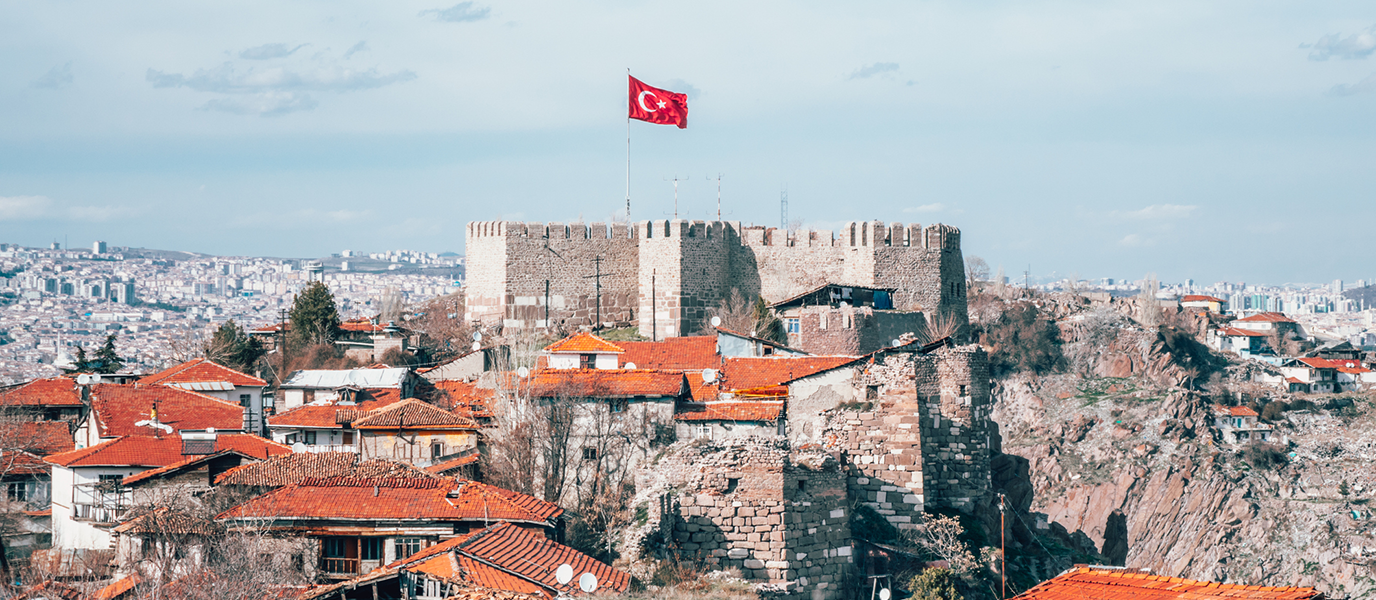
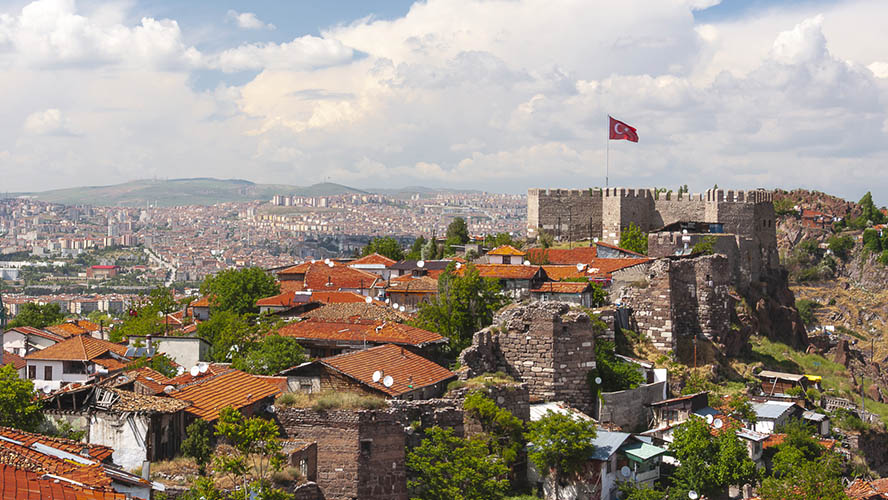
Standing on the city’s highest hill, Ankara Castle is so much more than a simple medieval fortress: it is a reflection of the melting pot of civilisations that have ruled Anatolia over thousands of years. This imposing, walled complex has witnessed the passage of Hittites, Romans, Byzantines, Seleucids and Ottomans, each of which has left its own stamp on the castle’s architecture and on the history of the city. Its structure, which has been strengthened and extended down the centuries, offers a fascinating journey back in time, with panoramic views that take in the entire Turkish capital, revealing the contrast between the historic quarter, with its minarets and red-roofed houses, and the growing modernity of the metropolis. To stroll along its narrow, cobbled streets and explore its imposing walls is to step into a past of conquests and transformations that have shaped modern Ankara.
- The history of Ankara Castle: a witness to the rise and fall of civilisations, from the Hittites to the Ottomans
- The Castle’s location and what you will see: exploring the fortress and its surroundings
- Information for visitors: what you need to know before you visit
The history of Ankara Castle: a witness to the rise and fall of civilisations, from the Hittites to the Ottomans
The foundations of Ankara Castle are sunk deep into a history dating back over 3,000 years. Although the castle’s exact origins remain cloaked in mystery, it is known that the Hittites established the first settlements on the hill, taking advantage of its strategic position to defend the area. Later, with the arrival of the Phrygians and the Lydians, the fortification began to take shape, but it was the Romans who, in the second century A.D., built the earliest stone walls with an organised structure for the defence of the city.
During the Byzantine period, and particularly in the seventh and ninth centuries, the castle was strengthened with taller and thicker walls, designed to resist attacks by the Arabs and Persians that threatened the stability of the Empire. The impressive square towers that can be seen today mostly date from this phase of the castle’s construction. However, the fortress could not avoid falling to the Seleucids in the eleventh century. They added architectural elements typical of their particular style, transforming the castle into a bastion fit for their new military strategies.
Ottoman rule, established in the fourteenth century, brought with it a new era for the castle. Although the fortress’s defensive function was losing importance with the development of more advanced artillery, its role as a symbol of Ottoman power in Ankara remained strong. Inside the citadel, the wooden houses that still survive are a reminder of life in Ottoman Ankara, where the castle was not merely a military enclave, but also the heart of the community. Merchants, craftsmen and soldiers inhabited its streets, creating a microcosm within the thick, stone walls.
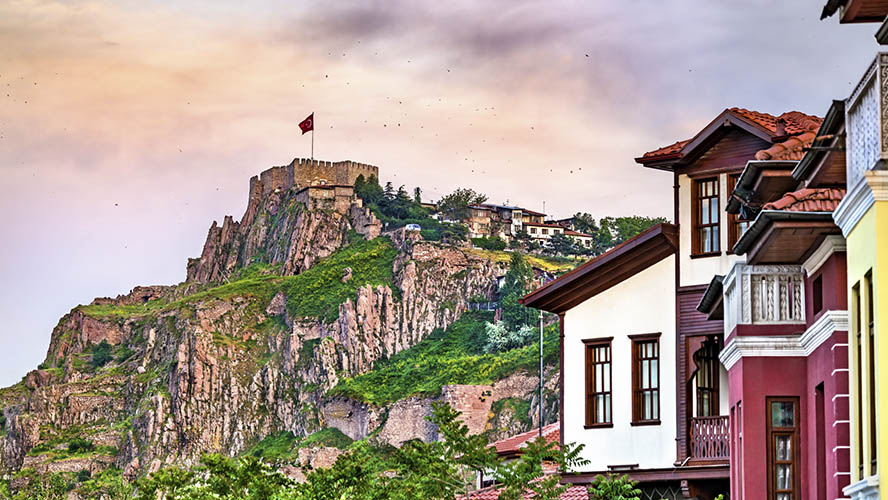
Despite wars and the passage of time, the fortress has remained standing, and has undergone restorations that have enabled it to preserve its essence and its heritage value. These days, Ankara Castle is not just a reminder of its military past: it has become one of Ankara’s most important historic symbols.
The Castle’s location and what you will see: exploring the fortress and its surroundings
Ankara Castle stands on a hill in the Altındağ district, dominating the city’s horizon. Its strategic position offers one of the finest panoramic views of Turkey’s capital city, making the climb up to its walls an essential experience for every traveller.
The structure is divided into two main sections: the inner citadel and the outer citadel. The inner part, which is also the oldest and best preserved, includes the original walls and defensive towers that have resisted the passage of the centuries. Here stands the main tower, from the top of which you can see unrivalled views of Ankara, with its historic and modern neighbourhoods spreading outwards in all directions.
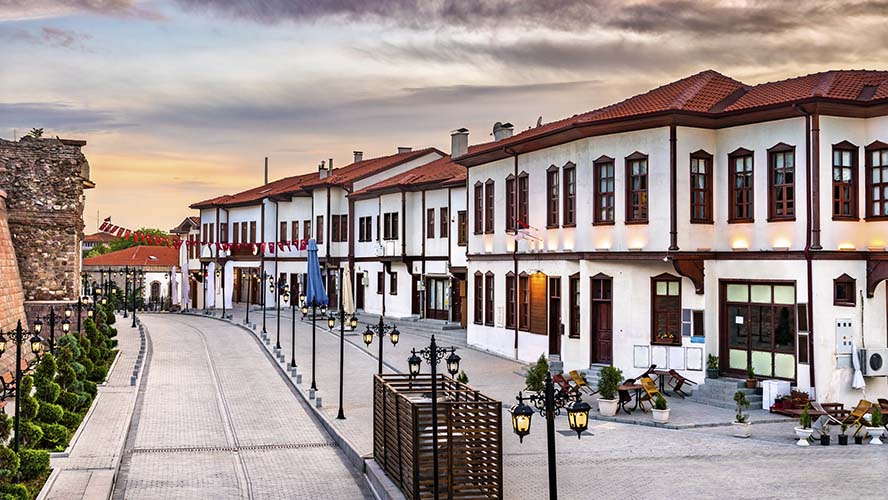
As visitors move through the complex, they will find cobbled streets lined with wooden houses dating from the Ottoman period, many of which have been restored and converted into charming snack bars and craft shops. Within the castle, there are several other interesting historic buildings, such as a small mosque from the Seleucid period, old cisterns used to store water in times of siege, and the remains of Roman inscriptions reused in the construction of the walls, a testament to the eclectic nature of Turkey’s architecture throughout its history.
Very close to the castle, in the Hamamönü district, you can explore former Ottoman residences that have been restored, as well as the Museum of the Civilisations of Anatolia, one of the country’s most important museums, whose exhibits include archaeological treasures ranging from the Hittite age up until the Ottoman period.
Information for visitors: what you need to know before you visit
In order to get the most from a visit to Ankara Castle, it is advisable to wear comfortable footwear, as the slope leading up to the complex is steep, and the cobbled streets can be slippery. The best time to visit is at sunset, when golden sunlight transforms the stones of the fortress and the views of Ankara are tinged with warm hues.
Admission to the castle is free, and although there is not a great deal of signage, the exploration of the walls and passageways is a unique experience for those who enjoy discovering historic nooks and crannies at their own pace. In addition, in the area around there are lots of traditional cafés where you can enjoy a cup of Turkish tea accompanied by baklava or some other local treat while you enjoy the atmosphere of the historic quarter.
If you are interested in delving into the history of the place, the best plan is to combine your visit with a tour of the Museum of the Civilisations of Anatolia, which is just a short distance away. This museum complements the experience of exploring the castle, providing context on the towns and villages that left their mark on Ankara down the centuries.