
























Beyond its political and administrative role, Ankara conceals a world of commercial tradition that thrives in its markets and bazaars. In its cobbled streets and covered passageways, history mingles with the hustle and bustle of bargaining, the aromas of spices and the gleam of metals crafted by skilled artisans. From ancient Ottoman caravanserais to weekly markets where local producers offer the best from Anatolia, strolling through these areas is entering the true heart of the city, where every stall tells a story and every purchase is a piece of its identity.
- Markets and bazaars in Ankara: the most authentic shopping areas
- Things to buy in Ankara: a range of traditions and flavours
- Recommendations and tips: browsing Ankara’s markets
Markets and bazaars in Ankara: the most authentic shopping areas
Suluhan Çarşısı: the 16th century caravanserai converted into a bazaar
One of Ankara’s most iconic markets is Suluhan Çarşısı, also known as Hasanpaşa Han. This historic caravanserai, built between 1508 and 1511 by Hasan Pasha, has witnessed centuries of trade and social activity. Located about 400 metres south-east of Ulus Square in the Hacıdoğan neighbourhood, Suluhan is a two-storey building with two courtyards surrounded by arcades, housing 102 rooms that originally served as lodgings and shops for merchants.
Today, Suluhan Çarşısı has been restored and houses a variety of stores selling everything from local handicrafts to jewellery and textiles. Strolling through its corridors is like travelling back in time, as you discover small workshops where artisans work with copper and silver, perpetuating ancestral trades. In the centre of the courtyard, there are several cafés which provide traditional Turkish tea so that visitors can relax and absorb the site’s historical atmosphere, imagining the times when caravans stopped there to rest and trade.
Çıkrıkçılar Yokuşu: the hill where antiques come to life
Also located in the Ulus neighbourhood, Çıkrıkçılar Yokuşu is a steep street known as Ankara’s antique hotspot. Its name, which means ‘Weavers’ Road’, reflects the area’s craft tradition. Along this cobblestone street, there are antique shops that have a large range of antique objects, from traditional carpets and kilims, to Ottoman furniture, coins and rare books.
Each shop is a small museum, and the shopkeepers, passionate connoisseurs of history, are always willing to share the stories behind each item. It is the ideal place for collectors and those who want to bring back home a piece of Turkish history. The bohemian atmosphere of Çıkrıkçılar Yokuşu, with its narrow streets and historic buildings, invites you to lose yourself and find hidden treasures on every corner.
Samanpazarı, one of the oldest markets in Ankara
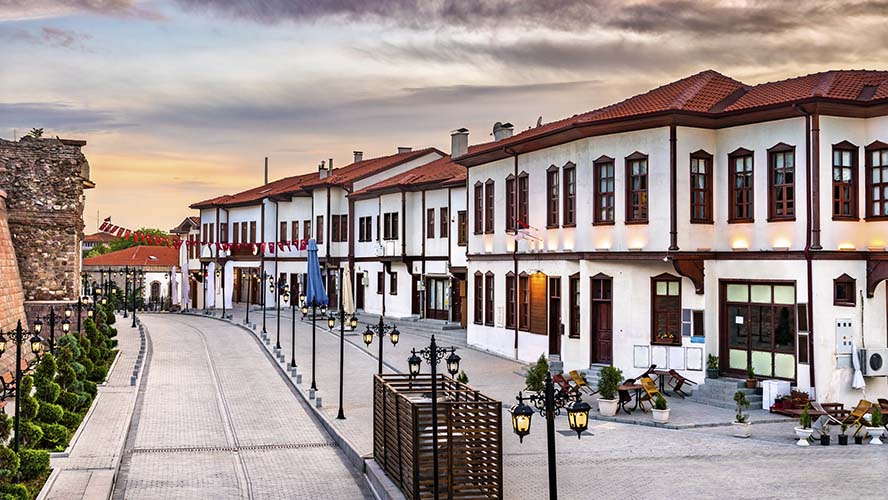
Adjacent to Çıkrıkçılar Yokuşu, the Samanpazarı neighbourhood is another historic commercial site in Ankara. Once known as the city’s hay market, today it is a vibrant centre where traditional and modern shops coexist. The cobbled streets are dotted with shops selling everything from textiles and ceramics to traditional musical instruments.
Samanpazarı is also famous for its artisan workshops producing copper and brass items, keeping alive a tradition that goes back centuries. Visitors can watch the artisans at work, hammering and shaping metals to create unique pieces. The area also has cosy cafés and restaurants where you can try the region’s typical dishes so that your visit is a well-rounded experience that combines shopping, culture and gastronomy. The only downside of this market is the steep slope on which it is located.
Bakircilar Çarşısı: where copper glows in the heart of Ankara
Known as the ‘Coppersmiths’ Bazaar’, Bakircilar Çarşısı is the place to buy copper products in Ankara. Located near Ankara Castle, this market is a maze of stores and workshops where copper shines in all its forms, from kitchen utensils to elaborate lamps and decorative objects.
The tradition of coppersmithing is an integral part of Turkish culture, and at Bakircilar Çarşısı this heritage is kept alive. The sounds of hammering resonate in the air as artisans shape their creations, using techniques passed down through generations. For travellers interested in authentic crafts and taking home unique pieces, this bazaar is a must-see.
Things to buy in Ankara: a range of traditions and flavours
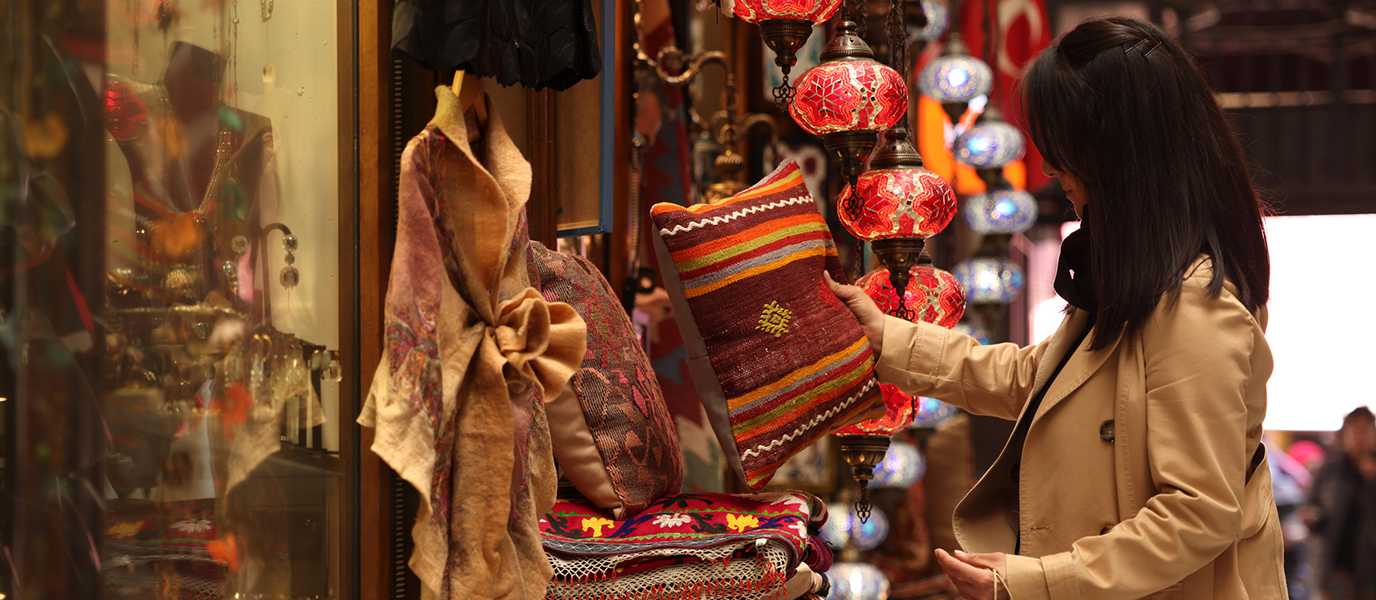
Ankara has a large range of products that capture Turkey’s essence. Among the most sought-after are carpets and kilims. These hand-woven pieces are renowned for their quality and intricate designs that tell ancient stories and traditions. Although carpets can be a significant investment, their durability and beauty make them priceless keepsakes.
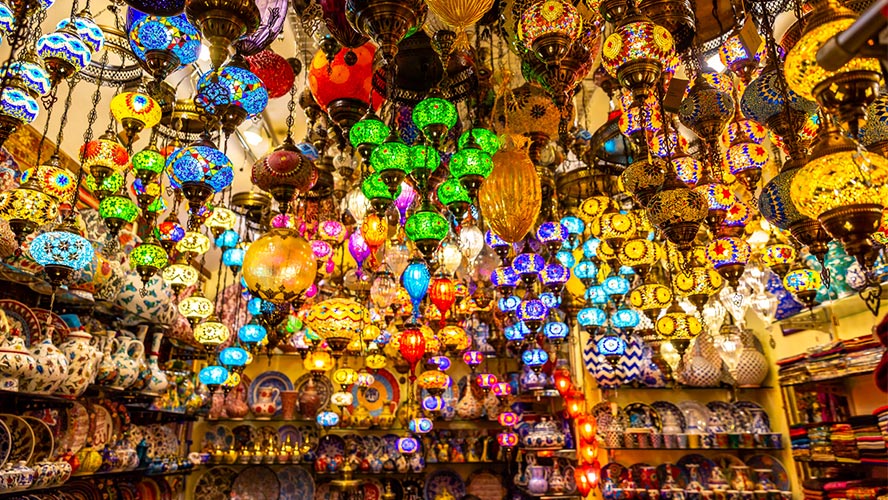
Turkish lamps are another iconic item. Characterised by their colourful glass mosaic, the lamps add a warm, oriental touch to any space. Available in various shapes and sizes, they are a popular choice for visitors wishing to take a piece of Turkish aesthetics back home with them.
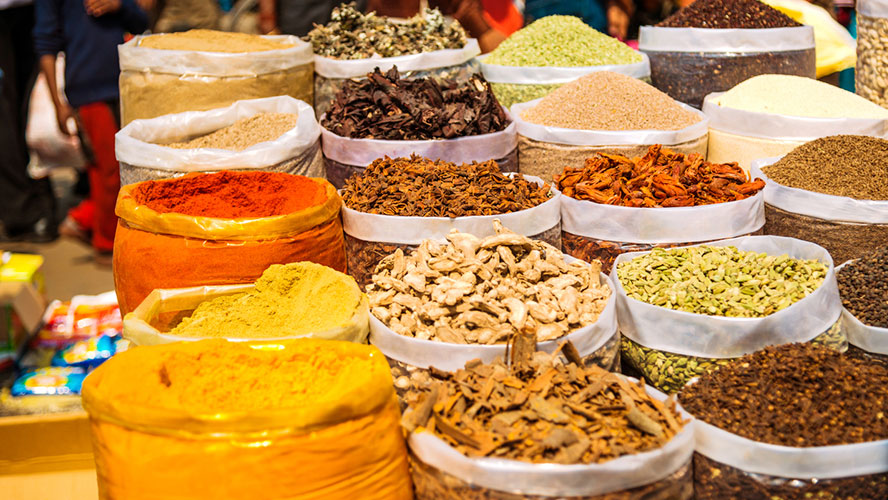
For foodies, Ankara’s markets offer a variety of spices, nuts and traditional confectionery. Saffron, cumin and paprika are essential ingredients in Turkish cuisine and can be bought fresh in local bazaars. Lokum (Turkish delight) and baklavas are sweet treats that will satisfy any palate and are perfect for sharing with friends and family back home.
Also, silver and copper jewellery, made using traditional techniques, is highly appreciated. Items such as bracelets, necklaces and earrings reflect local craftwork and are lasting souvenirs of your visit to Ankara.
Recommendations and tips: browsing Ankara’s markets
When exploring Ankara’s markets and bazaars, it is essential to keep a few recommendations in mind to ensure a satisfactory experience.
Bargaining is a common practice at Turkish bazaars. Traders expect buyers to negotiate the price, so you should start by offering about half the initial price and adjust from there. The key is to maintain a respectful and friendly attitude throughout the process.
When buying products such as carpets or jewellery, remember to verify their authenticity. Do not hesitate to ask the seller about the origin and materials used. In the case of carpets, requesting a certificate of authenticity can be a good practice.
Most markets and bazaars in Ankara operate from Monday to Saturday, usually from 9:00 a.m. to 7:00 p.m. Nevertheless, always check the specific opening hours of each market since they may vary. Also, some markets may be closed on religious or national holidays.
Although many traders in tourist areas speak basic English, learning a few phrases in Turkish can enrich the experience and make communication easier. Gestures such as greeting with ‘Merhaba’ (hello) or thanking with ‘Teşekkür ederim’ (thank you) are appreciated.
While some establishments accept credit cards, you should carry Turkish lira in cash to facilitate transactions, especially in the more traditional markets.