
_435x320?&)

All inclusive

Rooted in vibrant Balkan tradition and shaped by a rich history as a crossroads of cultures, Bulgaria’s generous, wholesome and deliciously unfussy food is a feast for the senses. Find out what’s on the menu with our taster of the best Bulgarian dishes

Food in Bulgaria often comes as a tasty surprise to travellers who are fans of gastronomy. Fertile plains and vineyards, extensive mountainous regions and a Black Sea coast mean Bulgarian cuisine is built around fresh vegetables, signature dairy products, slow-cooked stews, delectable seafood and fine filo pastries. Bulgarian cooking is unmistakably Balkan but also bears the hallmarks of centuries of influence from neighbouring Greece and Turkey, as well as the wider culinary traditions of the Ottoman Empire.
Meals are hearty rather than fussy, with simple, honest ingredients forming the bedrock of Bulgarian food culture. With a glass of local wine or a shot of rakia or mastika at the table, you’ll have all you need for the essential Bulgarian dining experience.
If there’s one dish that serves as the perfect introduction to the cuisine, it’s Bulgarian Shopska salad. Considered a culinary symbol of the country, it delivers a refreshing combination of tomatoes, cucumber, onion and peppers, topped with grated or crumbled sirene, a white brined cheese not unlike feta. Often served as a starter or a side with grilled meat, the salad’s colours mirror those of the Bulgarian flag.
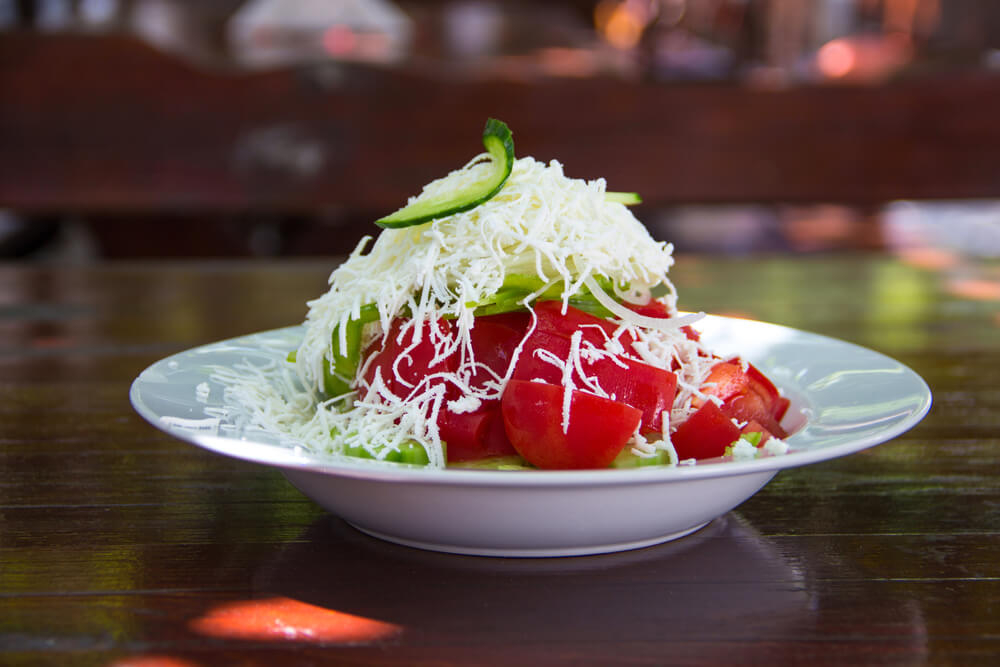
Shopska salad is a culinary symbol of Bulgaria
In the summer months, look out for tarator, a cold yoghurt and cucumber soup flavoured with garlic, dill and often walnuts. It’s light, tangy and can provide a wonderful pick-me-up – perfect after a day exploring Bulgaria’s cities, sunning yourself at a Black Sea resort (don’t miss the plump mussels in fragrant white wine and garlic sauce) or wandering Bulgaria’s mountains.
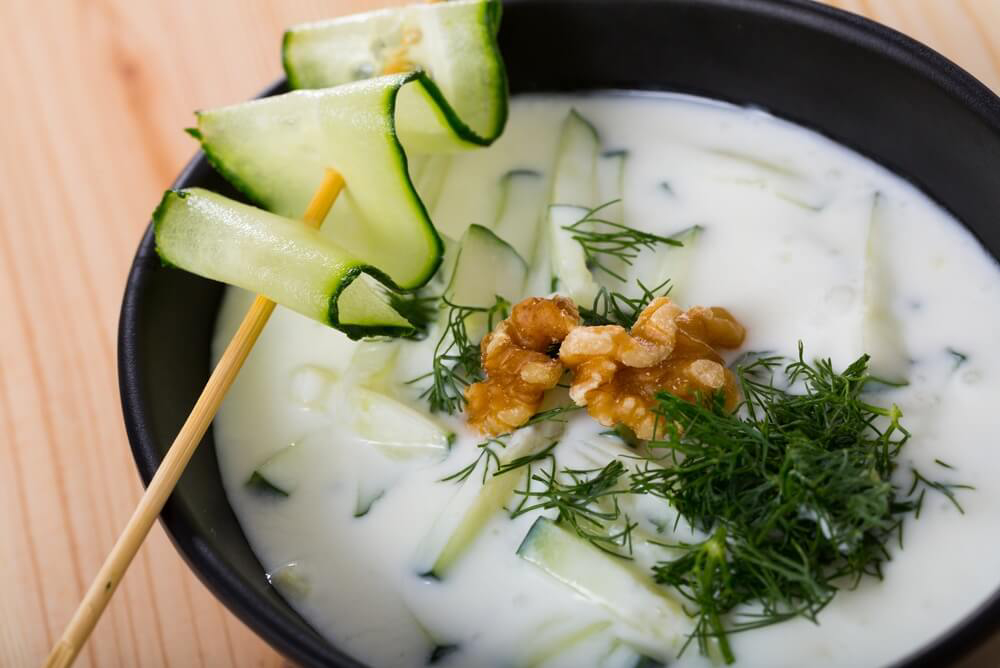
Tarator is a refreshing pick-me-up on a hot Bulgarian summer day
Bulgarian main courses are where the country’s culinary traditions really come alive. Meat can feature prominently, although there are also plenty of Bulgarian vegetarian dishes.
A staple among Bulgarian meat dishes is kebapche, a seasoned blend of minced beef and pork shaped into small, elongated rolls and cooked over a grill. Its flatter, rounder cousin is kyufte, which also contains Bulgarian traditional spices like cumin or summer savory (chubritsa). We’re talking classic comfort food – smoky, juicy and commonly served with chips, salad or bread. For something even more carnivorous, try meshаna skara, a mixed grill of various types of meat and sausages.
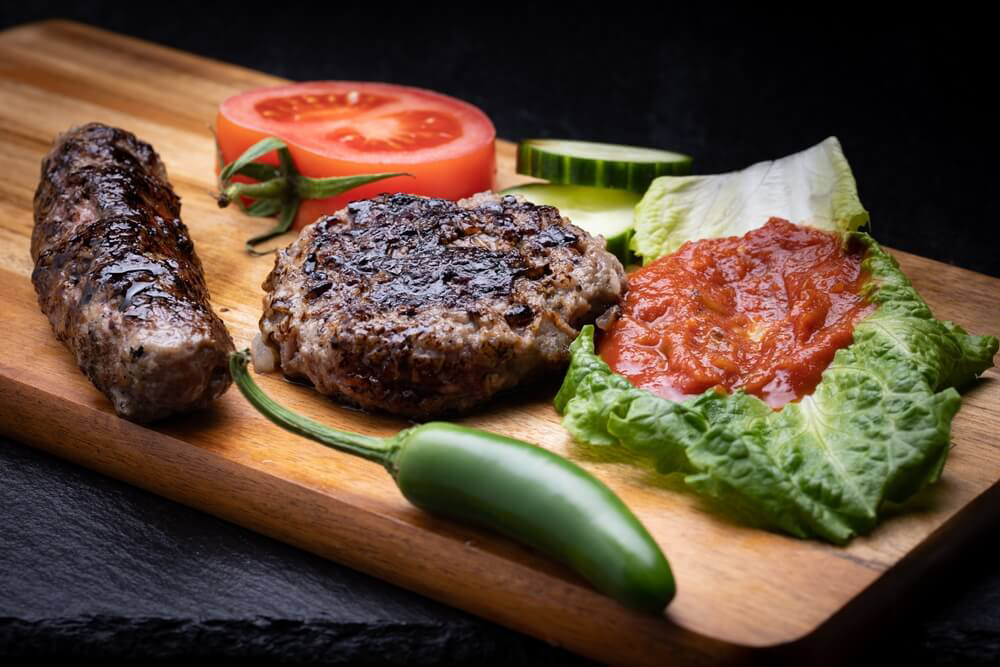
Kebapche and kyufte are classic Bulgarian grilled meat dishes
Bulgarian cuisine also has its own takes on dishes familiar across the Balkans and wider region. Moussaka in Bulgaria, for instance, swaps aubergine layers for diced potatoes, and bechamel sauce for a tangy topping of the country’s famous yoghurt (kiselo mlyako) mixed with egg.
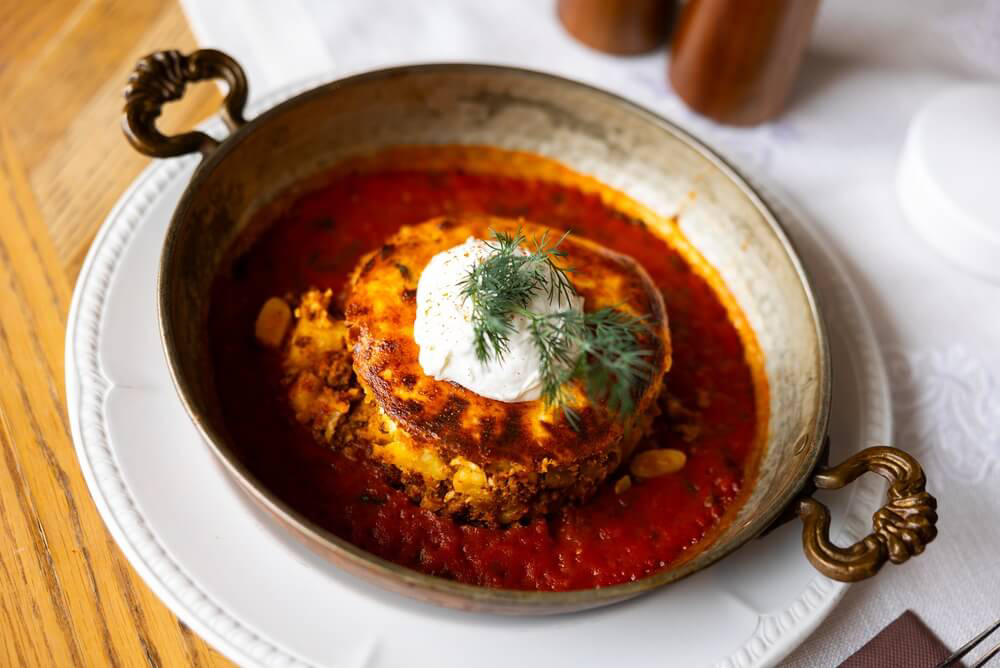
Bulgarian moussaka uses potatoes rather than aubergine
Sarmi consist of vine or pickled cabbage leaves wrapped around a savoury filling of rice, minced meat and spices. Versions including herbs, raisins or walnuts as well as rice, however, make great vegan Bulgarian food. Meatless sarmi are a fixture of any Bulgarian Christmas table.
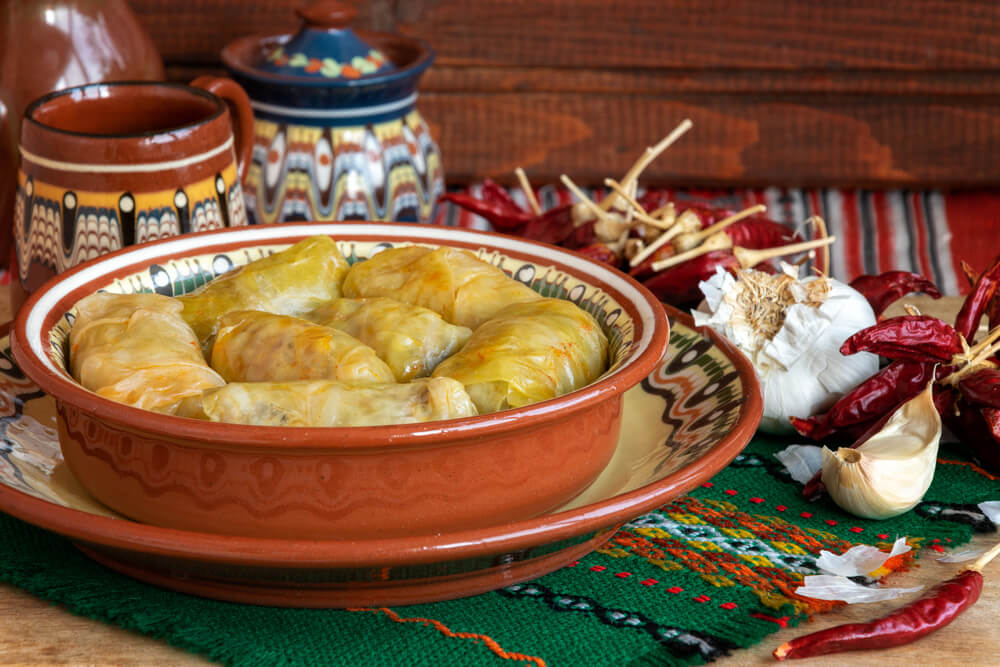
There are both meat and vegan versions of sarmi stuffed leaves
Gyuvetch, meanwhile, is a slow-cooked Bulgarian stew named after the traditional earthenware pot used to bake the ingredients to rich, melt-in-the-mouth perfection. It’s often made only with seasonal vegetables, though there are meat and even fish and seafood variations.
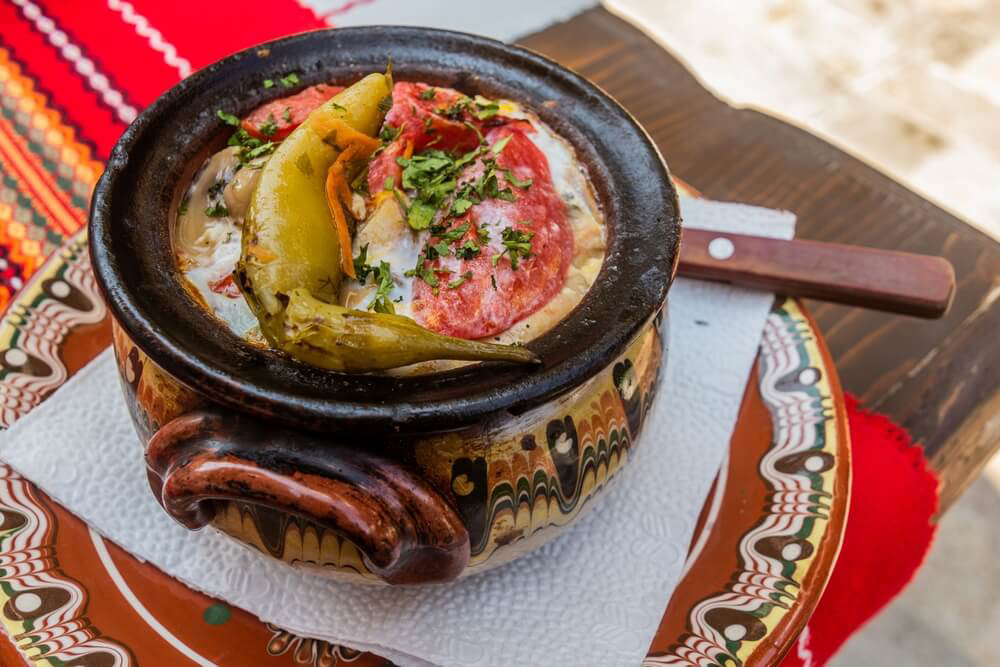
Gyuvetch is a popular Bulgarian stew
One of the most-loved Bulgarian appetisers, chushki burek, also serves as a main course too. Sweet red peppers are roasted and peeled, before being stuffed with cheese, eggs and herbs, then breaded and fried. They typically come with a garlic yoghurt dip.
Banitsa must be near the top of the list of traditional Bulgarian food. This classic savoury pastry is made from layers of filo-like dough filled with eggs, sirene cheese and yoghurt, then baked until golden and crisp. Found in neighbourhood bakeries, markets and kiosks practically everywhere in Bulgaria, some regional versions feature spinach, pumpkin or meat.
Banitsa is commonly eaten for breakfast, often paired with a salty Bulgarian yoghurt drink (ayran). But there’s no reason not to tuck into this most iconic and popular Bulgarian street food any time of day.
The pastry also has strong links to Bulgarian celebrations. New Year’s Eve in Bulgaria is traditionally marked with a special banitsa, which is baked with hidden treats or wishes predicting luck, health and prosperity for the coming year.
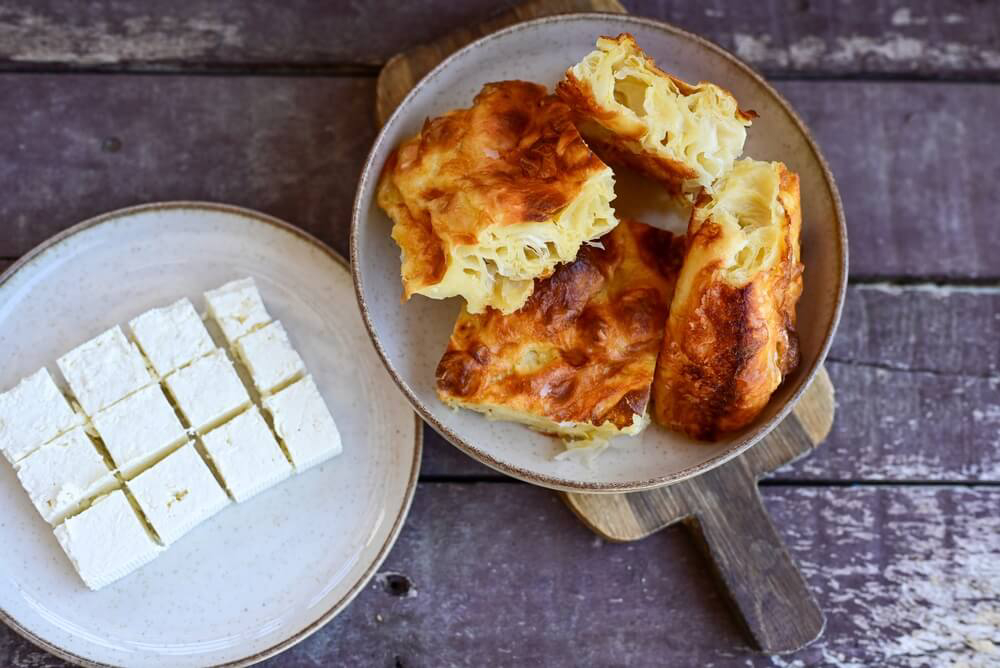
Banitsa is a Bulgarian culinary staple
If tarator is a fantastic summer refresher, Bulgarian cuisine also has a great line in rich, warming broths that are ideal for when temperatures drop.
Shkembe chorba is not for the faint-hearted though. This popular spicy tripe soup is made with the chopped stomach of a cow, pig or lamb, which is boiled and mixed with a little milk and heavily seasoned with hot red paprika, garlic and vinegar. Often served with thick crusty bread, locals swear by it as a morning-after hangover cure.
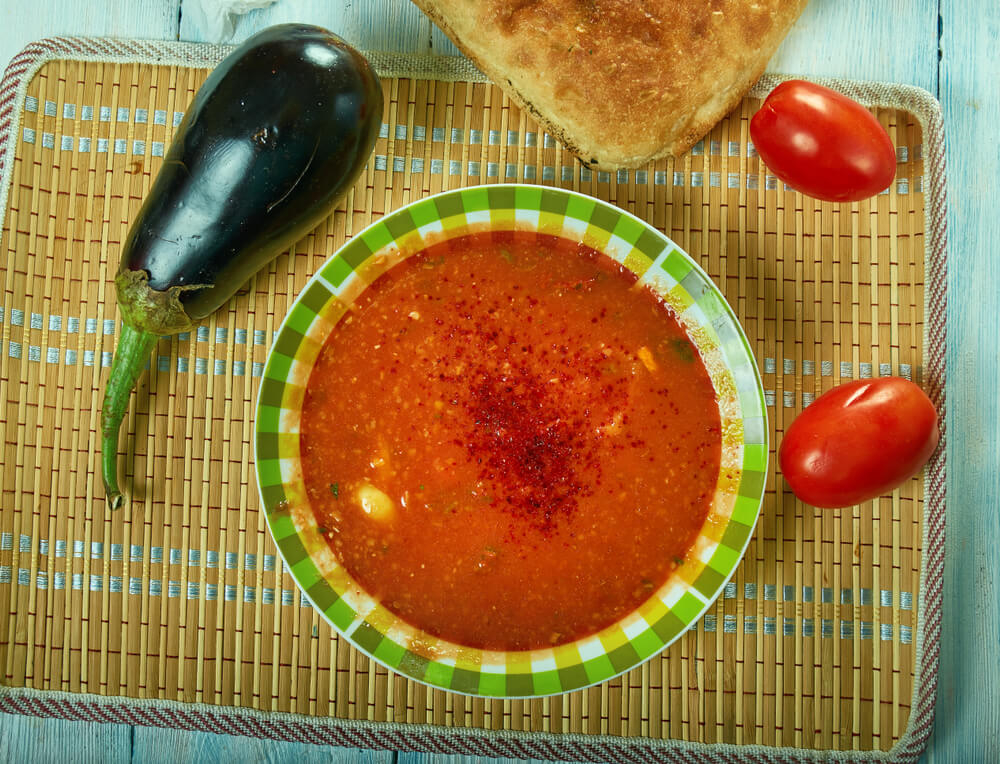
Spicy shkembe chorba is a popular hangover cure
A meat-free option is bob chorba. A comforting staple of Bulgarian food (and a Christmas Eve essential), it’s made from white beans simmered with onions, tomatoes, carrots and peppers, all deliciously flavoured with paprika, mint and chubritsa. Some regional variations may include sausage or meat, though the classic soup, historically cooked in large batches in Bulgaria’s monasteries, is completely vegetarian.
Traditional Bulgarian sweets blend Balkan, Ottoman and Slavic influences that lean into warm spices, walnuts, dairy and filo pastry.
What sets Bulgarian baklava apart from its Middle Eastern and Turkish counterparts is that rather than layering pastry with chopped pistachios and soaking it with rich syrup, local walnuts and, occasionally, raisins provide the filling.

Bulgarian baklava swaps a pistachio filling for local walnuts
Torta Garash, meanwhile, is a flourless Bulgarian chocolate cake made from ground walnuts layered with dark chocolate cream and coated in chocolate icing. It makes a great gluten-free option for lovers of cacao. And with the arrival of autumn and winter, tikvenik, a popular pastry made of filo dough rolled and coiled around grated pumpkin, sugar and cinnamon, comes into its own.
Wine lovers will find lots to keep them entertained in Bulgaria. The country has a long winemaking tradition and a diverse range of native grape varieties.
One of the most famous is Mavrud, which produces robust, full-bodied reds that pair wonderfully with Bulgarian meat dishes and hearty stews. For a fresher, fruitier alternative, try a Melnik. For a crisp local white to partner your Shopska salad, fish and seafood, or lighter dishes, look out for Dimyat and Misket.
Wine tourism is on the rise too, with vineyards and wineries offering tastings in scenic rural surroundings. A visit can be an excellent opportunity to experience Bulgaria beyond its cities and beaches.
And no culinary journey through Bulgaria would be complete without mentioning its spirits. Rakia is a potent fruit brandythat is very much part of the social ritual surrounding Bulgarian cuisine. Mastika, meanwhile, is a sharp anise-flavouredalternative. Both are traditionally sipped alongside salads or appetisers. A word of caution, they’re strong!
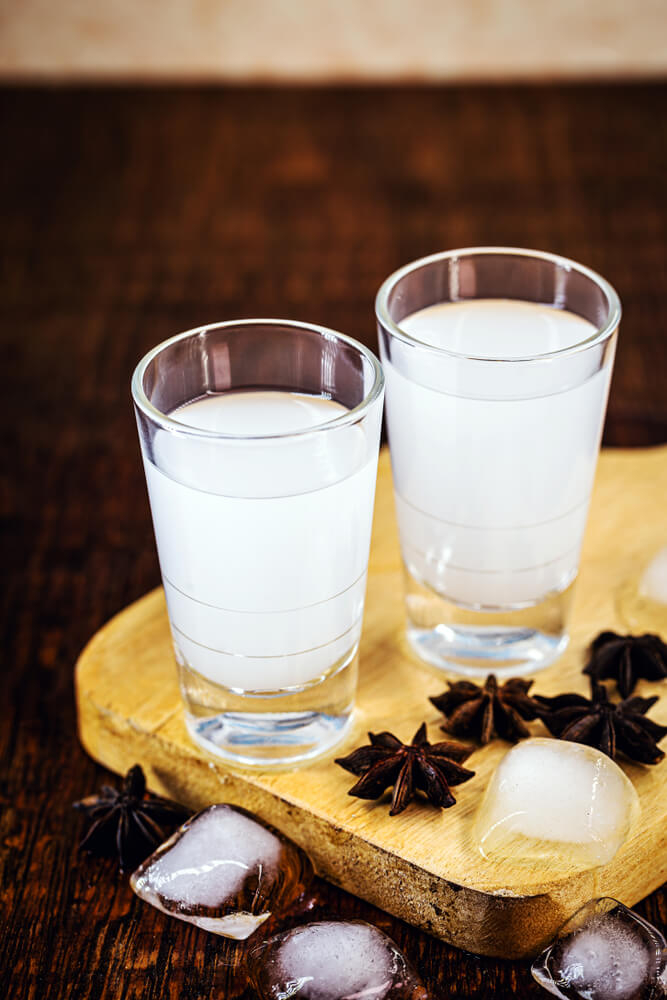
Mastika is a potent Bulgarian spirit sipped with starters
The best way to experience Bulgarian cuisine, of course, is not to rush things. Sit down at a family-run restaurant, be adventurous in your ordering and let the meal gradually unfold, always leaving room for dessert.
Whether you’re exploring Sofia, hiking the Rhodope Mountains, wandering historic Plovdiv or just relaxing by the Black Sea, Bulgaria’s hearty, gloriously uncomplicated cuisine invites you to travel slow and savour the journey.









Subscribe to the Barceló Hotel Group newsletter to not miss out on anything!
Offers, special deals, news….