









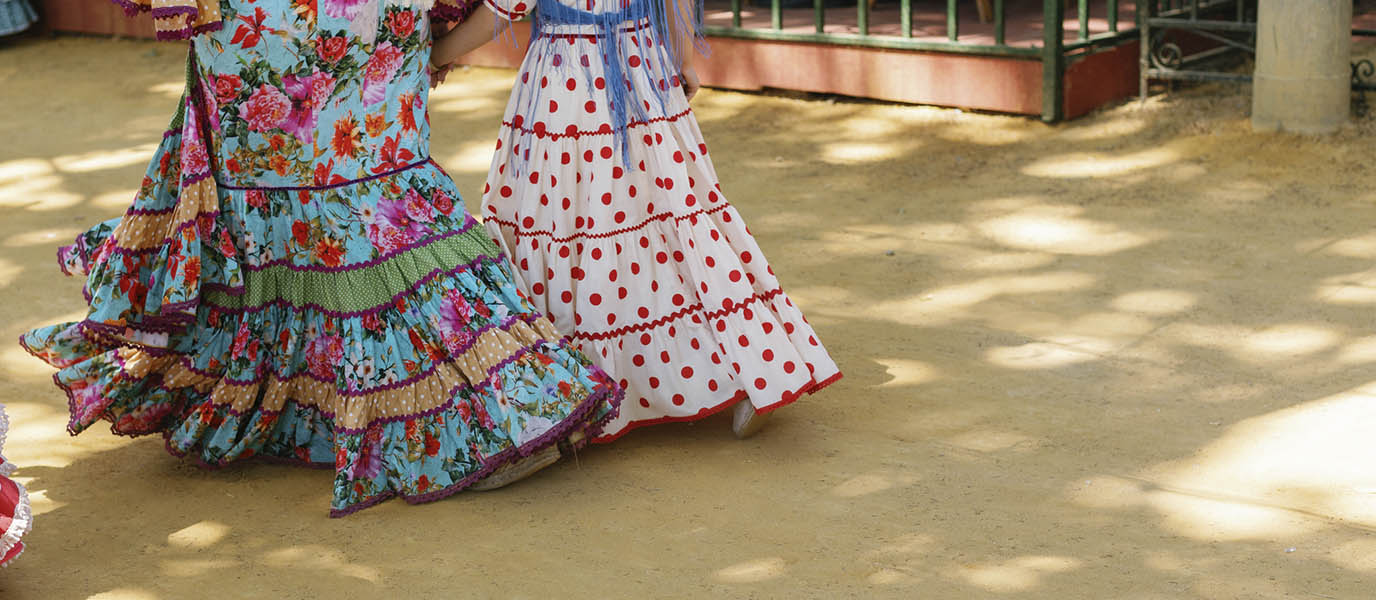
For one week in June, Marbella undergoes a complete transformation: the city centre is decorated with lanterns, the streets and squares are lined with pavilions, and daily life proceeds to the rhythm of the traditional Andalusian dances known as ‘sevillanas’. The Festival of San Bernabé, which commemorates the Christian reconquest of the city, is not simply a religious celebration or a local fiesta: it is an explosion of Marbella’s identity, in which every toast, every cavalcade and every flamenco costume is a mixture of tradition, history and joy. A journey to the festive spirit of the Costa del Sol
- The context and history of the San Bernabé Festival: remembering the Christian reconquest of Marbella five centuries ago
- Information and dates: where and when to experience the Festival of San Bernabé
- The programme and activities: a week of traditions and entertainment
- Where to eat during the festival: flavours to delight the tastebuds among the lanterns and palm trees
- Other Marbella festivals: the festive calendar apart from San Bernabé
The context and history of the San Bernabé Festival: remembering the Christian reconquest of Marbella five centuries ago
The history of the San Bernabé Festival is deeply rooted in one of the most decisive episodes of Marbella’s past: the reconquest of the city by the Catholic Monarchs on the 11th of June 1485. On that date, after centuries under Muslim rule, Marbella became part of the Christian kingdom of Castille, a feat achieved with almost no blood spilt. As a gesture of gratitude, the saint on whose day the victory was won, was proclaimed the city’s patron: San Bernabé. That moment marked not only a political and religious turning point, but also the beginning of a new identity for the city.
For the first few centuries, the festival was a solemn event: masses sung in the church, (the Iglesia de la Encarnación), processions with images carried on the shoulders of the faithful along the steep streets of the old town, and public prayers that drew the community together. In time, however, devotion gave way to celebration. From the nineteenth century onwards, Marbella’s residents began to organise festivities, with pavilions, equestrian competitions and fireworks, transforming the festival into a lively blend of the sacred and the profane.
This transformation was supported by the growth of Marbella’s tourism industry in the second half of the twentieth century. The Feria became one of the most eagerly awaited events of the year, for the city’s residents and tourists alike, who were drawn to a celebration that has retained its authenticity despite all the hype and publicity. The daytime festival, which is held in the old town, centres on dancing ‘sevillanas’, eating sliced ham and drinking sweet wine. At night, the celebrations switch to the La Cañada festival ground, with a plethora of attractions, pavilions and concerts that reflect a more modern Andalusia.
But the essence remains: the Festival of San Bernabé is still, above all else, a renewed promise of community. Neither financial crises, nor difficult years, nor even the restrictions imposed by the pandemic have managed to erase this date from the soul of the city’s population. Every June, Marbella’s inhabitants come together, just like their ancestors did five centuries ago, to celebrate what they are and what they have been able to preserve.
Information and dates: where and when to experience the Festival of San Bernabé
The San Bernabé Festival is celebrated every year on the week of 11 June, the saint’s day of Barnabas, Marbella’s patron. In 2025, the festivities are scheduled to take place between the 5th and 11th of June — a full week of activities for everyone.
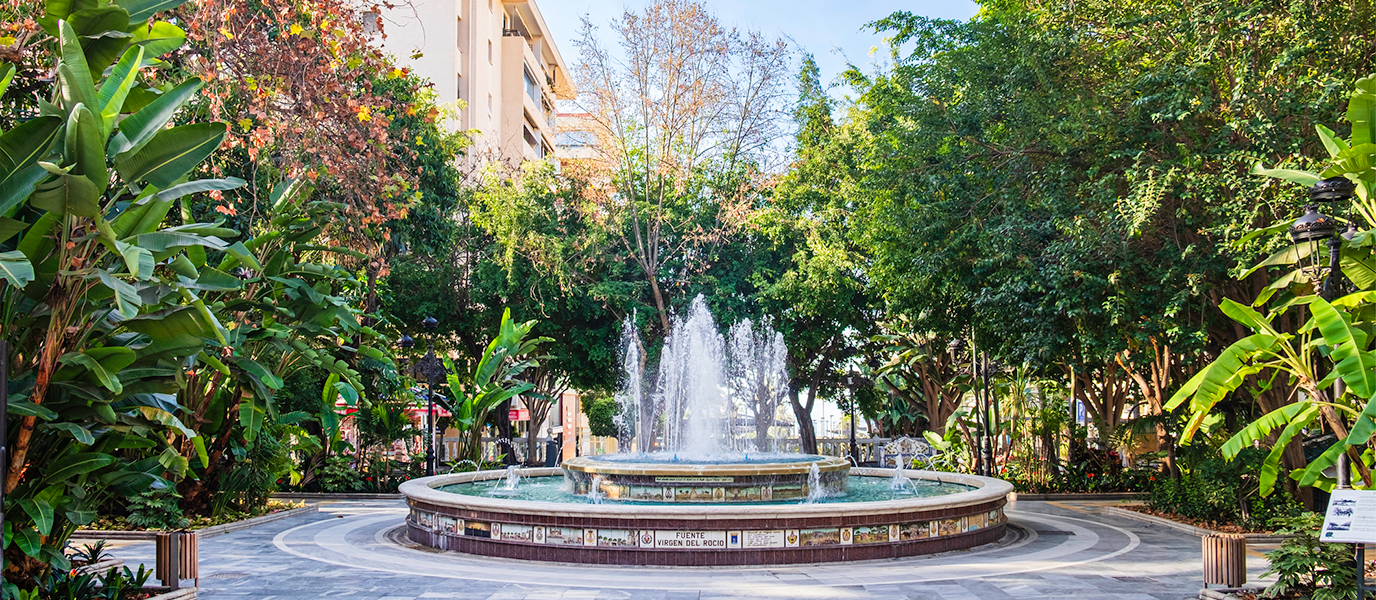
The celebrations are divided into two main areas: the daytime festival and the night-time festival. The daytime festival takes place in the city centre, with the focus of activity on Avenida del Mar and the Parque de la Alameda, where pavilions and stages are erected for live performances. The night-time festival is held on the Arroyo Segundo festival site, in La Cañada, on the outskirts of the city, and offers rides, food stalls, and pavilions with music until the early hours of the morning.
We recommend you plan your visit in advance, as the event attracts large crowds, and hotel accommodation is quickly booked up. Marbella’s Town Hall publishes in advance a detailed programme of activities, making it easier for visitors to organise their time during the festival.
The programme and activities: a week of traditions and entertainment
The San Bernabé Festival offers a varied programme that combines religious, cultural and leisure activities. The festivities are launched by the opening proclamation and the crowning of the festival queens and ladies-in-waiting, followed by a firework display that lights up the sky over Marbella.
One of the most emblematic events is the San Bernabé pilgrimage, which takes place on the Sunday before the official start of the festival. On this pilgrimage, the faithful accompany the image of the saint from his hermitage to Nagüeles Park, in a festive atmosphere enlivened by music and traditional dancing.
The Día Grande [Big Day], the 11th of June, concludes with a solemn mass in the Parish of Nuestra Señora de la Encarnación, followed by a civic and religious procession through the streets of the old town. During this procession, commemorative medals are presented at the Cross of the Humilladero, in memory of the place where the keys of the city were handed to the Catholic Monarchs.
Apart from religious ceremonies, the festival includes a wide range of concerts and shows. Renowned national and international artists converge on the various stages scattered throughout the city, performing everything from flamenco to pop. In previous years, groups such as Camela y La Frontera have appeared, along with soloists of the calibre of Jaime Urrutia.
Where to eat during the festival: flavours to delight the tastebuds among the lanterns and palm trees
Gastronomy is an essential pillar of the San Bernabé Festival, it is as ubiquitous as the frills on the flamenco costumes and the ‘sevillanas’ that can be heard on every street corner. During the daytime festival, the pavilions scattered around the old town — particularly in streets such as Avenida del Mar and the Plaza de los Naranjos — are transformed into little temples to Andalusian cuisine. Here, as people listen to music and drink a toast, you will generally find tapas such as traditional ‘pescaíto frito’ [fried fish], aubergines with cane honey, salmorejo [cold creamy soup] and a good plate of fiery chorizo. All this is accompanied by local wines or the inevitable ‘rebujito’ the Andalusian cocktail of manzanilla sherry and lime which is served chilled and which flows like water in the searing afternoon heat.
When night falls, and the festival moves to the La Cañada site, there is a change of pace, but not of intensity. In the night-time pavilions, as well as live music and dancing until dawn, visitors can enjoy everything from generous servings of Ibérico ham and cured cheese to more substantial dishes such as pig cheek in sauce, Moorish-style kebabs or grilled squid. Around the festival site, street stalls offer the classics of every festival: burgers, hot dogs, baked potatoes and chocolate with churros [sweet fritters] to round the night off with a sweet treat.
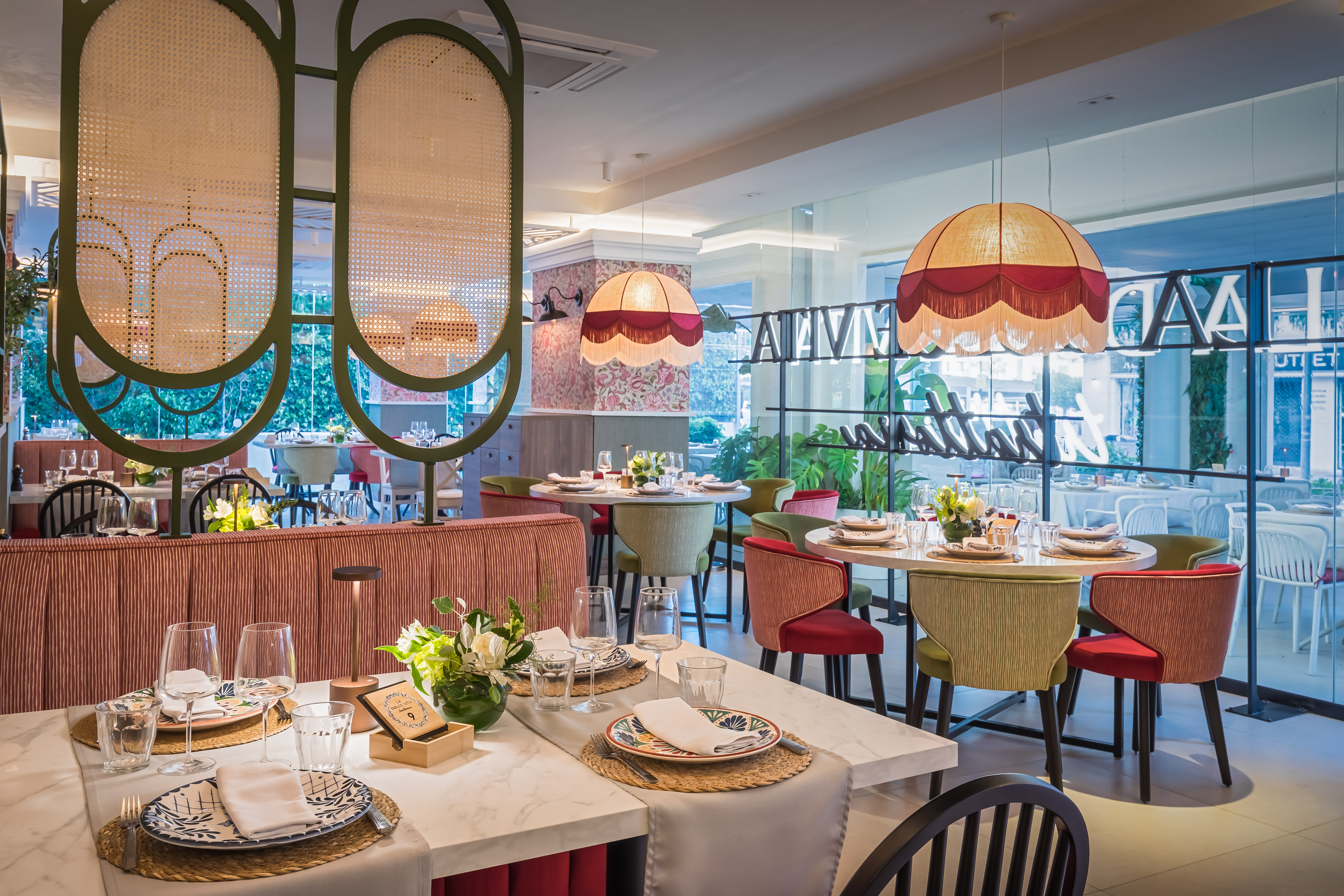
For those seeking a more sophisticated culinary experience, Marbella does not disappoint. Even during festival week, some of the most exclusive restaurants — such as Skina and El Lago, both Michelin-starred — offer special menus that reinterpret traditional Andalusian cooking with modern techniques. There are also plenty of restaurants serving Mediterranean and fusion cuisine, for a quiet meal before joining the festive hubbub. But be warned: it is worth booking in advance: during the festival, tables are snapped up with the same speed as a glass of fino sherry at the sound of a ‘bulería’, a flamenco dance style.
Other Marbella festivals: the festive calendar apart from San Bernabé
Although the San Bernabé festival is Marbella’s most emblematic celebration, it is not the only one that brings the city’s streets to life. Throughout the year, this Mediterranean city observes a varied and colourful programme of festivals, in which religious ceremony merges with profane pleasure and tradition merges with modern customs.
Highlights of Marbella’s festival year include ‘Semana Santa’ [Holy Week], which is observed with great fervour. Processions wind through the streets of the old town in a solemn atmosphere, marked by the beat of the marches and the steady pace of the floats. For months in advance, local religious brotherhoods prepare their images and floats, which then parade through the streets accompanied by ceremonial candles and ‘saetas’, the emotional flamenco songs, often sung from balconies. This is a unique opportunity to observe Andalusian spirituality in one of its most beautiful settings.
Another popular festival is the ‘Romería de la Virgen del Carmen’, a pilgrimage in honour of the patron saint of sailors, which is held in July. This festivity has a strong following in the fishermen’s quarter, where the image of the Virgin is carried down to the sea on a decorated boat, followed by a procession of boats that sail along Marbella’s coastline to the sound of cheers, music and flares. A festival that connects Marbella to its seafaring soul.
Also in July, the ‘Feria de Nueva Andalucía’ [Festival of New Andalusia] is celebrated. This is a smaller, and more local event, though characterised by the same joy as the other Andalusian festivals. And during the summer, there are frequent music festivals — such as Starlite Marbella — which transform the city into one of southern Europe’s cultural epicentres, attracting international artists and a cosmopolitan audience.