






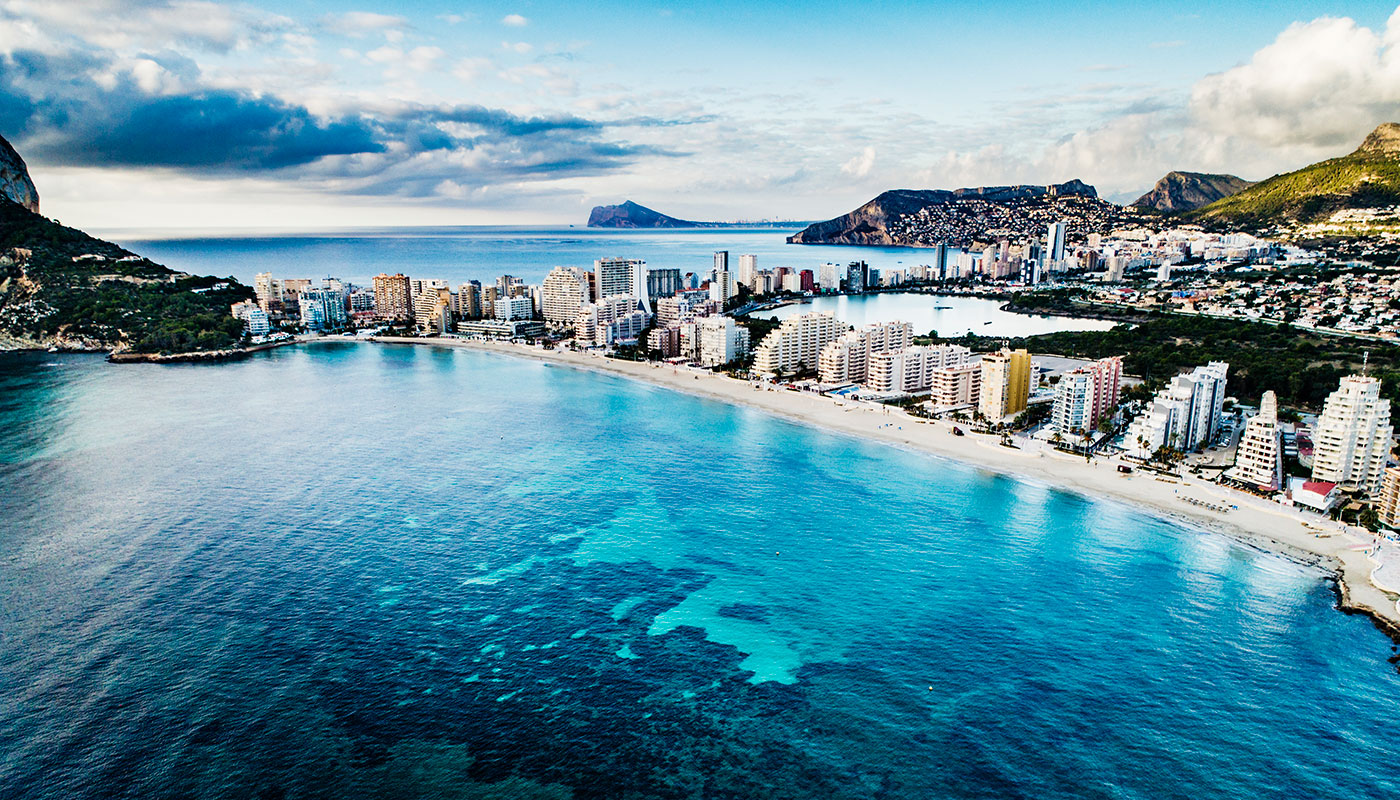
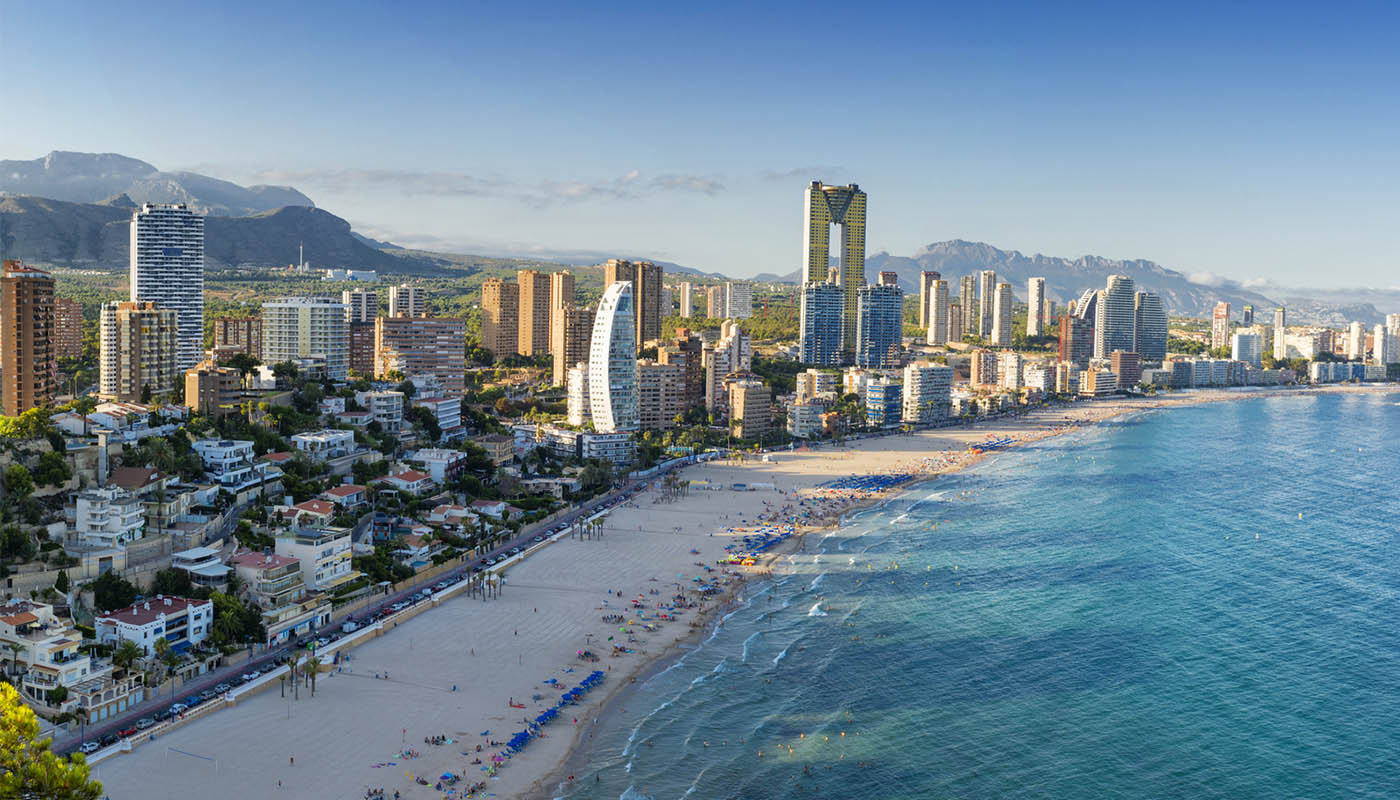









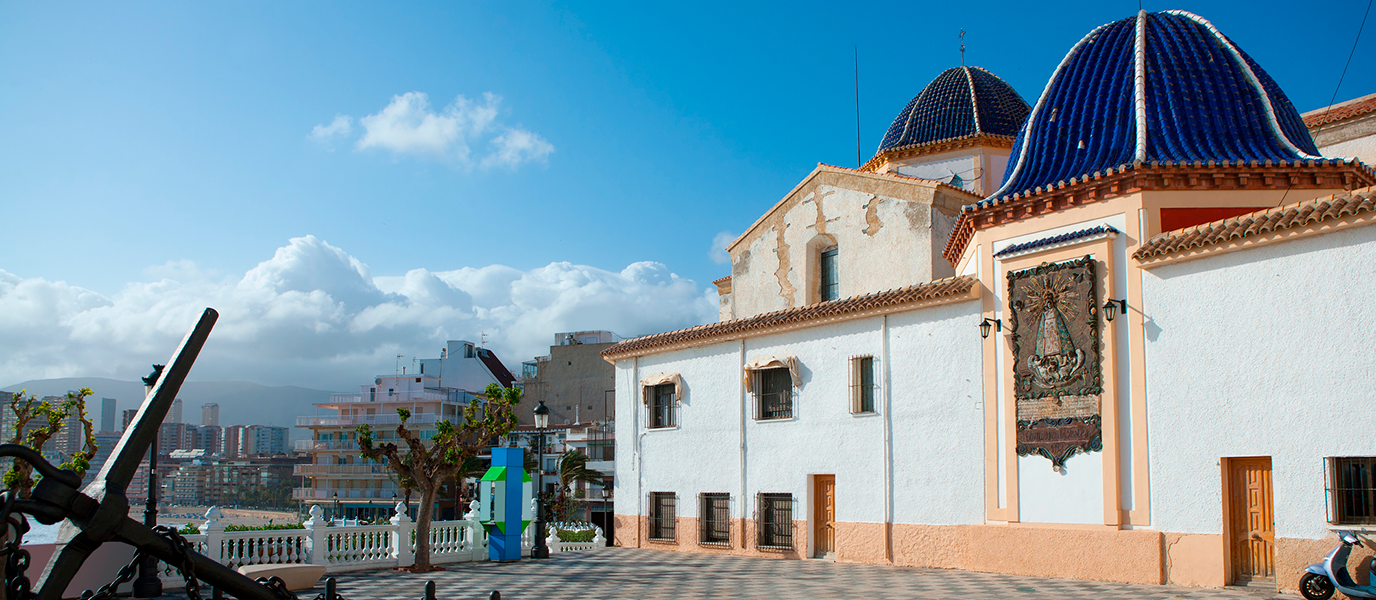
Rising above Canfali Hill, at the highest point of Benidorm’s old town, the Church of San Jaime and Santa Ana is not just a temple, it’s the spiritual cradle of a city that is much more than beach tourism and nightlife. Since its foundation in the 18th century, its white walls and blue dome have witnessed the transformation of a humble fishing village into one of the capitals of European tourism. But here, where narrow streets open onto the Mediterranean, you can still breathe in something ancient and authentic, a mixture of devotion, history and seafaring legend that lingers among the wooden benches and silent vaults of this church that continues to beat to the rhythm of the people of Benidorm.
- History of the parish: from a miraculous discovery to a symbol of the city
- Architecture and details: a neoclassical gem facing the Mediterranean
- Visit to the church: a stop on your walk through Benidorm’s old town
- Other churches in Benidorm: spirituality among skyscrapers
History of the parish: from a miraculous discovery to a symbol of the city
The history of the Church of San Jaime and Santa Ana is closely linked to a seafaring legend that has been passed down from generation to generation, forming an inseparable part of the local identity. In the mid-18th century, around 1740, a small unmanned boat was spotted adrift off the coast of Benidorm. Inside, the fishermen found an image of the Virgin Mary, which they took ashore, bewildered and excited by what they considered a miracle.
As was customary at the time, they decided to burn the boat for fear of epidemics or infections. However, according to tradition, the image of the Virgin remained intact among the flames. This was interpreted as a divine sign, and the people decided to erect a sanctuary in her honour. This was how the devotion to the Mare de Déu del Sofratge (Virgin of Suffrage) was born, who is still the patron saint of Benidorm today.
This event led to the construction of the Church of San Jaime and Santa Ana, which began shortly afterwards on top of the Canfali hill. Although the main dedication of the temple is to Saint James the Apostle (patron saint of Benidorm since 1740) and Saint Anne, mother of the Virgin Mary, popular worship has focused for centuries on the image found in the sea, giving the building a dual nature: official and popular, institutional and legendary.
The work was carried out between 1740 and 1780, using local materials and traditional techniques. The bell tower, for example, was not built until 1807, and the church underwent several major renovations, especially in 1912 and 1990. The latter restoration was key to recovering original architectural elements and adapting the church to the demands of cultural tourism without losing its essence.
The history of the church is also closely linked to the major events on the local calendar: from Holy Week to the Fiestas Mayores Patronales (patron saint festivities) in November, everything comes together here. Every year, thousands of Benidorm residents flock to this church to venerate their patron saint, relive the founding legend and reaffirm a sense of belonging that transcends religion.
Architecture and details: a neoclassical gem facing the Mediterranean
The Church of San Jaime and Santa Ana has a sober but harmonious architecture, typical of the Valencian neoclassical style. Its floor plan follows a Latin cross, with a single longitudinal nave covered by a barrel vault with lunettes and interconnecting side chapels. The transept is crowned by a dome set on an octagonal tambour, adorned with blue ceramic tiles that gleam in the Levantine sun and have become a visual symbol of Benidorm.
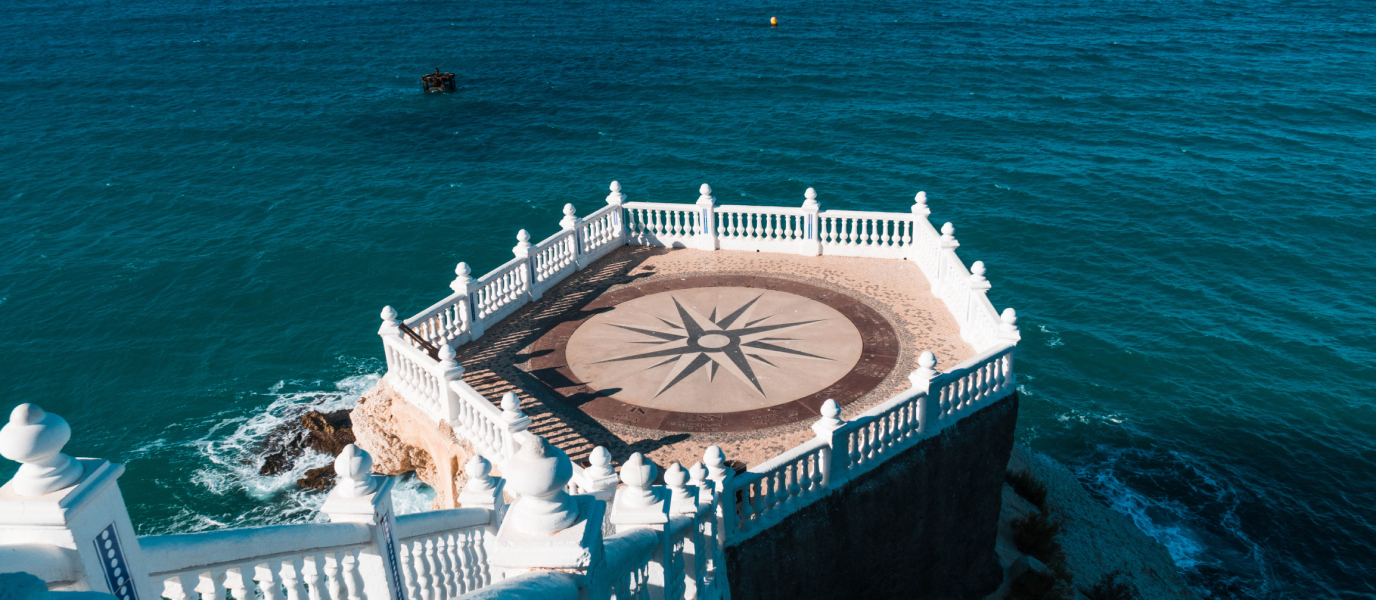
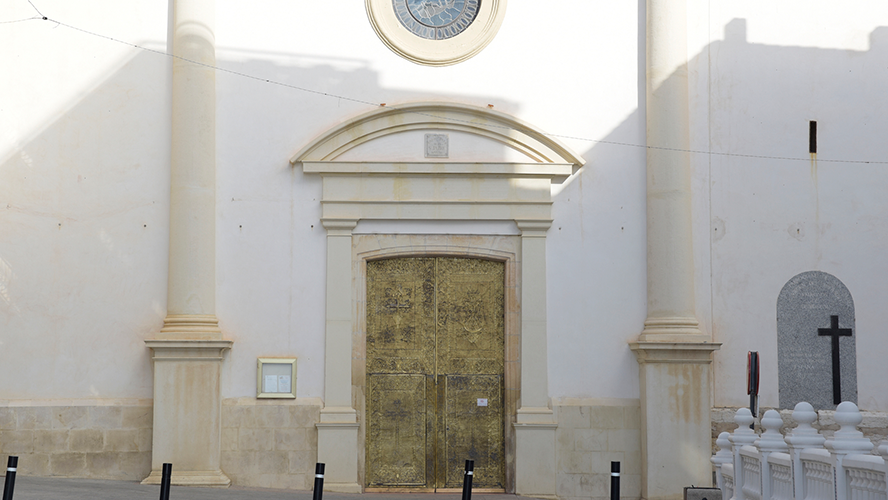
The main façade, facing Plaza Castelar, is simple, with a curved pediment topped by a linteled door. To the right stands the square bell tower, divided into two sections and topped by a hipped roof. The bells continue to mark the rhythm of celebrations and can be heard clearly from the Balcón del Mediterráneo.
Inside, the Chapel of the Blessed Sacrament is particularly noteworthy for its golden mouldings and intimate atmosphere. But the most important spot for worshippers and visitors is undoubtedly the Chapel of the Mare de Déu del Sofratge. Here you will find the small polychrome wood carving found in the sea, displayed in a glass case on an altar decorated with flowers. The devotion generated by this corner goes beyond aesthetics: it is an intimate link with Benidorm’s history and seafaring soul.
Among the most striking artistic details are the frescoes that adorn the vault, the stained glass windows with Christian motifs and the image of Christ of Forgiveness and Good Death, which presides over one of the side chapels and is especially venerated during Holy Week.
Visit to the church: a stop on your walk through Benidorm’s old town
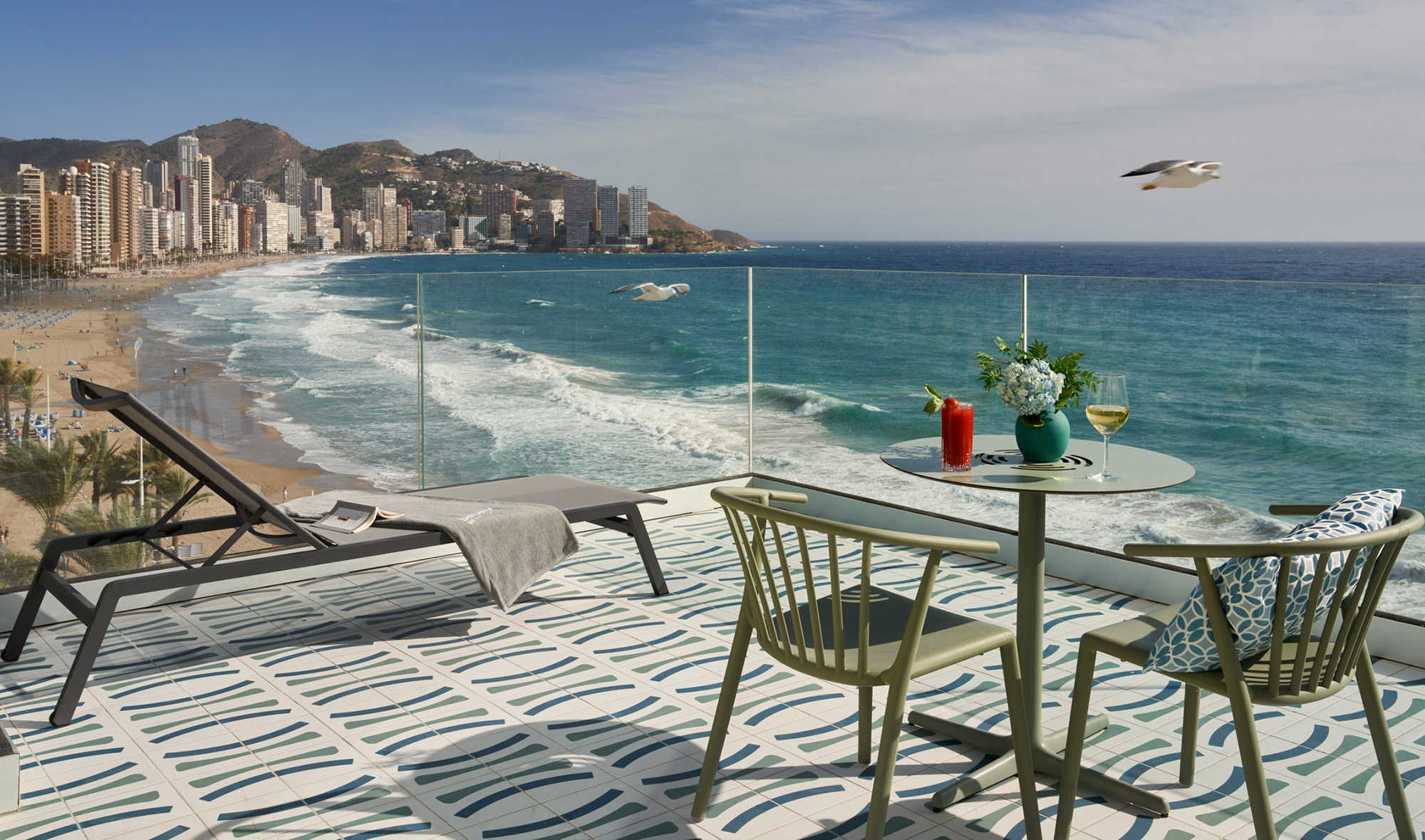
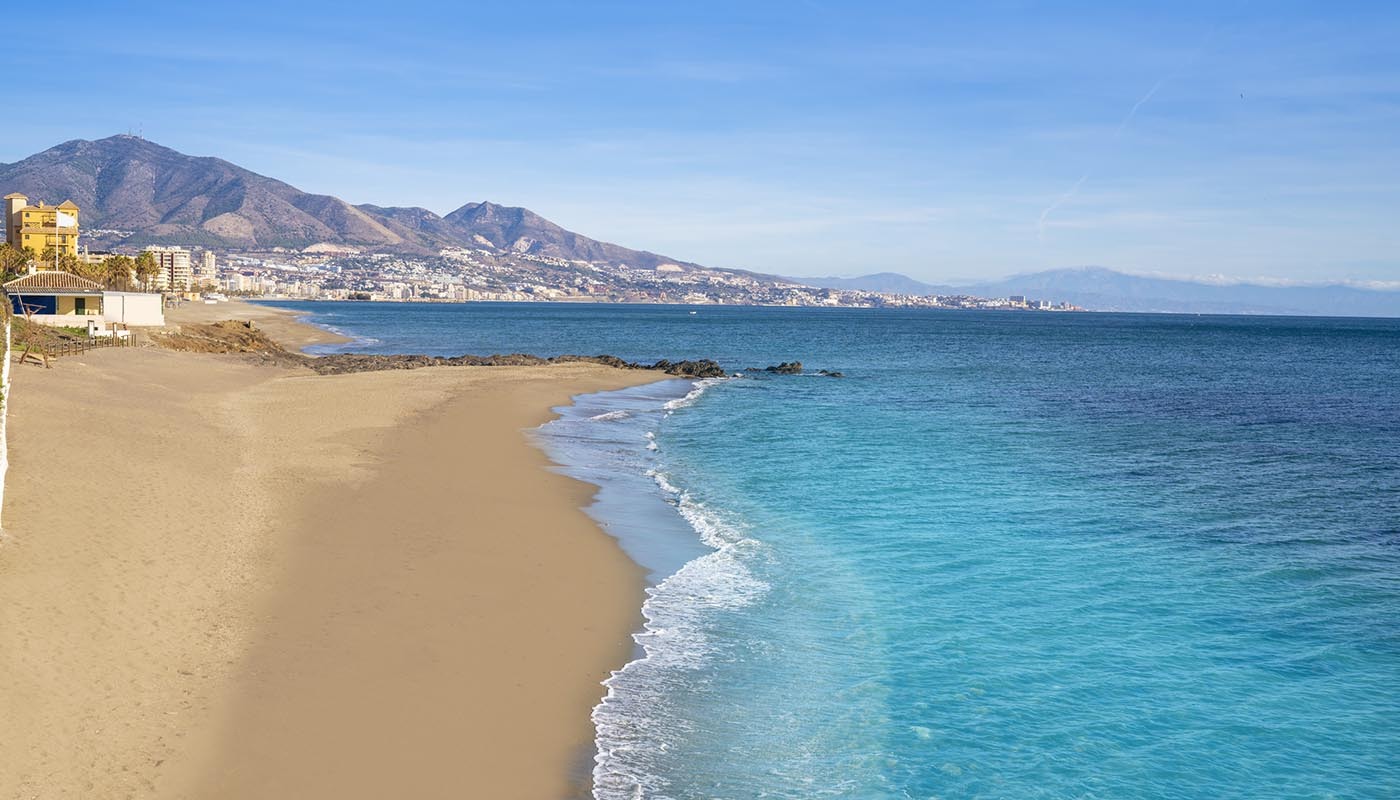
A visit to the Church of San Jaime and Santa Ana naturally begins with a climb up Canfali Hill. The church can be accessed from Castelar Square, right next to the Balcón del Mediterráneo, one of the most spectacular viewpoints on the Spanish coast. The contrast between the white façades, the blue sea and the murmur of the waves beneath the cliffs offers a unique setting for those visiting for the first time.
Once inside, it is worth stopping at the small side chapels, which house images and altars with centuries of history. The Communion Chapel, decorated in Baroque style, is another space that deserves special attention, as does the main altarpiece, which features an image of Saint James in his traditional pilgrim’s garb.
A good option is to combine a visit to the church with a stroll through the narrow streets of the old town, which still retain some of the fishing village atmosphere that defined Benidorm until the mid-20th century. On Sunday mornings, after mass, Castelar Square fills with locals who take the opportunity to chat and have a pre-lunch drink with views of the sea.
Other churches in Benidorm: spirituality among skyscrapers
Although the Church of San Jaime and Santa Ana is the oldest and most iconic temple in Benidorm, it’s not the only one worthy of attention. The diverse and open city has numerous places of worship that meet the needs of a multicultural and cosmopolitan population.
One of the most notable is the Church of Nuestra Señora del Carmen, located in the Foietes neighbourhood, a modern temple that plays an active role in local religious life. Also noteworthy are the Church of the Good Shepherd, linked to the Protestant community, and the Scandinavian Tourist Church, which caters to the many residents from northern Europe, especially during the winter months.
Each of these churches offers a different perspective on how Benidorm not only welcomes tourists, but also a diversity of beliefs and ways of practising their faith. Together, they make up a surprisingly rich spiritual map in a city often associated exclusively with leisure.