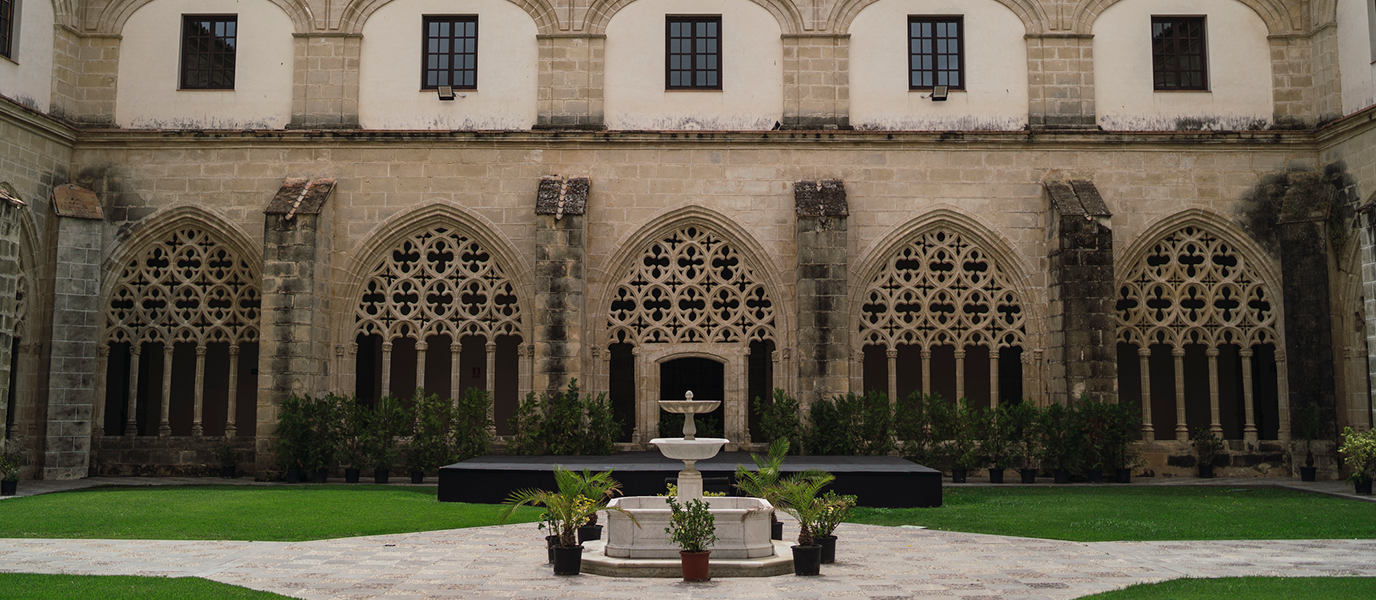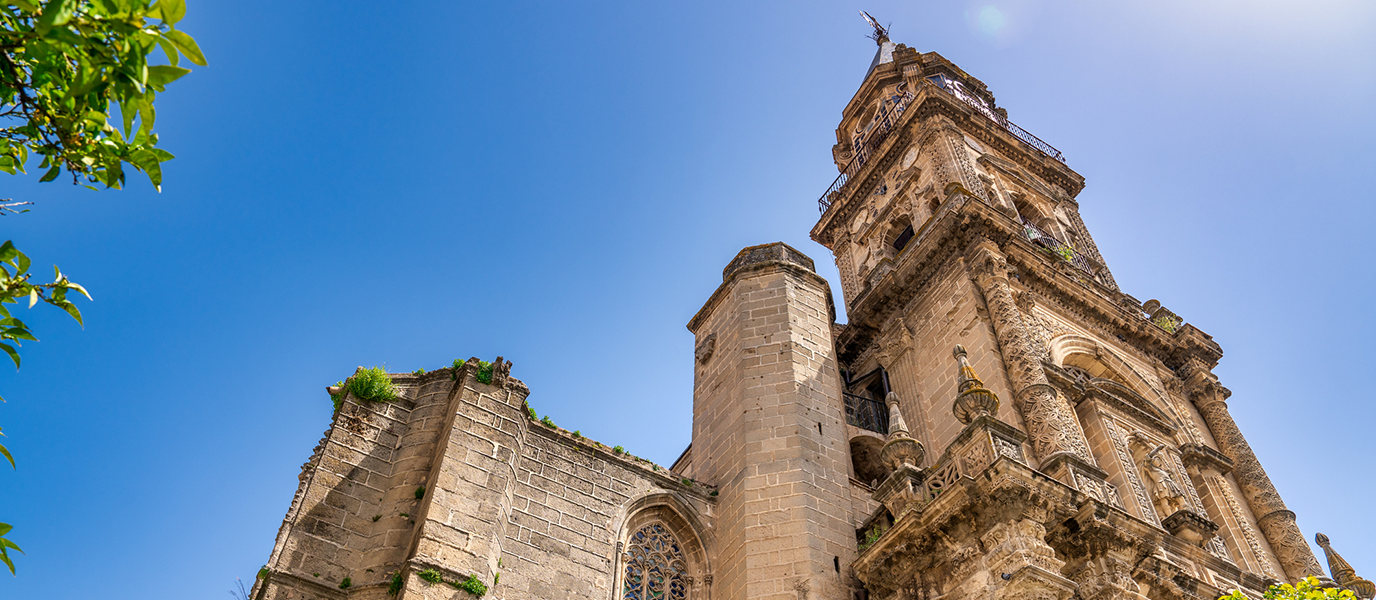








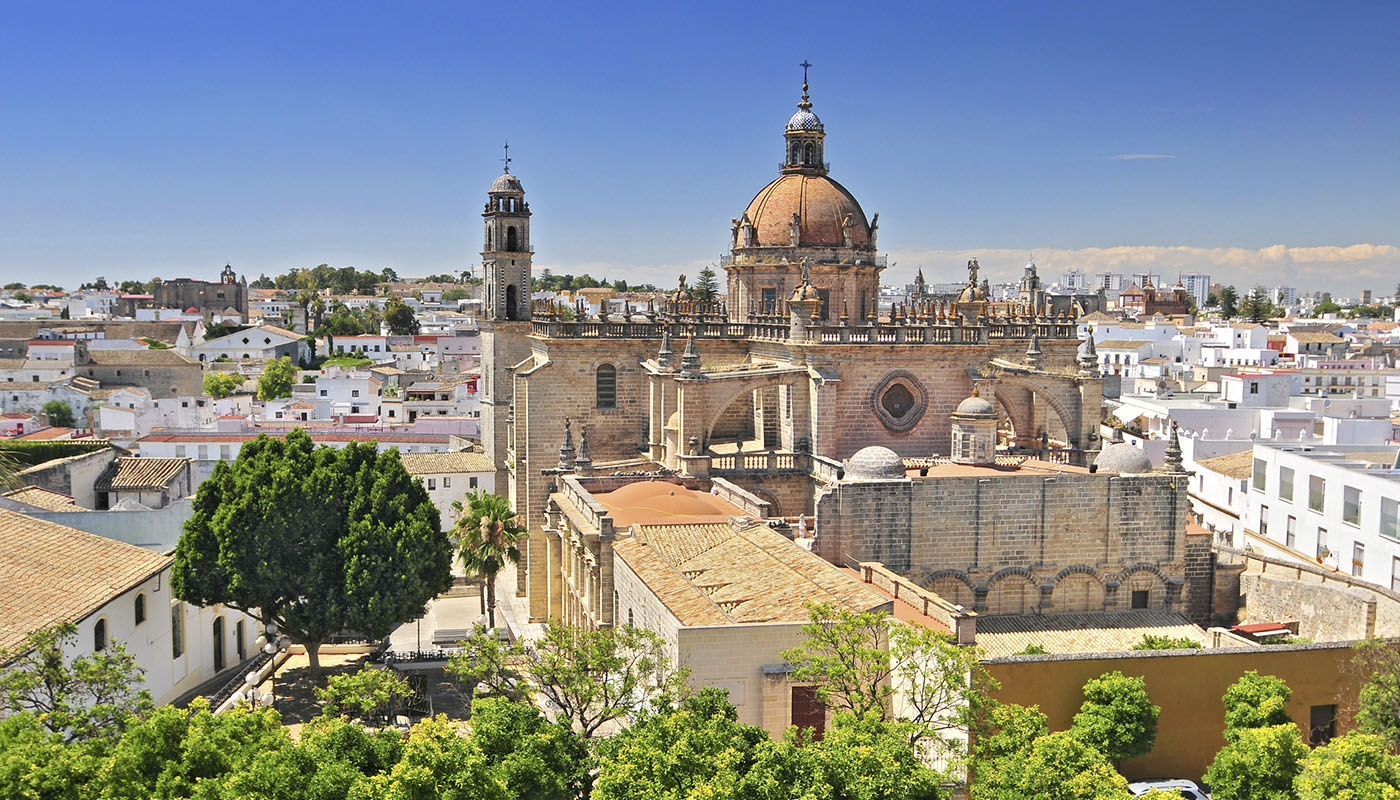



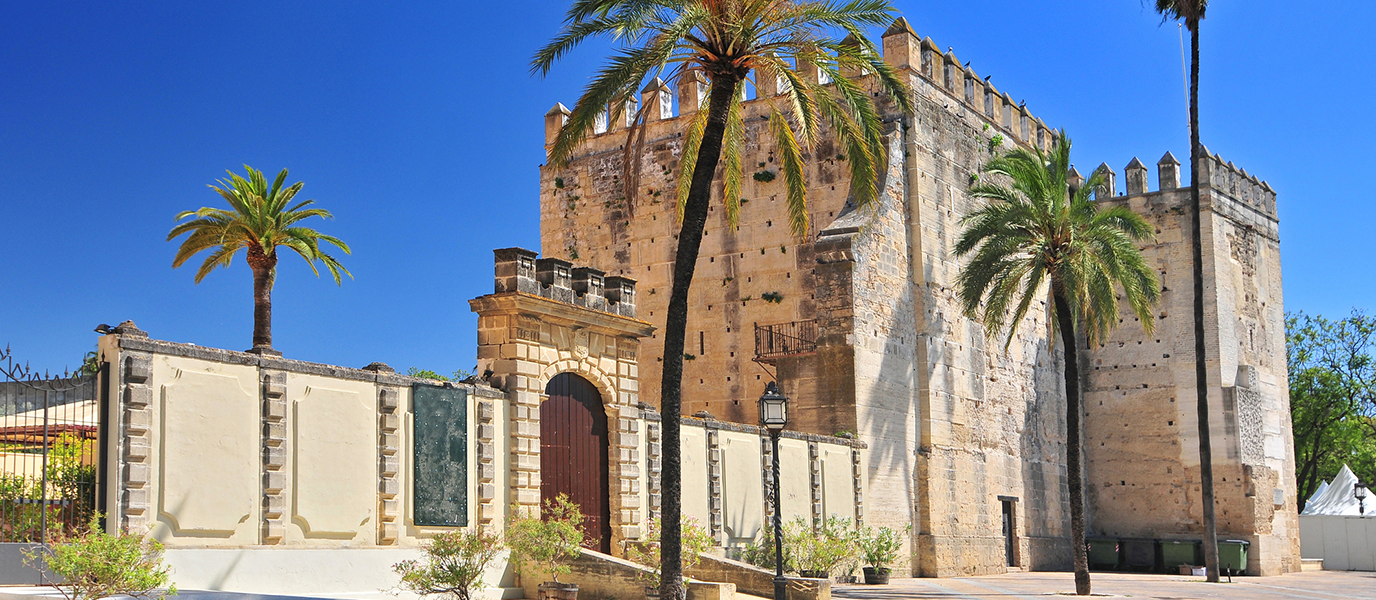
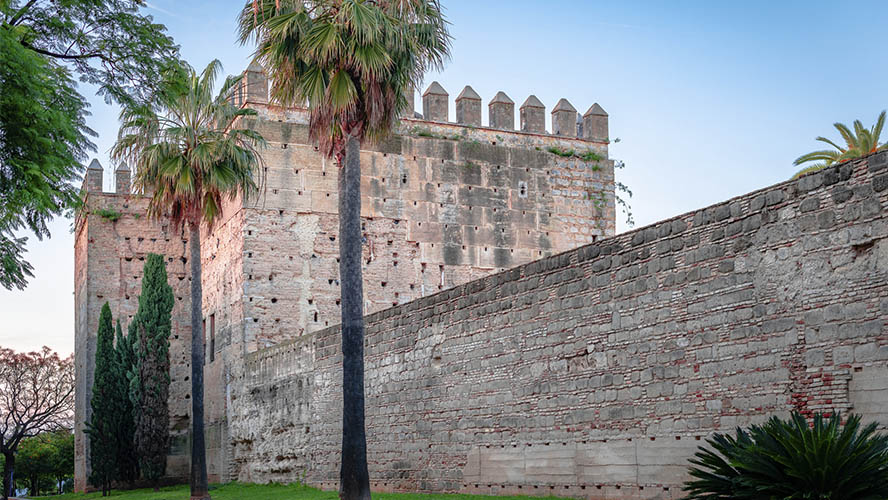
The collection of historical buildings known as the Conjunto Monumental del Alcázar de Jerez y Cámara Oscura is one of the few surviving examples of Almohad architecture in Spain. From outside, you can see the Octagonal Tower (the city’s highest historical monument), the Almohad tower and the Ponce de León tower. Inside, the highlights are the City Gate, the only entrance to the city during the twelfth century, and the Mosque, Jerez de la Frontera’s only mosque. Visitors can also see the ablutions courtyard, the gardens, the baths, the courtyard of San Fernando, and the palace of Villavicencio (seventeenth-eighteenth centuries), whose tower houses the well-known Camera Obscura.
The Alcázar Jerez tour includes admission to two permanent exhibitions: one about Camera Obscura around the world, and the other about Jerez and its principal monuments.
- Alcázar de Jerez, a fortress to enjoy
- What you can see on a visit to the Alcázar de Jerez
- Useful information: opening times, admission, etc.
Alcázar de Jerez, a fortress to enjoy
Built during the Almohad period (twelfth and thirteenth centuries), the Alcázar de Jerez has a long history closely linked to the city’s defence systems. Located at the southern end of the walled city at the highest point of the historic quarter, the Alcázar offers views across the city and the surrounding area.
This fortress was once the seat of political and military power. The Almohads were past masters in the art of military construction, to the point where their fortified structures were practically unassailable. Originally, the Alcázar had 12 towers, of which only seven remain, some of which have undergone significant renovation. Its two gates have also survived: the Ciudad [City] entrance, which leads directly to the medina and which is a monument in its own right, and the Campo [Country] entrance, which leads to outside the city walls. This was the most vulnerable point from a defensive perspective, and so it was positioned between two towers, with a very narrow passageway and domes set at a great height.
Apart from its defensive and military functions, the Alcázar was also the Wali’s residence during the Almohad period, and during the Christian period it housed mayors.
Today, the complex belongs to the City Council, which acquired it in 1968 from the heirs of the Jerez Salvador Díez y Pérez de Muñoz winemaking company. After extensive renovations, the site was opened to the public in May 1998.
What you can see on a visit to the Alcázar de Jerez
After a long period of neglect, the Alcázar de Jerez de la Frontera is now very well preserved, attracting visits from locals and tourists alike. There is much to see and admire:
The Mosque
This was a hall for prayers, and is the only religious vestige of the twelfth-century Almohad reign in the city. It is a space for contemplation and a haven from the bustling city outside. It was converted into a chapel for King Fernando III in the thirteenth century, but its architecture still bears the stamp of the Muslim civilisation.
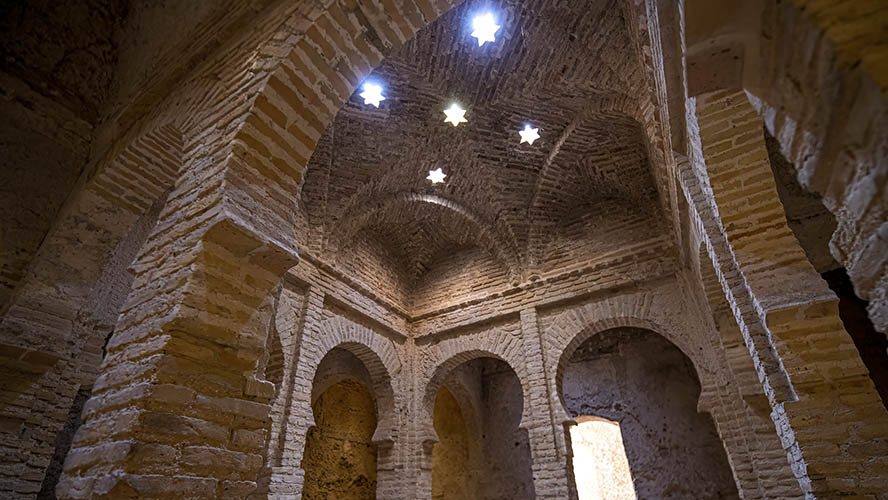
The Arab Baths
These have survived for over 900 years, and are one of the few baths from the Almohad period that still exist in Spain and whose structure is almost fully intact. Descended from the Roman thermal baths, these baths have three adjoining rooms: cold, warm and hot. In the sixteenth century, Isabel the Catholic Queen banned the baths, because they were being used as brothels, and a church was built in their place.
City Gates
To strengthen their defensive function, these entrances were designed with a chicane — a characteristic of Muslim military architecture. We can see the Puerta del Campo which affords views outside the city walls, and the City entrance, the Puerta de la Ciudad, a majestic ironwork structure with marble features.
The Octagonal Tower
This was a very tall watchtower inside the walled city, which could communicate visually with other similar towers in the surrounding area. It has since been converted into a viewing point for the landscape around Jerez, and also as a vantage point overlooking the historic quarter.
The Keep
This tower dates from the Middle Ages. It was built by Rodrigo Ponce de León in 1471 after he took Jerez. It was the result of power struggles between factions of the Lower Andalusia nobility, represented by two lineages: the Guzman and the Ponce de León dynasties.
The Palace of Villavicencio
This Baroque palace was built during the eighteenth century by the Villavicencio family on the site of a former Muslim palace that lay in ruins. Inside, there is a permanent exhibition of posters for Jerez festivals from 1868 till 2003. On the third floor, visitors will find the old nineteenth-century municipal pharmacy, and in the tower is the Camera Obscura.

The Camera Obscura
Here you can see a panoramic view of Jerez in real time, a moving image of everything happening in the city at that moment. For a few minutes, visitors can feel like sentinels watching over the city’s monuments, churches and streets.
The Olive Oil Mill
This is an outbuilding belonging to the Palace of Villavicencio which still houses the oil press built on the orders of Lorenzo Fernández de Villavicencio. It is a beam and hundredweight press that shows how important olive cultivation was in this area during the eighteenth century.
Useful information: opening times, admission, etc.
Would you like to know the Alcázar de Jerez’s opening times and charges? Admission to the Conjunto Monumental Alcázar de Jerez is 5 euros per person. This is reduced to 4 euros per person for groups, but these visits can only be conducted by the Alcázar staff or by official guides who must be properly accredited. Admission to the Alcázar de Jerez de la Frontera is also cheaper for pensioners, students, and natives and residents of Jerez: 1.80 euros. There is no admission charge for Jerez schools and educational institutions. In addition, admission is free on Mondays between 1.30 and 2.30 p.m.; this changes to between 4.30 and 5.30 p.m .in summer. Higher charges apply for admission to the Camera Obscura. The Alcázar’s rooms and courtyards are also available to hire for private events, for making films and videos, and for professional and advertising photography sessions.
The Alcázar de Jerez complex is open Monday – Sunday from 9.30 a.m. until 2.30 p.m. From July to September, the complex is open from Monday – Friday from 9.30 a.m. until 5.30 p.m., and on Saturdays, Sundays and Public Holidays from 9.30 a.m. until 2.30 p.m.