












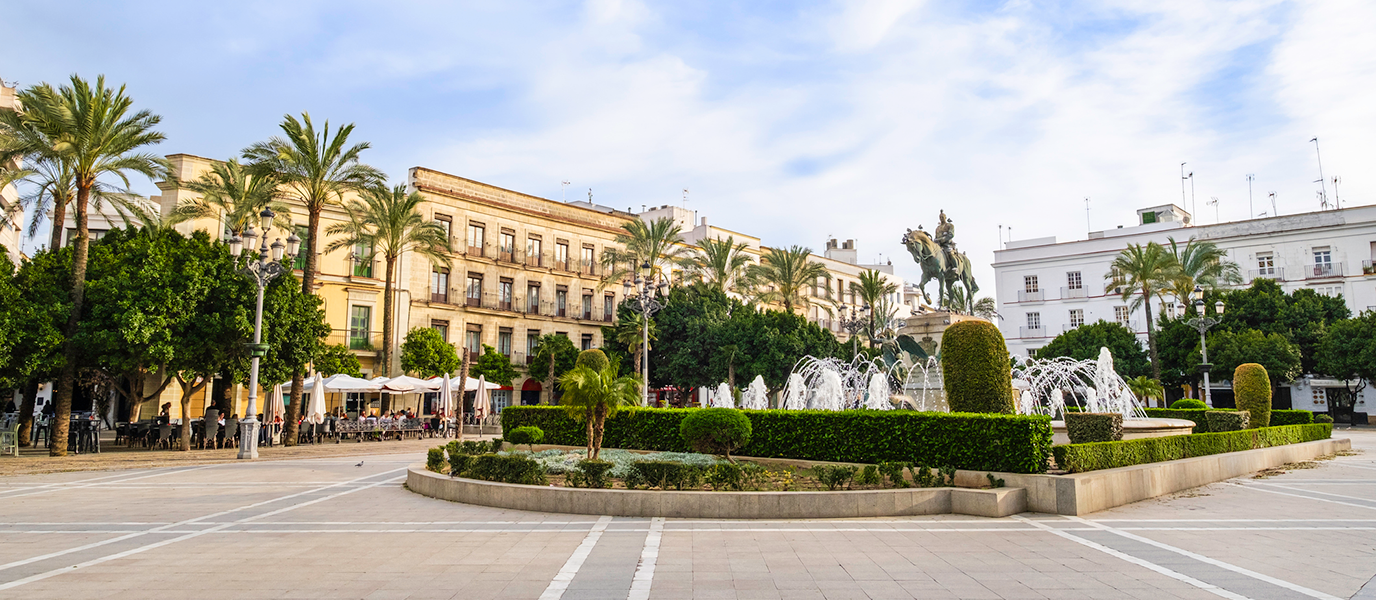
The Plaza del Arenal inJerez de la Frontera is one of the most popular meeting places for the locals and is the main square of this historic Andalusian city. Located in the centre, it has had different uses over the centuries: from serving as the place where Moorish troops gathered before departing for battle to becoming the scene of duels and battles after the Reconquest of Spain (13th century).
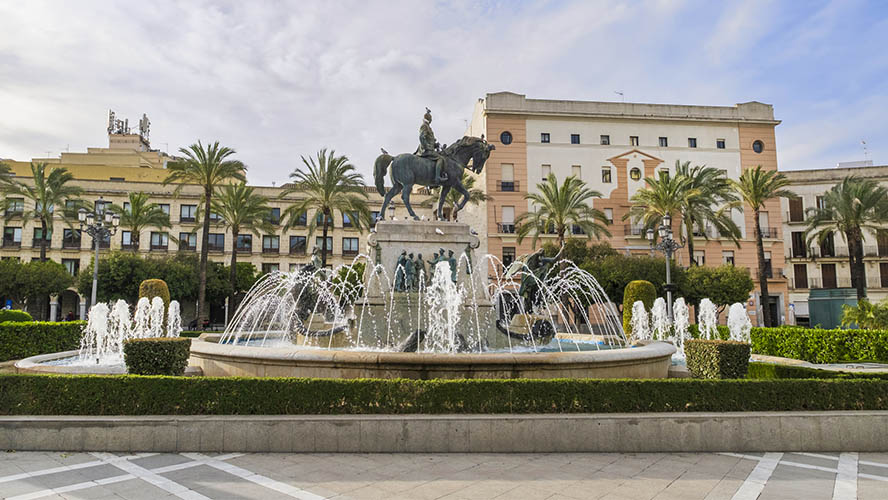
The iconic buildings or monuments on the Plaza del Arenal include the Jerez Town Hall Planning Office, which was once the corn exchange, as well as the Palace of Justice. Nevertheless, perhaps the most striking feature, or the one that attracts the main attention of tourists on foot, is the monument on horseback of Miguel Primo de Rivera, a Jerez native who ruled Spain under a dictatorship between 1923 and 1930.
Travellers visiting this city in Cádiz province will end up passing, sooner or later, through the Plaza del Arenal.
History and location of the square
Located in the heart of Jerez, the Plaza del Arenal (Sand Square) was given its name after the Reconquest of Spain, when this area was filled with sand from the river Guadalete for the celebrations. Hence its name. Before then, during the Moorish period, it was located outside one of the gates of the city walls, had a cemetery and was a musara, i.e. the space where Moorish troops gathered before departing for battle.
The square has hosted all types of festivities and shows, from bullfights, autos-da-fé, masses to different competitions such as jousting on horseback, horse racing and riding with shorter stirrups, similar to the tournaments fought by the knights during the Middle Ages.
It was from the 19th century onwards that those popular celebrations moved to other areas of the city, and benches and green areas were included. In 1869, a central fountain was installed, which in 1929 gave way to the monument in honour of Miguel Primo de Rivera, sculpted by Mariano Benlliure. This equestrian statue is surrounded by a fountain with gushing water and various hedges.
Over the years, during the 20th and 21st centuries, the square has gained vegetation with the planting of trees such as ficus and large palm trees. In 2004, an underground car park was built, thus easing traffic congestion on the streets.
Sightseeing near the Plaza del Arenal
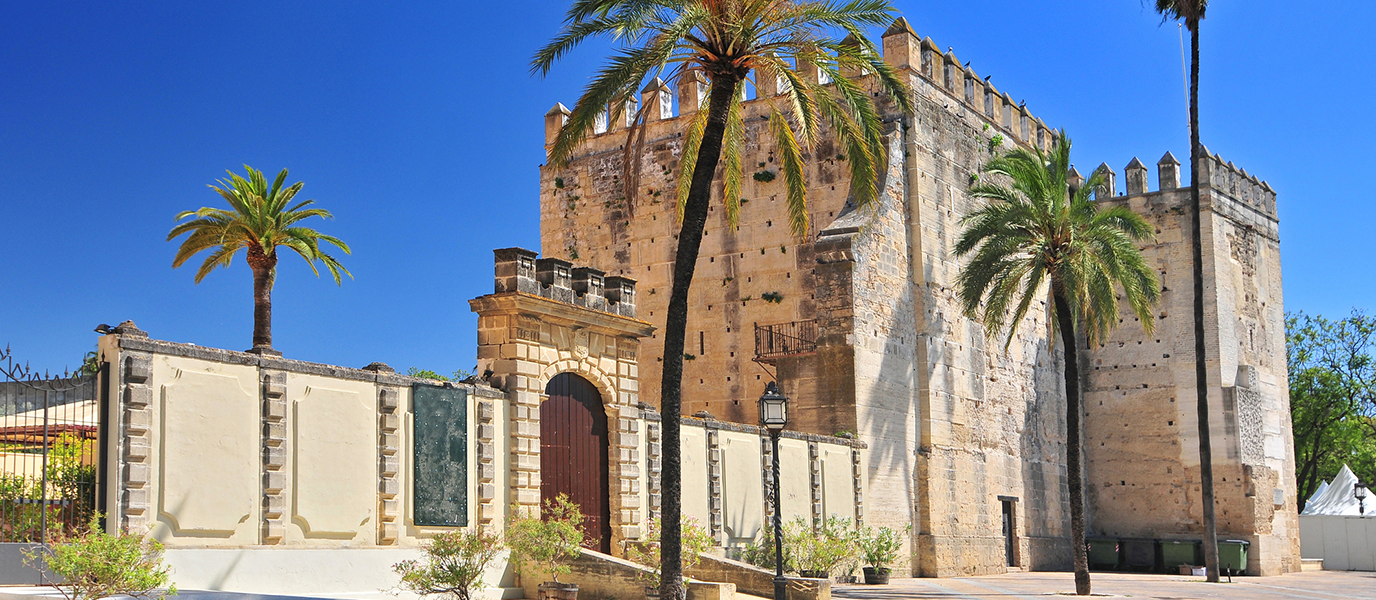
Some of the main tourist attractions in Jerez de la Frontera are located near the Plaza del Arenal. Just a few metres away is the Alcazar (12th century), an example of Almohad architecture and the oldest monument in Jerez. Its mosque, Arab baths, walls and towers evoke the Arab past, but also the Christian era.
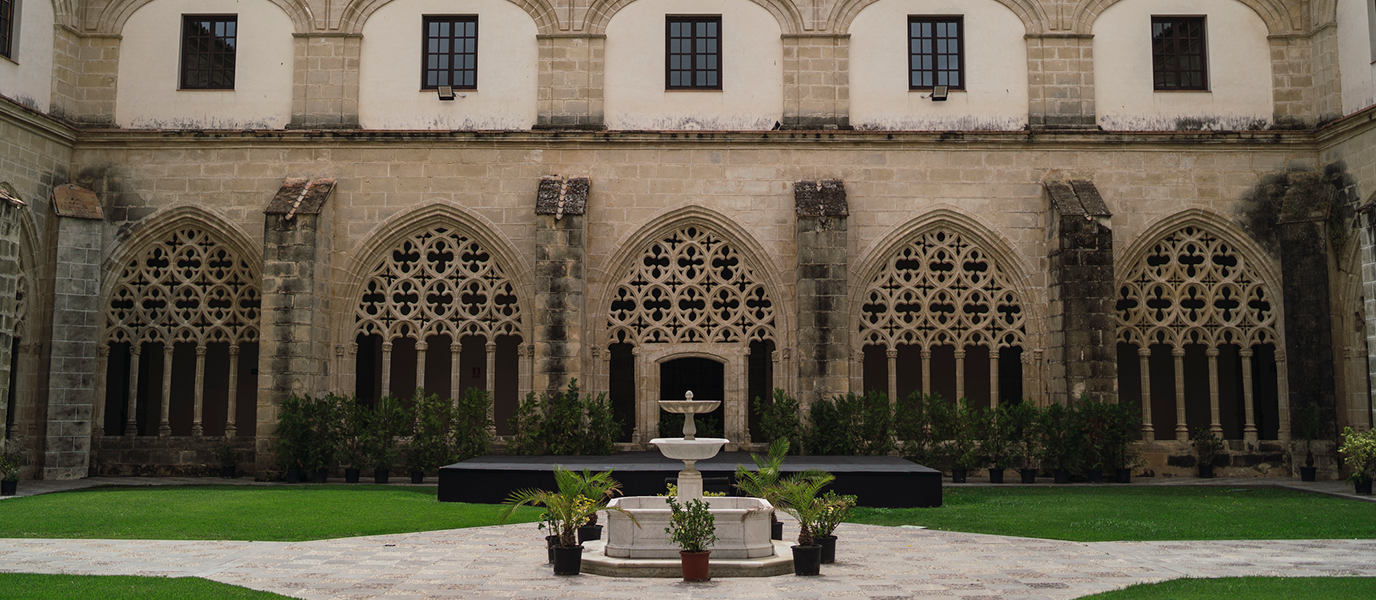
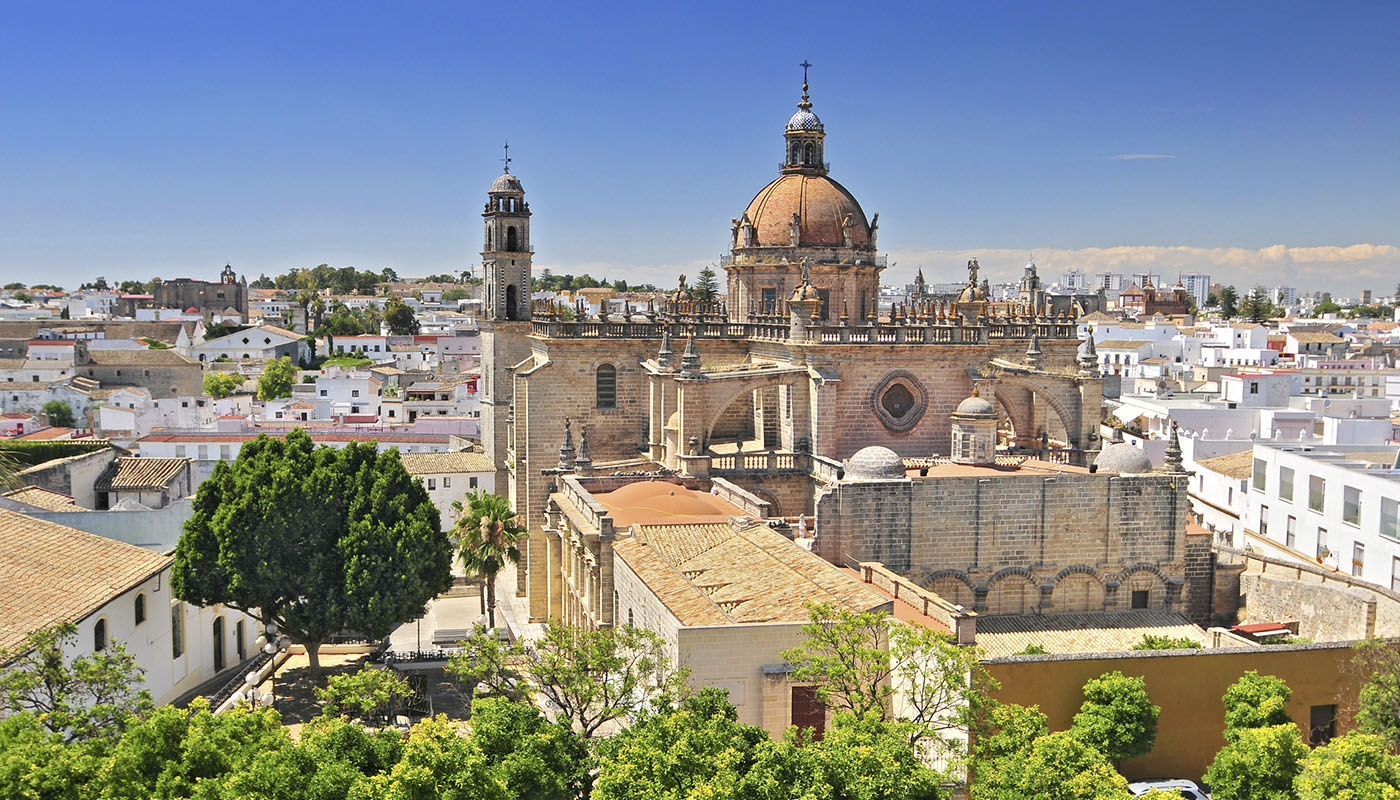
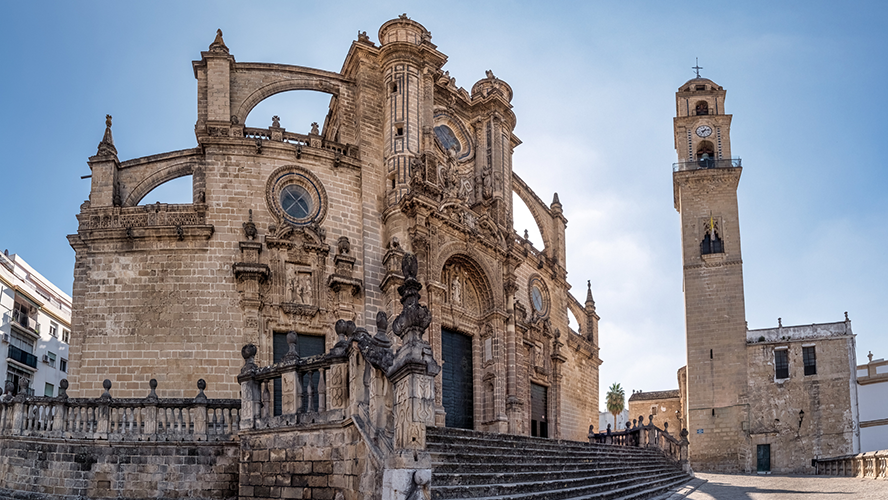
Jerez Cathedral is also located in the area around the Plaza del Arenal. Built in the 17th and 18th centuries on the site of the original Church of the Saviour, which was, in turn, built on the site of a mosque, it combines Gothic, Baroque and Neoclassical styles.
Nearby is the Palace of Viceroy Laserna, the last viceroy of Peru and Spain in the Americas, who lived in this building in the late 18th and early 19th centuries. Neoclassical in style, it belongs to the heirs of Laserna. It is worth a visit inside and on the outside to learn how the Andalusian aristocracy lived at that time.
Emerging as a suburb south-east of the walls in the 14th century, the San Miguel neighbourhood outside the walls was named after the beautiful Isabelline Gothic church built between the 15th and 16th centuries. That area of Jerez, located near the Plaza del Arenal, is closely linked to flamenco (where the Spanish legend Lola Flores was from), a genre whose roots come from this city in Cádiz.
From the square, you can reach the Alameda Vieja, a walkway which stands out for the beauty of its landscaped areas and trees, whose origins date back to the time of the Alcazar and which is surround by this historic ensemble, the Cathedral and the González Byass sherry winery.
Food and shopping
Jerez’s gastronomy is linked to sherry, just as the city itself is linked to flamenco. Restaurants and bars are all over the city, but the downtown area is where tapas reign supreme. Calle Larga, Plaza del Arenal, Plaza de Rafael Riveo, Plaza de Plateros and Plaza Mamelón are home to some of Jerez’s top dining establishments.
Taberna Jerez (calle de San Miguel, 2) is a good option. Located next to the Plaza del Arenal, this establishment has good recommendations on Tripadvisor. Its interior simulates the courtyard of a sherry winery with vine leaves on the ceiling and bunches of grapes as lights. You can eat tapas, excellent fish or meat, and even homemade stews.
A Mar (calle Latorre, 8) offers diners high quality on its fish menu, as well as a large variety of rice dishes and charcoal-grilled meats.
If you want to go shopping, there are many options from the Plaza del Arenal: from craft and souvenir shops to stores specialising in local arts (flamenco articles, sherry wines or horse riding equipment).