















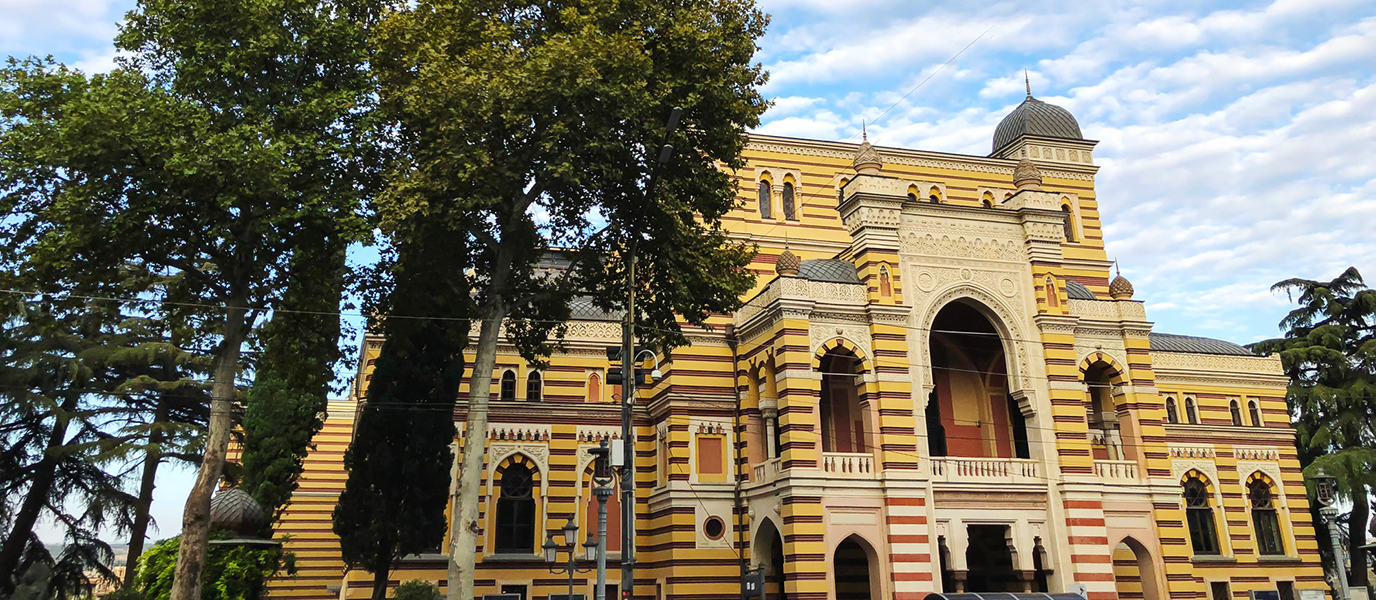
In Georgia, opera and ballet are deeply loved. That’s why no expense or effort was spared when, in the mid-19th century, the Tbilisi National Opera and Ballet Theatre was built; since 1937, it has borne the name of Zakharia Paliashvili. This is why a visit to the famous Rustaveli Avenue, where it’s located, is a must, to enjoy this magnificent and sophisticated building in the Georgian capital, the country’s oldest opera house.
Numerous figures from the worlds of culture and the arts have worked at this opera and ballet theatre. One of them was the composer Zakhariy Paliashvili, author of the opera “Abesalom and Eteri” (1919) and one of the most significant figures in Georgian classical music. As well as his brother Ivan Paliashvili, better known by the nickname Paliev. The theatre also provided a debut for Nino Ramishvili and Ilya Sukhishvili, who later founded the Georgian National Dance Company.
The theatre went through a long period of decline in the 20th century due to a lack of financial resources, but from 2003 onwards, the state covered all the costs and, following a comprehensive refurbishment, it regained its former splendour. Today, the theatre is the hub of cultural life in Tbilisi.
- A theatre to charm the people
- Architecture and interior decoration
- Tips and information for your visit
- Frequently held performances
A theatre to charm the people
The walls and halls of the Tbilisi Opera House hold many secrets of local and national social life. Its construction, with Arab influences, began in 1847 under Governor Mikhail Vorontsov after Georgia joined the Russian Empire, and he did so to charm and win over the population, who weren’t very happy with him. The chosen location? What is now the famous Rustaveli Avenue, next to Erivansky Square.
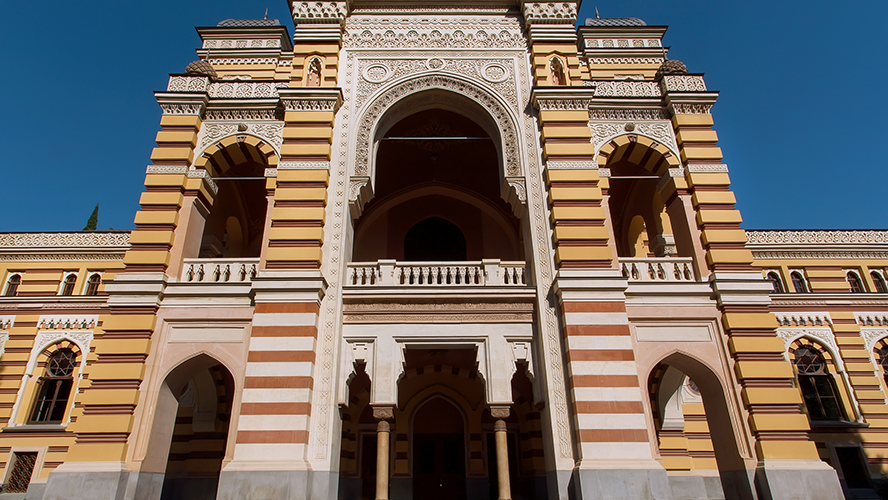
The architect behind the project was Antonio Scudieri, who’d arrived in Tbilisi from Odessa. The Russian artist Grigoriy Gagarin was commissioned to paint the murals. In just three years, construction of this magnificent building was completed, and it immediately became a favourite spot for the city’s residents and the main hub of Tbilisi’s cultural life.
The theatre season opened on 9 November 1851 with Gaetano Donizetti’s opera “Lucia di Lammermoor”. Since then, opera in Tbilisi has grown in popularity, and many different companies and artists from across Europe have performed at this theatre.
Unfortunately, on 11 October 1874, a fire destroyed the theatre, along with all the costumes, the décor and a significant music library, just before a performance of Bellini’s “Norma”. Following an extensive restoration process, the theatre was reopened.
Architecture and interior decoration
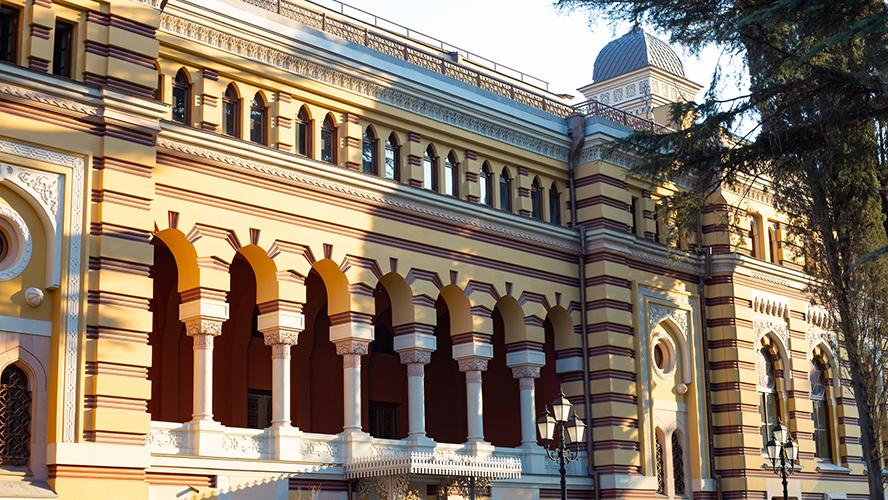
Built in the Moorish style, the Tbilisi Opera and Ballet Theatre, formerly known as the Imperial Theatre of Tbilisi, was designed by the architect Antonio Scudieri, whilst the interior paintings are the work of the artist and Russian aristocrat Grigory Gagarin. The facade, with its geometric decoration, is reminiscent of ancient Arab palaces due to its Neo-Moorish style, featuring ornate arches, columns and vibrant colours that give it its unmistakable appearance. Its interior, adorned with striking chandeliers, is a true reflection of the elegance of the great European theatres. It’s worth noting that a gigantic chandelier weighing over 1,200 kilos, packed into 12 enormous crates, was shipped here all the way from Marseille.
The theatre was decorated by a Parisian designer, who used coloured velvet, gold and silver detailing and high-quality silks. The layout of the foyers and the main auditorium is that of a typical European opera house.
Tips and information for your visit
To discover the details of the history and anecdotes witnessed by the Tbilisi Opera House, it’s best to book a guided tour to visit the rehearsal rooms of the State Ballet, under the direction of the renowned ballerina Nina Ananiashvili. Furthermore, these tours usually include a ticket for an opera or ballet performance. The average price is around 40 euros.
If you simply wish to attend one of the major performances at the Tbilisi Opera and Ballet Theatre, it’s best to purchase tickets on the theatre’s official website (www.opera.ge) or via one of the authorised ticket sales platforms. Prices are quite affordable. It is worth checking the schedule of performances beforehand to choose a show that best matches your tastes.
The theatre is located in the heart of Tbilisi’s historic centre and is easily accessible by public transport, as it’s situated on the city’s main avenue.
Frequently held performances
Many legendary productions have been staged here, from “Swan Lake” to “Giselle”, including “The Nutcracker”, “Don Quixote”, “Romeo and Juliet” and “A Midsummer Night’s Dream”. For example, the theatre has welcomed great opera stars, such as the Spaniards Montserrat Caballé and José Carreras.
It must be said that the Tbilisi Opera and Ballet Theatre is one of those remarkable places that is a must-visit on a holiday to Georgia due to its uniqueness. Furthermore, this building enjoys an enviable location, right in the heart of the city, so travellers are very likely to come across it, as it’s easily recognisable thanks to its Moorish style.