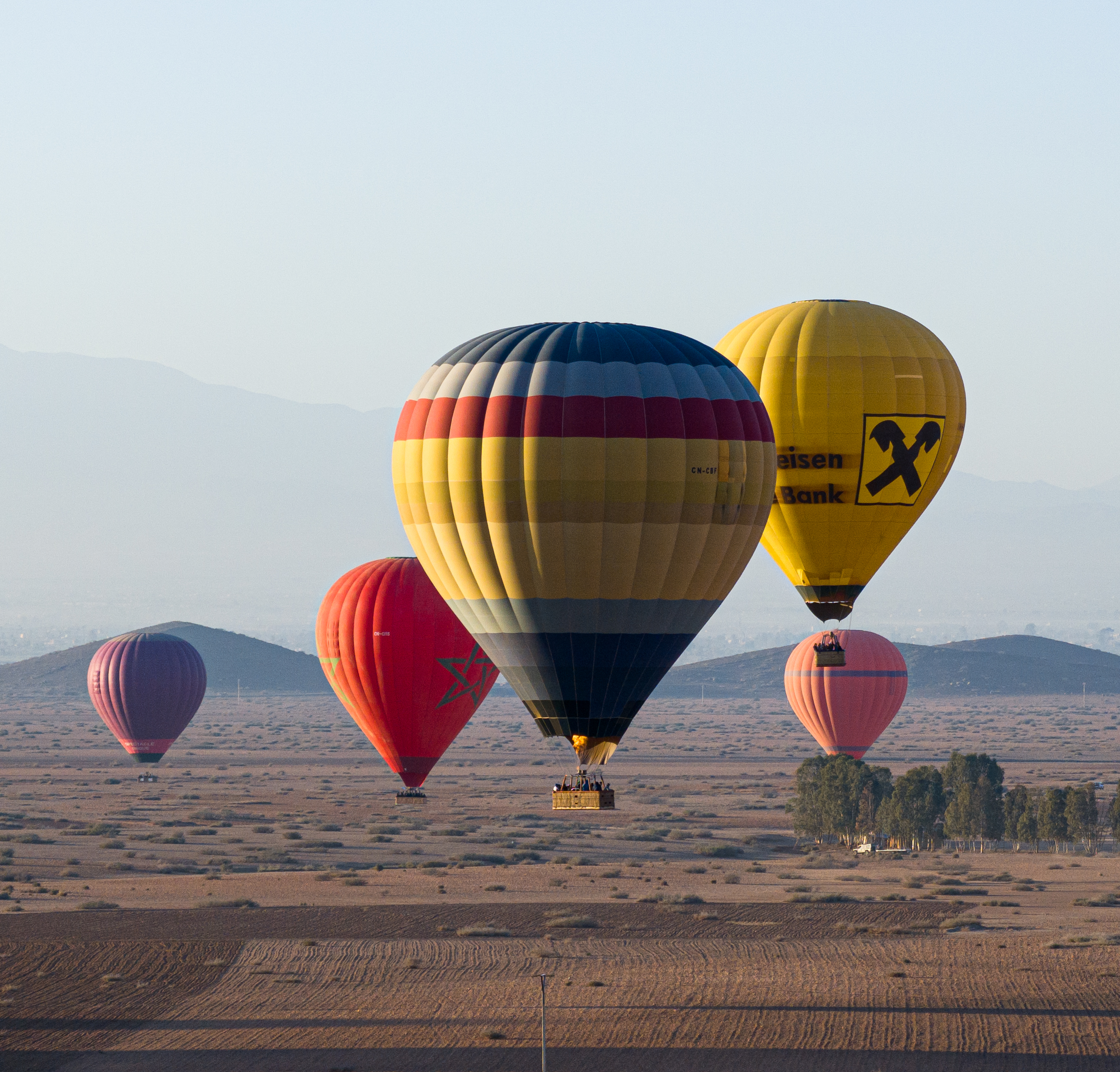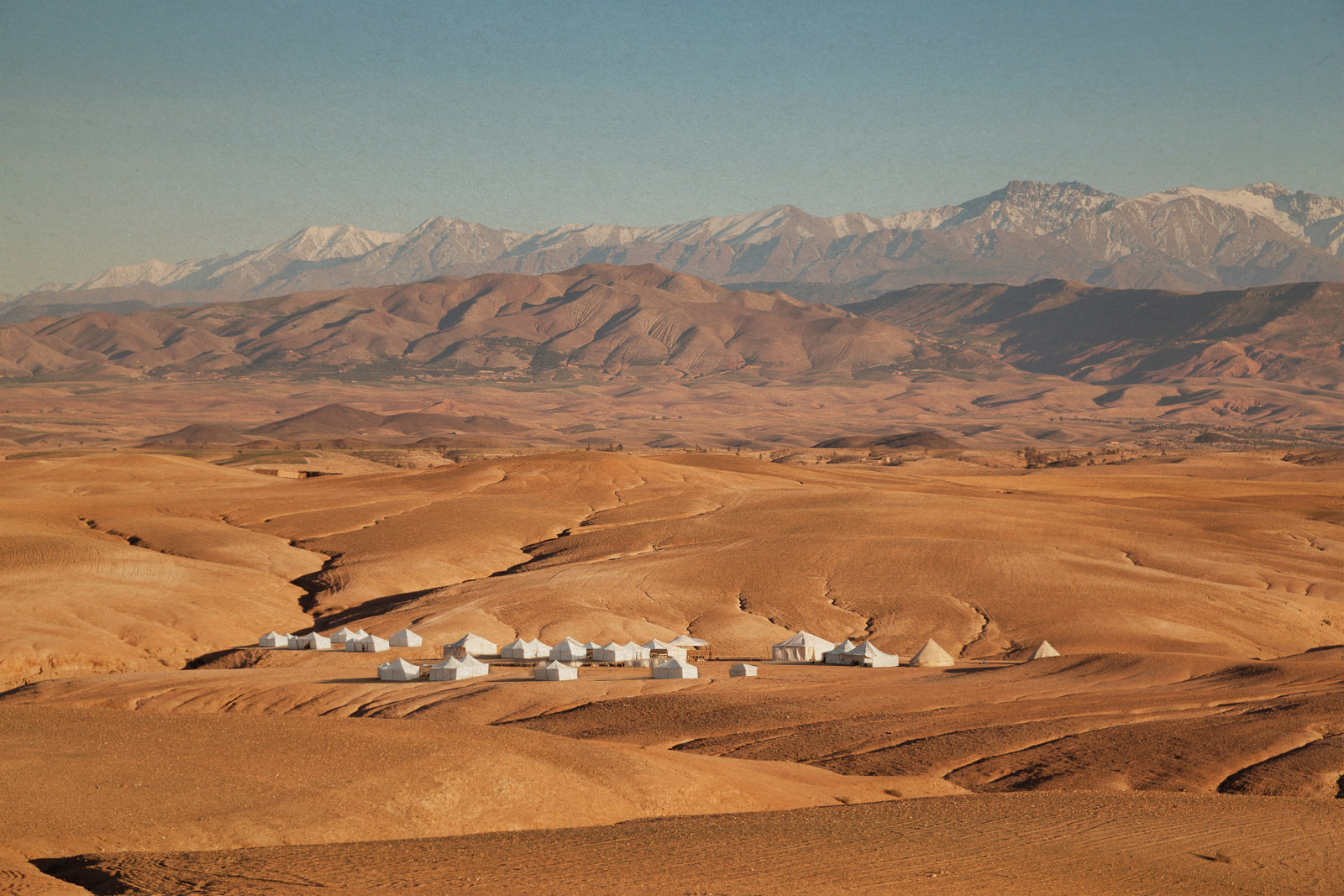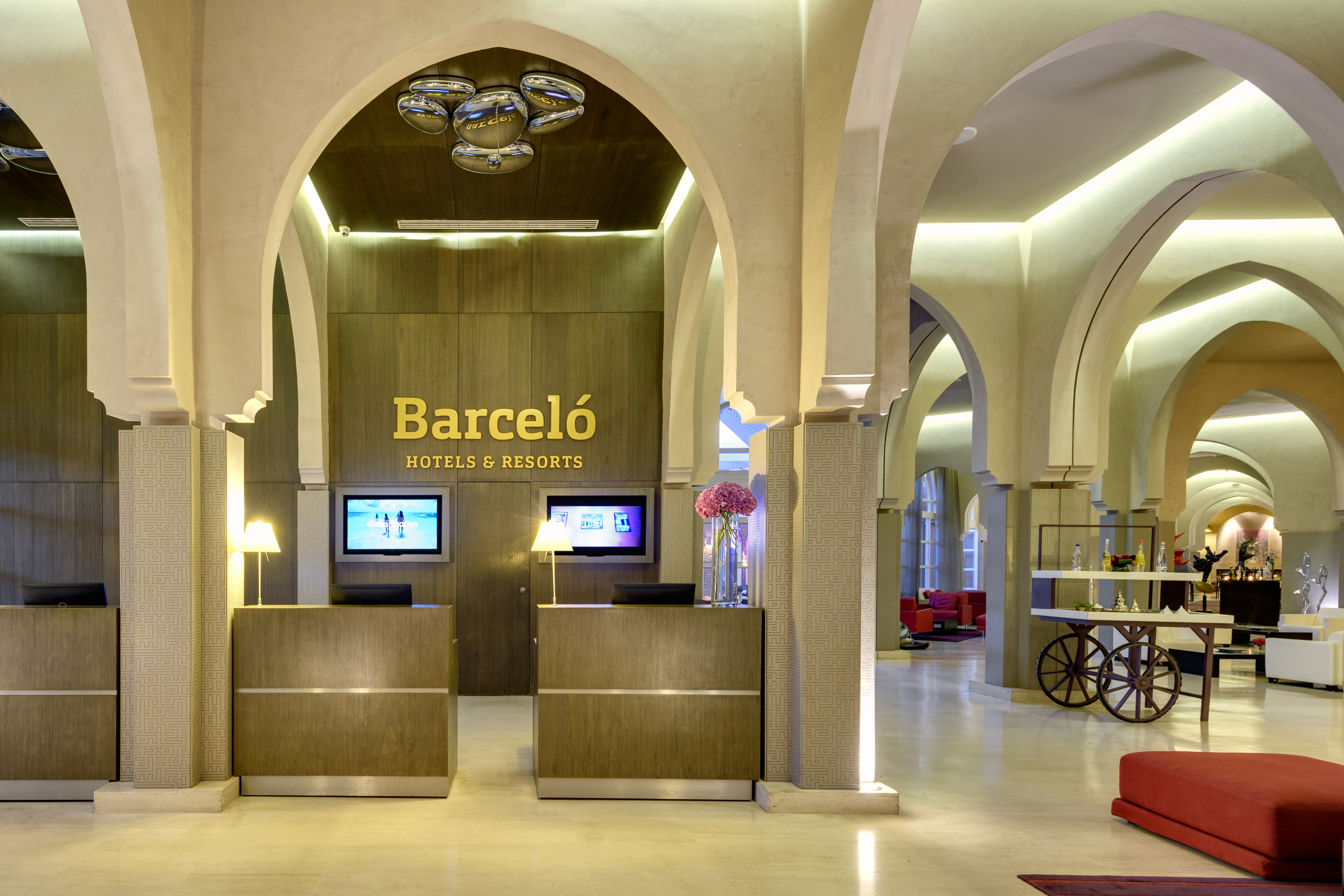










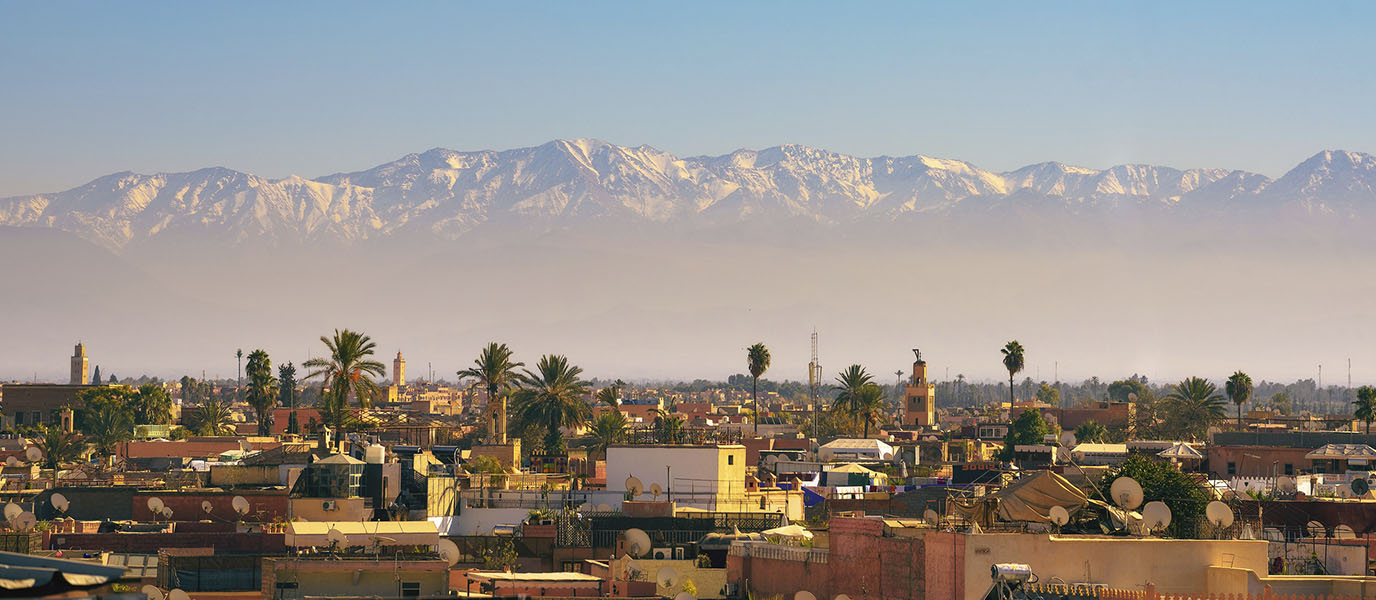
Known as the “Red City” for the ochre hue of its walls and buildings, Marrakech is a captivating destination of winding alleyways, grand palaces, serene gardens, and lively markets rich with aromas and flavor.
Morocco’s great southern city is a cultural crossroads that has preserved its essence while welcoming modern travelers.
Marrakech was founded around 1070 by the Almoravid dynasty as a capital near the Atlas Mountains. Over the centuries it passed through Almoravid, Almohad, Saadian, and Alaouite rule—each leaving a distinct architectural and cultural legacy. The famous Koutoubia Mosque, begun by the Almohads after taking the city, remains one of its defining landmarks. The medina of Marrakech is a UNESCO World Heritage Site.
Must-see monuments and places in Marrakech
Marrakech is one of Morocco’s most monumental cities and an essential destination for travelers drawn to history, culture, and Islamic architecture. Here you’ll encounter centuries-old mosques, palaces adorned with exquisite mosaics, peaceful gardens, and souks where time seems to stand still.
Discover why Marrakech offers an endless array of places that reflect its rich heritage. Below you’ll find the main monuments and points of interest you shouldn’t miss on your visit.
- Jemaa el-Fna Square
- Koutoubia Mosque
- The Marrakech Souk
- Medersa Ben Youssef
- Almoravid Qubba
- Marrakech Museum and others
- Le Jardin Secret
- Menara Gardens
- Majorelle Garden
- The Marrakech Palm Grove
- Bahia Palace
- Saadian Tombs
- Final tips for your visit
Jemaa el-Fna Square
This is the heart of the city and the classic meeting point for locals and visitors alike. By day, the square fills with stalls, storytellers, and snake charmers. As evening falls, Jemaa el-Fna truly comes alive: the scent of grills drifts through the air, Gnawa musicians set the rhythm, and dozens of food stands turn the space into a vast open-air dining room.
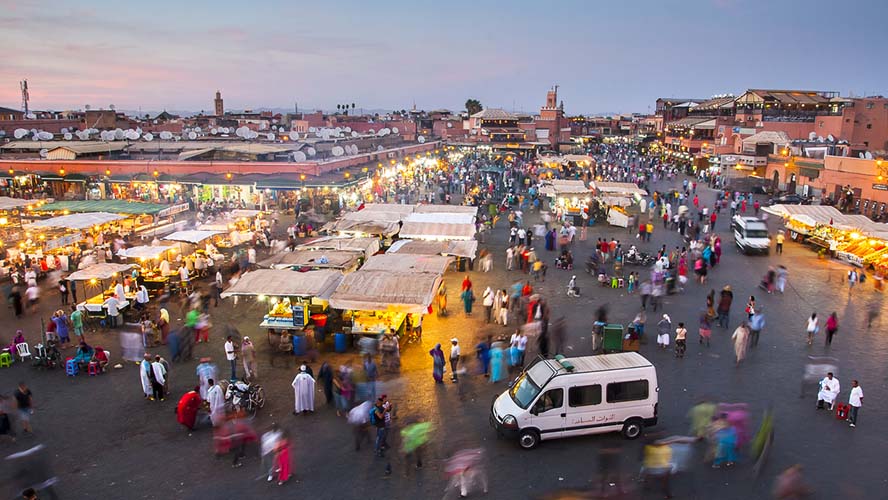
Head up to one of the rooftop terraces for an iconic panorama of Marrakech, with the Koutoubia minaret on the horizon and an atmosphere like nowhere else.
Koutoubia Mosque
The Koutoubia Mosque is Marrakech’s most emblematic monument. Built in the 12th century by the Almohads, it’s renowned for its striking minaret—over 70 meters high—visible from much of the city. It inspired Seville’s Giralda and Rabat’s Hassan Tower. Its name comes from the nearby booksellers’ market (kutubiyyin) that once stood beside it.
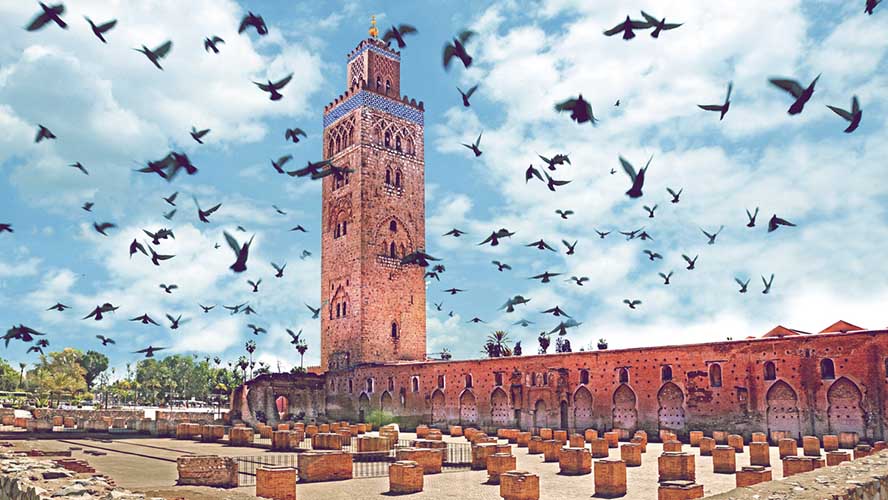
Non-Muslims cannot enter the prayer hall, but the surrounding gardens offer a peaceful vantage point to admire the sandstone architecture and perfect symmetry—textbook Almohad style.
The Marrakech Souk
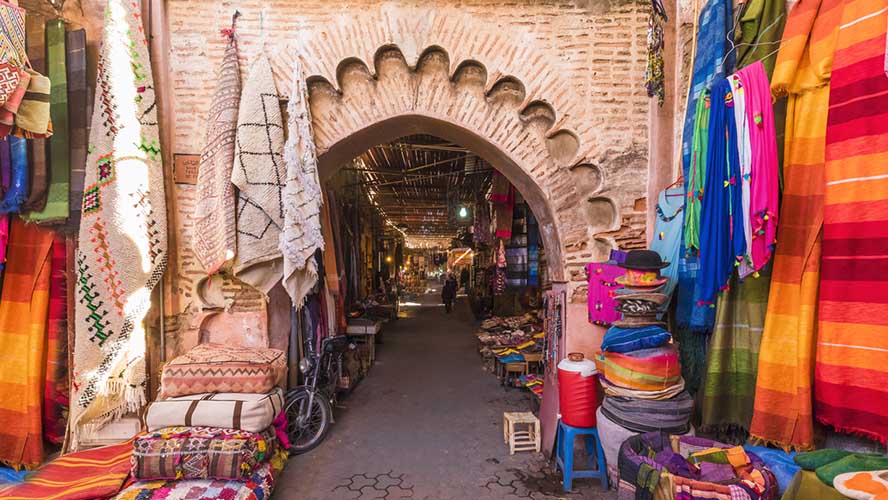
Exploring the souk means stepping into the living soul of the medina. This maze of covered lanes is packed with artisanal workshops, spice merchants, carpets, metal lanterns, and leather goods. Each area specializes in a different craft, letting you watch artisans at work up close. It’s the ideal place to practice your bargaining skills and pick up authentic souvenirs—from Berber ceramics to essential oils.
Medersa Ben Youssef
In the heart of the medina, the Medersa Ben Youssef was once one of North Africa’s leading Quranic schools. Founded in the 14th century and rebuilt by the Saadians in the 16th, it housed more than 800 students at its peak.
Its architecture blends carved stucco, cedar wood, and zellige tiles that blanket every surface of the central courtyard. Reflections on the water, finely worked arches, and geometric detail make it a masterpiece of Islamic art.
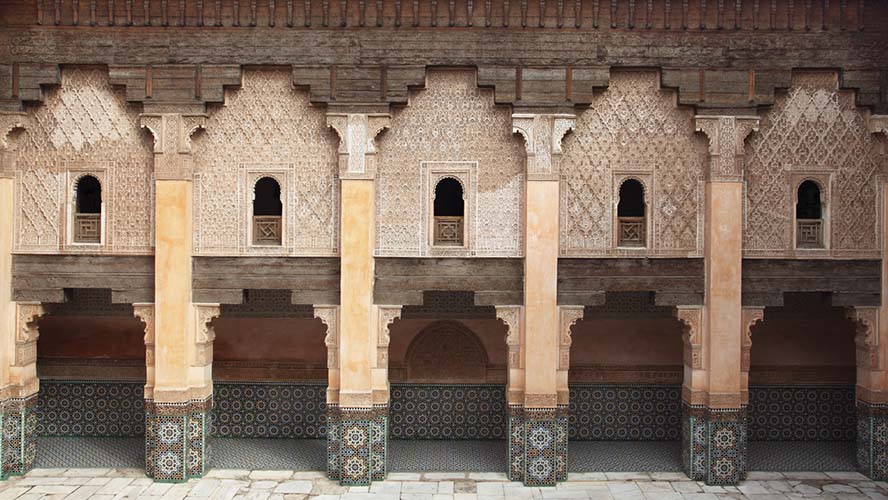
Today it’s one of Marrakech’s most visited monuments and essential to understanding the city’s cultural and educational prominence in the past.
Almoravid Qubba
The Almoravid Qubba is among Marrakech’s oldest surviving structures, dating to the 11th century. This modest building is the city’s only intact architectural remnant from the Almoravid founders. While the exterior is restrained, the interior reveals refined geometry, Kufic inscriptions, and an intricate arch system that showcases the era’s technical prowess.
Its simplicity and age make it a key stop for anyone curious about Marrakech’s earliest history.
Marrakech Museum and others
Set in the former Dar Menebhi Palace, the Marrakech Museum is a superb example of Andalusi-Moroccan architecture. Inside you’ll find contemporary art, ceramics, textiles, and traditional objects—but the building itself steals the show, with a grand central courtyard crowned by a dramatic chandelier.
Also worth visiting are Dar Si Saïd—focused on decorative arts and craftsmanship in leather and wood—and the Museum of Orientalist Art, which explores relations between Morocco and Europe in the 19th and 20th centuries.
Le Jardin Secret
Recently restored, this historic garden is a calm oasis within the medina. Le Jardin Secret marries traditional Islamic architecture with a sophisticated hydraulic system inherited from the Saadian period. Its two main areas—the Exotic Garden and the Islamic Garden—express a serene balance between nature and spirituality.
Menara Gardens
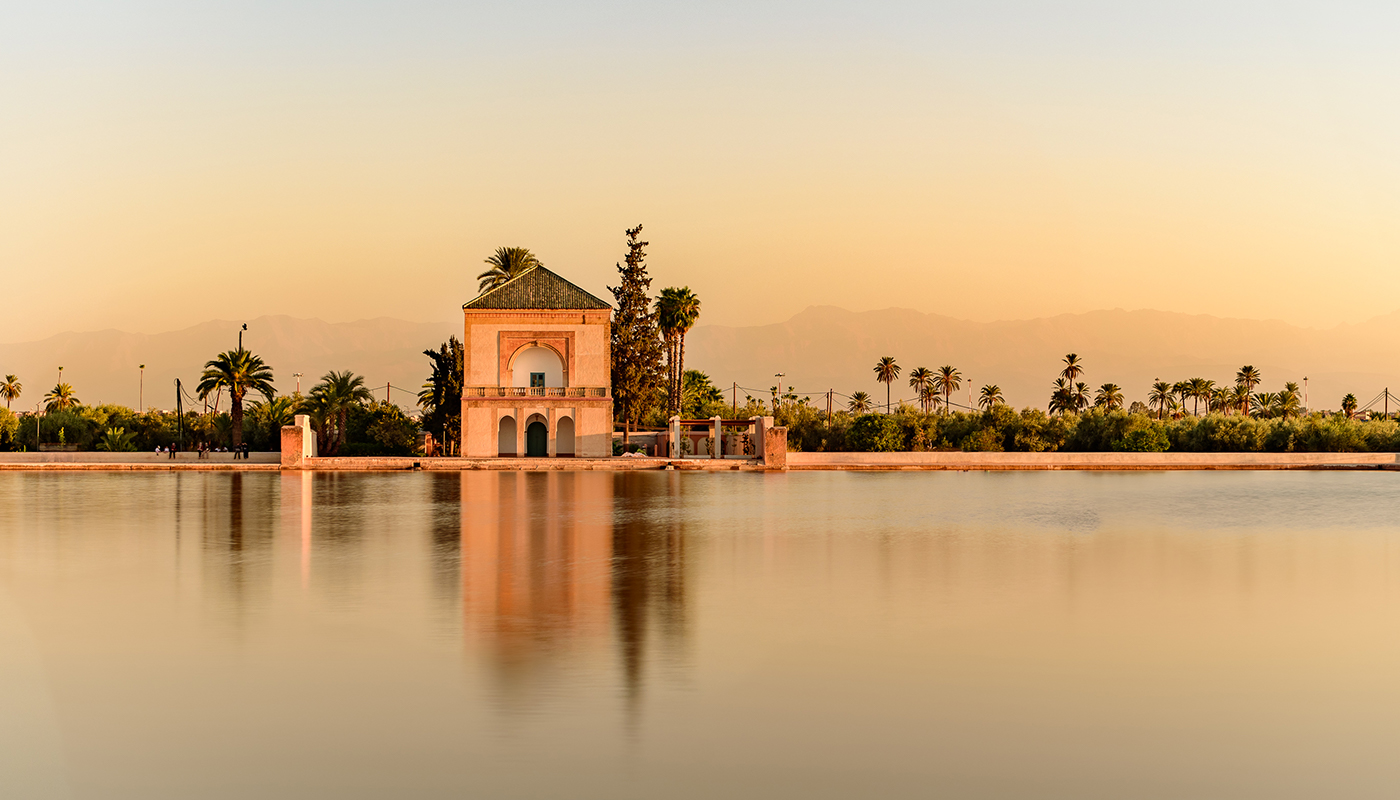
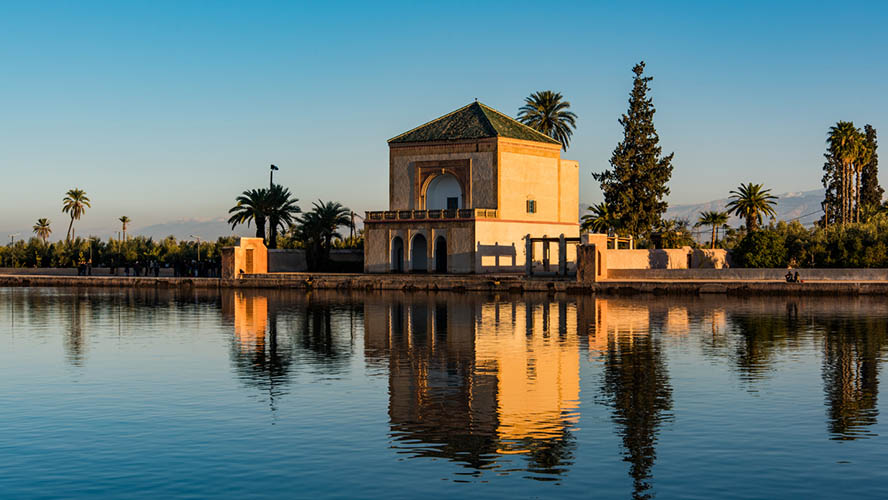
On the edge of the city lie the Menara Gardens, among Marrakech’s most peaceful and beautiful spots. Created in the 12th century by the Almohads, they are defined by a large central basin once used to irrigate the surrounding olive groves. The Menara pavilion reflects in the water with the Atlas Mountains beyond—one of the city’s classic postcards. It’s perfect for a stroll or a tranquil sunset away from the bustle of the medina.
Majorelle Garden
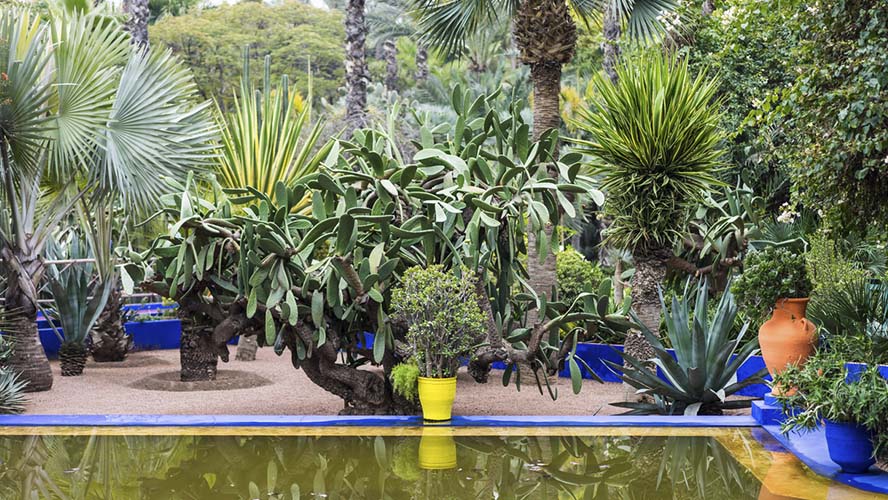
The Majorelle Garden is one of Marrakech’s most beloved attractions. Designed by French artist Jacques Majorelle in the 1920s and later restored by Yves Saint Laurent and Pierre Bergé, it sets vivid Majorelle blue against cacti, bamboo, palms, and ponds. Within the grounds, the Berber Museum showcases the culture and traditional objects of the Amazigh communities of North Africa—ideal for art, botany, and photography lovers.
The Marrakech Palm Grove
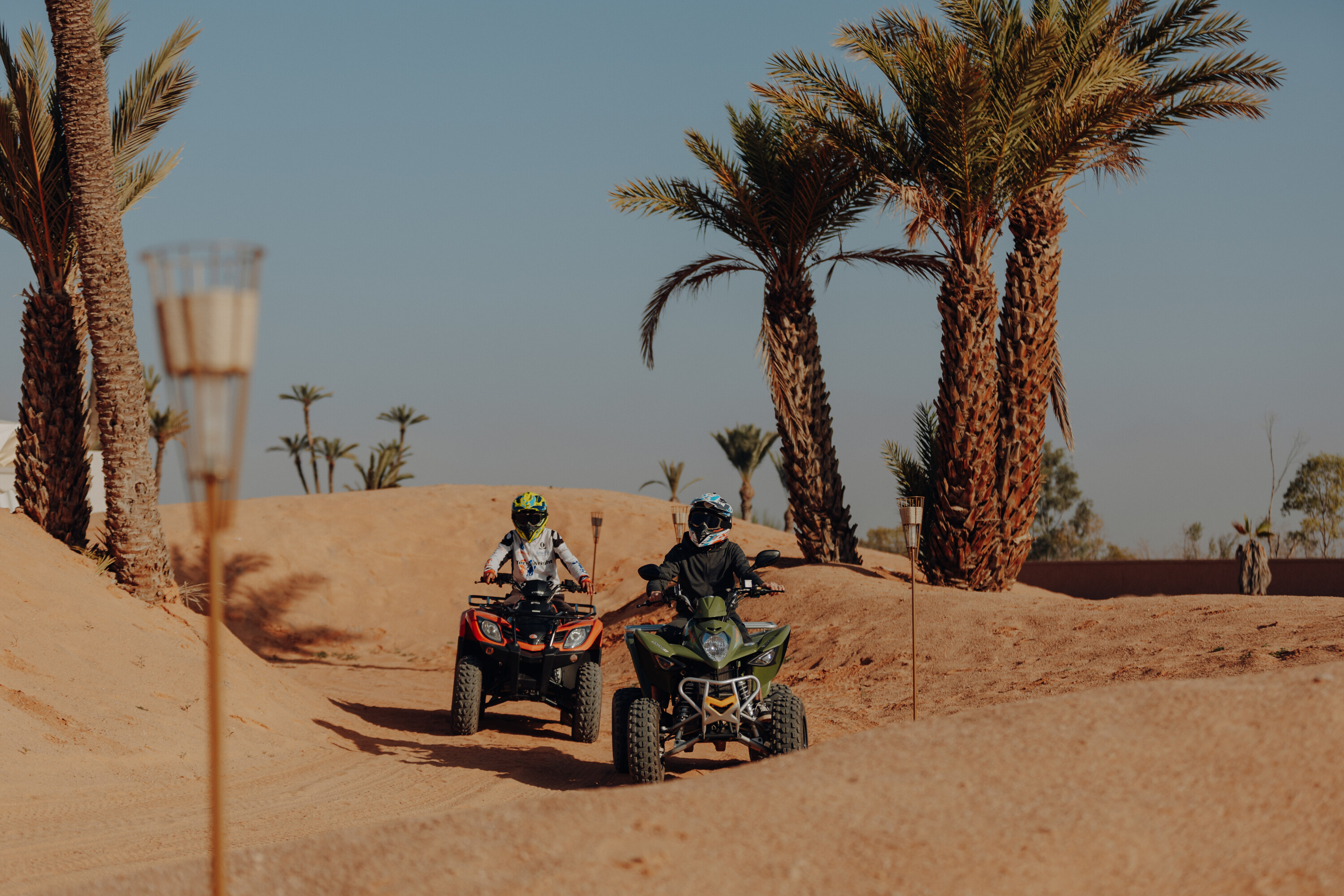
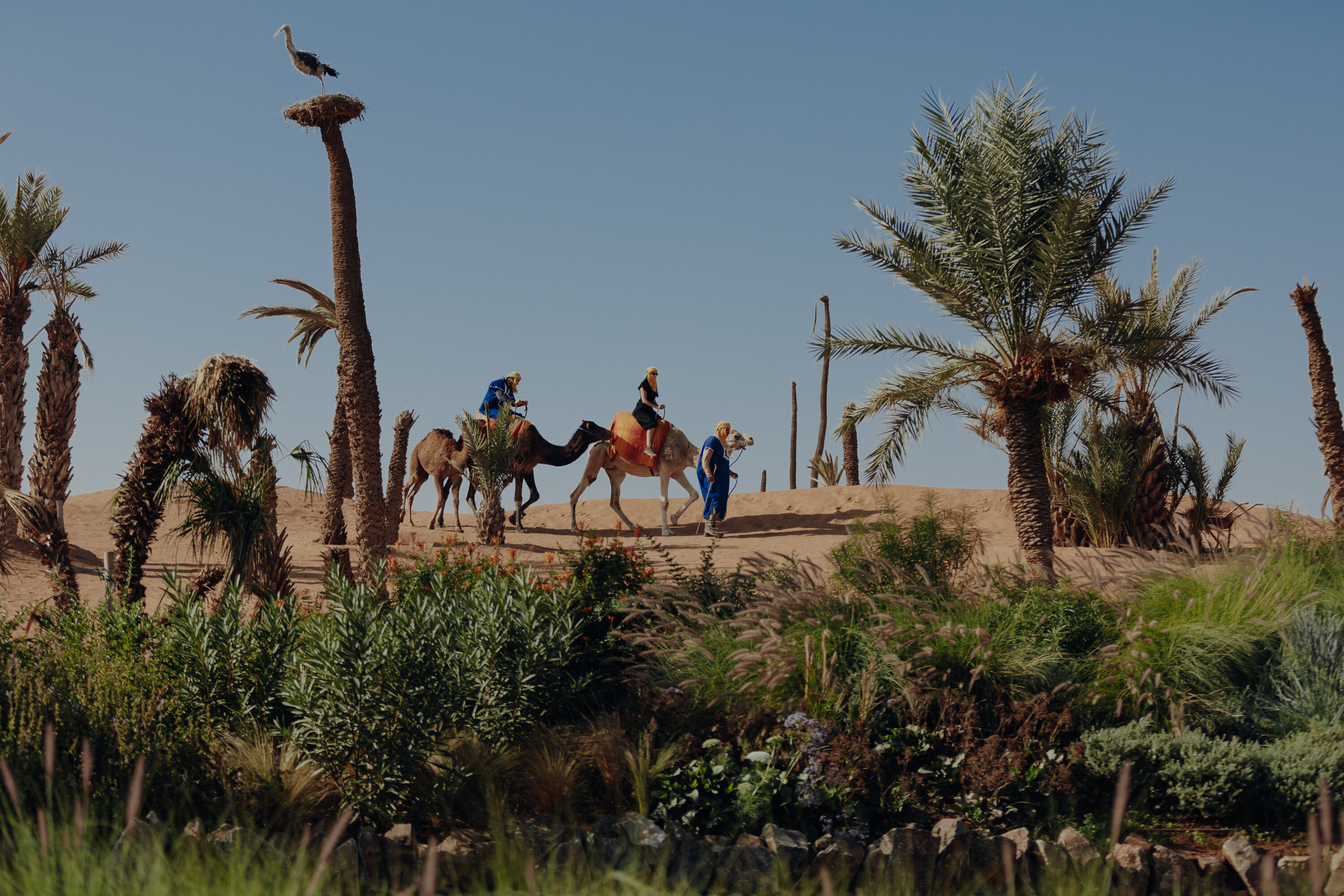
With more than 100,000 palm trees spread across roughly 13,000 hectares, the Marrakech Palm Grove is one of the region’s largest green areas. Planted in the 11th century by the Almoravids, it provided shade and produce for the city. Today it’s popular for camel rides, quad outings, or simply soaking up a desert-fringe landscape just a short hop from the center.
Bahia Palace
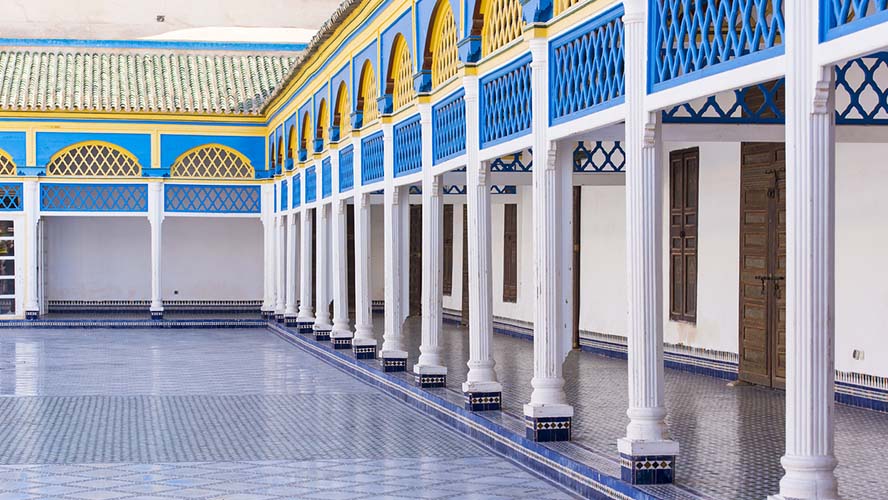
The Bahia Palace is a 19th-century masterpiece built by the vizier Si Moussa and expanded by his son Ba Ahmed. Its name—“the Brilliant” or “the Beautiful”—captures the ambition to create the country’s most splendid palace. With over 150 rooms, gardened courtyards, and finely carved ceilings, it’s a showcase of late-period Moroccan opulence. Wandering its mosaic-lined halls and marble floors offers a glimpse into the lifestyle of the era’s elite.
Saadian Tombs
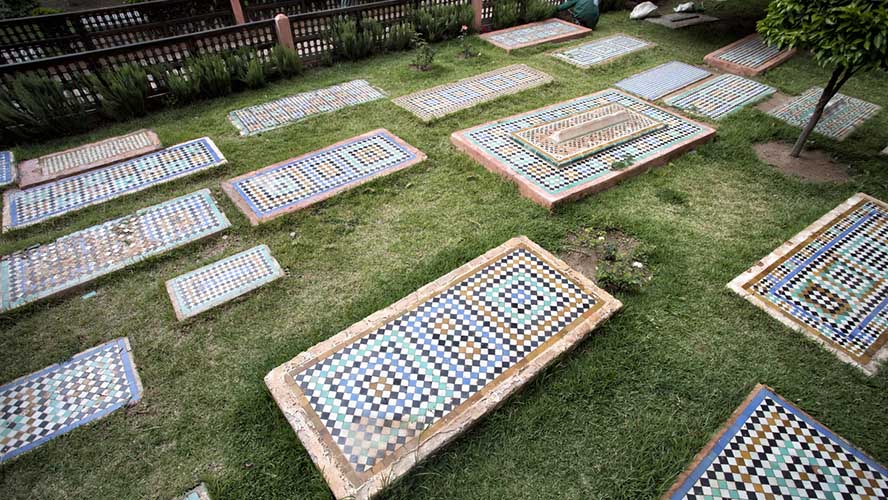
Rediscovered in the early 20th century, the Saadian Tombs are among Marrakech’s best-preserved treasures. Dating from the 16th century, they house the resting places of the Saadian dynasty, which oversaw one of the city’s most prosperous eras.
The highlight is the “Hall of Twelve Columns,” adorned with Italian marble and carved cedar. The complex is surrounded by gardens where members of the royal family and their attendants lie at peace—an unmissable visit to appreciate the refinement of Saadian art.
Final tips for your visit
- Bring water, comfortable footwear, and sunscreen.
- Embrace getting a little lost in the medina—it’s part of the experience.
- Dress modestly and respect local customs.
- Bargain with patience in the souks.
- Enjoy sunset from a rooftop overlooking Jemaa el-Fna.