










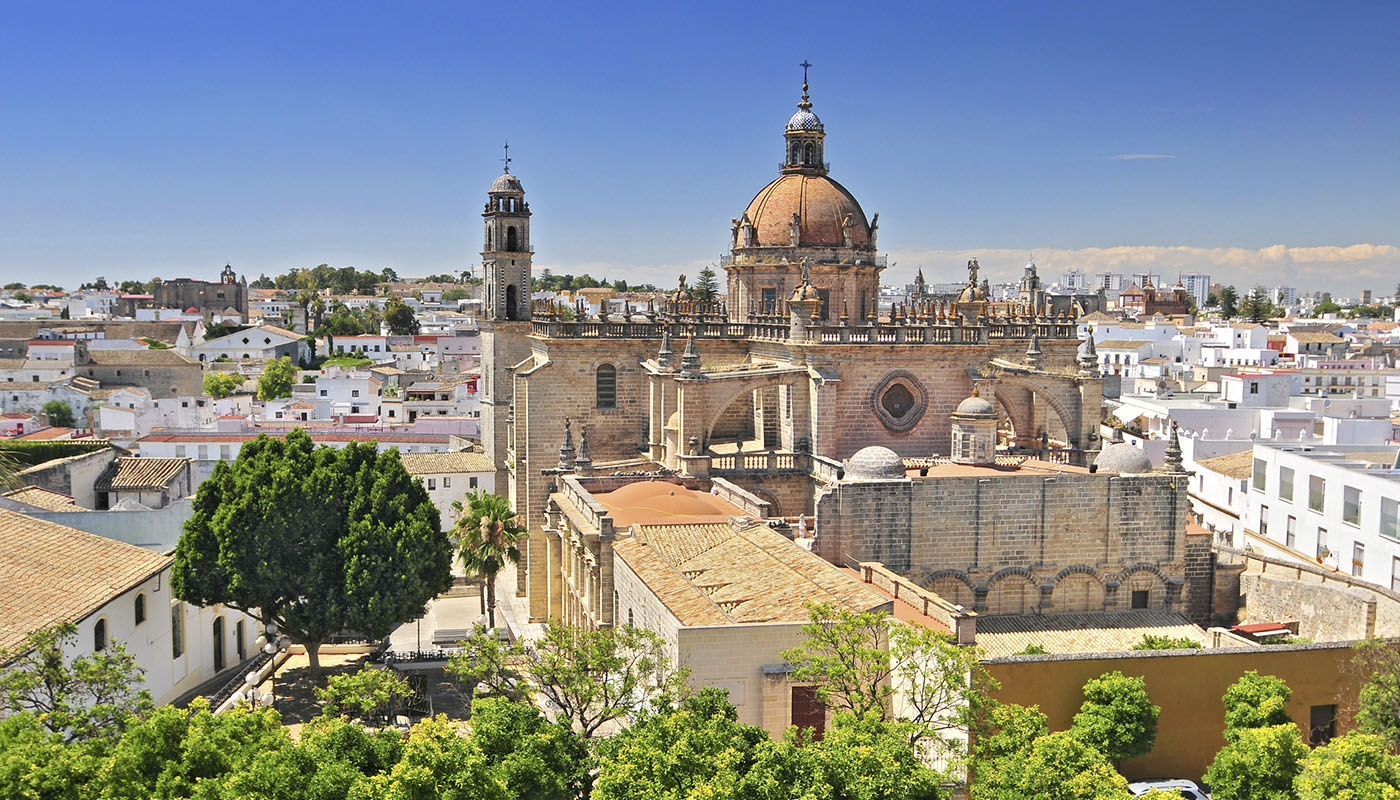





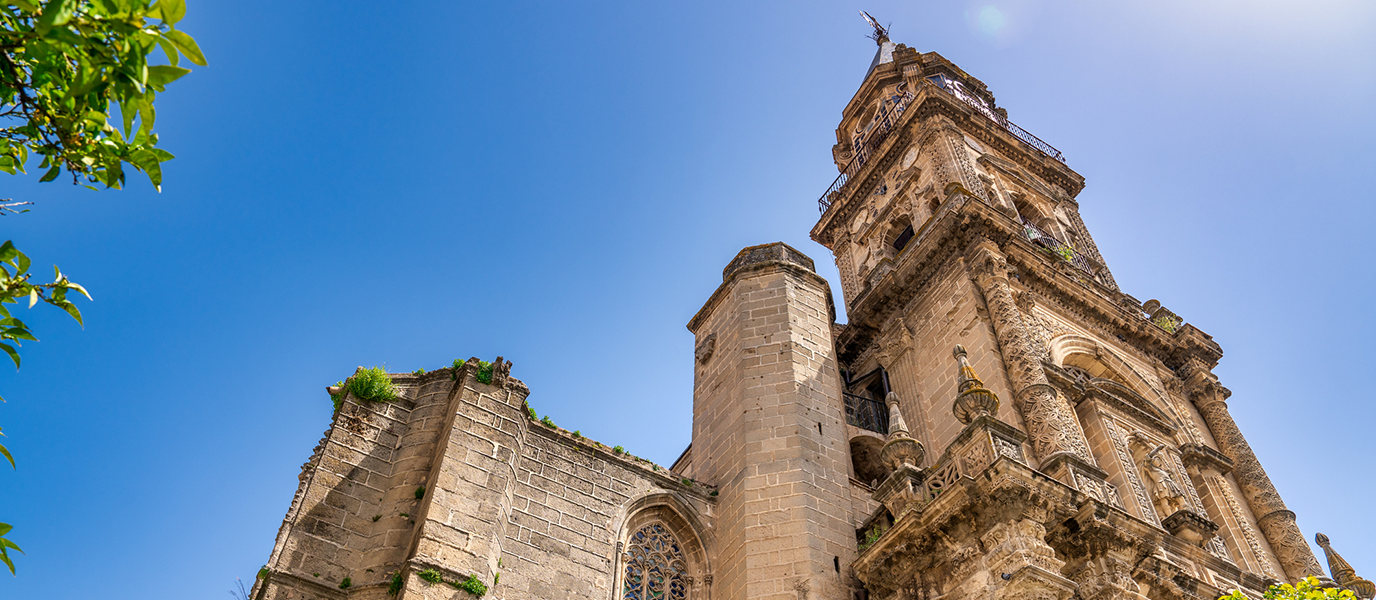
The Church of San Miguel is big enough to be considered as a cathedral. It is built on a majestic scale, and is in fact Jerez’s biggest place of worship. It is, without question, the finest and most complete religious edifice in this part of Andalusia. Its architecture is a mix of styles, embracing Jerez Gothic, the voluptuousness of the Renaissance and the most beautiful of the Baroque.
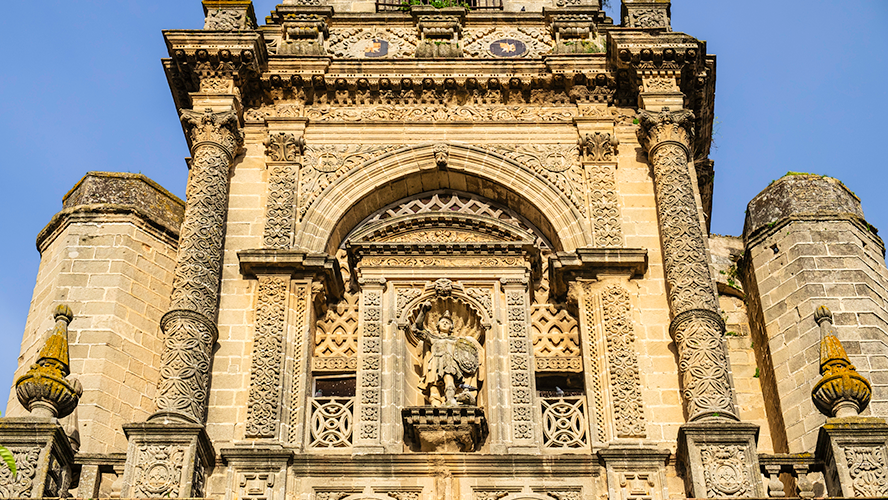
Located in the district of San Miguel, this church is one of Jerez’s most emblematic monuments. Construction began in 1484, under the patronage of the Catholic Monarchs, and continued for several centuries. As is commonly the case, this long period of construction resulted in a remarkable mixture of architectural styles. The church’s outstanding feature is its imposing Gothic façade, known as the Portada del Evangelio, and its eighteenth-century bell tower. Inside, there are various chapels with sacred art of immense value, with ribbed vaults above.
- History of the Church of San Miguel de Jerez
- Sacred art and a canvas by Zurbarán
- Useful information: opening times, admission, worship, etc.
History of the Church of San Miguel de Jerez
Declared a Monument of Historic and Artistic Interest in 1833, the Church of San Miguel, Jerez, is a symbol of cultural heritage in this Andalusian city, and the centre of particular attention during Holy Week. The church’s tower-façade was built between 1672 and 1701 by Diego Moreno Meléndez, a master builder who was also involved in the building of Jerez Cathedral.
The Burgundian-style side entrances were built between 1482 and 1484. The Epistola entrance is named for the Immaculate Virgin, and the Evangelio entrance for San José, judging by the Baroque images that have presided over them since the eighteenth century. The Sagrario entrance has one of the finest collections of stone sculptures in Jerez. It was created in 1739, possibly by José Camacho de Mendoza, and has Corinthian columns.
Sacred art and a canvas by Zurbarán
The Church of San Miguel is truly spectacular, and it is well worth taking a walk around its most outstanding features:
High chapel
The High Chapel has a magnificent altarpiece, which demonstrates the maturity of the Seville school of sculpture during the first half of the seventeenth century. The work was designed by Juan Martínez Montañés, and the artistic style of its structure hovers between Mannersim and Baroque. The relief sculptures of the central aisle are also the work of Montañés’ studio: the Battle of the Angels, the Transfiguration and the Ascension, as well as the sculptures of St Peter; St Paul; James son of Zebedee and James, son of Alphaeus; and the virtues of Hope and Faith that crown the pediment. In 1641, Montañés’ responsibilities passed to the Flemish sculptor José de Arce, who completed the lateral aisles and other elements in a more cutting-edge style for the time. Other painters and gilders worked alongside Martínez Montañés and Arce; these included Francisco Pacheco, the son-in-law of Velázquez; Juan del Castillo and Gaspar de Ribas.
Sacramental Chapel
Another important element of the Church of San Miguel is the Sacramental Chapel, built between 1733 and 1758 in a style associated with the Seville Baroque, which was flourishing at the time. Some say that, given its proportions and splendour, it is a church within a church. It has two important images of St Thomas Aquinas and St Buenaventura, and its altarpiece has been attributed to Gabriel de Arteaga.
The side chapels
It is worth taking a close look at some of the Church of San Miguel’s side chapels, including those of the Santo Crucifijo de la Salud, which dates from the mid-seventeenth century, and is attributed to José de Arce; the Incarnation; the Virgen del Pilar, which contains a canvas possibly by Juan de Valdés; the Altar de Ánimas; the Bapisterio (in the baptismal font of which Lola Flores was christened); the San Pedro [Peter] side chapel, the Pavón family chapel and that of the Virgen del Socorro, with its dome which dates from 1547 and is unique in the world.
The vestry
The Vestry has a doorway attributed to the sixteenth century Jerez master builder Francisco Rodríguez, which contains the reliquaries of the 11,000 virgins of Santa Úrsula.
The Treasure Room
The church’s prestige is demonstrated by the huge amount of silverware held by the parish of San Miguel. It has extremely valuable sets of crucifixes and celebratory candelabra, intended for use on the high altar and great religious festivals. In the centre of the room is a huge solar monstrance, commissioned by the Sacramental Brotherhood and created by Juan Laureano de Pina in 1674. There are also censers, incense containers, patens, wine vessels, chalices and ciboria. And a highly prized canvas of the Holy Face, created by Francisco Zurbarán.
Useful information: opening times, admission, worship, etc.
The general admission charge for a visit to the Church of San Miguel is 6 euros, with a reduction for people over 65 and for young people aged between 12 and 25. Children under 12 years are admitted free of charge. Tickets combining admission to the Cathedral are also available.
Opening hours for the Church of San Miguel are Monday – Friday, from 10.00 a.m. till 2.00 p.m. and from 3.00 p.m. till 7.00 p.m., but visitors need to bear in mind that the last admission is 45 minutes before closing time.
The Eucharist is celebrated at the Church of San Miguel every day of the week at 8.00 p.m. On Sundays, mass is celebrated at 9.00 a.m. and again at 12.00 midday.