














The story of Christian Jerez starts at the Convent of Santo Domingo, raised on the site of an old Muslim stronghold. This medieval architectural gem grew during prosperous times, but also went through confiscations and sales that saw its cloisters used as an art shop, then a winery and, eventually, a municipal cultural space.
- History of the convent and its importance to Jerez
- How to visit: opening hours and ticket info
- What to see inside: cloisters, dormitories and an oratory
History of the convent and its importance to Jerez
Historical records say it was in 1264 when the troops of Alfonso X conquered Jerez from the Muslims after much back and forth. It was this king who handed a Muslim military fortress to the Dominicans to secure their presence in the newly claimed land and to have them build a monastery.
Facing the Puerta de Sevilla, these monks held off skirmishes from the Nasrid Kingdom of Granada and expanded this medieval treasure with cloisters and annexes, thanks to land grants from the Crown. The Dominicans’ wealth in those centuries is clear to see in the layout of the monastic complex, as well as in the valuable items housed inside.
The monastery continued to operate and flourish artistically until 1835, but following the confiscations, only the church retained its religious role.
The other buildings and cloisters changed hands and purpose depending on who paid the highest price. They were once owned by the González family, local winemakers who set up a gallery selling artworks and furniture. Then by the Díez family, who converted part of it into a winery, and even Rumasa owned the cloisters until Jerez City Council acquired them in 1983.
Since their restoration in 2012, the City Council has used the site for a variety of cultural events.
How to visit: opening hours and ticket info
Since Jerez City Council took over the Cloisters of Santo Domingo, following Rumasa’s expropriation in 1983, the aim has been to make them accessible to everyone. They were closed for many years due to restoration works, but since 2012 they’ve been open to the public for free.
Today, they serve as a cultural centre next to the convent church in Alameda Cristina and are only closed on Mondays.
From Tuesday to Friday, they open in the mornings from 10.30 a.m. to 1.30 p.m. and in the evenings from 6.00 p.m. to 9.00 p.m. On Saturdays and Sundays, they are only open in the mornings, from 10.00 a.m. to 1:45 p.m., and entry is completely free.
What to see inside: cloisters, dormitories and an oratory
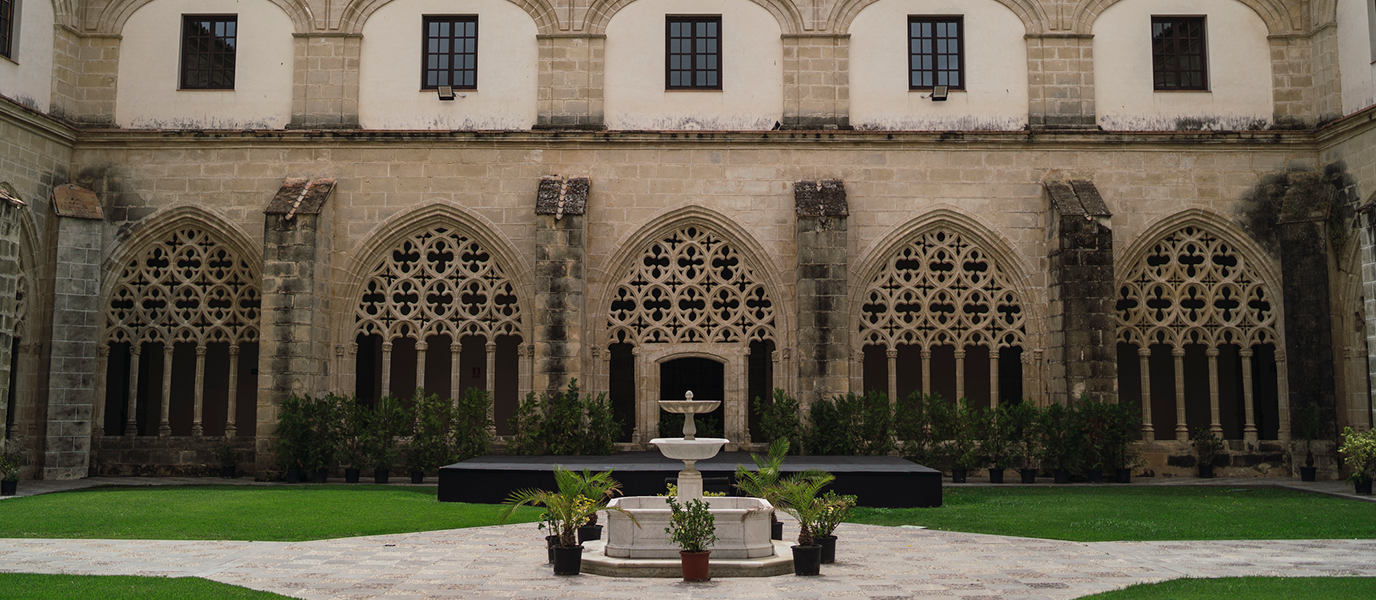
The Mendizábal confiscation of 1835 separated the cloisters and other convent buildings from the church, giving them a civil use they’ve maintained to this day. Among the surviving and visitable spaces is the Great Cloister, a Gothic structure possibly built between 1460 and 1500. It was in the 16th century that the tracery work enclosing the openings was carried out, and it remains particularly striking.
In one corner stands the Oratory of Diego de Ribadeneira, who established a foundation here. The depiction of Saint Veronica on one of its arches is particularly eye-catching.
Much later, in 1729, the Upper Cloister was built, which even held a library, part of which is still preserved in the monastery. Here you can see remains of the original Islamic building Alfonso X handed over to the Dominicans. Its vaulted ceiling and the use of upside-down damaged clay pots to reduce weight are particularly fascinating.
The visit continues through the Lower and Upper Dormitories. The Lower Dormitory was funded by Portugal and features broad ribbed vaults. The Upper Dormitory, used during the coldest months, had to be fully restored.
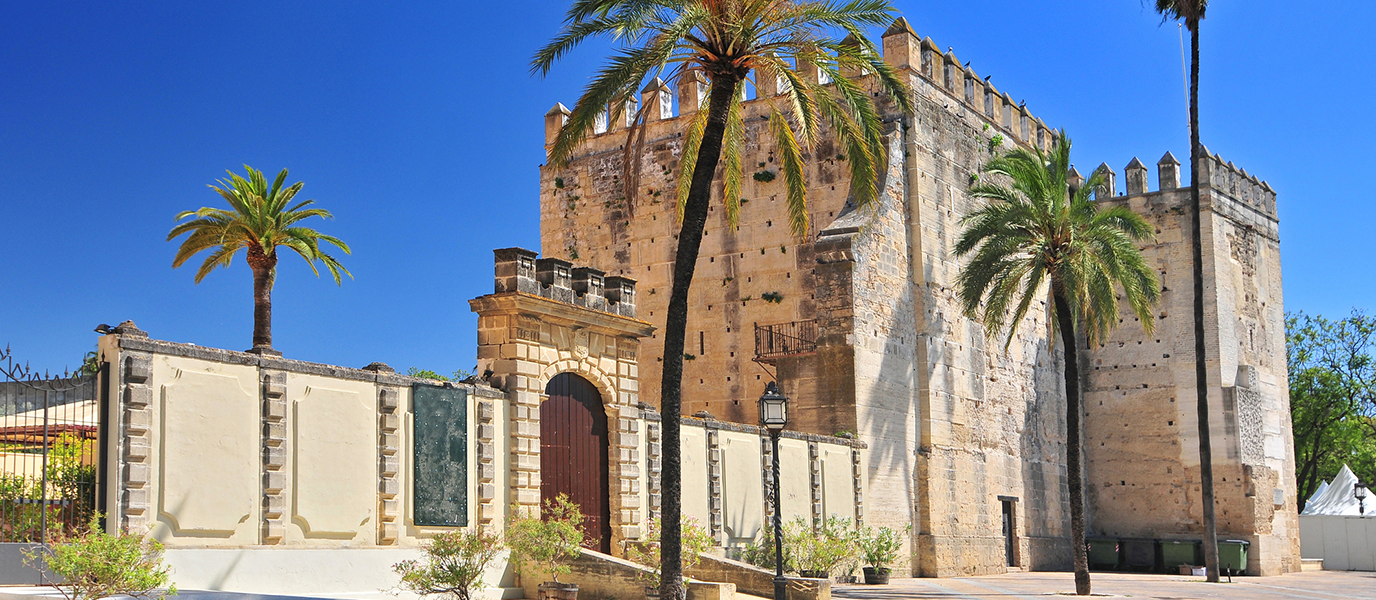
The only visible remains of the old Muslim fortress are the Almohad Gate and a stretch of crenellated wall. This gate is a horseshoe arch framed by an alfiz, which has led historians to believe that the structure Alfonso X handed over wasn’t just any building, but a ribat, a type of Islamic monastery for warrior monks, highly valued at the time.
Several confessionals have also been found, along with a refectory that once housed over 300 friars and a chapter house. Before you leave, don’t miss the Puerta de Gracias, from the 16th century, which was the monks’ access to the church. What’s left of its painted decoration, depicting the Passion of Christ, is especially intriguing.