
















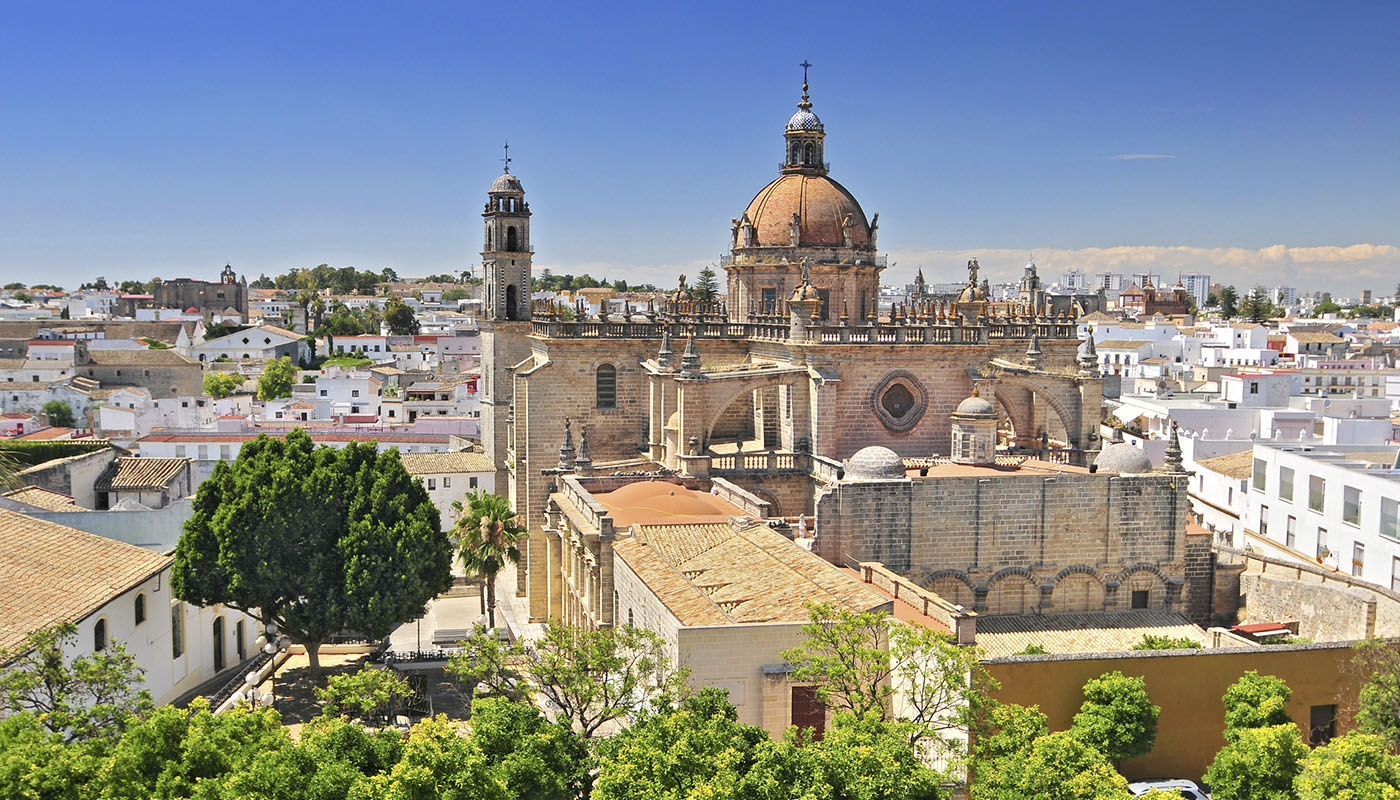





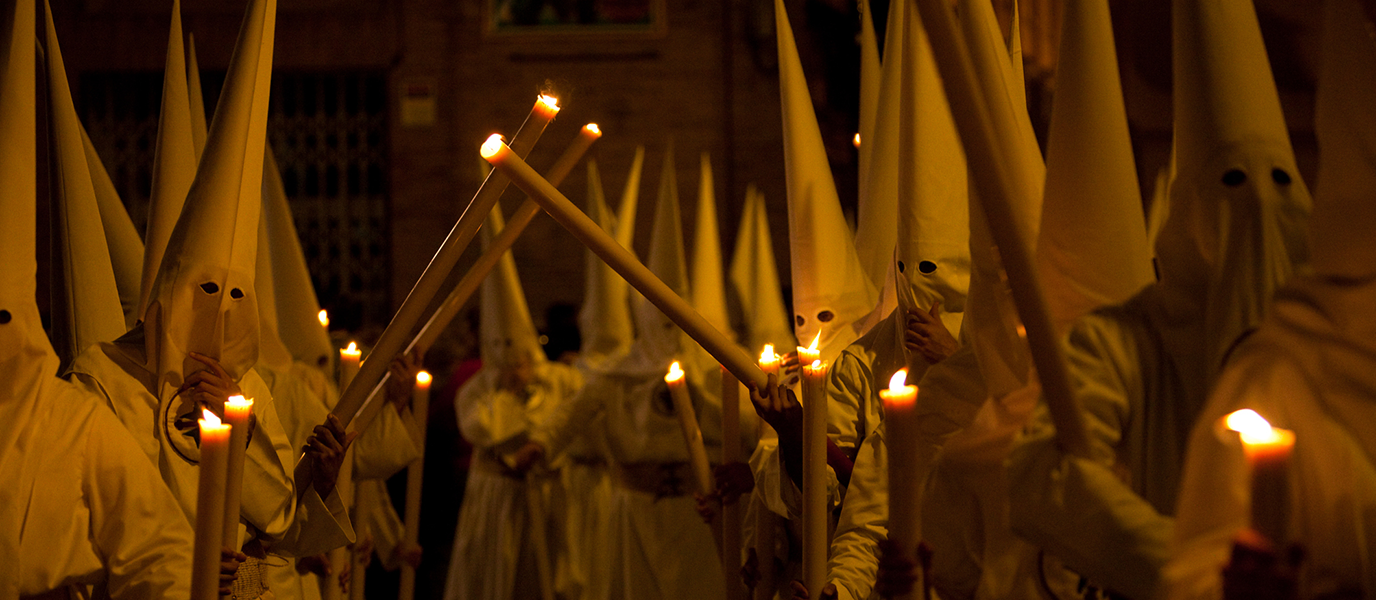
Holy Week in Jerez was declared an Asset of National Tourist Interest in 1993. The 46 confraternities or brotherhoods that take part in the processions through the old quarter of this historic Andalusian city between Passion Saturday and Easter Sunday (usually between March and April) display quality imagery to the sound of drums, trumpets and other instruments typical of this Christian celebration.
In addition to its staging and history, one of the characteristics of Jerez’s Holy Week are the flamenco saetas that some of its neighbours sing from the balconies of their houses to the Virgin Mary or Jesus Christ.
- History of Jerez’s Holy Week
- The main brotherhoods and processional floats
- The main procession routes
History of Jerez’s Holy Week
The origins of Holy Week in Jerez date back to the 16th century, when the first brotherhoods were founded to perform public penance during the days of Lent. At first, they carried out processions with brothers who carried candles (‘brothers of light’) or those who flagellated themselves in public (‘brothers of blood’). The ‘pasos’ (floats) of that time were urns with an image of Christ during the Passion or of the Mater Dolorosa.
In the 18th century, this way of experiencing Holy Week came to an end with Charles III of Spain. The monarch suppressed the confraternities that did not have statutes approved by the Council of Castile, i.e. all those of Jerez.
It was at the turn of the 20th century, after decades of upheaval due to the French invasion, the confiscation by the Spanish state between the 18th and 20th centuries and the anti-clerical governments, that Holy Week in Jerez regained its importance. Former confraternities and old devotions were revived, and other new confraternities were created; the most recent one first paraded in 1973.
The main brotherhoods and processional floats
The number of brotherhoods or confraternities that carry out Holy Week processions in Jerez (46) is the second largest in Spain, behind Seville.
There are two types of confraternities or brotherhoods. One of them maintains the traditions and customs of four centuries ago, which are those of Jesus the Nazarene and the Christ of the Expiration. The penitents carry the float on only one shoulder, they do not use a mask to cover their faces and they wear ‘Egyptian-style’ robes, among other details. The other type of brotherhood are those created at the turn of the 20th century which adapt to the changing times.
Below we describe five of the main ones:
Hermandad de Nuestro Padre Jesús Nazareno y Nuestra Madre y Señora del Traspaso (Brotherhood of Our Father Jesus the Nazarene and Our Mother and Lady of the Transfer)
It is believed to have been founded at the end of the 16th century since its first Rules date back to 1585 and was established at the Saint Francis Convent; its current location is at the Saint John Lateran Chapel.
There are three floats on Good Friday: Our Father Jesus the Nazarene, the Apostle Saint John, and Our Mother and Lady of the Transfer.
Hermandad del Santísimo Cristo de la Expiración (Brotherhood of the Holy Christ of the Expiration)
The confraternity dates back to 1575, although its first Rules were approved in 1588. It was established at the hermitage under the invocation of Saint Elmo.
There are two floats on Good Friday: the Float of the Mystery and the Float with a Palio.
Hermandad de Nuestro Padre Jesús del Prendimiento (Brotherhood of Our Father Jesus of the Arrest)
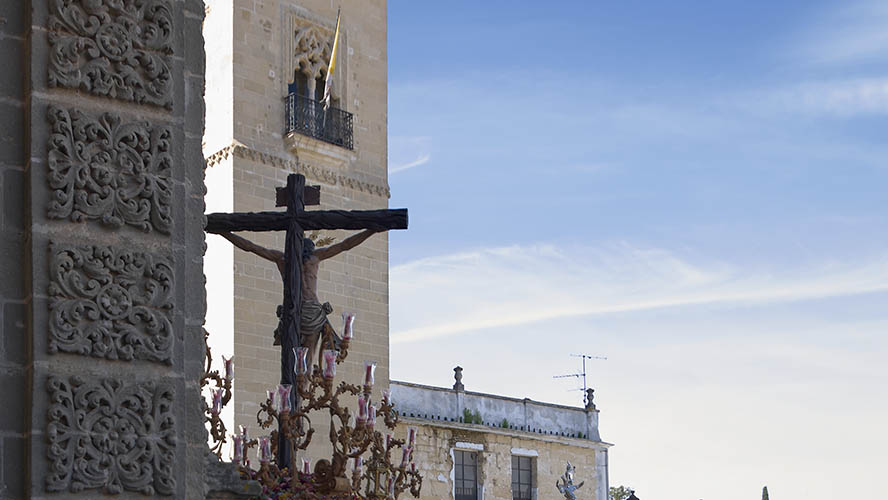
Its origins date back to 1660, but it had to be re-founded in the 20th century. It is based at Santiago church. It is one of the most popular among the people of Jerez: on its route from the Santiago neighbourhood to the Cathedral, saetas are sung and there is no shortage of clapping.
There are two floats on Holy Wednesday: the Float of the Mystery and the Float with a Palio.
Hermanad de la Santa Veracruz de Nuestro Señor Jesucristo (Brotherhood of the Holy True Cross of Our Lord Jesus Christ)
Founded in the 16th century, it has a long history. It had to be reorganised in 1938. It is one of the highlights of Maundy Thursday, when the Crucifixion of Hope advances through the San Juan de los Caballeros neighbourhood.
Hermandad de Nuestro Señor Jesús Nazareno en su Entrega (Brotherhood of Our Lord Jesus the Nazarene in his Surrender)
This is one of the most recent: it carried out its first procession in 2008. On Holy Saturday it covers almost 14 kilometres in 14 hours, making it the longest procession in Spain.
It is based at the Parish Church of Saints Henry and Teresa.
The main procession routes
The route taken by the 46 brotherhoods of Jerez that parade their imagery and floats through the streets of this city is called the Carrera Oficial.
The current 1.3-kilometre route was made official in 2014 (it has been updated over the years) and runs from Plaza Aladro to the Cathedral, making it one of the longest in Spain.
The exact route along which the brotherhoods and confraternities pass through are: Plaza Aladro; Alameda Marqués de Casa Domecq; Alameda Cristina; Calle Larga; Rotonda de los Casinos; Calle Larga; Lancería; Plaza del Arenal; Consistorio; Plaza de la Yerba; Angostillo de San Dionisio; Plaza de la Asunción; José Luis Díez; Santa Isabel; Visitación; and Cathedral of the Holy Saviour, which they enter through the side door on Calle Visitación and leave through the side door of Calle Encarnación.
Along the way, there are different monuments or historical buildings such as the Domecq Palace; the Convent Church of Saint Dominic; the Palace of the Marquis of Villamarta; the Gallo Azul building; the Former Chapter House; the Church of Saint Dionysius; and the Cathedral.