









Located in the centre-west of Jerez de la Frontera, facing the surrounding countryside, Santiago, along with San Miguel, is one of the areas with the deepest flamenco roots and traditions. Singers like José Mercé, Tomasito and Diego Carrasco were all born in these streets.
It began in the 14th century as a suburb to the north of the city wall. Today, it’s a lively area steeped in traditional Andalusian architecture, and its flower-filled patios are a perfect reflection of this style.
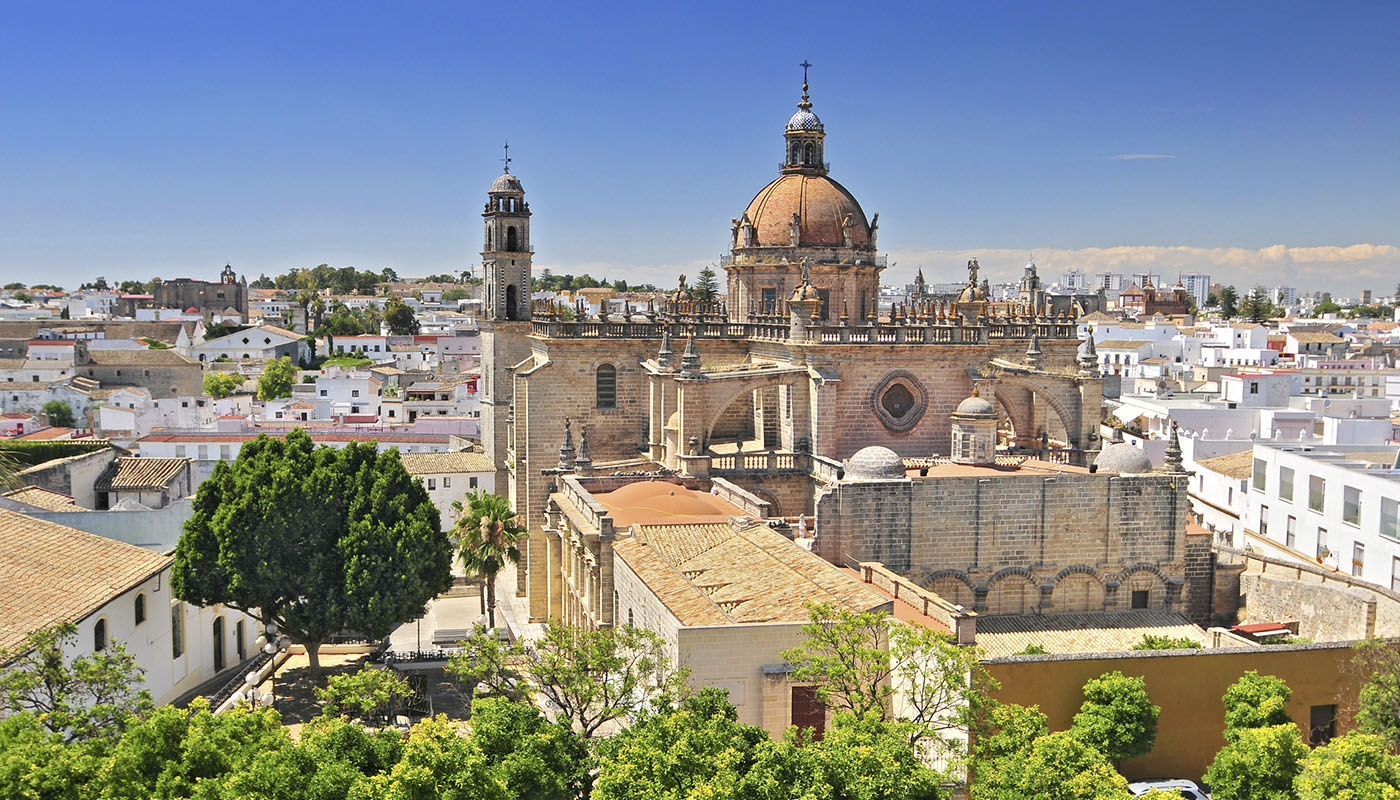
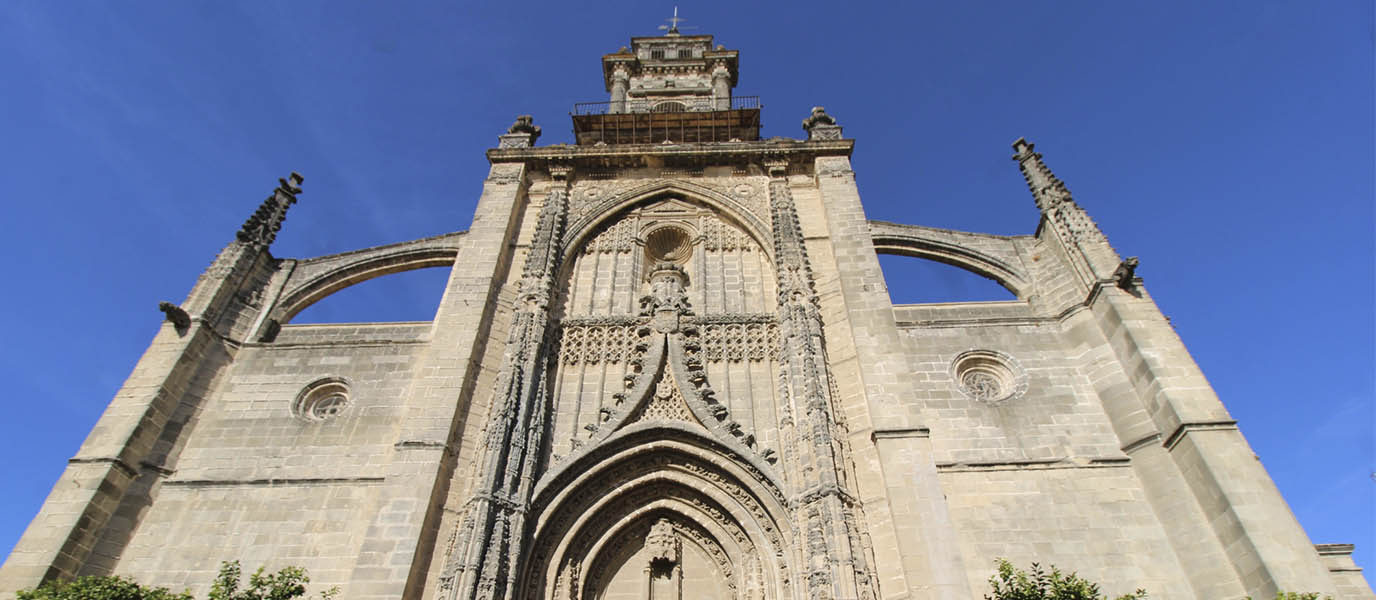
Its most iconic historic building is the Church of Santiago (15th-16th century), though the Basilica of La Merced (13th century), which houses the city’s patron saint and the tomb of dictator Miguel Primo de Rivera, is also well worth a visit.
History
After the conquest of the city by Alfonso X the Wise, the Santiago neighbourhood was established in the 14th century to the north of the wall as a suburb. The king ordered a chapel to be built in honour of Saint James, to give thanks for the Christian victory over the Arabs. Later, in the 15th and 16th centuries, the church still standing today was constructed.
As the city grew and more gateways opened in the wall, the present-day neighbourhood eventually formed just outside the Puerta de Santiago.
Points of interest
The Church of Santiago (15th-16th century) is a Gothic building with Baroque additions and was declared a Site of Cultural Interest in 1931. It also preserves Mudejar elements, particularly in the Chapel of Peace, which was originally a separate hermitage later incorporated into the current church.
This is the church that gives the neighbourhood its name. It was built outside the city wall and now sits very close to Plaza de Santiago. Its façade is striking, split into two levels flanked by pinnacles. Inside, you’ll be struck by its three naves, especially the Cristo del Prendimiento, known as “Prendi”, which takes centre stage on Wednesday night during Holy Week.
A short walk along Calle Merced leads to the 16th-century Basilica of La Merced, with its Baroque façade, on the square dedicated to Jerez’s patron saint. Inside, the figure of Our Lady of Mercy can be admired on the main altarpiece.
This temple is part of the Monastery of La Merced, which belongs to the Mercedarian Order. The basilica holds the tomb of dictator Miguel Primo de Rivera in the Riquelme chapel and also houses a replica of the Shroud of Turin, brought here in 1572.
Two of the most famous streets in Santiago are calle Muro and calle Ancha. Both run parallel to Plaza de Santiago and still preserve remains of the old Almohad wall.
Another well-known street is the one locals call “de la sangre”, though its official name is Taxdirt. The nickname comes from the Hospital de la Sangre de Nuestro Señor Jesucristo, founded in 1485, which now houses the Prendimiento Brotherhood of Jerez. Just by the Church of Santiago, it served for years as a shelter for the sick and poor.
Carmen Benítez School now hosts the flamenco club of singer Luis de la Pica and its patio is used for flamenco performances and shows.
Alongside wandering the winding streets and historic buildings, the Santiago neighbourhood is also home to a zoo: the Zoobotánico Jerez Biodiversity Conservation Centre. With over 72 years of history, it’s a space where both children and adults can get close to nearly 900 animals from over 180 species (lions, giraffes, chimpanzees and hippos, among others).
Flamenco in the neighbourhood
Some of the most important names in the history of flamenco were born in Santiago. Paco la Luz (creator of the seguiriya flamenco style), Terremoto de Jerez, José Mercé, Tomasito and Diego Carrasco all grew up in these streets, among others.
Historic flamenco singing and guitar-playing streets branch off from Plaza de Santiago. Over time, the houses and shared patios on these streets became home to many Gypsy families.
Right in front of the Church of Santiago stands a monument to Fernando Terremoto, son of Terremoto de Jerez. Behind the church is the monument to the singer Tío José de Paula (1870-1955). In his honour, the Tío José de Paula Flamenco Club (calle de la Merced, 11), was founded, one of the iconic flamenco venues in Jerez, where legends like Manolo Caracol and Lola Flores have performed.
Another club is the Don Antonio Chacón Flamenco Cultural Centre on Calle Salas. And in Plaza de San Juan, you’ll find the Andalusian Flamenco Documentation Centre and the Flamencology Chair of Jerez.
Festivals and traditions
As well as its flamenco roots, Santiago is also known for its local festivities, especially Holy Week and the traditional Christmas celebrations, zambombas, the most popular events.
During Jerez’s Holy Week, one of the most important in Andalusia, the neighbourhood’s streets fill with locals and tourists eager to see the processions or hear saetas, or sacred songs, sung from the balconies. Several brotherhoods begin their procession at the Church of Santiago.
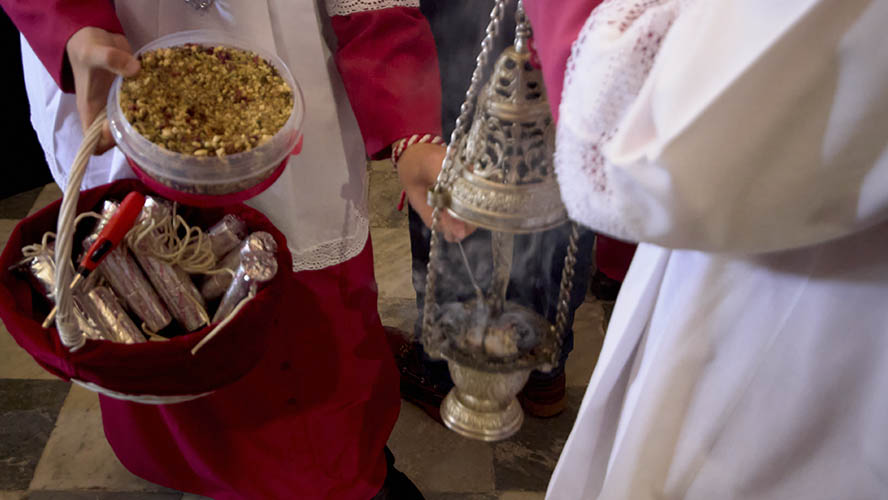
At Christmas, the streets of Jerez come alive to the sound of zambombas. Locals and visitors sing carols to the rhythm of the drums and enjoy a chat and a few nibbles.
Where to eat
The restaurant Jindama (calle Tardix, 2) goes by the motto “Gastronomy, culture, gypsy soul”. Its menu, Jaleo, includes hearty stews (pork cheek, meatballs, etc.), fried treats like “pescaílla de Cai” fish, plus classic starters and Iberian cured meats. It has a terrace and an indoor space that blends modern touches with the essence of Jerez, just like the food.
El Rincón del Chiri (Plaza de Santiago, 3) is a very special establishment. Live flamenco performances and, at Christmas, traditional Jerez-style zambomba music. All that, of course, with a good-value menu.